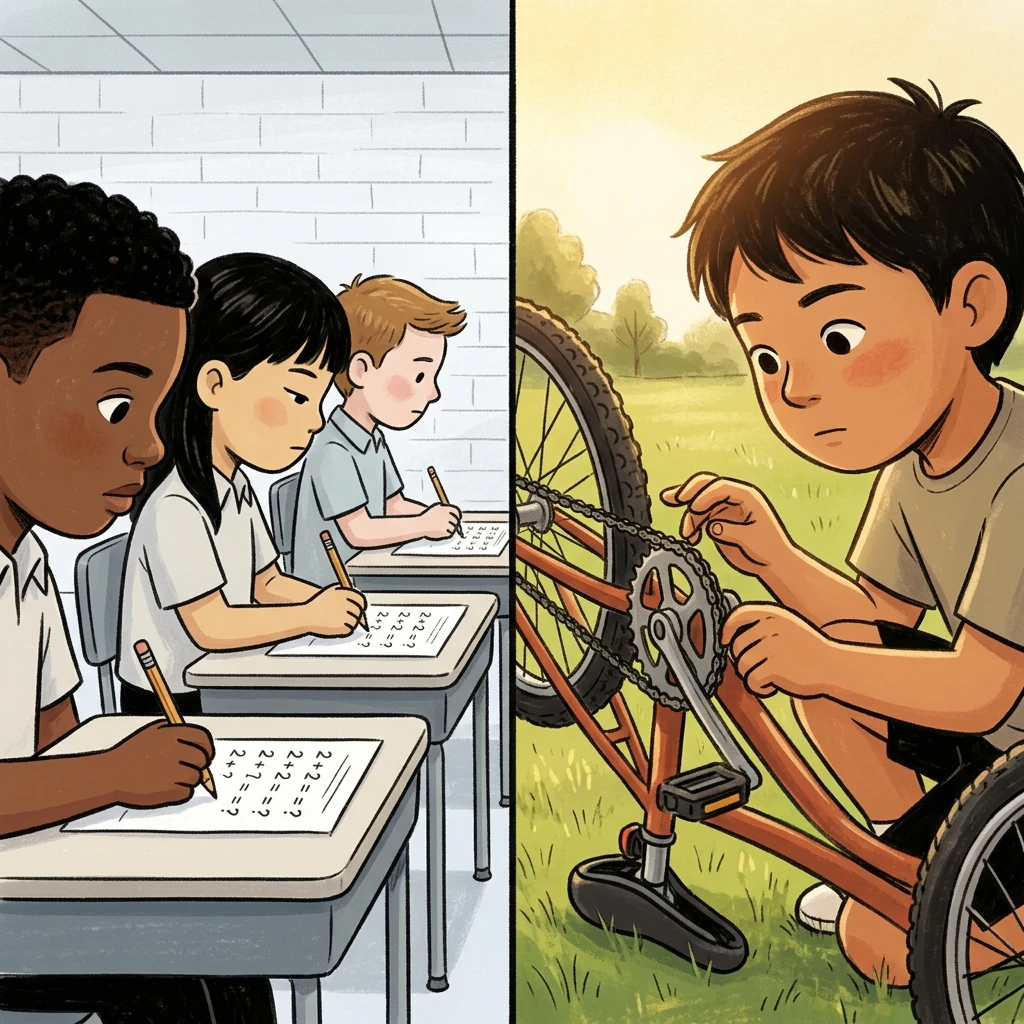
Your child will never apply for a job the way you did.

Parenting in the Age of AI Course

Your kid will graduate into a world where AI does the technical work. What's left is thinking clearly, reading people, spotting nonsense, and making someone care about what you built. This course teaches all of that through dinner conversations, family projects, and games you already have time for.

Activities that build thinking, articulation, and judgment through everyday moments
Works for ages 3 to 14. No tech background needed.
10 illustrated lessons. Audio narration included.

No charge. We'll let you know when it's ready.

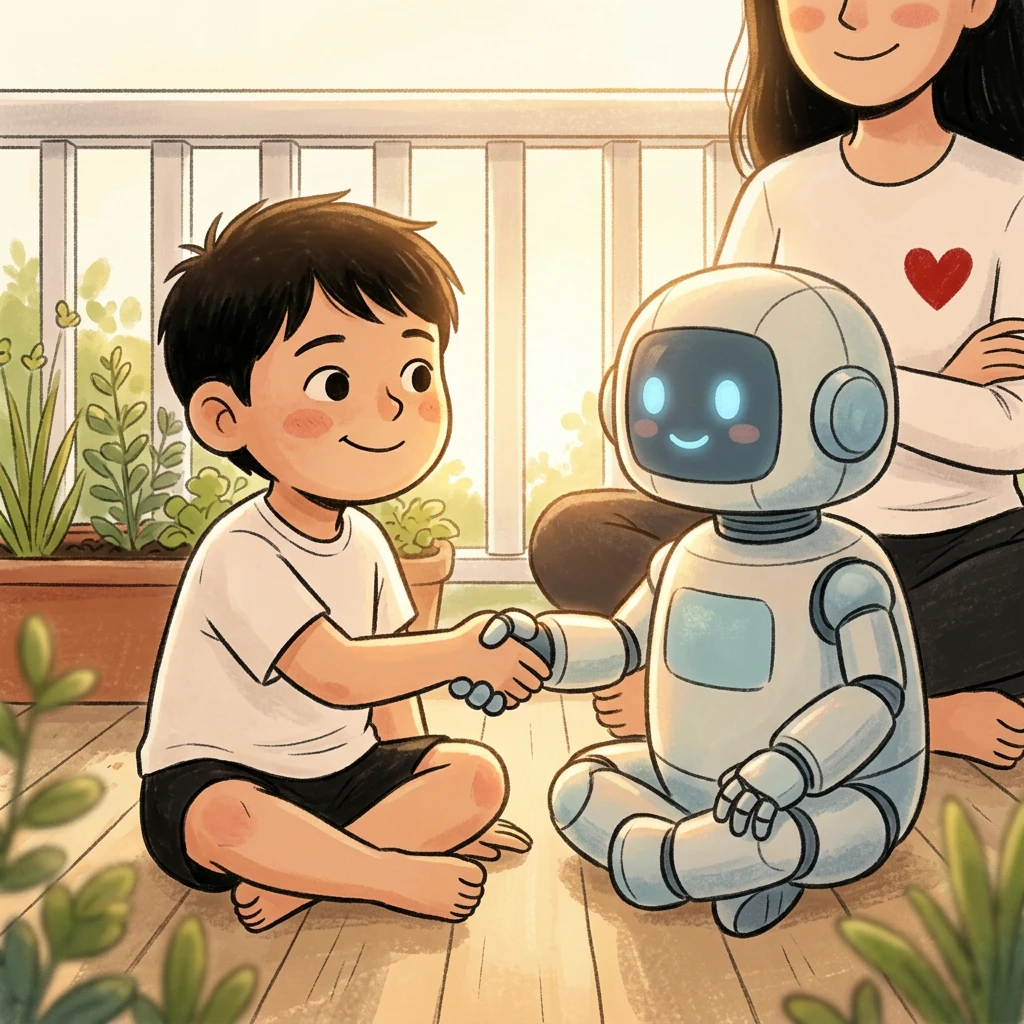
Child shaking hands with a friendly robot while parent watches
The problem

Schools are teaching skills that AI already does better

Writing essays? AI does that. Solving math step by step? AI does that. Memorizing facts? AI does that. Even coding (the thing everyone said kids should learn) is being done by AI too. So what's left? Knowing what's worth building. Understanding who needs it. Being able to say what you want clearly enough that it gets done. Making people care about it. Every career your child will have depends on these skills. Schools aren't covering them. Neither is anyone else.

Robot doing homework while a child watches, wondering what their role is now
What if

Your child sees what others miss, says what others can't, and people follow

The shift

AI automated the thinking schools teach. The thinking they skip just became everything.

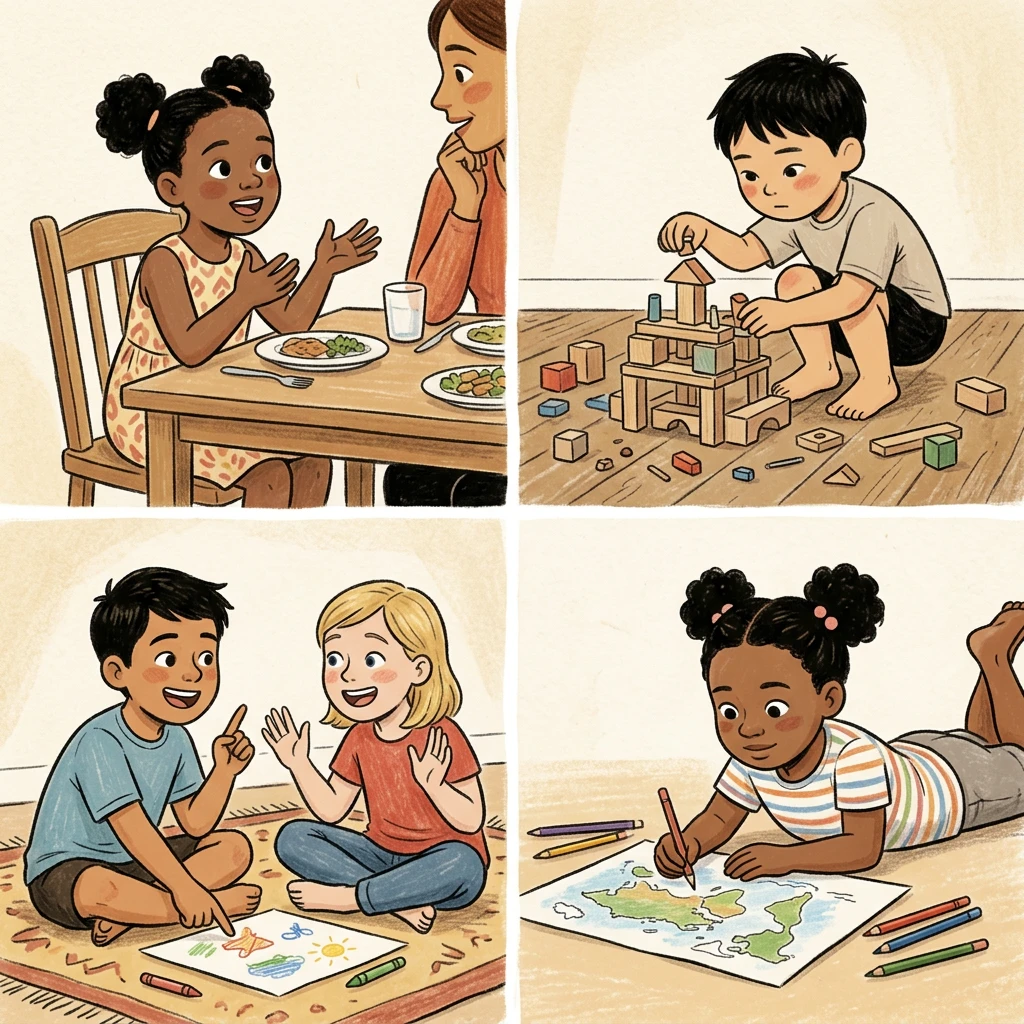
Before AI, schools taught procedural thinking: follow the steps, solve the equation, write the essay. AI handles all of that now. The thinking that's left is harder to teach and worth more: seeing how systems connect, reading what people need, knowing good from good enough, figuring out which problem is worth solving in the first place. This course develops that kind of thinking through moments you already have: dinner, car rides, homework, play, family projects. No extra hours.

Four scenes of children thinking, building, debating, and creating
Who we are

We live this every day, on both sides.

We've been doing AI since before it was called AI.

We're Eugene and Anna. Software engineers in Lisbon, developmental psychology fanatics, parents, and the people behind Steady Parent.

We watched "how to code" become "how to think about what to build" in our own careers, in real time. We raised Eugene's sisters, Sofia and Diana, through this change into people who can keep up. And we're raising our daughter Alexandra, figuring out how to give her these skills before school even knows they matter.

We're not academics writing papers. We're not influencers speculating. We're practitioners raising a child while building AI systems. We see both sides every day.
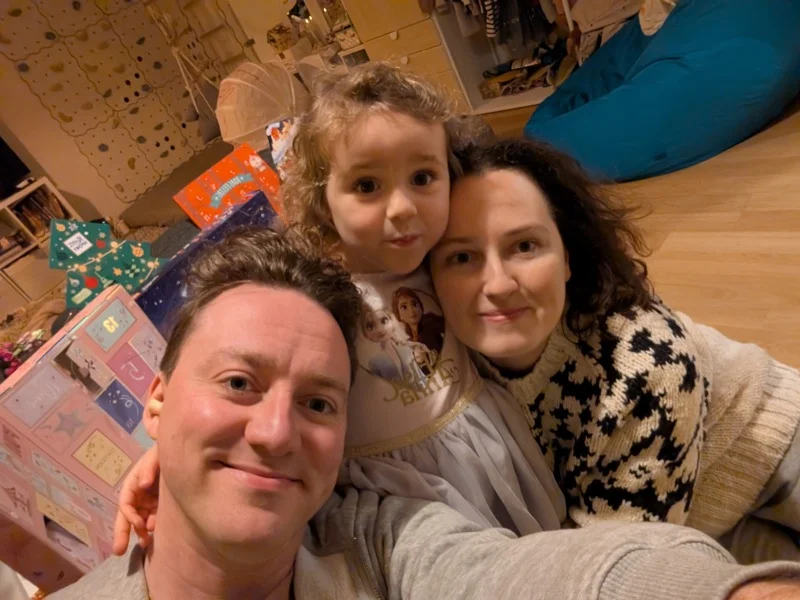

Anna, Eugene and Alexandra at home
Anna, Eugene, Alexandra, Sofia and Diana in Lisbon
Anna, Eugene and Alexandra during winter in Budapest
Anna, Eugene and Alexandra on Alexandra's Capoeira belt ceremony
We're engineers who had to learn that building great stuff isn't enough. You also have to make people give a damn. That was the hardest lesson of our careers. And it's the one we most want to pass to our kids.
Join the waitlist

No charge. We'll let you know when it's ready.

It's a family practice

Same dinner. Same car ride. Completely different results.

Most parents feel a vague anxiety about AI and screens but have no idea what to do about it. This course turns moments you already have (dinner conversations, car rides, homework, shopping, play) into training ground for the thinking skills that matter now. No extra hours. No "AI homework." You and your child develop these skills together, because most of us weren't taught them either.

Moments you already have

"Why do you think she did that?" At dinner, building people-reading.
"What would happen if...?" In the car, building systems thinking.
"Describe it so I can picture it." Anywhere, building articulation.
"Who made this and why?" At the store, building critical thinking.

Skills they develop

Understanding what people need (product thinking for kids)
Seeing how things connect (systems thinking through cooking, games, projects)
Saying what they mean clearly (the new literacy)
Making people care (storytelling, persuasion, positioning)

Zero extra screen time. Zero tech jargon. Works with the time you already have together.

Join the waitlist

No charge. We'll let you know when it's ready.

It's evidence-based

Grounded in developmental science. Not just our opinion.

Which skills are trainable at which age, how children develop systems thinking, when critical reasoning emerges. That comes from decades of developmental psychology research. We studied the science, then built activities that work in real family life.

Bruce D. Perry

Bruce D. Perry

M.D., Ph.D. in Neuroscience

Psychiatrist behind the neurosequential model and the critical "Regulate, Relate, Reason" sequence used to connect with distressed children.

Daniel Siegel and Tina Payne Bryson

Daniel Siegel & Tina Payne Bryson

M.D. in Psychiatry & Ph.D. in Social Work

Authors of The Whole-Brain Child, providing foundational strategies for integrating logic and emotion to nurture developing minds.

Stephen W. Porges

Stephen W. Porges

Ph.D. in Psychophysiology

Creator of Polyvagal Theory, identifying the distinct nervous system states of safety, fight/flight mobilization, and shutdown.

Adele Diamond

Adele Diamond

Ph.D. in Developmental Cognitive Neuroscience

Neuroscientist specializing in executive functions, defining the biological developmental limits of impulse control and reasoning in young children.

Bruce E. Compas

Bruce E. Compas

Ph.D. in Clinical Psychology

Researcher on coping styles, distinguishing between helpful regulation and harmful strategies like suppression, avoidance, and rumination.

John Bowlby

John Bowlby

M.D. in Psychiatry

The father of attachment theory, establishing that secure emotional bonds are the absolute prerequisite for independent emotional regulation.

Disclaimer: These researchers developed the science underlying our methods. We are not affiliated with or endorsed by them.

Testimonials

What parents say after our courses

Swipe through reels and comments from parents using the Steady Parent method in everyday moments.

Finally understand why I lose it. Less of a mess now.

Danielle

Mom of two boys (6 and 9)

Gentle parenting never stuck. This one did. Regulate yourself first is a game changer.

Ashley

Mom of a strong-willed 4-year-old

Not a course person. But it's bite-sized enough to do it on lunch breaks.

Kristin

Stepmom to a 5-year-old

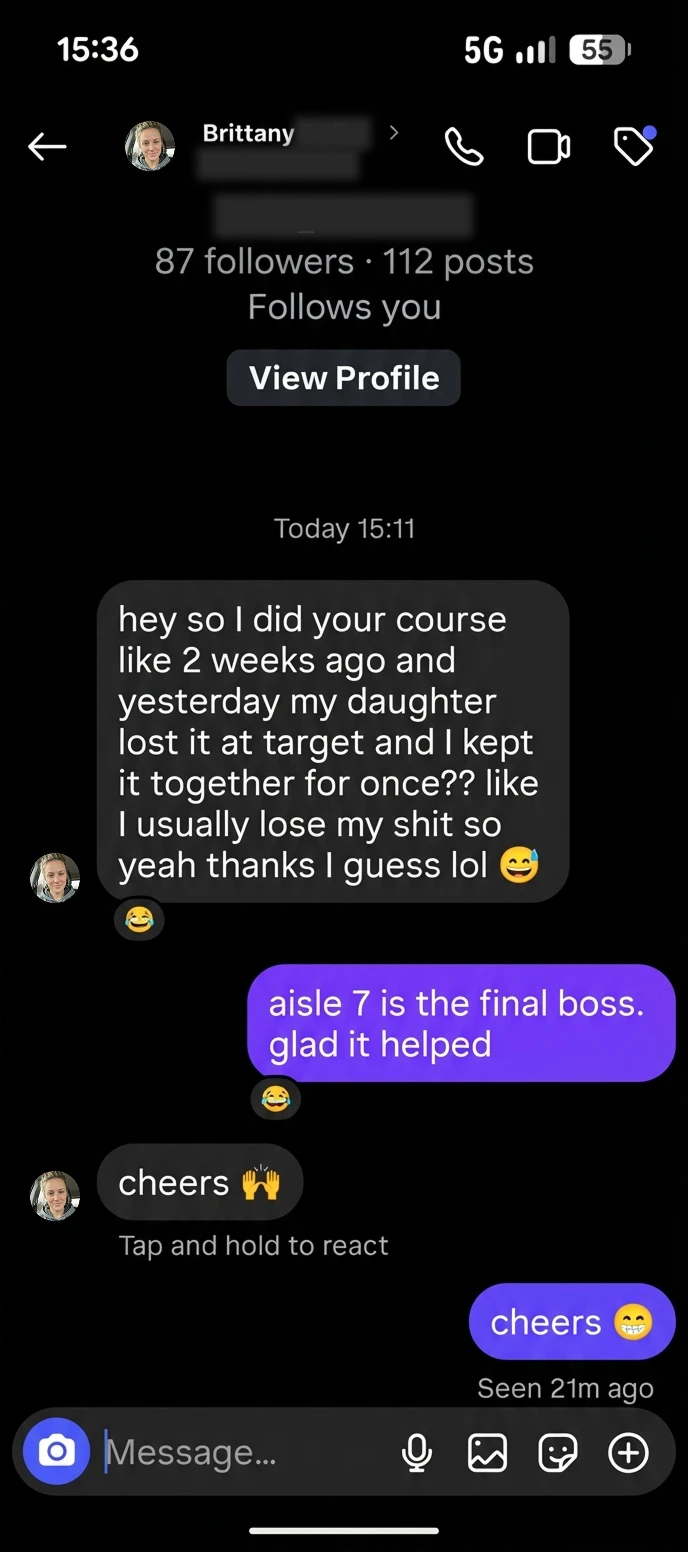
Blurred feedback screenshot from Brittany
Blurred feedback screenshot from Megan
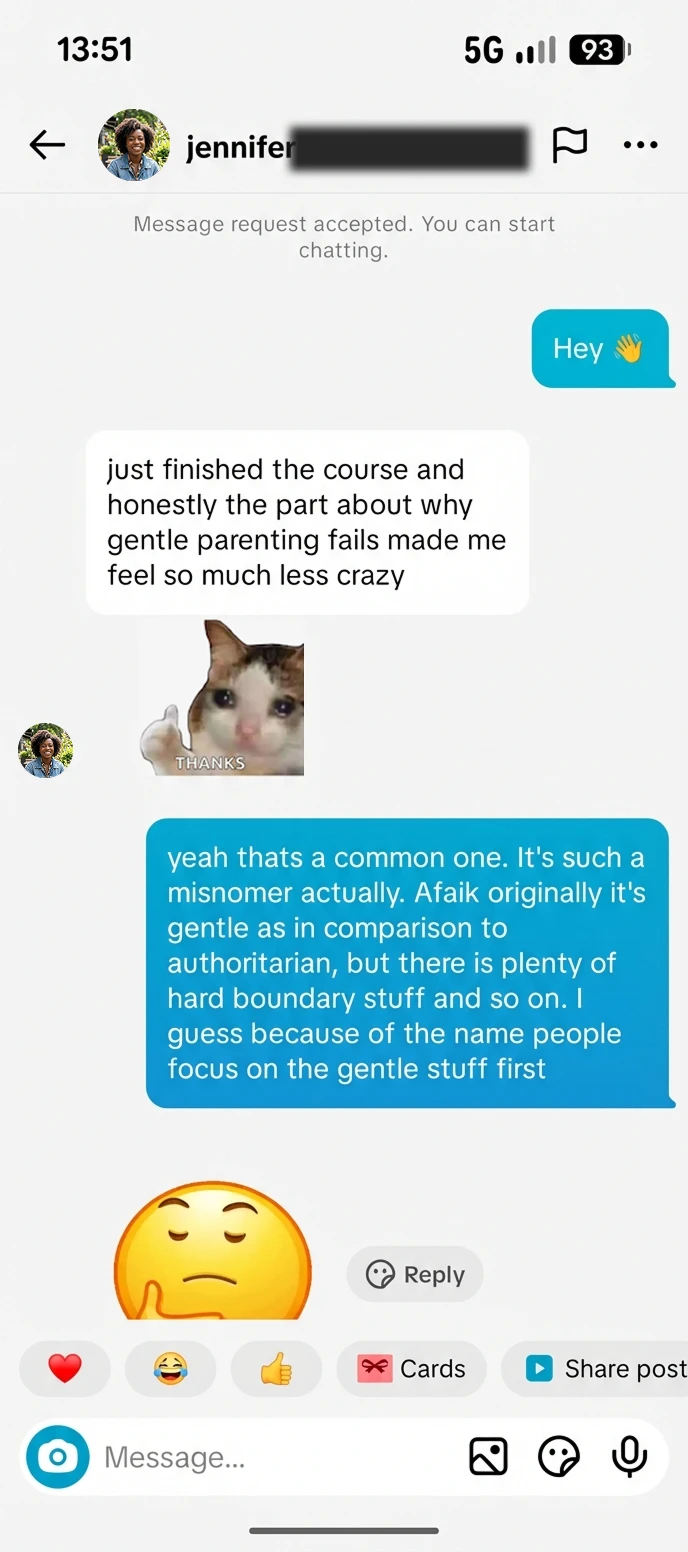
Blurred feedback screenshot from Jennifer
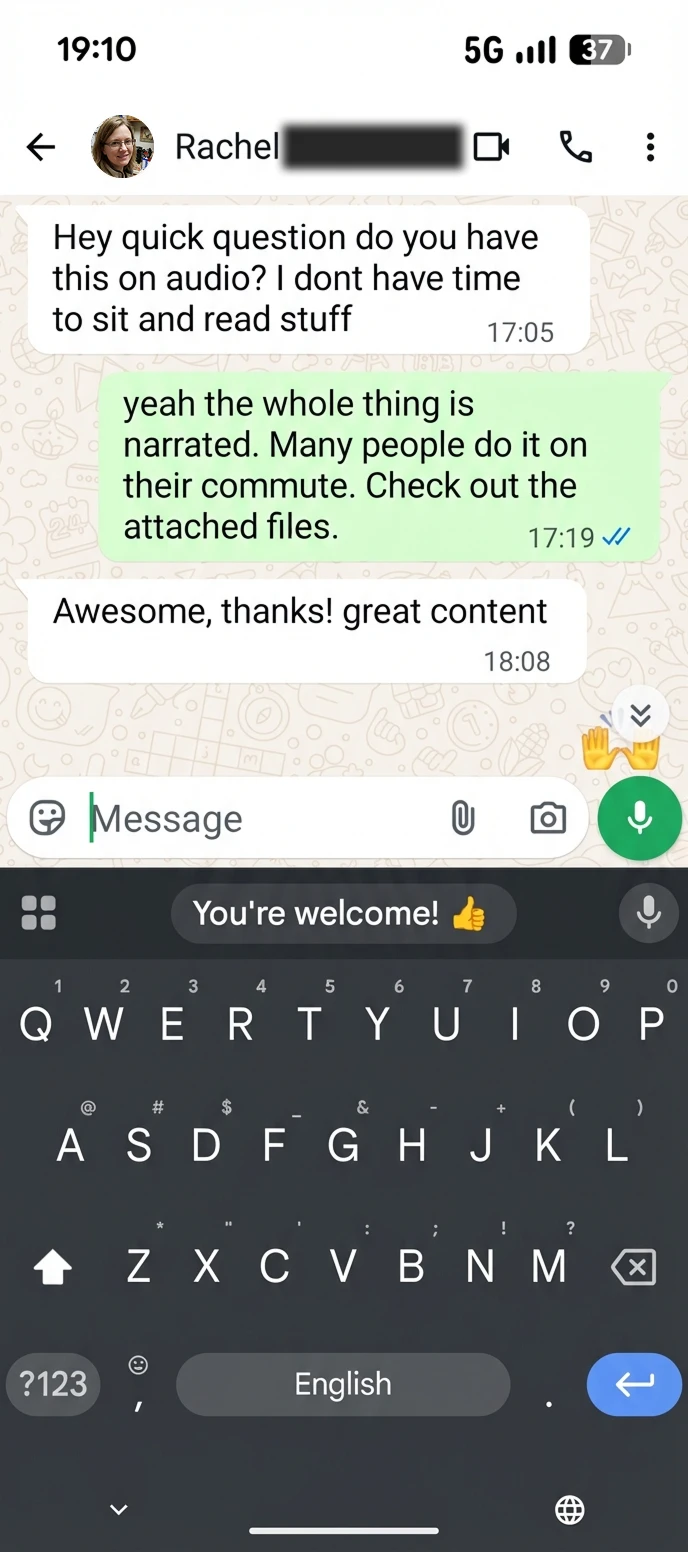
Blurred feedback screenshot from Rachel
What's inside

Ten lessons that change how your family thinks

Each lesson introduces a skill, then gives you practical tools (conversations, games, family projects) to develop it through daily life. No extra hours.

Content: What AI took, what it left, and what it amplified. Why "learn to code" is already outdated advice, and what replaced it. The shift from "can you do it?" to "do you know what's worth doing?"

Outcome: You understand which skills matter now and can spot them in everyday moments.

Content: Understanding what people need beyond what they say. Product thinking, UX intuition, and motivation-reading through dinner conversations, gift-giving, and role reversal games.

Outcome: Your child starts saying "I think she did that because..." unprompted.

Content: Cause and effect. Feedback loops. Second-order consequences. How cooking, gardening, budgeting, and the "What Would Happen If" car game build systems thinking.

Outcome: Your child starts noticing connections on their own. "If we leave later, we'll hit traffic, so we should pack tonight."

Content: The Description Drawing game, ordering at restaurants, teaching games to adults. Daily practice for precise articulation. If your child can't describe what they want, no tool helps them.

Outcome: Instead of "Can we go to the thing?" your child says "Can we go to the park after school tomorrow? I want to bring my bike."

Content: "Who wrote this and why?" The one question that changes everything. Research missions, the "most important thing" game, and the two-source habit.

Outcome: Your child stops repeating what they saw online as fact and starts saying "Someone said this, but I'm not sure if it's true."

Content: The "Pitch Me" game, mini-businesses (not lemonade stands, that's the first lesson), birthday invitations, and convincing through empathy. AI can build anything, but making someone care about it is still a human job.

Outcome: Instead of "look at my drawing" your child says "I drew this because you like cats and I thought it would make you smile."

Content: AI generates fifty options. The person who picks the right one wins. "Is this good? Why?" about everything: meals, buildings, websites. Comparison exercises, curating their space, and developing standards with vocabulary.

Outcome: Your child moves from "this is dumb" to "this doesn't work because..."

Content: Understanding that "I want X" requires steps, sequence, and trade-offs. Family projects with visible planning, kid-planned events (let them forget the cups, that's the lesson), and post-project reflection.

Outcome: "If we want to do X on Saturday, we should probably get Y on Friday."

Content: Age-appropriate ways to use AI tools together as a family. Building a culture of "think first, then direct the machine." A practical framework for rules that evolve as your child grows.

Outcome: Your family has a working agreement on AI that updates as the technology changes, instead of a blanket rule that breaks on contact.

Content: Most of us weren't taught these skills either. The dinner conversations that teach your kid to read people sharpen your people-reading too. This lesson is about sustaining the practice and making it a family identity.

Outcome: The skills become how your family operates, not something you did once.

Join the waitlist

No charge. We'll let you know when it's ready.

Full refund

Full refund

If you didn't find it valuable, you don't pay. Full refund within 30 days, no questions asked.

Self-paced

Self-paced

Start anytime. Go at your own speed. No deadlines, no live calls, no pressure.

Secure Checkout

Secure Checkout

Processed by Lemon Squeezy (powered by Stripe). HTTPS encrypted. We never see your card details.

FAQ

Questions parents ask first

Clear answers so you know exactly what you're getting.

Course

No. This course is about thinking skills, not technology. If you can have a conversation with your child, you can use everything in here.

3 to 14. Each activity has age variations. Younger kids get games and conversations. Older kids get projects and real-world challenges.

No. AI tools change every month. Teaching specific tools is already outdated by the time you finish the lesson. We show parents how to raise children so they naturally develop the skills to figure out any tool on their own.

This is not a coding course. We don't teach coding. We show parents how to develop their child's mindset so the skills emerge naturally, through everyday moments.

Practical

Zero extra hours. The activities are designed for moments you already have: dinner, car rides, shopping, homework, family projects. It's a different lens, not a different schedule.

Absolutely. Most activities are one-on-one conversations or games. Some family projects work with any group size.

Every activity is a game or a conversation. Your child won't know they're developing skills. They'll think they're playing the Pitch Me game or planning their own birthday party.

Full refund within 30 days if you don't find it valuable. No questions, no hoops.
Not ready for the course?

Get the 7 Skills cheat sheet

A one-page guide to the seven skills AI made essential, with one starter activity for each. Print it, put it on the fridge.