TLDR
- Explosive aggression is a symptom, not the problem. Underneath every outsized outburst is a feeling the child can't tolerate: fear, shame, frustration, or hurt. The explosion is how that feeling escapes.
- Fragile self-esteem makes everything feel like an attack. Kids who equate their worth with their performance will lash out when they fail. A lost game or a hard task becomes a threat to their entire identity.
- Punishment adds fuel to the fire. Punishing a child who is already overwhelmed by big feelings piles shame on top of fear. It intensifies the pattern instead of breaking it.
- The anger is almost always masking something scarier. Fear, sadness, or disappointment sit underneath. If you can help your child reach the tears, the aggression often melts away.
- Some kids need professional support, and that's okay. When explosions are frequent, intense, and getting worse despite consistent effort, a specialist can identify sensory, developmental, or emotional factors you can't see from inside the storm.

What "explosive" looks like
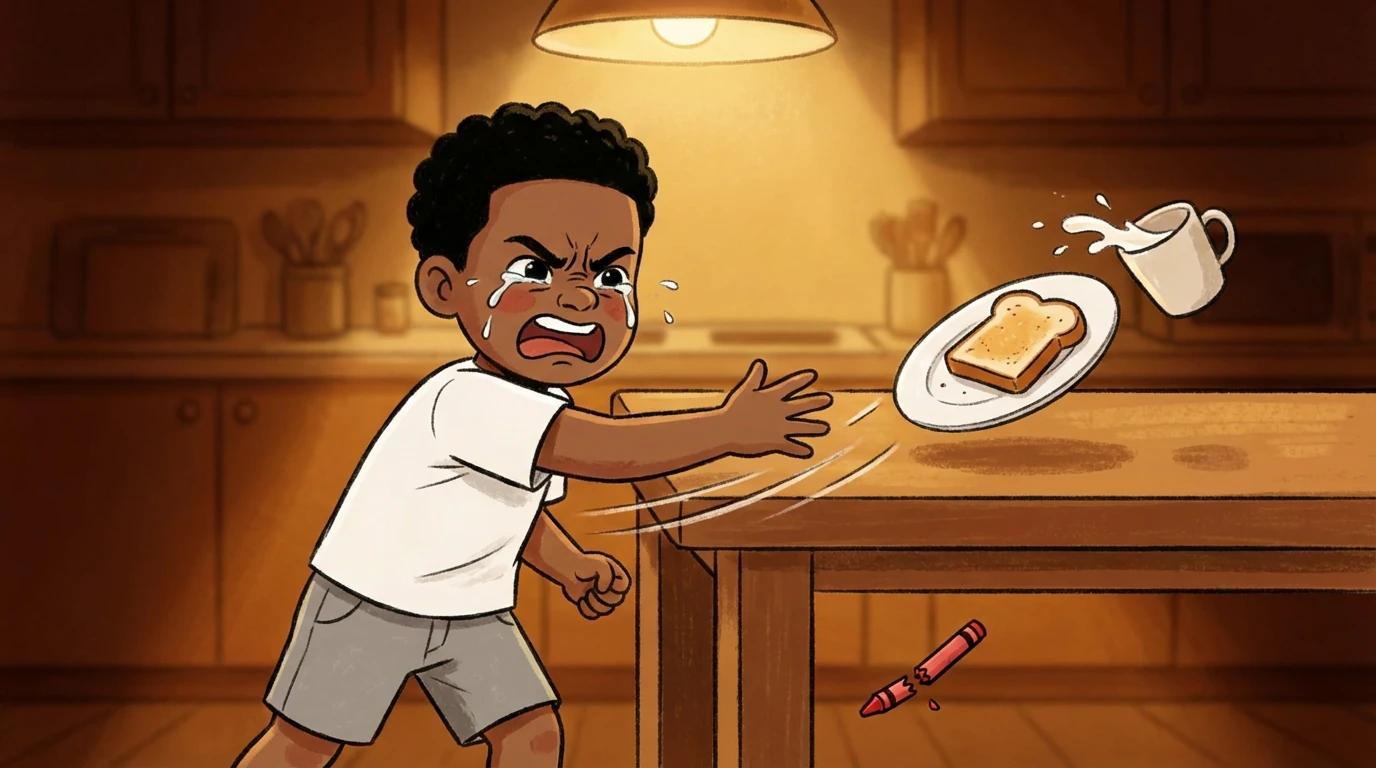
You know the difference. There's regular kid anger (the whining, the foot-stomping, the dramatic "I HATE this dinner") and then there's the kind that makes your stomach drop. A reaction so far out of proportion to the trigger that you find yourself thinking something is really wrong here.
Your five-year-old can't retrieve a toy from underwater at the pool, and she claws her friend's face. Your four-year-old hears "no" about a cookie, and he's throwing furniture. The trigger is a 2. The response is a 10.
This mismatch between trigger and reaction is the hallmark of explosive aggression. And the scariest part is often what you don't see: visible anger. Some kids who explode never look angry. They look blank, spacey, or even cheerful right before they lash out. If your child seems to go from zero to sixty with no warning, you're probably missing the warning signs because they don't look like what you'd expect.
The feeling underneath the fist
Here's the part that changes everything once you understand it.
Under every explosive outburst is a more threatening emotion: fear, hurt, disappointment, or shame. The child experiences something that feels unbearable, and the brain's defense system kicks in with an attack response. Fight mode. The aggression is the armor, not the wound.
When self-worth is on the line
Some kids have a fragile sense of "all of me is good, even my messy parts." When that belief is shaky, any imperfection, any failure, any moment of not measuring up feels like an existential threat. Your kid can't do what her friend can do at swim class, and the resulting fury looks like she's angry at her friend. She's angry at herself. She's terrified that struggling means she's broken.
Kids who equate their worth with their performance will attack whoever witnesses their failure. The friend who dove deeper. The sibling who finished first. The parent who saw them lose.
When fear has nowhere to go
Other kids carry around a backpack full of unnamed fears: about school, about changes at home, about a new sibling, about things they can't articulate. A child who has signs pointing toward ADHD, sensory processing challenges, or ASD may experience the ordinary world as genuinely overwhelming. Noises are louder. Transitions are harder. Social situations drain them faster.
These kids aren't choosing to overreact. Their nervous system is reacting to real distress. The explosion is the pressure valve releasing.
Rage out of nowhere
The Beyond Hitting course will help you gauge when aggression needs outside support
You'll learn what's within the normal range and what signals it's time to bring in a professional.
Reading the signs before the storm
The "unpredictable" part of explosive aggression is usually a reading problem, not a behavior problem. The signs are there. You just haven't learned to speak the language yet.
Watch for spaciness (the child goes blank, seems unreachable), wildness (sudden hyperactivity, bouncing off walls for no reason), and the freeze response (going still and quiet right before an explosion). These are your early warning system. A child who suddenly seems checked out at a birthday party is a child whose nervous system is overloaded and looking for an exit.
Transitions are high-risk. Leaving a friend's house, ending screen time, getting picked up from school. The grief of leaving plus the overload of the day creates a perfect storm. If your child always falls apart during goodbyes, that's your data. Plan for it.

What to do when the explosion is happening
You cannot reason with a child in the middle of an explosive episode. The rational brain has left the building. Your only job right now is containment and safety.
How to handle an explosive aggression episode
- Get close, not loudMove toward your child, not away. Kids attack harder when they feel disconnected. Your physical presence (without grabbing or restraining) tells their nervous system that someone safe is here.
- Name the trigger out loudSay what happened: 'You wanted that toy and she took it.' Rage doesn't start to dissipate until the child feels understood. Keep it short. One sentence.
- Protect everyone without leavingBlock hits, move breakable objects, put distance between siblings. Say 'I won't let you hurt me, and I'm staying right here.' Do not walk away. Do not send them to their room.
- Wait for the tearsBehind the fury, tears are waiting. If you stay steady and keep acknowledging the feeling, many kids will eventually collapse into sobbing. That sobbing is the real release. Hold them through it.
- Skip the lecture afterwardAfter the storm passes, your child will often become relaxed, cooperative, and affectionate. Match that energy. The teaching conversation happens hours later, or even the next day, when everyone is regulated.
The playful redirect (for milder episodes)
When you catch the aggression early, before it goes nuclear, a playful redirect can defuse it. Scoop your kid up, get silly, give them a chance to giggle out whatever anxiety is building. "Oh no, are you about to throw that? We don't throw shoes, we throw PILLOWS." Laughter releases the same fear-chemicals that crying does. If your child can giggle it out, the episode may never reach full blast.
If silliness doesn't work and they push back harder, let the tears come. Both are release valves.

What makes it worse (and parents do this constantly)
Punishment
Punishing a child for explosive behavior makes the behavior worse. Full stop. The child is already drowning in feelings they can't handle. Punishment adds shame, hurt, and fear to the pile. Now they have more emotions they can't process, which means more explosions, which means more punishment. It's a cycle that only spirals.
This includes time-outs, consequence-based discipline, and taking away privileges. If you're using these strategies and the explosions are getting worse, the discipline approach itself may be the accelerant. The question of whether oppositional defiance is a diagnosis or a relationship signal is worth considering here.
Forced apologies and physical contact
Making a child hug someone goodbye when they're already overwhelmed is asking for a bite. Making them apologize while still dysregulated teaches them to perform remorse they don't feel. Both backfire.
When this is more than a phase
So how do you know if your child's explosive aggression is within the range of "hard but normal" or a sign that something else is going on?
The answer depends on whether the explosiveness is sensory-driven or frustration-driven, how often it happens, and whether it's getting better or worse over time with consistent effort.
Consider professional evaluation if:
- The aggression is getting more intense or frequent despite weeks of consistent, non-punitive response
- Your child seems to have no warning signs at all (zero to sixty with no ramp-up)
- The explosions happen across all settings (home, school, with friends, with family)
- Your child hurts themselves during episodes (head-banging, self-hitting, self-critical language like "I hate myself")
- You've noticed concerning patterns that go beyond typical tantrums
- Other kids are afraid of your child, or your child is being excluded
Finding the right specialist can identify sensory processing differences, developmental delays in emotional flexibility, or anxiety you can't diagnose from inside the daily chaos.
Getting help is data collection. You're bringing in someone with tools you don't have so you can respond to the right thing.

The long game
Explosive aggression in young kids is scary to live with. It's embarrassing in public. It's exhausting at home. And it's isolating because most parents won't talk about it.
But here's what the research shows: kids who get consistent empathic limits, who feel safe to cry, and whose parents address the feelings underneath the behavior, get better. The explosions get smaller. The recovery time shortens. The child starts to develop their own coping strategies because they've internalized yours.
You might see an uptick before the improvement. When kids realize it's truly safe to show all their feelings, they test that safety hard. Expect a rough month. Then watch what happens.
The work is slow, repetitive, and unglamorous. Hold the limit. Name the feeling. Stay close. Let them cry. Do it again tomorrow. And the day after. You're building something you can't see yet.
FAQ
Physical aggression during meltdowns is common at five, though many five-year-olds are starting to develop alternatives. The key factor is trajectory. If the episodes are gradually becoming less intense and less frequent with your support, you're on track. If they're escalating, get a professional assessment.
Only if someone is about to get seriously hurt. Physical restraint often escalates the situation because it triggers the child's fight response even harder. Instead, position yourself to block and redirect. If you must hold your child, keep it gentle and say 'I'm keeping everyone safe' rather than using it as punishment.
Laughter after aggression signals discomfort and anxiety, not defiance. Your child feels uneasy about what just happened and the laugh is a nervous release. Treat it the same way you'd treat crying: it means they're processing. Don't punish the laugh or interpret it as them not caring.
Early childhood aggression that receives empathic, consistent response has a very good prognosis. Kids whose parents help them process the feelings underneath the behavior typically develop strong emotional regulation over time. The risk factor is the response the child receives, not the aggression itself.