TLDR
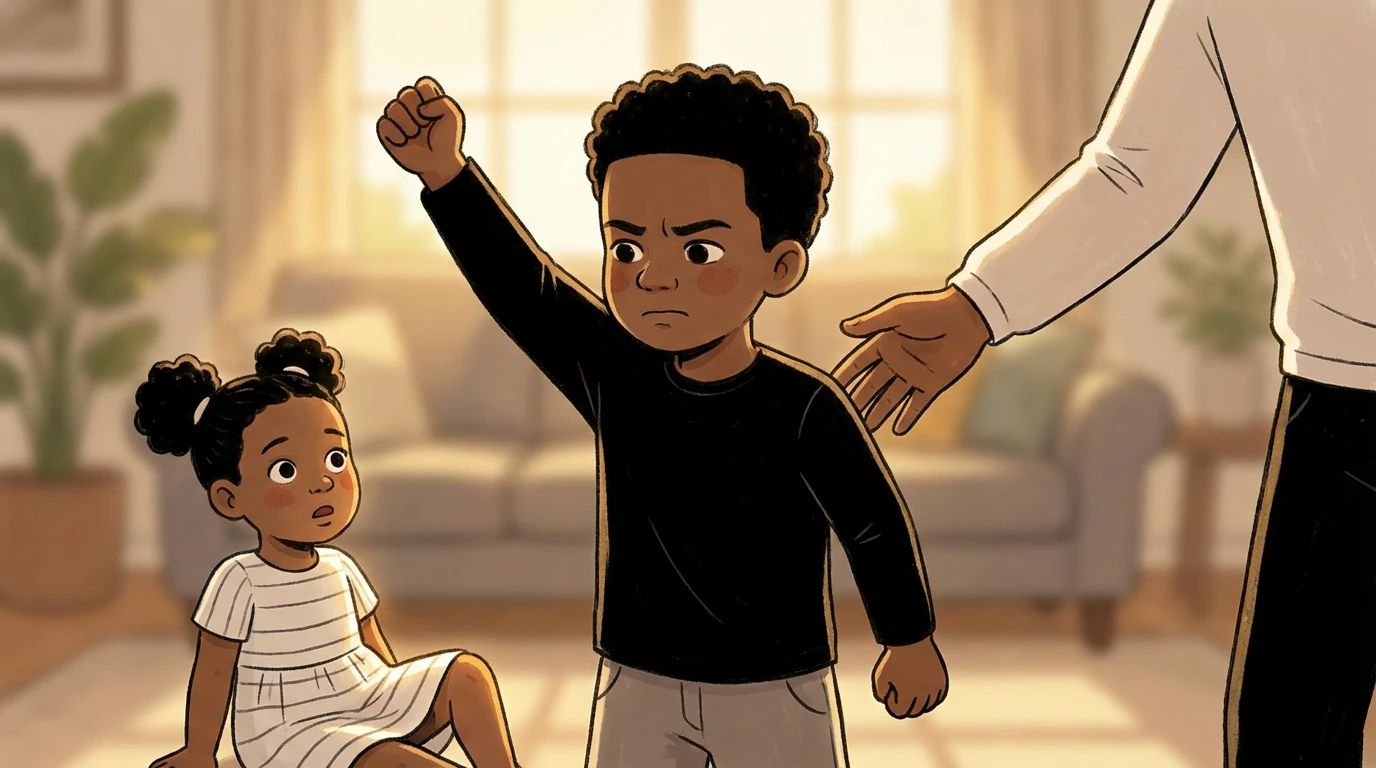
- The hitting is not about the toy, the turn, or whatever just happened. It's about a toddler whose emotional tank is empty, whose impulse control is basically nonexistent, and who feels threatened by sharing you with another human.
- Protect the victim first, then turn to the hitter. Pick up the baby or comfort the hurt child. Once they're safe, take a breath, then move to the child who hit. In that order.
- Firm limits and empathy are not opposites. You can say 'I won't let you hit' and 'You must be so frustrated' in the same sentence. Kids only follow limits from people they feel connected to.
- Preventive connection beats reactive discipline every time. Spending ten minutes of roughhousing and snuggling before the hard part of the day fills your toddler's tank so they can hold it together when your attention shifts.
- Guilt does not build empathy. Forcing 'say sorry' or lecturing about love shuts kids down. Real compassion grows when they feel safe enough to notice someone else's pain.

Why your toddler hits their sibling (and it's not because they're mean)
Your two-year-old has the emotional range of a full-grown adult crammed into a brain that cannot regulate any of it. The prefrontal cortex, the part that would pump the brakes before a fist flies, won't be functional for years.
When a baby sibling arrives, or when an older sibling gets to do things the toddler can't, the feelings that show up are primal. Jealousy. Fear of losing you. Rage at having to share the person they need most. A toddler who hits their sibling is acting from overwhelm, not cruelty.
These are feelings they have zero words for. So the body does the talking. Understanding why siblings fight in the first place helps you see the pattern: the aggression spikes when the child feels most disconnected from you.
The moment it happens: your intervention sequence
You hear the smack, then the scream. Your heart rate spikes. Every instinct says to yell at the hitter. Do not do that.
Step one: protect the hurt child. Pick up the baby. Comfort the crying sibling. For right now, ignore the toddler who hit. This is triage. The hurt child needs you first.
Step two: once the victim is safe, breathe. Put the baby somewhere secure. Take one actual breath. If you need a refresher on how to keep yourself calm when one kid hurts another, that's worth reading, because what you do in the next thirty seconds matters more than any lecture you could give later.
Step three: move close and set the limit. Get to the toddler's level. Look them in the eye. Say it clearly: "People are not for hitting. Hitting hurts." Then add what most parents skip: "You must have been really upset to do that."
One kid crying, one hitting
The Beyond Hitting course will teach you to intervene between siblings safely
You'll separate them without siding, comfort without rewarding, and debrief without a lecture.
What to say (scripts that work)
The limit-setting script
Keep it short. Toddlers cannot process paragraphs.
- "I won't let you hit your brother. Hitting hurts."
- "You're so angry right now. I get it. But I can't let you hurt him."
- "I'm going to hold your hands to keep everyone safe."
Say it once. Maybe twice. Then act. Move the children apart. If the toddler follows to hit again, gently restrain their hands. One statement, one action.
The feelings script (after the limit)
This is the part that stops the cycle from repeating tomorrow. Once the hitting has been physically stopped:
"Sometimes you feel so angry at the baby. Sometimes you wish you could have me all to yourself. Lots of kids feel that way when there's a new baby. You can always come tell me when you feel that way. I want to hear it."

If the toddler is open enough, they'll cry. Crying is the goal. Relief tears, not punishment tears. The feelings that have been driving the hitting are finally coming out through something other than fists.
If they go glassy-eyed or try to run, stay close. Stay compassionate. Say: "I know. Sometimes you wish the baby would go away. That's a big feeling and it's okay to have it."
The redirection script
"People are not for hitting. Can you show me how angry you are by stomping your foot?"
When they stomp: "You are SO mad. I can see it. Show me more."
Having a witness who gets it helps a child work through feelings enough that they don't have to express them through violence. You're giving the anger an exit route that doesn't involve someone else's face.
Prevention: the strategy that makes everything else easier
Reactive intervention is exhausting. You know what's less exhausting? Making the hitting happen less often.
How to prevent sibling hitting before it starts
- Spot your danger windowTrack when the hitting usually happens. Dinner prep? After daycare? Before bed? Most families have a predictable daily window when their toddler falls apart. That window is your target.
- Start connection one hour earlyBefore the danger window, get your older child set up with an activity they enjoy. Then give your toddler ten to fifteen minutes of completely undivided attention. No phone. No cooking. Just them.
- Roughhouse until they laughChase them, wrestle gently, let them climb on you. The goal is real belly laughter. Laughter releases the same stress chemicals that otherwise come out as aggression. This is preventive medicine.
- Snuggle to fill the tankAfter the roughhousing, slow it down. Hold them, rock them, read a book together. Physical closeness tells their nervous system that they are safe and you are not going anywhere.
- Include them for realIf the danger window is dinner prep, make the toddler a genuine participant. A learning tower at the counter, washing vegetables, stirring something. Busy-work they see through won't cut it. Real participation reduces the jealousy.
This works because the hitting is an empty-tank problem. A toddler who feels full of your attention can hold it together when your attention has to go somewhere else. A toddler running on fumes cannot, no matter how many times you say "no hitting."

What does not work
Forcing apologies. "Say sorry to your sister." The toddler mumbles sorry, learns nothing, and hits again in twenty minutes. Real empathy develops later, when the child is calm enough to notice someone else's pain: "Did you hear him cry? Remember when you fell at the park and it hurt? He hurts like that too."
Lecturing about love. "But that's your brother! You love your brother!" Love cannot be mandated. Guilt makes kids shut down their feelings, both the bad ones AND the good ones. You need those good feelings intact, because they're what will eventually motivate gentleness.
Spanking. You cannot teach a child not to hit by hitting them. Hundreds of studies confirm this: spanking increases aggression. If your toddler sees you hit when you're angry, they learn that hitting is what adults do when feelings get big.
Distraction alone. Giving the toddler cans to stack when they're already dysregulated fails because their internal resources are depleted. They can't occupy themselves with an alternative activity when their nervous system is in fight mode.
When the aggression is aimed at a baby
If your toddler is being rough with a baby sibling, the monitoring has to be constant. Most two-year-olds will pinch a baby sibling if no adult is around. This is developmentally normal. It means your toddler needs more of you, not less.
The hardest part for parents with closely spaced kids is that there is simply not enough of you to go around. If you have help available (a partner, a grandparent, anyone), use it. Have someone hold the baby while you roughhouse with the toddler. This is not a one-parent job.
The long game
Your toddler will not stop hitting overnight. The prefrontal cortex doesn't speed up its construction timeline because you read a parenting article. Learning to intervene in sibling fights is a skill you'll practice hundreds of times.
But here's what changes with consistent effort: the frequency drops. The intensity drops. One day your toddler will walk toward their sibling with a raised hand, see you watching, and put the hand down. That's the beginning of self-regulation. And the day after that, they might walk over and hand their sibling a toy instead.
FAQ
Yes. Most two-year-olds will be physically rough with a baby sibling at some point. Their impulse control is minimal, and the feelings triggered by sharing a parent are enormous. It does not mean your child is aggressive by nature. It means they are two.
Punishment (time-outs, yelling, spanking) either escalates the behavior or teaches the child to hide it. Set the limit firmly, comfort the hurt child, then help the hitter process the feelings underneath. Connection and firm limits together are more effective than punishment alone.
With consistent preventive connection and firm-but-empathic limits, most families see improvement within two to four weeks. The behavior won't vanish overnight because brain development takes time. If hitting remains frequent and intense after several weeks of consistent effort, check in with your pediatrician.
You will. Every parent does. When it happens, repair it: 'I yelled and that wasn't okay. I was scared when I saw your brother get hurt.' Modeling what to do after you mess up teaches more than never messing up would.