TLDR
- Peer aggression is a developmental stage, not a personality trait. Toddlers lack the impulse control and empathy wiring to manage big feelings around other kids. They experiment with physical force because their brain has no other tools yet.
- Group play is more stressful than it looks. Cortisol levels spike during peer play. Your child has to share toys, read social cues, and handle unpredictability all at once. That overload turns into hitting.
- Your proximity is the best prevention. Stay within arm's reach during playdates. Physical closeness helps your child feel connected and safe, which directly reduces aggressive impulses.
- Leave immediately after an incident. No warnings. Tell your child ahead of time that hitting means leaving. Then follow through every single time. The consistency matters more than the lecture.
- Repair happens later, not in the moment. Wait until everyone is calm. Then walk through what happened, acknowledge the big feeling, and practice what they could do instead next time.

Why daycare and playdates are ground zero
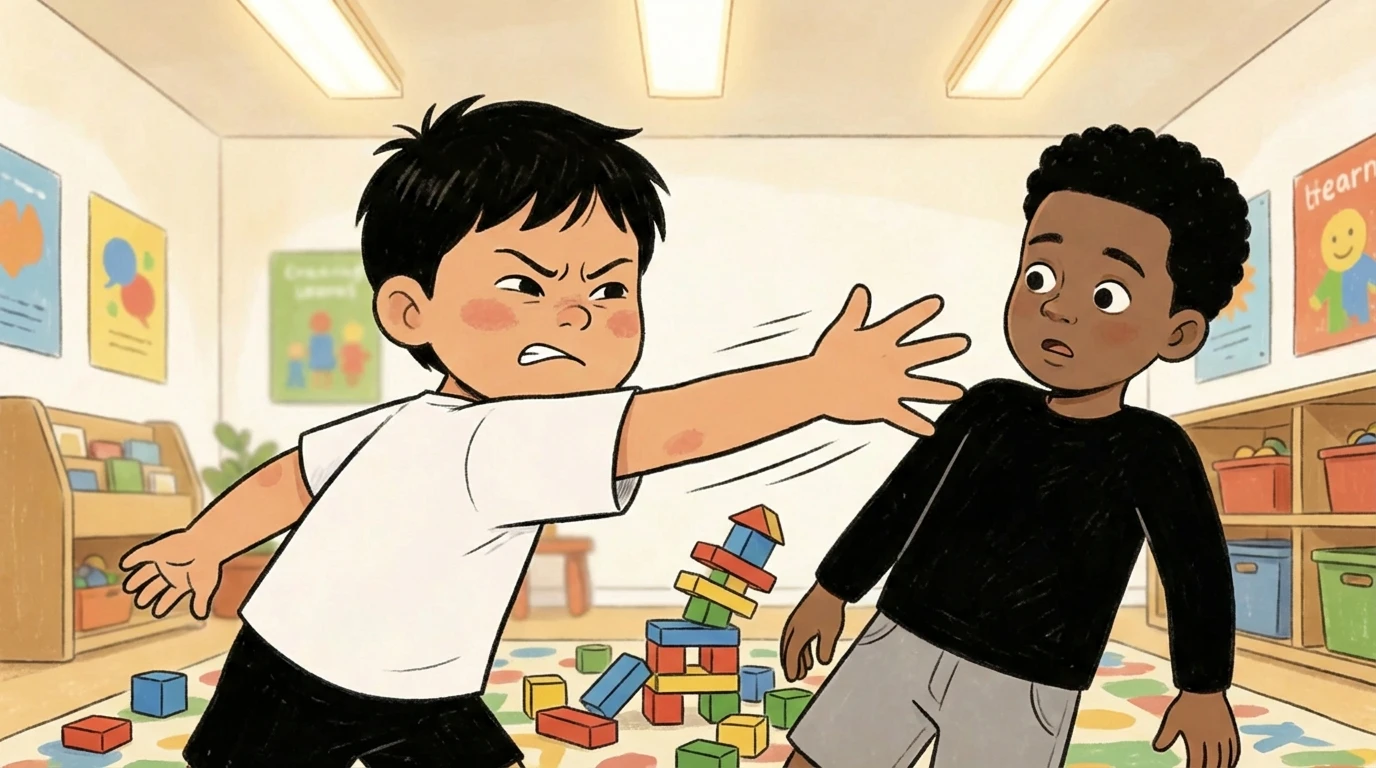
Your kid plays beautifully at home. Shares snacks with the dog. Gives you unprompted hugs. Then you get the daycare incident report, and you think: who is this tiny person?
The sweet one is still in there. The problem is that peer play asks more of a toddler's brain than almost any other situation. At home, your child handles one or two familiar adults who adjust to them constantly. At daycare, they share space, share toys, read unpredictable social cues, and handle group chaos. All at once. And nobody in the room is adapting to make things easier for them the way you do at home.
Their cortisol levels measurably increase in group play. Research on toddler stress hormones shows that cortisol rises through the daycare day, peaking in the afternoon. This is the same chemical surge an adult feels during a work confrontation. Except your two-year-old has had zero practice managing it, and their brain will not have the hardware to manage it well for several more years.
The daycare incident report
The Beyond Hitting course will help you handle peer aggression from both sides
You'll walk into pickup knowing exactly what to say to the teacher and what to skip with your child.
What is happening in their brain
The sequence, almost every time:
- Your child is playing, things seem fine
- Something tips the balance: a grabbed toy, rising noise, feeling disconnected from you
- Frustration floods their system
- Their prefrontal cortex (the brakes) cannot stop what comes next
- They hit, push, or bite
Their nervous system has no other option. With that much input and that little self-regulation, hitting is the only thing their body can do. They are feeling something enormous and their body is doing the talking.
This changes your entire response. You are dealing with a brain that is years away from handling what you are asking of it, not a behavior problem.
The empathy gap
At 18 months, your child does not truly understand that other people have feelings. Even if the other child cries, your toddler does not grasp that they caused pain. Empathy develops slowly, and it is nowhere near finished in toddlerhood. The brain regions responsible for understanding another person's perspective are still under heavy construction through ages three and four.
What they do understand is cause and effect. They pushed, and something big happened. That feeling of having a massive impact on the world is exciting for someone who normally gets carried around and told what to do all day. For a small person with very little control over their own life, the discovery that their body can make things happen is intoxicating.

The shame spiral (yours, not theirs)
The daycare teacher pulls you aside. Another parent gives you a look at the playground. Your child smacks the birthday kid, and every adult in the room is watching to see what you will do.
The shame makes you want to overcorrect. Yell, grab your child, force an apology, prove to every watching parent that you take this seriously. That impulse is about managing your embarrassment, not helping your child.
When you react from shame, your child (already overwhelmed) feels your anger on top of everything else. More stress means more hitting later. You have just fed the cycle you are trying to break.
What the other parents think does not matter
The right response to hitting looks underwhelming from the outside. It looks too soft. It also works. Pick your priority. The parents who judge you for not yelling are the same ones who will be dealing with these same problems in six months. You are playing a longer game.
The prevention playbook
Stay within arm's reach
For the next few months, every time your child plays with other kids, sit right there. Not across the room. Right there. Close enough to intercept.
Your closeness helps your child feel connected and safe, reducing the stress that triggers hitting. And you can catch it before it happens. When you see the tension building (the tight jaw, the raised hand, the body leaning in), you can redirect before anyone gets hurt.
Brief your child beforehand
Before you walk in: "We are going to Maya's house. If you want a toy someone has, come tell me. If you get mad, come tell me. If you hit, we leave right away."
Keep it matter-of-fact. You are informing, not threatening. Knowing what to expect makes the situation less overwhelming.
Limit group size
If your child hits more in groups, scale back to one-on-one playdates with a calmer kid. This is meeting your child where their social development is.
When hitting happens: the response protocol
Step one: breathe. One breath. You need your brain online first.
Step two: tend to the other child. Check on the kid who got hit. This models the empathy you want your child to develop. "Are you okay? That hurt. I'm sorry that happened."
Step three: remove your child. Pick them up, move away. Hold them while you apologize: "He is still learning. We are going to take a break."
Step four: leave. No "one more chance." You said hitting means leaving. So you leave. Every time.
How to respond when your child hits at a playdate
- Take one breath firstBefore you move or speak, take a single breath to get your own nervous system under control. You cannot regulate your child if you are dysregulated yourself.
- Check on the other childTend to the child who was hit before addressing your own. Say out loud what happened and that you are sorry. This models empathy in real time.
- Remove your child calmlyPick up your child or take their hand and move them away. Hold them close. Say: 'Hitting hurts. We need to take a break.' Keep your voice flat and steady.
- Leave without negotiatingIf you said hitting means leaving, leave. Your child will cry. That is expected. The crying lets them process the feelings that caused the hitting.
- Talk about it later at homeWait at least an hour. Then say: 'You hit Maya today. You were feeling really mad. Hitting hurts. Next time, come find me.' Practice the alternative together.
What to say after (and what not to say)
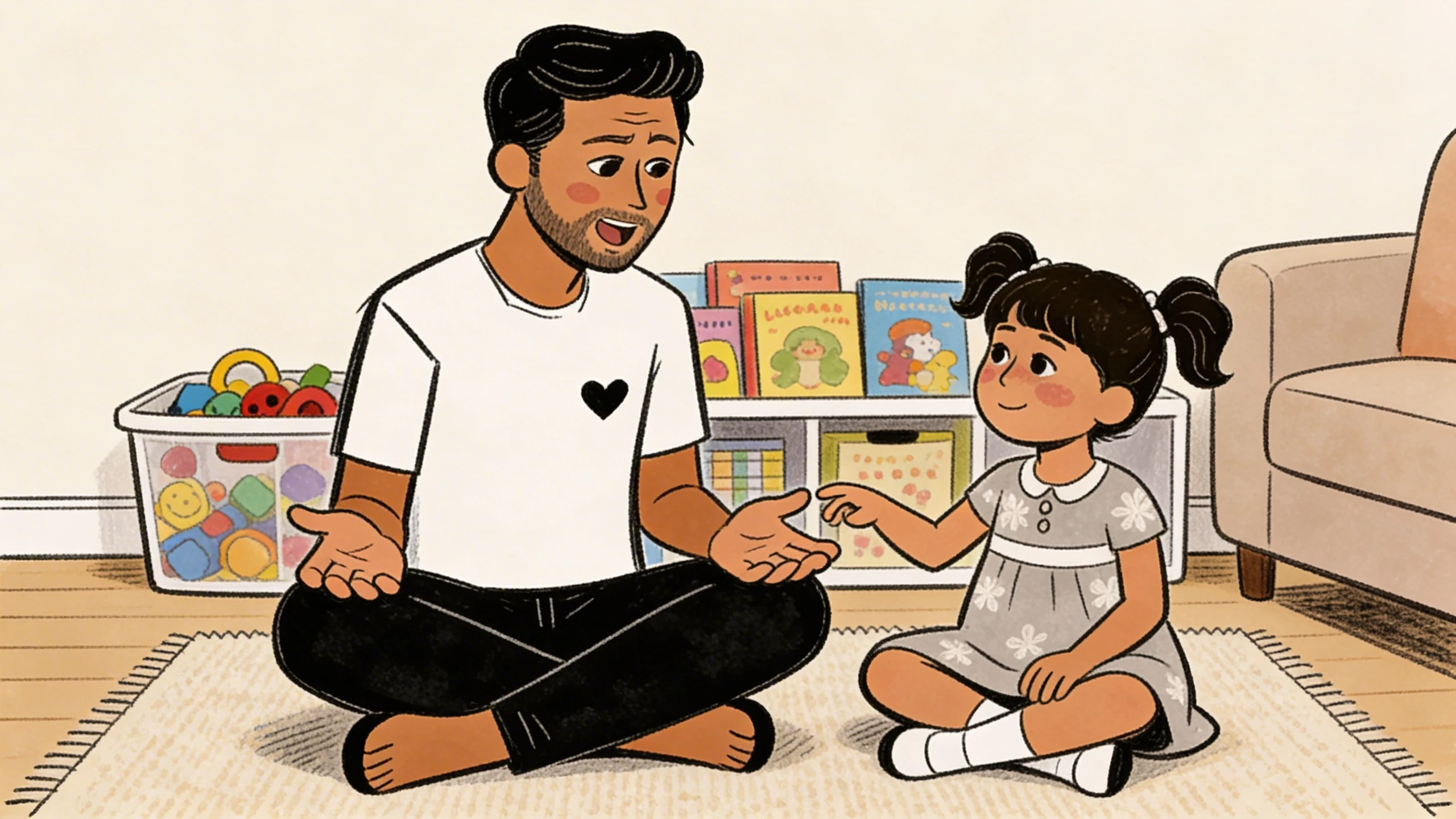
When everyone is genuinely calm, revisit what happened.
Say: "You hit Liam today. You were frustrated because he took the truck. Hitting hurts his body. Next time you feel that mad, come tell me and I will help."
Do not say: "We do not hit." (They know. They cannot stop themselves yet.) "Say sorry." (Forced apologies teach performance, not empathy.)
Practice the alternative
Sit on the floor and role-play. "Pretend I took your toy. What could you do instead of hitting?" Help them practice saying "Stop!" or "Mine!" or running to get you. Do this when everyone is happy, not as a consequence. You are building a new neural pathway through repetition in a calm state.
The pushing game
This sounds counterintuitive, but it works. At home, invite your child to push you. "You cannot push other kids, but you can push me." Let them push you hard. Fall over dramatically. Make it silly.
Your child has a legitimate need to feel physically powerful. The pushing game gives them a safe outlet. The laughter releases the tension that would otherwise come out as hitting at daycare tomorrow. You can also try pillow fights, wrestling on the bed, or letting them "knock you down" with a running start. The key is that they feel strong and you are both laughing.

When to get more help
Most peer aggression resolves with consistent intervention over a few weeks. Talk to your pediatrician if the hitting is getting more frequent despite consistent effort, if your child hits in calm moments (not just when overwhelmed), or if the aggression comes with extreme rigidity, sensory sensitivities, or language delays.
Getting help early means you are paying attention.
FAQ
Not completely, but scale back. Switch to one-on-one playdates with calmer kids, keep sessions short, and stay within arm's reach. Your child needs peer practice to build social skills, but in doses they can handle.
They are probably not the only one. But even if they hit most often right now, that reflects brain development and temperament, not character. Ask the daycare about their response protocol and whether they stay close during transitions and free play.
Forced apologies teach performance, not empathy. Model the apology yourself while holding your child. Later, help them choose a repair action: a hug, a drawing, or a kind gesture they pick themselves.
This fear is worth addressing directly with caregivers. Ask for a meeting, share your home strategies, and request consistent language. Most teachers understand toddler development and will not label a two-year-old a bully if they see you working on it.