TLDR
- The bully label makes behavior worse. Children who believe they're bad have less motivation to try being good. Labels create identity, and identity drives behavior.
- Punishment teaches might makes right. Time-outs and physical discipline model exactly the power dynamic you're trying to eliminate. Kids learn both sides of every interaction.
- Stay physically close during play. Your proximity reduces your child's stress and lets you intervene before aggression happens. This is prevention, not hovering.
- Leave immediately when hitting happens. Ending the playdate is a natural consequence, not a punishment. No lecture needed. The loss of fun teaches the lesson.
- Giggling releases the fear driving aggression. Physical play like wrestling and pillow fights lets kids process the anxiety that causes lashing out. Tickling doesn't count.
The word nobody wants to hear
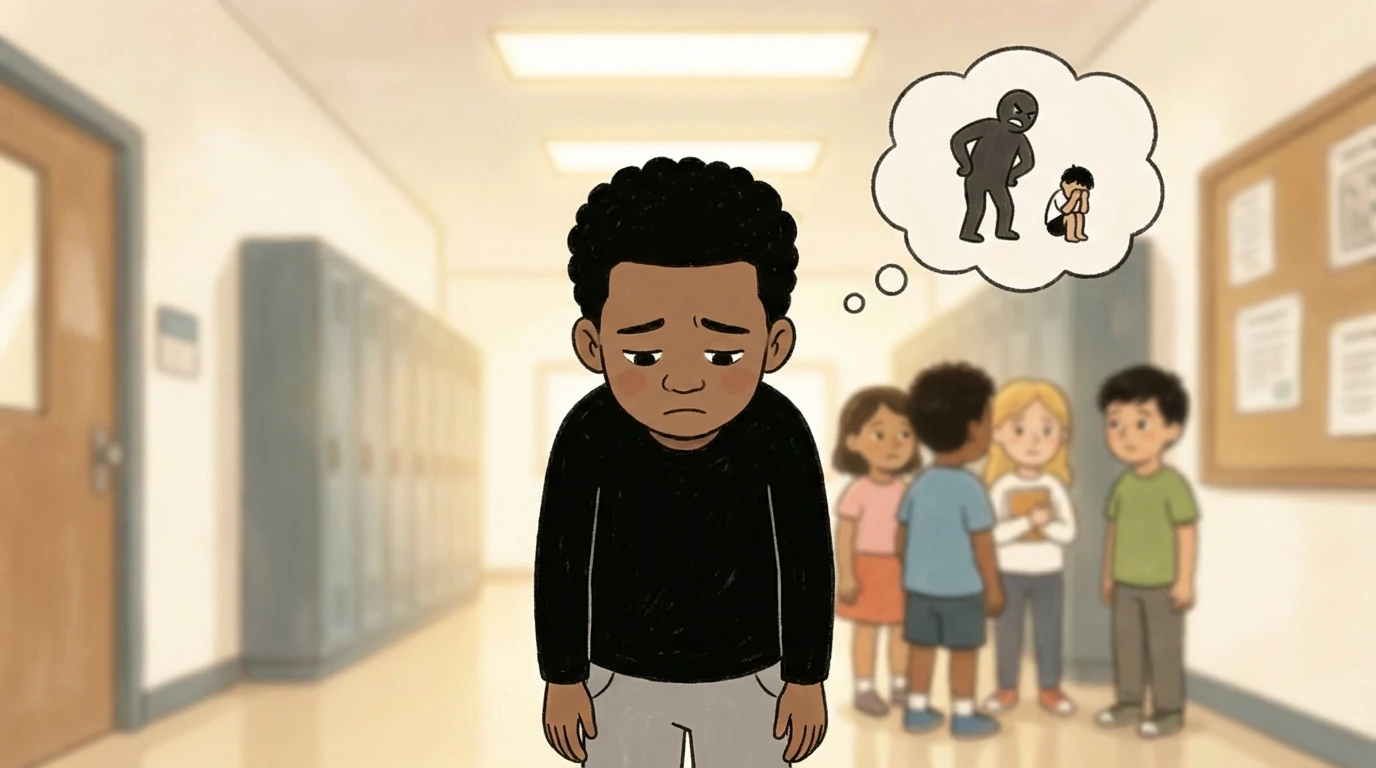
Someone called your kid a bully. Maybe it was a teacher pulling you aside at pickup. Maybe another parent said it within earshot at the playground. Maybe you overheard it in a group chat you were never meant to see.
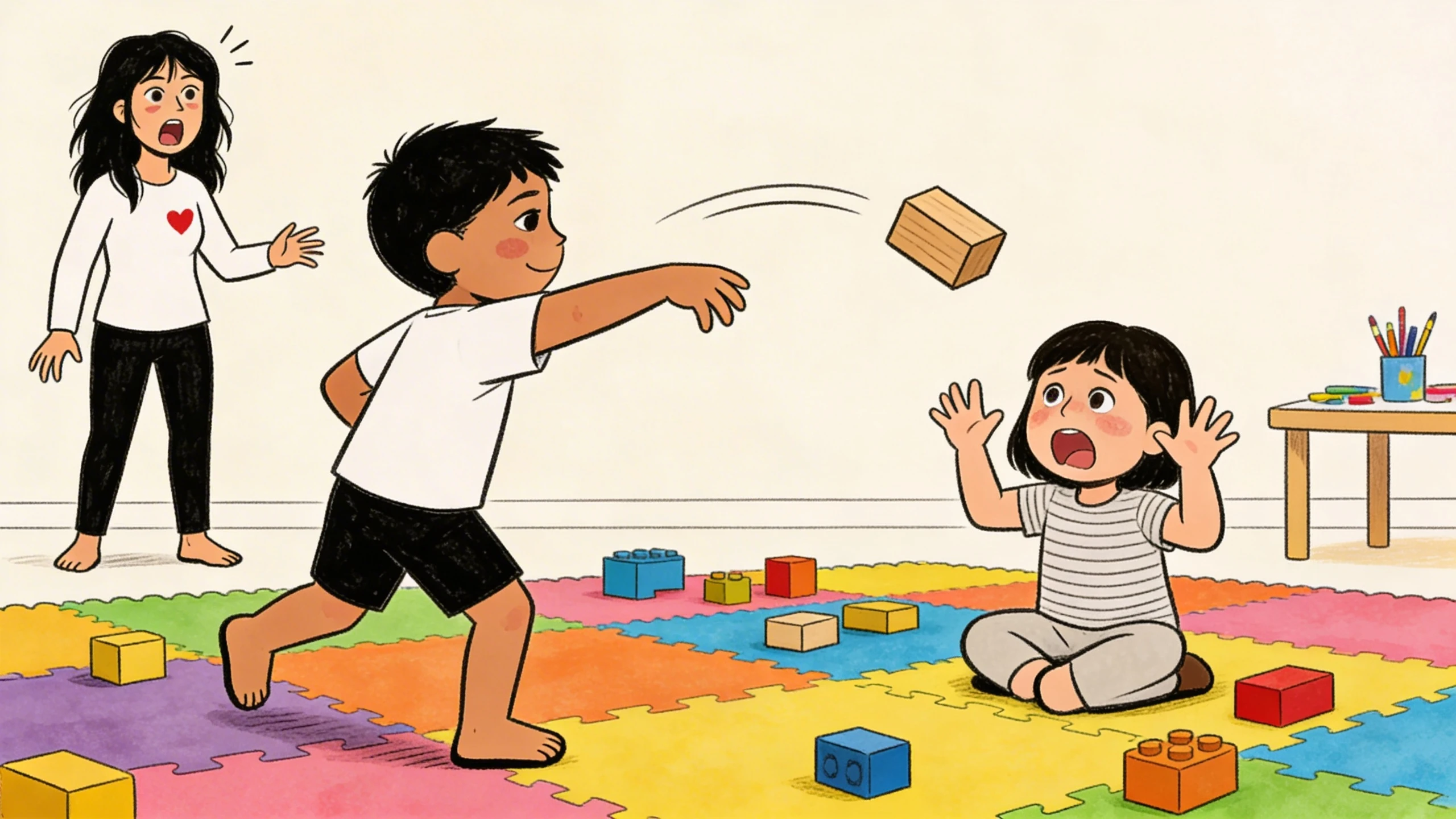
The word sits in your chest like a brick. You know your kid. You know the silly dances and the stuffed rabbit tucked in at night. How do you square that with the child who just shoved someone off the slide?
Your child almost certainly lacks the intent required for the word "bully" to mean anything. Before age seven or eight, kids are still building the brain architecture for impulse control. The empathy circuitry, the part that would make them stop and think wait, that hurt, is under construction.
That distinction will change everything about how you respond. And how you respond will determine how fast this phase ends.
Called the bully
The Beyond Hitting course will help you change the behavior behind the label
You'll address what your child needs so the label stops defining them at school and at home.
Why the label is the first thing to fix
The language you use about your child's behavior shapes their identity. Say "he's a bully" enough times and the child absorbs it. Kids who feel labeled as bad have less reason to try being good. Why bother? The verdict is already in.
Swap the framing. "He's learning to control his temper" implies a skill being developed, a direction of travel. One framing is a prison sentence. The other is a construction project.
This applies to how you talk to teachers, other parents, your partner, and yourself. The child who senses their parent views them as someone defined by shame will perform accordingly.

What's driving the behavior
It feels powerful (and they're small)
Your kid spends most of their day being told where to go, what to eat, when to sleep, and how to sit. When they push another child and that child falls down, something clicks: I can make things happen. The feeling is intoxicating for someone who normally feels pushed around by the world.
Play is overwhelming
Playing with other kids forces a child to share toys, read social cues, and manage excitement, all at once. Cortisol levels spike during group play. A stressed, overstimulated child with underdeveloped impulse control is a child who hits. Add three kids, a contested dump truck, and thirty minutes of chaos? Different story.
Bottled-up feelings need an exit
Kids who hit often have intense emotions and nowhere to put them. The aggression is the pressure valve. When a child can't tolerate their sad and mad feelings and hasn't been given tools to express them, the body takes over. Fists fly because words aren't available yet.
The punishment trap
Every time you use physical force or imposed consequences to stop aggression, you're teaching two lessons: people with more power can push smaller people around, and physical force solves problems. This is the exact logic behind bullying.
Time-outs do the same thing in a subtler package. When you physically make a child stay in one place, they experience being pushed around. Children who feel pushed around push others around.
You set limits, but with empathy. The limit stays firm. The delivery changes.
The playdate protocol
How to handle aggression during play
- Stay within arm's reachFor the next few months, sit right beside your child during every play interaction. Your proximity reduces their stress and lets you physically step between kids before contact happens.
- Brief them before arrivalDescribe what will happen: who will be there, what toys are available, and what the rules are. Say the consequence calmly ahead of time: if you hit, we leave right away.
- Tend to the other child firstWhen hitting happens, go to the child who got hurt. This protects the victim and teaches your child that hitting doesn't earn attention. Model the apology while holding your child.
- Leave immediatelyNo second chances during this phase. Pick up your child, state the boundary once ('pushing hurts, we can't play when you push'), and go. The lost fun is the consequence.
- Name the feelings in the carOn the way home, acknowledge the emotion: 'You're so mad we had to leave. It's hard when you're little. Next time you can tell me when you're upset instead.'
The pre-event briefing matters more than most parents realize. Before you arrive, tell your child what to expect: who will be there, what the rules are, and what happens if they hit (you leave immediately). Kids who know the plan feel safer, and safer kids hit less.
Tell other parents what's happening. Something like: "My kid is going through a phase where he gets aggressive, and I'm working on it by staying right next to him." Accept that adult conversation is off the table during this stretch.

Building the skills they're missing
The pushing game
This one sounds counterintuitive. Say: "You can't push other kids, but you can push me. Let's play the pushing game." Let them push against you. Let them push you over. Make it ridiculous. Fall dramatically. They'll laugh, and that laughter matters.
The child gets to experiment with force and power in a context where nobody gets hurt. Play this daily. When they lose interest (probably after a couple of months), the developmental need has been met.
Teach when calm, remind when upset
Anger management tools only work if they're practiced during good moments. Try making "mad faces" together during a silly afternoon. Give them a squeeze ball and explain it's for filling up with mad feelings. These techniques are useless if introduced mid-meltdown. The teaching sequence is everything: learn it when happy, access it when flooded.
If you find yourself struggling with your own reactions to these moments, that's worth paying attention to. Your regulation sets the ceiling for theirs.
Point out feelings everywhere
Throughout daily life, narrate other people's emotions. "Look, that kid is crying. I wonder what happened." "That child fell down, ouch. Should we check on them?" Every one of these small moments builds the empathy circuit that will, over time, make aggression feel wrong to your child from the inside.
The reason we don't hit is that we feel for other people. You can't lecture empathy into existence. You model it, over and over, until the wiring takes hold.
When the behavior happens at school
If your child is getting in trouble for hitting at daycare, work with the teachers. Ask them to track what triggers the hitting. Is it before lunch? After drop-off? When the room gets crowded? Use the same language at home and school: "He's learning to control his temper."
Look at the bigger picture too. Some kids in full-time care need more downtime or they get overwhelmed and start swinging. A major study found a 9% increase in aggressive behavior for each hour of daily TV watched by kids under four. Cut screens, add outdoor play, push bedtime earlier.
The other side of the phone call
If another parent calls to tell you their child was hurt by yours, resist the urge to defend. Listen. Thank them. Ask what happened.
Then talk to your child with curiosity, not anger. "What happened with Maya today? Were you upset?" Help them connect the feeling to the action. "You pushed because you were mad. Pushing hurt her. Next time, what could you do instead?"
You're building a pathway from feeling to words, replacing the pathway from feeling to fists.

This phase ends
Four-year-old aggression feels permanent when you're in it. Every playdate is a minefield. Every phone notification might be another parent complaint.
But this is a developmental stage, not a character trait. The impulse control hardware comes online. The empathy wiring connects. The child who pushed everyone at three becomes the seven-year-old who comforts a crying classmate.
Your job right now is to hold the image of your child flourishing, even on the days when that image feels delusional. Stay close. Set limits without shame. Play hard.
FAQ
Children under seven or eight lack the intent required for true bullying. They're experimenting with physical cause-and-effect and struggling with impulse control. The behavior is developmental, not a character flaw. How you respond now determines how quickly they develop the empathy and regulation to stop.
Punishment (including time-outs) teaches children that bigger people can push smaller people around, which reinforces the exact behavior you want to stop. Instead, end the play session immediately as a natural consequence and process the feelings afterward with empathy and clear limits.
With consistent intervention (staying close during play, ending sessions when hitting occurs, building emotional skills daily), most children show significant improvement within a few months. If you commit fully and see no change after three to four months, consider a professional evaluation.
Be direct and proactive. Tell them your child is going through a phase where they get aggressive and that you're actively working on it by staying close. Accept that you'll get limited adult socializing during this stretch. Other parents respect honesty far more than denial.
The opposite. Wrestling, pillow fights, and physical games that produce giggling help children release the anxiety driving the aggression. The key difference is laughter: if they're giggling, the play is therapeutic. Tickling doesn't count because it triggers a different neurological response.