TLDR
- Biting is a stress response, not a character flaw. When toddlers feel tension, the mouth is where it lands first. Biting discharges frustration or overstimulation before they have words for it.
- Your child doesn't know it hurts you. Babies and young toddlers don't connect biting with your pain. A calm 'no' doesn't communicate that. You need to show them.
- Cry like you mean it. Put the child down, cry dramatically, say 'OUCH, biting HURTS.' Kids understand crying. They don't understand lectures.
- Redirect to a teether, don't just say stop. Some kids have a physical need to bite. Give them something acceptable to chomp on instead of eliminating the urge entirely.
- The laugh after biting isn't mockery. When your toddler laughs after biting you, they're discharging tension, not enjoying your pain. Misreading this leads to harsher responses.
Why your toddler just sank their teeth into you
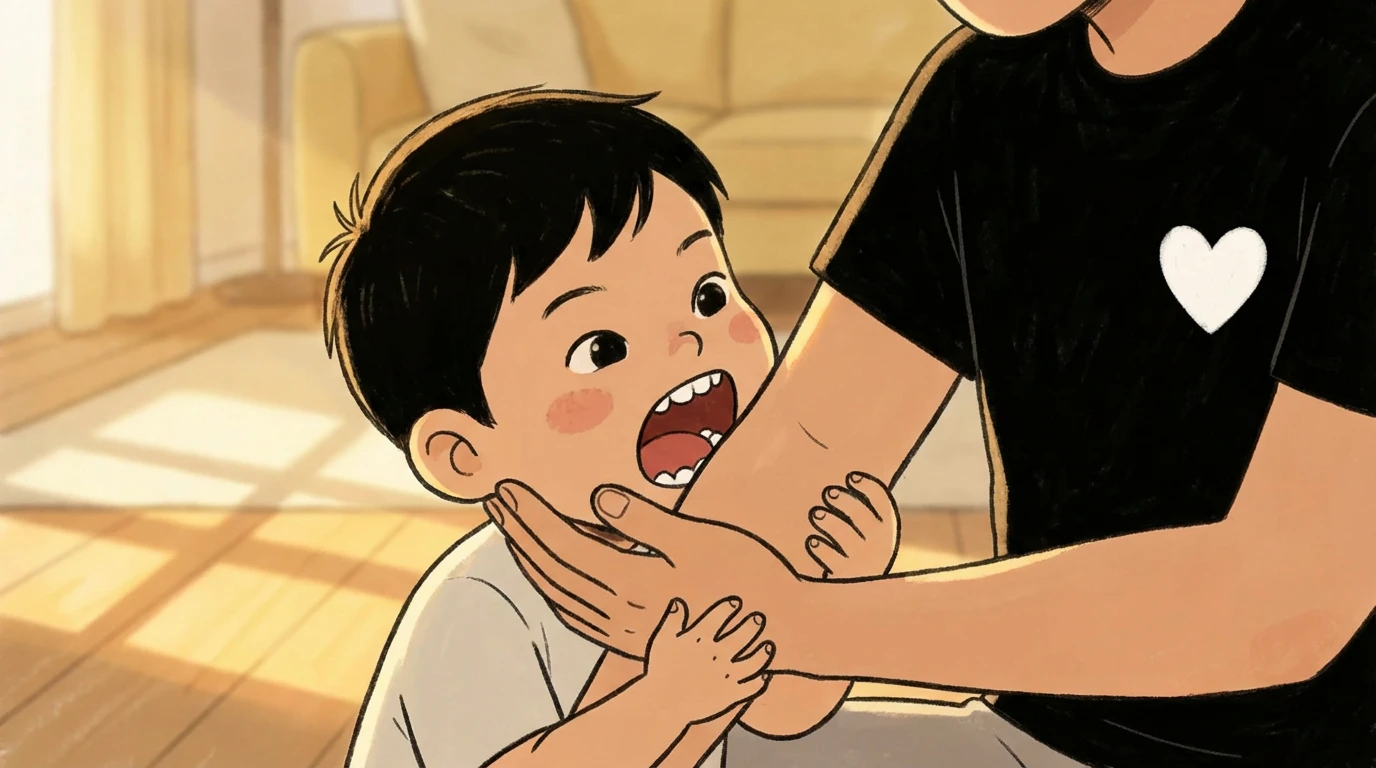
Your toddler bit you and you're holding your arm thinking, "What is wrong with this child?" Nothing. Nothing is wrong with this child.
When humans feel tension, the mouth is the first place it lands. Think about your own stress responses: jaw clenching, teeth grinding, lip biting. Your toddler has the same wiring with none of the self-control. Their mouth tenses up and your forearm happens to be right there.
Biting falls into a few categories, and knowing which one changes everything.
Exploration biting
Babies and young toddlers learn about the world through their mouths. When your 10-month-old bites you during a snuggle, they're running an experiment. What happens if I chomp this warm thing? For most exploratory biters, one or two honest reactions end the experiment permanently.
Frustration biting
This is the big one. Your toddler wants the blue cup. You gave them the green cup. They have roughly 12 words and "I'm experiencing a disproportionate emotional response to drinkware color" isn't in there yet. So they bite. The bite is the sentence they can't say. This is a normal part of toddler social development, not evidence you're raising a tiny villain.
Connection biting
You're on your phone. Your toddler bites your knee. Translation: "Hey. I'm right here. Look at me." The behavior is unacceptable. The need behind it is legitimate.
Teeth marks again
The Beyond Hitting course will break the biting cycle before it sets in
You'll spot the jaw clench early and redirect without yanking them away or losing your composure.
The thing nobody tells you about "no"
Here's what makes the biting phase drag on: your child does not understand that biting causes you pain.
When you say "no," your baby laughs and bites again because they think you invented a game. Say it louder and they cry because you're clearly angry, but they have no idea WHY. Even once they connect your anger to the biting, some kids treat it as a dare.
Only when a child understands that you HURT when they bite are they likely to stop. Anger doesn't communicate pain. Sternness doesn't communicate pain. You know what does? Pain.

How to respond when the bite lands
How to stop biting in the moment
- Push in, don't pull awayYour instinct is to yank your arm back. Don't. Push gently into their mouth instead. They'll open up and release. Pulling away drags teeth across skin and worsens bruising.
- Put them down immediatelyIf you're holding them, set them down. Not punishment, it's the natural consequence of biting the person holding you. The physical separation is the message.
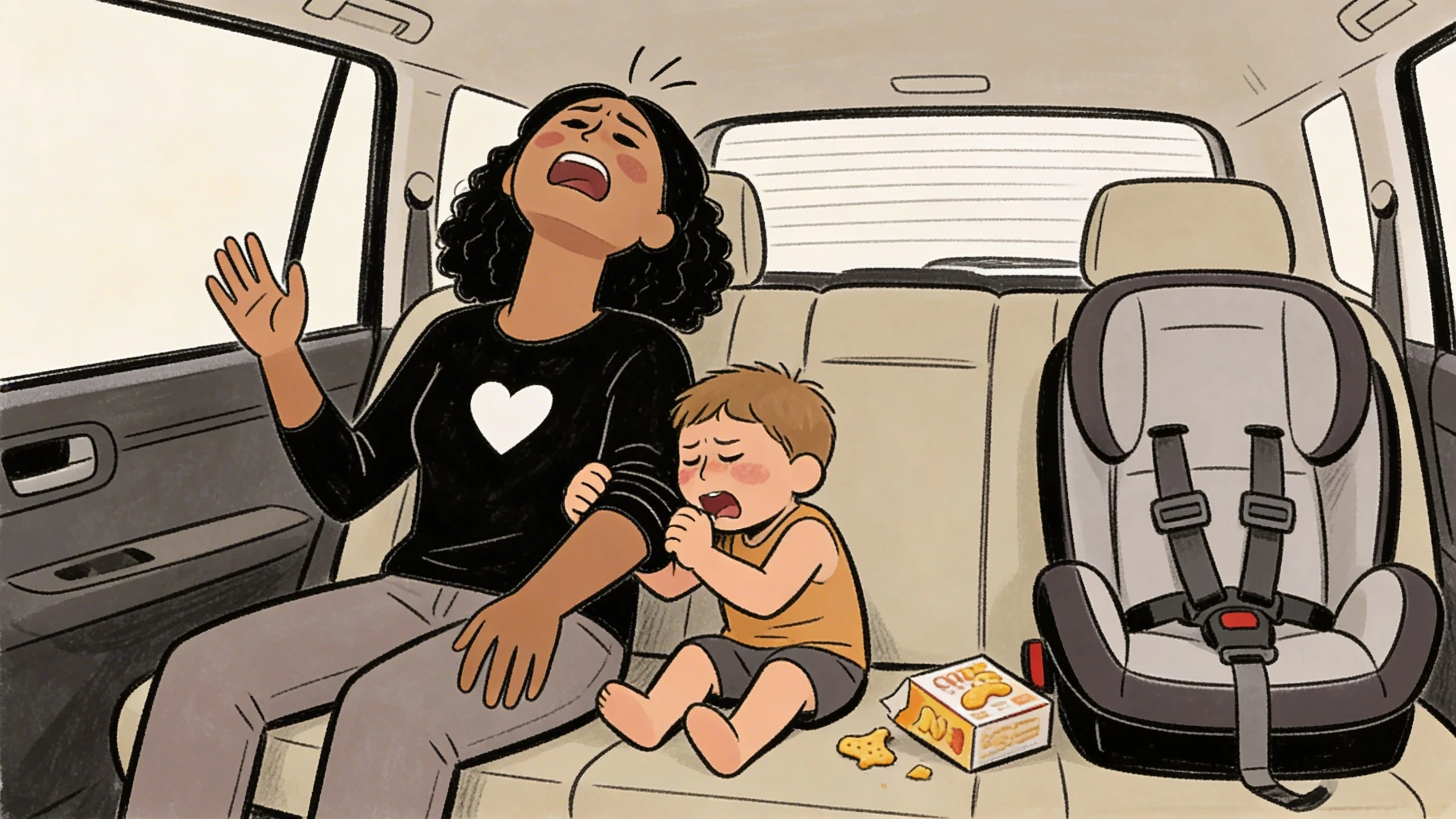
- Cry like it really hurtsBecause it does. Sob dramatically. Say 'OUCH, biting HURTS' through the crying. Even babies get upset when someone cries. This is the fastest way to connect biting with real pain.
- Ignore them for one full minuteFocus on where you were bitten. Don't look at them. Let them sit with the weight of what happened. Do NOT leave the room. Walking away triggers abandonment panic that overwrites the lesson.
- Reconnect and name itAfter a minute (they may be crying too), pick them up. Say: 'I'm okay now, but biting hurts. You hurt me. We never bite. Can we hug instead?' Then hug them.
That reconnection matters. You're showing them relationships can absorb damage and repair. The sequence: this hurt me, I need a moment, now we come back together.
What NOT to do
Don't bite them back. (Yes, people suggest this. Modeling the exact behavior you want to stop does not work.) Don't use timeout. Don't make them bite soap. Don't yell.
And the counterintuitive one: do not stay calm and clinical. The common advice is to avoid strong reactions so you don't "reward" the behavior with attention. But ignoring biting doesn't help them distinguish between sensory needs and frustration responses. Your honest reaction is the teaching tool. Kids who see real pain learn faster than kids who get a controlled, therapist-voice "we don't bite."
When biting happens at daycare
Daycare biting is its own special parenting stress. You get the incident report, feel the shame, and wonder if your kid will get expelled from a place that serves goldfish crackers and fingerpaints.
The mouth tenses first in crowded, noisy rooms too. If your child bites during free play when the room is loud and kids keep bumping into their stuff, that's overstimulation, not aggression. The triggers are predictable: someone knocks over their tower, grabs their toy, or invades their space.
Talk to the teachers about three things:
Space. Some kids need a personal bubble during free play. Not isolation, just an out-of-the-way spot where others won't crowd them. Especially true for kids sensitive to group chaos.
A support shadow. A staff member who stays near your child during high-risk moments, not to catch them being bad, but to prompt words before teeth. "It looks like you're worried someone will knock your tower. Can you take a deep breath?"
Positive reporting. Your child probably uses words successfully dozens of times for every bite. Ask the teacher to share the wins in front of your kid. That attention builds the behavior you want.
The redirect that works
Some kids have a strong oral need. They're going to bite something. Your job is to make sure it isn't a person.
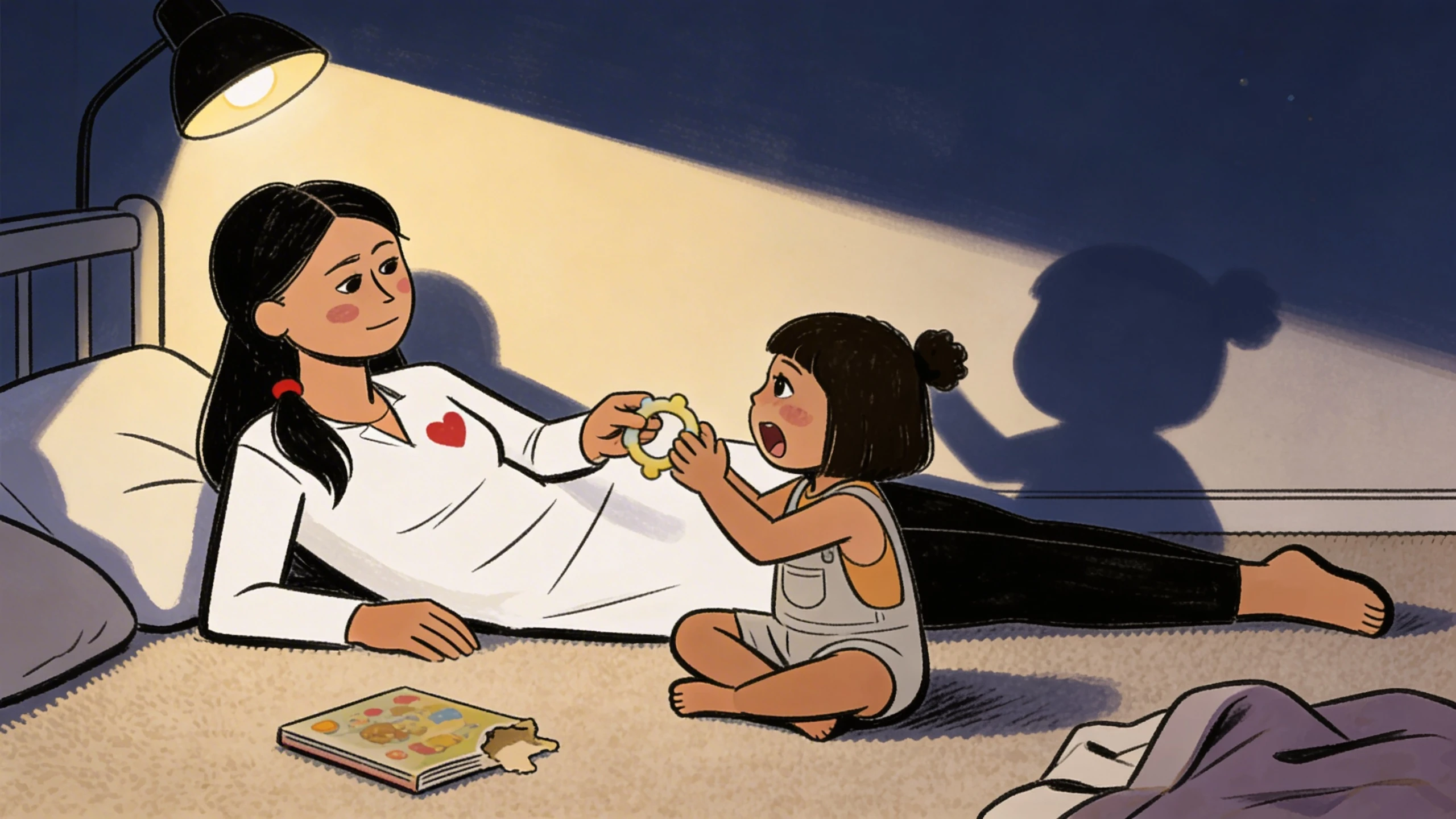
Keep a teether accessible at all times. Clip it to a pacifier leash (not around the neck). When you see tension building, put it in their hand: "Teethers are for biting. People aren't for biting." One parent gave their daughter beef jerky when the biting mood hit. The biting stopped completely. The sensory need was real, it just needed an acceptable target.
This works because you're not suppressing an urge. You're redirecting it. Redirection beats suppression every time with young children. Their impulse control is years from "just stop." Setting a clear limit on biting people while giving them something they CAN bite is the move.
The feelings underneath the teeth
Sometimes biting isn't about teething or frustration or sensory needs. Sometimes your child is sitting on feelings they can't get out.
If your child bites and then laughs, they are not mocking you. The laugh is a tension-release valve, their body discharging the emotional pressure that caused the bite. Misreading this as defiance pushes you toward harsher responses that make everything worse.
When you suspect stored-up feelings: set your limit in a kind voice, get down to their level, and say: "No biting. What's going on, sweet pea?"
If they look away, stay with it. Eye avoidance means feelings are near the surface. With gentle persistence, tears will come. Let them cry. That cry is the pressure valve releasing. After a good cry, they won't need to bite because the tension driving it is gone.

Practice when everyone is calm
You can't teach a drowning person to swim. Same principle: mid-bite is the worst time to introduce new skills.
Role-play at home. "Let's play school. Pretend you bump into me like Charlie does. I'm going to say 'This is my space, please move.'" Make it silly. A relaxed brain absorbs new patterns better than a stressed one.
Tell stories about animals who want to bite but use words instead. Puppets work. Stuffed animals work. Repeating a simple phrase ("People aren't for biting") builds a verbal cue that fires automatically in the moment.
Get them laughing about it. Laughter helps kids work through tension and fear. The experience of biting and getting in trouble is loaded with shame. Playful rehearsal discharges that shame and makes the topic feel manageable.
The timeline (it's shorter than you think)
As your child gains words and impulse control, the biting stops. Every strategy here speeds up what development would eventually handle on its own. You're not fixing something broken, you're bridging a gap.
Most dedicated biters, with consistent responses, stop within a few weeks. Some within days. The key is consistency: same reaction, same redirect, same reconnection.
FAQ
No. Biting back models the exact behavior you want to stop. Young children learn by imitation, so biting them teaches that biting is what people do when upset. Showing genuine pain through crying communicates far more effectively.
The laugh is a tension-release mechanism, not enjoyment. Their body is discharging the emotional pressure that caused the bite. Responding with anger because you think they're mocking you escalates the situation instead of resolving it.
Usually no. Removing them eliminates the chance to practice managing these situations with support. Work with teachers on more physical space, a support shadow during free play, and consistent language to replace biting.
In toddlers and preschoolers, biting is normal developmental behavior. It peaks between ages 1 and 3 when children have big feelings and limited language. If biting persists past age 4 or intensifies despite consistent intervention, talk to your pediatrician.
With consistent responses (showing pain, redirecting to a teether, naming feelings, reconnecting), most children stop within a few weeks. Without intervention it can drag on for months. Language development naturally ends it, but you don't have to just wait.