TLDR
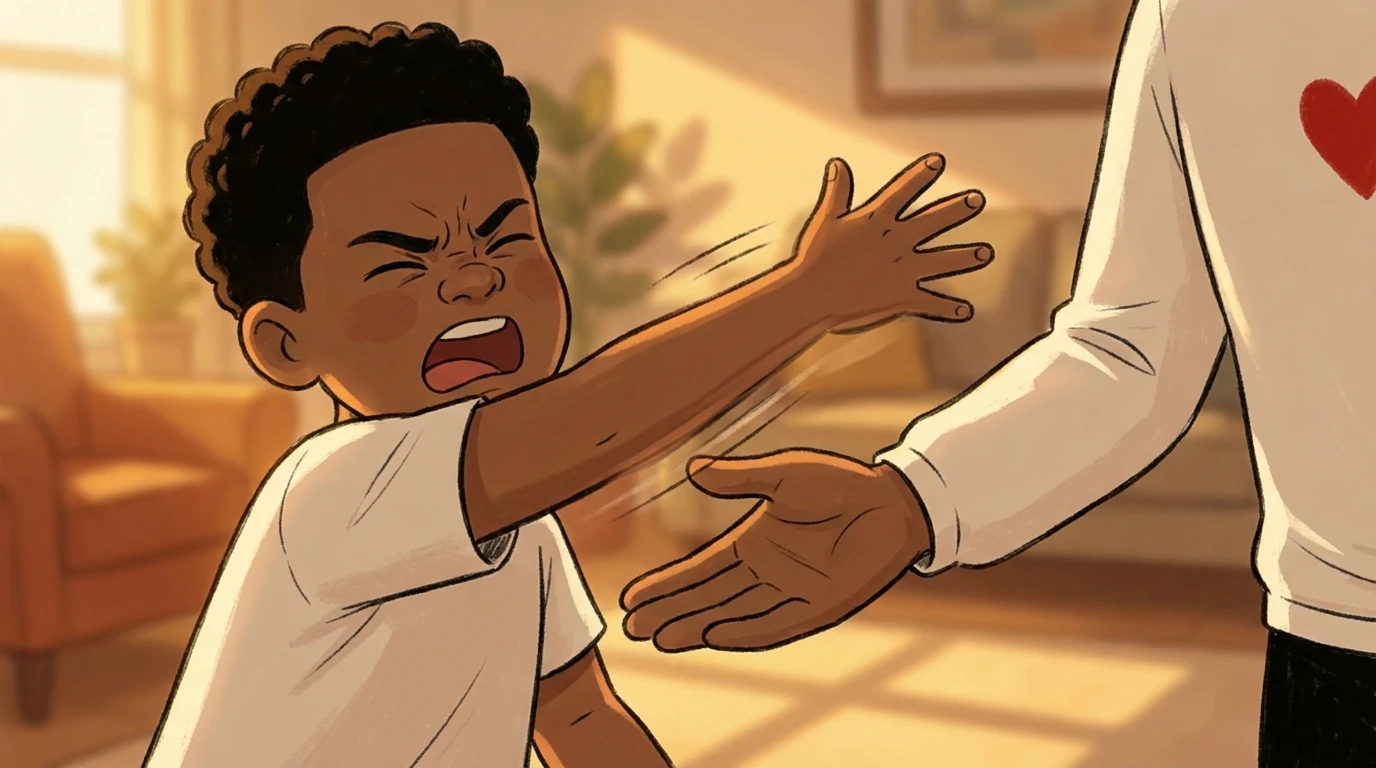
- Hitting is a brain development problem, not a character problem. The parts of the brain that manage impulse control and emotional regulation are under construction until at least age seven. At this age, kids are simply incapable of choosing not to hit.
- Your big reaction is fuel for the fire. Yelling, punishing, or giving a dramatic response teaches kids that hitting is the fastest way to get your full attention. Negative attention still counts.
- Calm yourself before you open your mouth. You cannot regulate a dysregulated child while you yourself are dysregulated. Breathe first. Intervene second.
- Validate the feeling, block the behavior. Say 'You're so mad' and 'I won't let you hit' in the same breath. The emotion is allowed. The action is not.
- Teaching happens hours later, not during the meltdown. Wait until everyone is calm and happy. Then revisit the incident, validate again, and ask your kid what they could do instead next time.
Their brain is still under construction
Here's what's happening inside your kid's skull when they wind up and smack their sibling across the face: almost nothing useful.
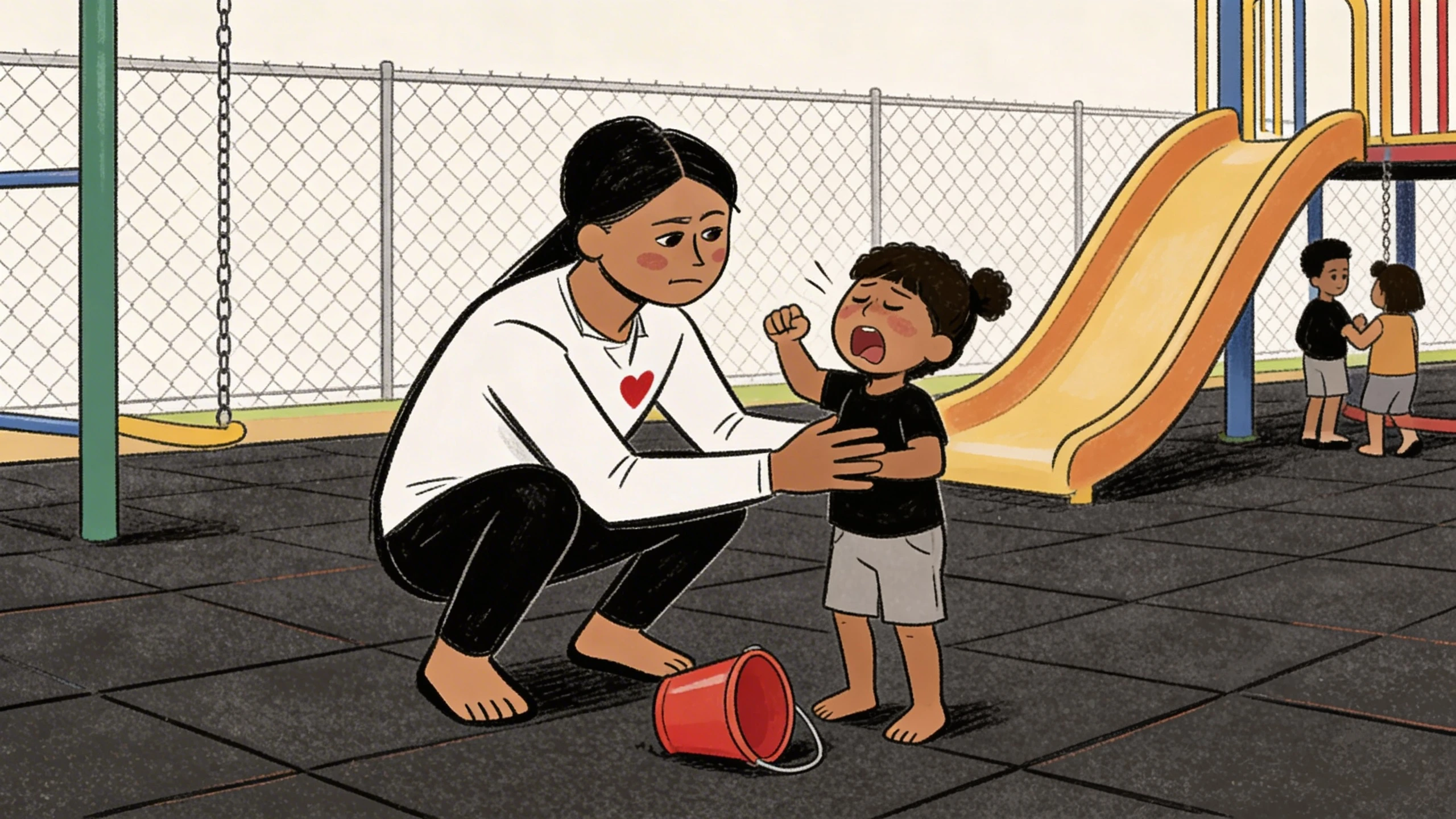
The prefrontal cortex, the region responsible for impulse control, won't be fully online for another twenty-plus years. The emotion centers? Those are firing on all cylinders from birth. So your toddler has a gas pedal and no brakes. They feel fury, frustration, jealousy, or overstimulation at full blast, and the part of the brain that would normally pump the brakes and say "maybe don't punch your brother" is basically a construction zone.
This means hitting is developmentally typical. Almost every toddler goes through it. Almost every parent of a toddler Googles "why does my kid hit me" at 11 p.m. with a bruise on their cheekbone. You're in good company.
The behavior is also closely tied to why tantrums happen in the first place. Big feelings hit the body before the child has any words for them. The body does what it can. Sometimes what it can do is smack you in the mouth while you're trying to put their shoes on.
Not all hitting is the same
Before you can respond well, it helps to know what's driving the behavior. A kid who hits because they're overstimulated by noise and chaos needs a different first move than a kid who hits because their sister took the last granola bar.
Frustration hitting
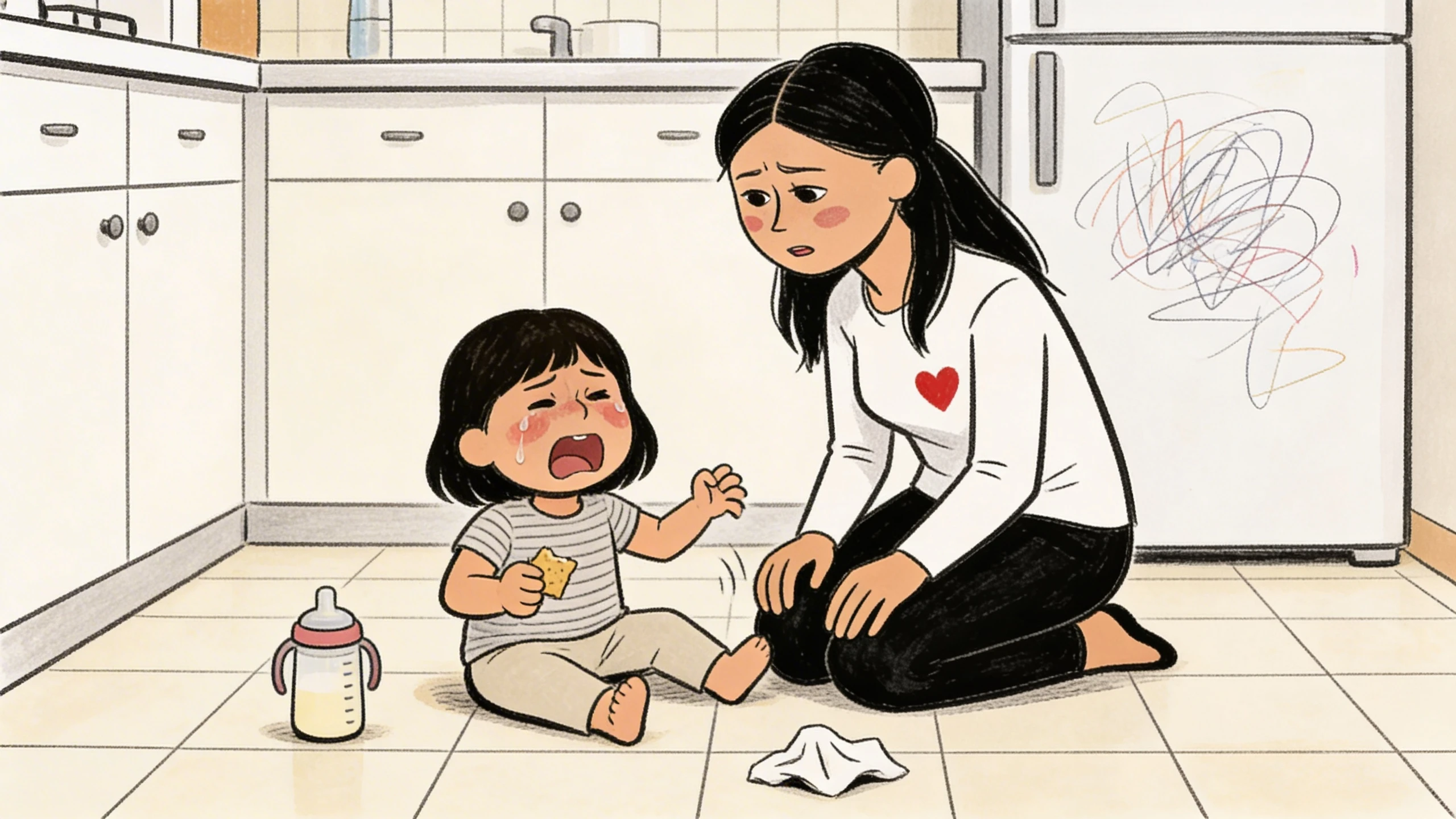
This is the most common type. Something happened that the child cannot tolerate, and they have zero tools to express it. The toy got taken. The cracker broke in half. You said no to the thing they wanted most in the world (the thing being, inexplicably, a raw onion from the grocery store). The feeling floods them, and their fist is the only release valve they have.
Sensory overload hitting
Some kids hit when the world gets too loud, too bright, too much. The nervous system goes into full fight-or-flight, and "fight" wins the coin toss.
Attention-seeking hitting
When a child learns that hitting produces an instant, intense reaction from you, they file that away. Negative attention is still attention. A parent who responds to gentle requests with a distracted "uh-huh" but responds to hitting with full eye contact, raised voice, and complete engagement has accidentally taught a very clear lesson about what works.
Asking why they hit
The Beyond Hitting course will connect the reason to the response
You'll read your child's buildup and know which response matches which trigger before the swing lands.
What doesn't work (and why)
So your kid hits, and every cell in your body wants to yell "STOP HITTING." Let's talk about why that backfires, along with a few other popular strategies that sound good on paper.
Yelling
The louder you respond, the more your child learns that hitting controls the emotional temperature of the room. You've handed them the thermostat. They will use it again.
Punishment and time-outs
Punishing a child for hitting typically makes the behavior worse, not better. When you put a kid in time-out after they hit, they might calm down on the outside. But the feelings that caused the hitting are still inside, stuffed down, waiting for the next opening. Punishment teaches three unhelpful lessons: "I'm a bad person," "My feelings are too much," and "Nobody will help me with this."
Ignoring it
The idea that you should ignore hitting so you "don't reward it with attention" misses something big. The child is already overwhelmed. When you add disconnection on top of that, they become doubly frustrated: the original feeling is still raging, and now they've also lost you. The behavior escalates.
What to do when your kid hits
Here's the part you came for. This is a three-step process, and the order matters. Skip a step and the whole thing falls apart.
How to respond when your child hits
- Get yourself calm firstBefore you open your mouth, take one breath. Remind yourself: this is a small person whose brain cannot do what I'm about to ask it to do. You cannot regulate a child who is dysregulated if you are also dysregulated. Calm is a prerequisite, not a bonus.
- Name what they're feelingGet on their level and say what you see: 'You're so mad because he took your toy.' This isn't optional. During a tantrum, your child cannot hear instructions. But they can hear that you understand. Feeling seen begins the de-escalation.
- Validate the emotion, not the actionSay it directly: 'It's okay to feel angry.' This is the hardest step for parents who were raised with 'stop crying or I'll give you something to cry about.' The feeling is allowed. Always.
- State and hold the boundary immediatelySay 'I won't let you hit' and then act. Move the other child to safety, or move your own body out of reach. If your child follows you to keep hitting, gently hold their hands: 'I'm going to hold your hands to keep everyone safe.' Say it once, hold it once. No six warnings.
- Repeat as neededYou may have to cycle through these steps multiple times during a single incident. That is normal. Go into broken-record mode: see the feeling, okay the feeling, hold the boundary. Stay boring and steady until the storm passes.
After the storm: teaching that works
Stopping the hitting in the moment handles the crisis. But if you stop there, the hitting will keep happening because your child still has no replacement skills.
Wait until everyone is calm
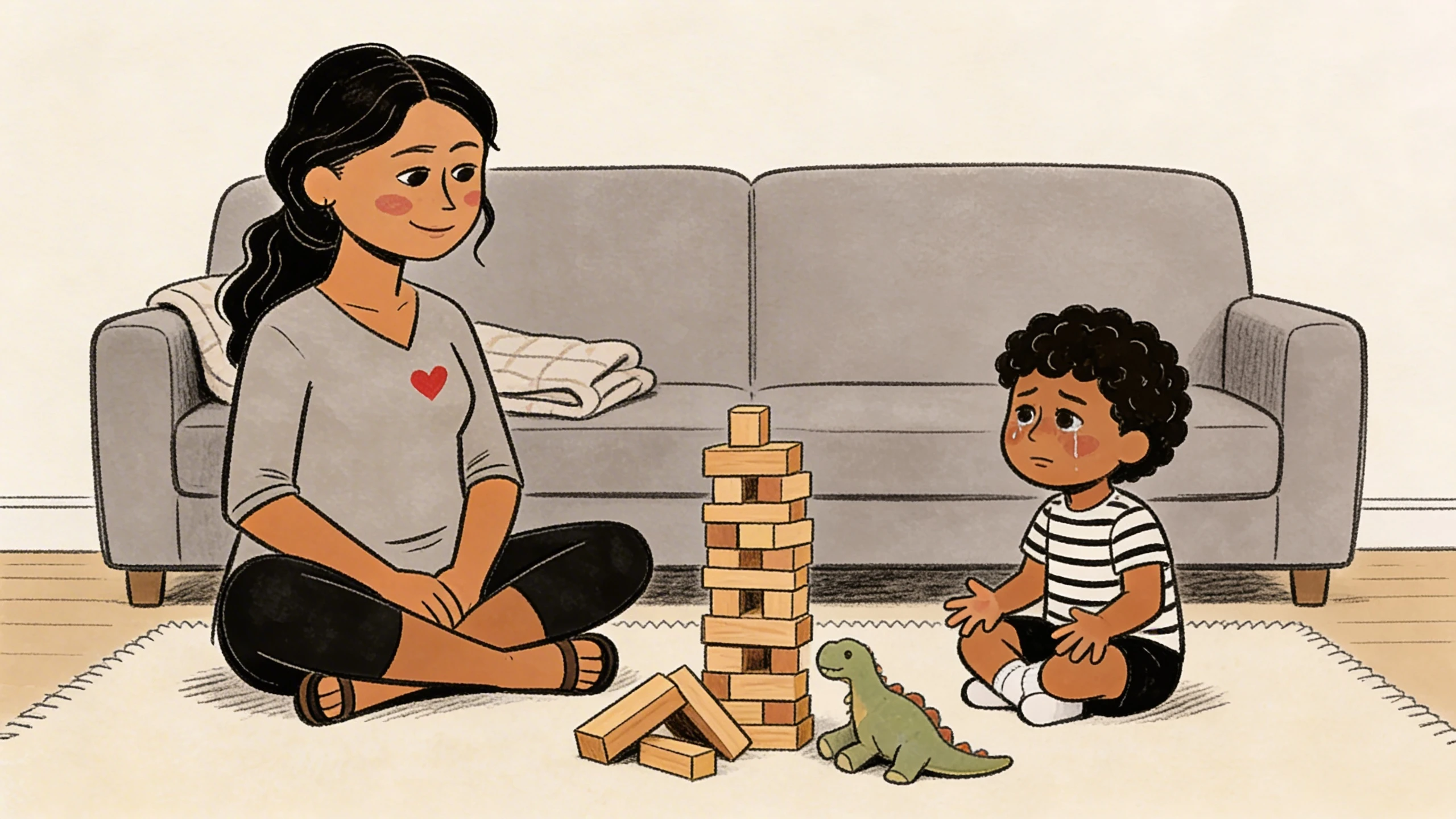
Teaching happens hours later, in a completely different emotional context. Not five minutes later while your kid is still hiccupping from crying. Wait until things feel normal again.
The conversation that builds skills
Here's a script that works: "Remember earlier when you were so mad because your sister took your truck? It's okay to feel mad. But hitting hurts, and we don't hit. When you feel that mad, what could you do instead?"
The magic is in the question. You're not lecturing. You're asking your child to generate alternatives. Kids who come up with their own ideas ("I could stomp my feet," "I could say I'm mad," "I could come find you") are far more likely to use those ideas than kids who get a list of rules handed to them.
Practice with role-play
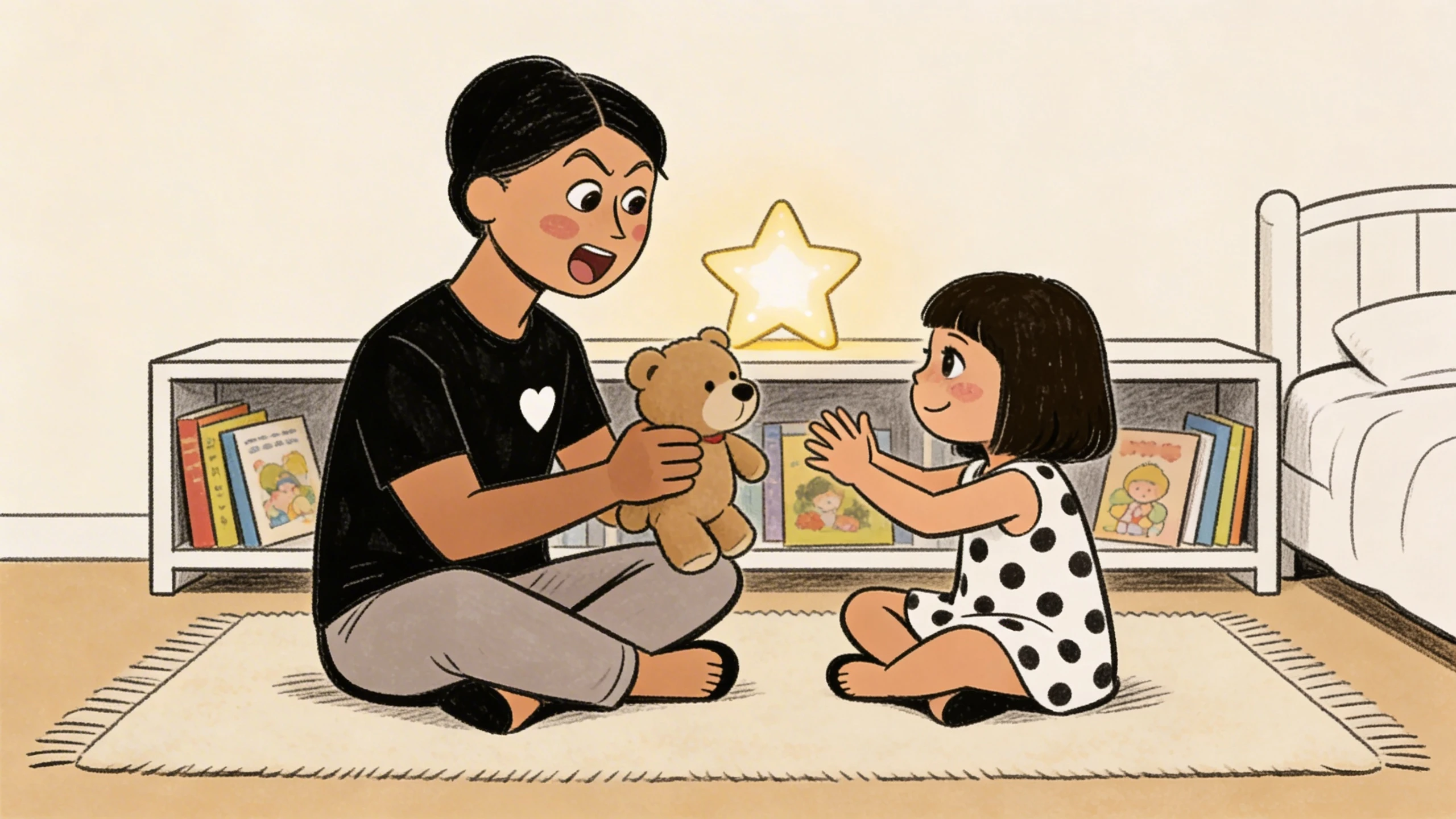
Take it one step further. "Okay, let's practice. Pretend this stuffed animal just grabbed your truck. You're really mad. What do you do?" Role-play builds the muscle memory of alternate responses, so when the real moment comes, your kid's body has somewhere else to go.
The long game
This approach is harder than yelling. It is slower than punishment. Your kid will test the new boundaries to see if you mean it (you do). There will be days when you do everything right and they hit anyway, because they are three and their brain is made of feelings and goldfish crackers.
But what you're building is something punishment cannot build. You're teaching your child that their feelings are real and allowed, that their actions have limits, and that when they mess up, someone will help them do better. That is how kids who hit become kids who don't.
Consistency is the price of admission. Pay it anyway.
FAQ
Yes. Kids hit the person they feel safest with. You are their safe person, which means you absorb the worst of their emotional overload. It is a sign of secure attachment, even though it does not feel like one when you're getting smacked in the face.
Forced apologies teach kids to say words they don't mean. Instead, after everyone is calm, help them see the impact: 'When you hit your brother, it hurt his body and his feelings.' Then ask what they could do to make it better. A hug, a drawing, a kind gesture they choose themselves carries more weight than a hollow 'sorry.'
Give it time. You are rewiring patterns, and that takes weeks of consistency, not days. If the hitting is frequent, intense, or combined with other concerning behaviors after several weeks of consistent effort, talk to your pediatrician to rule out sensory processing or developmental factors.
No. Giving attention during a tantrum does not increase tantrums, as long as your child also gets plenty of connection when they are not melting down. You are not rewarding bad behavior. You are being a safe person for a small human in crisis.