TLDR
- Panic attacks are a body event, not a behavior. The sympathetic nervous system fires a false alarm. Adrenaline floods the bloodstream. Your child isn't choosing this, and they can't think their way out of it mid-episode.
- They peak in about 10 minutes and resolve on their own. No intervention shortens a panic attack once it starts. Your presence and calm tone help your child tolerate it, but the chemical wave has its own timeline.
- Kids often think they're dying during an attack. Chest pain, tingling, dizziness, and a sense of unreality convince many children something is seriously wrong. Naming what's happening after the attack prevents the fear from compounding.
- Teens experience panic differently than younger kids. Teenagers are more likely to hide attacks, misinterpret them as heart problems, or avoid situations where one occurred. The avoidance pattern can shrink their world fast.
- Recurring panic attacks need professional support. A single panic attack is scary but common. Multiple attacks, especially with avoidance behavior between them, warrant a conversation with your pediatrician or a therapist.

What a panic attack looks like when you're eight
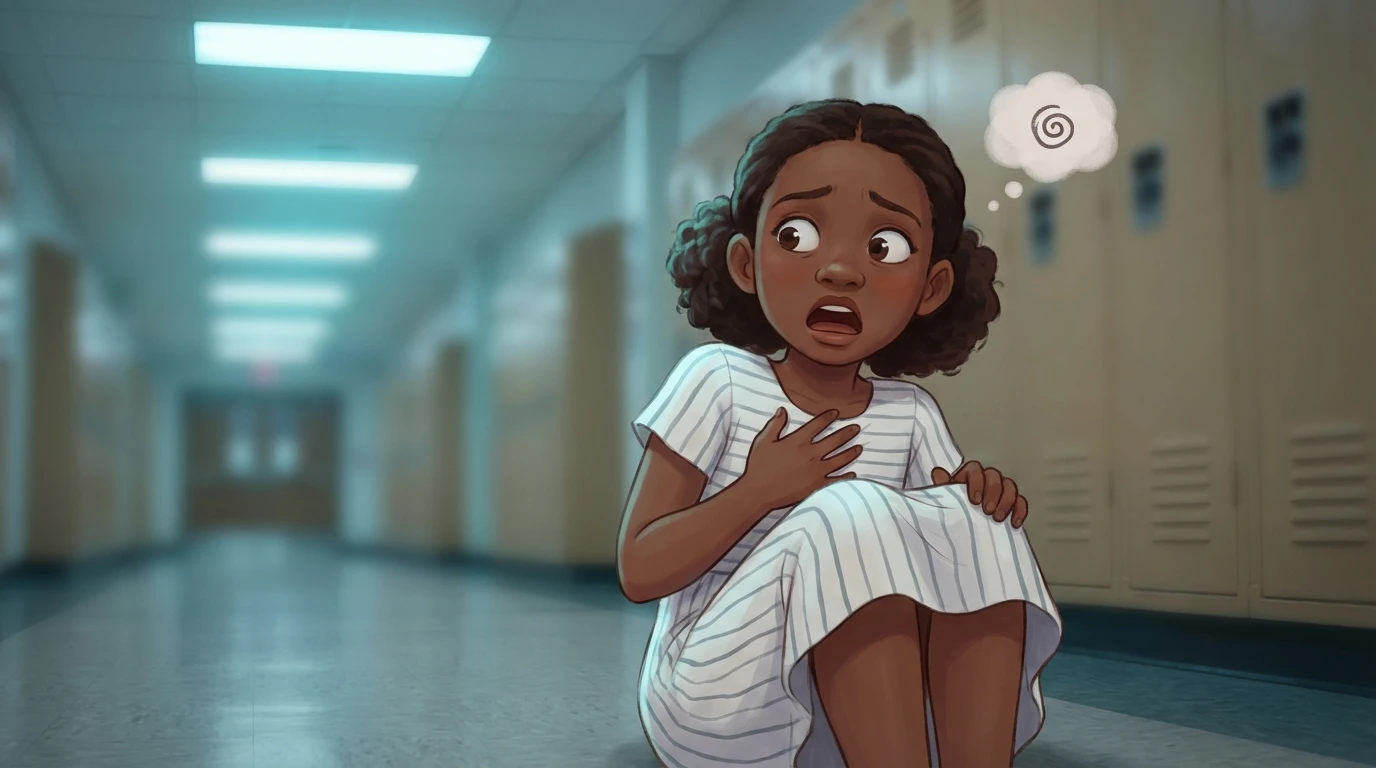
Your child is fine. They're watching TV, doing homework, sitting in the car. Then something flips. Their breathing goes shallow and fast. Their face drains of color. They grab their chest or their stomach and say something like "I can't breathe" or "something's wrong with me" or just scream.
A panic attack is the body's alarm system firing without an actual threat. The amygdala sends a distress signal, the adrenal glands dump adrenaline, and the body responds as if a bear just walked into the room. Heart rate spikes. Breathing becomes rapid and shallow. Muscles tense. Blood rushes away from the digestive system (which is why nausea and stomach pain show up). Extremities tingle or go numb.
The whole thing peaks in about 10 minutes. It feels like an hour to your child. It feels like three hours to you.
Panic attacks differ from anxiety or a worry spiral in one key way: there's no gradual buildup. One minute your kid is functioning. The next minute their body is in full emergency mode. That suddenness is what terrifies both of you.
Chest tight, can't breathe
The Childhood Anxiety course will show you how to respond mid-attack
You'll stay calm through the hyperventilating and guide your child back to breathing without making it scarier.
The symptoms parents miss
In younger kids
Children under 10 rarely say "I'm having a panic attack." They say "my tummy hurts" or "my heart is broken" or they just cry. Young kids don't have the vocabulary to describe depersonalization, chest tightness, or the feeling that the room is shrinking. They describe what they can: pain and fear.
Watch for: sudden stomach complaints with no illness, unexplained crying that starts abruptly and passes within 15-20 minutes, freezing in place and going pale, or clinging to you with a grip strength that surprises you.
Some kids vomit during attacks. Some hyperventilate visibly. Others go quiet and still, which is the version parents are most likely to miss entirely.
In teenagers
Teens are more likely to recognize what's happening to them, and more likely to hide it. A teenager having a panic attack in a school bathroom will wait it out alone, splash water on their face, and walk back to class without telling anyone.
The real danger with teens is the avoidance that follows. A teen who had a panic attack at a party stops going to parties. A teen who panicked during a test starts skipping school on exam days. The avoidance feels like it solves the problem, but it teaches the brain that the avoided situation was genuinely dangerous. The circle gets smaller.
This is where panic attacks in teens differ from typical teen anger and mood swings. Moodiness is reactive. There's a trigger you can trace. Panic often appears without an obvious cause, and the teen is as confused by it as you are.

What to do during an attack
The hard part: almost nothing you do will shorten a panic attack once it starts. The adrenaline is already in the bloodstream. You're waiting for the body to metabolize it. Your role is to make the waiting bearable.
Be boring on purpose
Lower your voice. Slow your movements. Sit down if you can. Your child's nervous system is scanning the environment for confirmation that something is wrong, and a panicked parent is that confirmation. A calm, steady presence tells their system the environment is safe, even if their body disagrees.
Don't say: "Calm down." "You're fine." "There's nothing wrong."
Do say: "I'm right here. This is going to pass. You're safe."
Match their breathing (don't instruct it)
Telling a panicking child to "take deep breaths" usually makes things worse. They can't control their breathing, and failing to do so increases the panic.
Instead, breathe audibly yourself. Slow, exaggerated exhales. Not a performance, just something they can hear and sync to. Breathing and grounding techniques work best when modeled, not coached.
Ground them in sensation
If your child can hear you and is somewhat responsive, try grounding through physical sensation. Cold water on wrists. An ice cube to hold. Feet pressed flat on the floor. These sensory inputs give the brain something concrete to process instead of the feedback loop of panic.
How to respond to your child's panic attack
- Recognize the signs earlySudden shallow breathing, pallor, chest-grabbing, or freezing in place. In younger kids, watch for abrupt stomach pain or unexplained crying that appears out of nowhere.
- Get low and get closeSit or kneel near your child. Keep your body relaxed and your voice quiet. You are becoming the anchor their nervous system needs to find solid ground.
- Name it simplySay 'your body is having a big reaction right now. It feels scary, but it will pass.' You are giving them a frame for something that feels like dying.
- Breathe where they can hear youSlow, audible exhales. Don't instruct them to breathe. Just breathe yourself. Their nervous system may start to mirror yours within a few minutes.
- Offer one sensory anchorCold water on wrists, an ice cube, pressing their feet flat into the floor. One input, not five. Overwhelmed brains can't process a menu of choices.
- Wait it out togetherStay until the attack fully passes, usually 10 to 20 minutes. Don't rush the recovery. When their breathing normalizes, say 'that was hard' and leave space for them to talk or not.
What to do after an attack
The attack is over. Your child's color is coming back, their breathing has slowed, and they look exhausted. This is when the real work happens.
Explain the mechanics
Kids who don't understand what happened to them develop a fear of the attack itself. That fear becomes the trigger for the next one. Breaking this cycle requires giving your child a clear, boring, mechanical explanation of what their body just did.
Something like: "Your brain has an alarm system. Sometimes it goes off when there's no real danger. Your heart raced, your breathing got fast, and you felt dizzy because your body was getting ready to fight or run. There was nothing to fight, so the feelings just sat there until they passed."
Boring is good. Boring means it's explainable. Explainable means it's survivable.

Don't interrogate
"What were you thinking about?" "Did something happen at school?" "Are you stressed about something?"
These questions feel caring. To a child who just had a panic attack with no identifiable trigger, they feel like an accusation. I should know why this happened. Something must be wrong with me.
Wait. Let them bring it up. If they don't bring it up today, circle back tomorrow with something low-pressure: "How's your body feeling today?"
Watch the avoidance
In the days and weeks after a panic attack, watch for situations your child starts dodging. A kid who panicked at soccer practice and now "doesn't feel like going" is building an avoidance pattern. The pattern, not the single attack, is what needs your attention.
Gentle re-exposure with your support works. Forcing them back into the situation without acknowledgment doesn't.
When panic attacks keep coming back
A single panic attack, while terrifying, is common. About one in ten teens will experience at least one. That doesn't mean your child has a disorder.
But if attacks are recurring, if your child is avoiding activities because of them, or if the fear of having another attack is limiting their daily life, that's a different situation. Recurring panic attacks, especially paired with avoidance, need professional support. A therapist trained in CBT can teach your child to recognize the early warning signs and get help before the full attack takes hold.
Panic disorder in kids is treatable. The earlier you get support, the less entrenched the avoidance patterns become.
The part where you check yourself
Your child just had a panic attack and you want to wrap them in bubble wrap and cancel everything stressful for the foreseeable future. That instinct makes sense. It will also make things worse.
If you treat your child like they're fragile, they'll believe they're fragile. Continue normal routines. Attend school. Go to the birthday party. But do it with the understanding that your child now has a body that occasionally misfires, and they need tools and support to handle it.
Your calm after the storm matters as much as your calm during it. If you spend the rest of the evening checking on them every ten minutes with worried eyes, you're telling their nervous system that the danger hasn't passed.
Dinner. Homework. Bedtime routine. Normal. You can process your own fear later. (You should process it. It's scary to watch your kid go through that. Just don't process it in front of them.)

Panic attacks and OCD-like behaviors
Some kids who experience panic attacks develop rituals to prevent them. Tapping, counting, avoiding certain numbers or colors, insisting on a specific routine before school. The logic: "Last time I wore those shoes, I had a panic attack, so those shoes are dangerous."
This is the brain's attempt to create control where there is none. If the rituals are mild and temporary, they'll likely fade. If they're multiplying, getting more elaborate, or causing distress when interrupted, mention it to your child's doctor. There's overlap between panic and OCD patterns in children, and catching it early makes a real difference.
FAQ
Yes. Nocturnal panic attacks happen during the transition between sleep stages. Your child may wake up suddenly with a racing heart, sweating, and difficulty breathing. They aren't nightmares, which occur during REM sleep. Comfort them, explain what happened in the morning, and mention it to your pediatrician if it recurs.
Tantrums have a trigger and a goal, even if the goal is unreasonable. Panic attacks appear without warning and your child gets no satisfaction from them. A tantruming child may peek to see if you're watching. A panicking child is genuinely terrified and wants it to stop.
If it's the first episode and you're unsure whether it's panic or a medical issue, going to the ER is reasonable. Once you and your child recognize the pattern, you can manage subsequent attacks at home. Always get medical causes ruled out first.
Many children who have a few panic attacks never develop panic disorder. For those with recurring attacks, early intervention with CBT has strong outcomes. The attacks themselves may become less frequent with age, but avoidance patterns can persist without treatment.
You can't prevent them entirely because the alarm system is hardwired. Regular sleep, limited caffeine, physical activity, and a predictable routine reduce the frequency. Teaching your child to recognize early body signals helps them ride out attacks with less distress.