TLDR
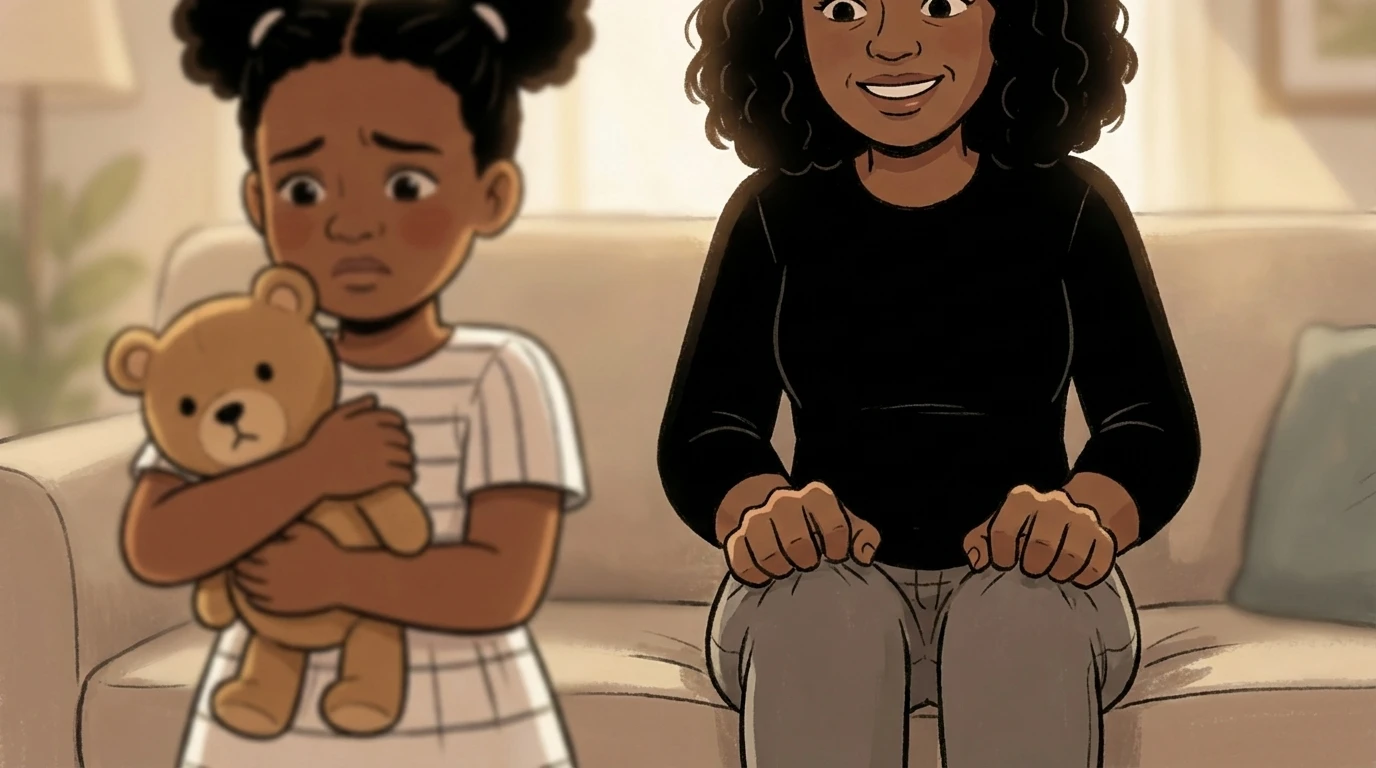
- Your anxiety about their anxiety makes their anxiety worse. Children co-regulate off your nervous system. When you're panicking internally about their fear, they feel it and escalate. Two anxious people in a room don't calm each other down.
- The urge to rescue is your anxiety talking, not theirs. When you rush to remove every source of discomfort, you're soothing yourself. Your child learns that the scary thing was indeed too dangerous to face.
- Your own childhood wired your threat detector. If anxiety ran in your family or your feelings were dismissed as a kid, your brain learned to treat your child's distress as an emergency. Recognizing that pattern is step one.
- You need a regulation strategy before your child needs one. A parent who can slow their own breathing and drop their shoulders in the moment gives their child a nervous system to borrow. That requires practice when you're not stressed.
- Getting help for yourself is a parenting strategy. Therapy, medication, mindfulness practice for your own anxiety directly improves your child's outcomes. This is the most efficient intervention available, not selfish.

Your nervous system speaks louder than your words
You've read the articles. You know you're supposed to validate feelings, stay calm, avoid saying "there's nothing to be scared of." And then your 5-year-old freezes at the birthday party entrance and your body floods with dread before your brain even registers what happened.
The problem is rarely what you say. The problem is what your body broadcasts while you're saying it. Your child's nervous system reads yours constantly, scanning for threat signals. Tight jaw. Held breath. A hand that grips their shoulder a little too hard. The cheerful voice pitched half an octave too high.
Research on co-regulation shows that children's stress responses sync with their parents' physiology. Your heart rate goes up, theirs follows. Your cortisol spikes, theirs mirrors it.
So when your child is anxious and you're anxious about their anxiety, you've built a feedback loop with no exit. Two nervous systems revving each other up in a parking lot while other parents stroll past carrying gift bags.
Worrying about their worrying
The Childhood Anxiety course will untangle your anxiety from theirs
You'll catch when you're projecting your own fear and learn to coach them without absorbing every spiral.
The rescue reflex (and who it really rescues)
Here's the pattern. Your child shows fear. Your stomach drops. You want to remove the source of fear, leave the situation, or tell them everything is okay. This feels like protection.
It's self-medication disguised as parenting.
When you pull your child out of the situation the instant they show distress, the person who feels better first is you. Your anxiety drops. And your child learns two things: that the scary situation was genuinely dangerous (because you fled), and that their anxiety is too big for even a grownup to handle.
The accommodation trap
Psychologists call this "anxiety accommodation." You stop going to restaurants because your child might get overwhelmed. You answer the same reassurance question fourteen times because saying "I already told you" feels cruel. You check under the bed, then check again, then a third time.
Each accommodation feels small. Together, they build a life organized around your child's anxiety, which teaches their brain that the world really is as dangerous as it suspects.
The alternative: "I can see you're worried about the party. We're going to go in, and I'll stay with you. If it's too much after fifteen minutes, we'll step outside together." You acknowledge the fear, set a plan, and tolerate your own discomfort long enough to let them try. The gradual exposure approach works because it lets them discover they can handle it, but only if you can handle watching them struggle.

Where your anxiety started
If you find yourself panicking about your child's panic, the origin story probably predates parenthood by a few decades.
Your childhood trained your alarm system
Maybe anxiety ran in your household and you grew up believing the world was more dangerous than it was. Maybe your feelings were dismissed ("stop crying, you're fine"), and now when your child cries, something in you screams fix this immediately because unaddressed feelings still register as emergencies in your body.
Your childhood patterns installed the software. Parenthood just runs it. You're not reacting to your child's fear in real time. You're reacting to a 30-year-old recording of what fear meant in your family.
Anxiety as identity
Some parents have been anxious so long it feels structural, like a load-bearing wall. "I'm just a worrier." The worry feels protective, as if relaxing your vigilance would invite disaster.
In parenting, this means you research every risk, pre-screen every environment, rehearse catastrophes to stay prepared. Your child picks up on all of it. They learn "the world requires this level of vigilance to survive." You can find out which type of worried parent you are and what that means for your kid.
What to do with your own anxiety first
You cannot regulate your child's nervous system from an unregulated one. Period. The staying calm strategies are the prerequisite, not a nice extra.
How to manage your own anxiety about your child's anxiety
- Notice the physical signal firstBefore your brain constructs a story about how your child will never make friends, catch the body sensation. Chest tight? Shoulders up near your ears? Stomach clenched? Name the sensation, not the catastrophe. 'My chest is tight' is more useful than 'something is wrong.'
- Slow your exhale deliberatelyBreathe out longer than you breathe in. A 4-count inhale and 6-count exhale activates your vagus nerve and physically downshifts your stress response. Do this before you speak to your child. Two breaths is often enough.
- Separate their experience from yoursAsk yourself: 'Is my child in danger, or am I uncomfortable?' Most of the time, the honest answer is that you're the one who can't tolerate the situation. Your child is scared but safe. Those are different things.
- Lower your voice and slow downAnxiety makes you talk faster and higher. Deliberately drop your pitch and pace. Your child's nervous system will track the shift even if they don't consciously notice it. Slow voice equals safe environment.
- Tolerate the discomfort of watching them struggleThis is the hardest step. Stand there while they cry at the classroom door. Stay at the table while they push food away at a new restaurant. Your presence without rescue is the message: 'I believe you can handle this.'
The daily practice that changes the pattern
Mindfulness practice sounds like something you do on a yoga retreat. In practice, it means spending three minutes a day noticing your breath without trying to change anything. That's it. You're training your brain to observe a sensation without immediately acting on it.
The parent who has practiced tolerating discomfort in a quiet moment can tolerate it in a loud one. The parent who hasn't will keep defaulting to rescue mode, because their nervous system has no other gear.

When your anxiety needs its own help
If your anxiety about your child's anxiety is running the household, if you're losing sleep over scenarios that haven't happened, if you can't watch your child experience discomfort without intervening, that's worth taking seriously.
Getting therapy or medication for your own anxiety is one of the most effective things you can do for your child. When anxious parents get treatment, their children's anxiety symptoms improve, sometimes even without direct treatment for the child.
The complete anxiety series covers the full picture of childhood anxiety. But the piece that gets skipped is this one: you. Your regulation. Your history. Your willingness to sit with discomfort instead of organizing life to avoid it.
And when professional help becomes the right call for your child, a parent who has done their own work shows up as a partner, not a second patient in the room.

The uncomfortable truth about parenting anxious kids
You will watch your child feel afraid, and you will want to make it stop. That urge will feel like love. Sometimes it is. Sometimes it's your own unresolved anxiety wearing a parenting costume.
The work is learning to tell the difference. And on the days when your anxiety is the loudest voice in the room, choosing to breathe, stay, and let your child discover what they're capable of.
You go first. They're watching.
FAQ
Ask yourself whether your child is in actual danger or whether you're uncomfortable watching them struggle. If they're safe but scared, your job is to stay present, not intervene. If your gut says something is genuinely wrong beyond normal fear, trust that instinct and talk to your pediatrician.
Genetics loads the gun, but environment pulls the trigger. Having an anxious parent increases risk, but it doesn't guarantee anything. A parent who manages their own anxiety openly and models coping teaches their child that anxiety is manageable, even if the predisposition is there.
No. Children detect hidden anxiety anyway and fill in the blanks with worse assumptions. Instead, name it at an age-appropriate level: 'I'm feeling a little worried right now, so I'm going to take some deep breaths.' You're modeling that anxiety is normal and manageable.
No. The brain remains plastic throughout childhood and adolescence. Changing your response pattern today still changes your child's experience going forward. Many families see shifts within weeks of a parent adjusting their own anxiety management. Start where you are.
Research says yes, indirectly. When parents treat their own anxiety with medication, therapy, or both, their children's anxiety symptoms often decrease. Your regulated nervous system is your child's primary co-regulation tool. Treating yourself is treating the family system.