TLDR
- Childhood phobias are evolutionary leftovers. Fear of bugs, water, loud sounds, and animals kept ancient toddlers alive. Your child's brain is running old survival software.
- Forcing exposure deepens the fear. Holding a screaming child in the bathtub or dragging them past a dog teaches their nervous system that the threat is real and the parent cannot be trusted.
- Laughter is the best anti-anxiety tool you have. Belly laughing physically releases the tension that fear creates in a child's body. Roughhousing and silly role-reversal games build the foundation for facing specific fears.
- Gradual exposure works when the child controls the pace. Move from drawings to toy versions to real-world encounters, always with the child deciding how close they get.
- Most phobias resolve quickly once you stop re-traumatizing. Back off the forced exposure, add play-based fear work, and many childhood phobias fade within weeks.

Why your two-year-old treats the bathtub like a crime scene
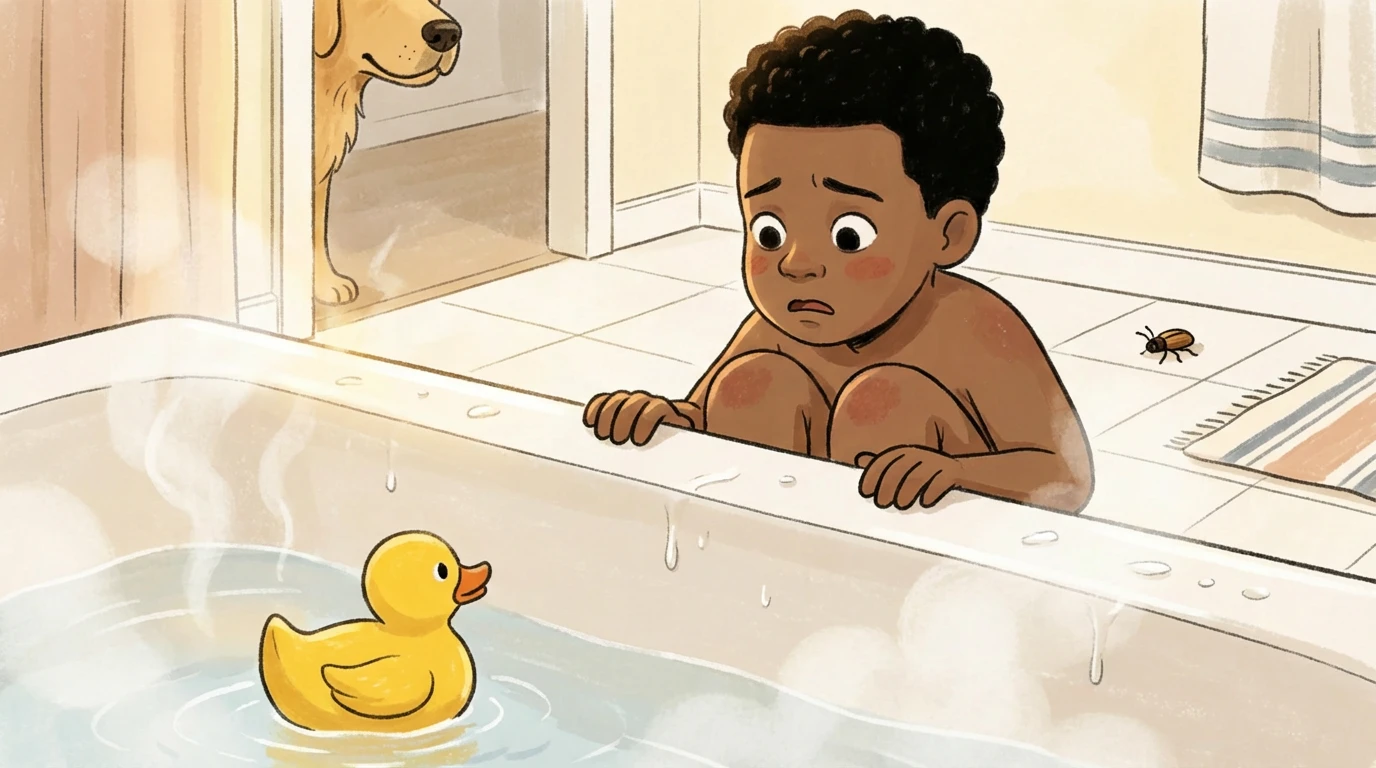
Your kid used to splash happily in the tub. Then one Tuesday, for no reason you can identify, they started screaming like you were lowering them into lava.
Maybe it's not the bath. Maybe it's dogs, bees, the vacuum, or the smoke detector that went off once six months ago and left a permanent mark. For some kids, especially those prone to sensory overload, loud or unpredictable stimuli hit even harder.
Kids who feared bugs, loud noises, water, and large animals were the ones who survived long enough to have their own kids. Your child's brain is running ancient software that says: If it's unfamiliar and loud, run. If it has too many legs, scream.
The same evolutionary logic explains why toddlers develop fears that seem to appear from nowhere. Fear of going down the drain, fear of the vacuum sucking them up, fear of elevators. These are signs of a brain doing exactly what it evolved to do.
Can't run the bath
The Childhood Anxiety course will shrink each phobia step by step
Bath time, loud noises, dogs — you'll walk your child toward each one without the meltdown.
Why forced exposure backfires
Forcing your child through the feared experience while they're terrified makes the phobia deeper, not shallower. Putting a screaming toddler in the bath reinforces the link between bathtub and panic. Dragging a howling child past the neighbor's dog confirms their nervous system's assessment that dogs are dangerous.
Fear shuts down the thinking parts of the brain. When your child is in full panic, the part that processes language and logic goes offline. Your explanation about how the drain is too small to fit through is bouncing off a wall of cortisol.
Exposure only works when the child feels safe enough to process the fear in small, manageable doses. That's the difference between therapeutic gradual exposure and repeatedly scaring your kid.

The real fix: laughter first, exposure second
Before you work on the specific fear, you need to lower your child's overall anxiety level. A child whose stress bucket is full will panic at everything. A child whose bucket has some room can handle small doses of scary things.
Physical play and role reversal
Games where your child is just slightly worried but safe (bucking bronco rides, tossing them onto a bed, chasing games where you're the bumbling pursuer who keeps tripping) produce the kind of laughter that releases stored anxiety. The indicator you're on the right track is sustained giggling. If they become genuinely distressed, you've gone too far.
Pretend you are terrified of something your child is NOT afraid of. A rock. A spoon. A houseplant. Ham it up. Shriek and hide behind the couch. Your child will find this hilarious, and that laughter is doing real work: it lets them be the powerful one who sees through fear, and it drains anxiety through the belly laughs. You can gradually move the "scary" object closer to the category of their actual fear.
Tackling the specific phobia
Once you've spent a week or so on general anxiety-reduction work, you can start addressing the phobia directly. The key principle: move from maximum psychological distance toward the real thing, and let your child control the pace.
Bath and water fears
Stop forcing baths. You can clean a child with a washcloth, a kitchen sink, or a wading pool on the bathroom floor. Daily baths are not a medical necessity.
Try the doll technique: get a washable doll and a toy tub, fill it together, and give the doll a bath. Act out the doll being scared. Comfort the doll. Then let the doll be brave and enjoy the water. Over days, move the toy tub into the real tub. Most kids climb in on their own.
The script that works: "I know the bath scares you right now. That's okay. We'll use the sink today. When you're ready, you'll take baths again. I'll always keep you safe."
Animal and bug fears

Start with drawings. During art time, draw the feared creature with a silly name and a ridiculous personality. Give it a family, a tendency to get lost in the honey jar. You're shifting the bug or dog from "threat" to "character" in your child's mind.
Next, try roleplay. Let your child be the bee and chase you while you dramatically flee. Then you be the bee, but a hopelessly clumsy one who bumbles into furniture. The sweet spot is the edge of fear: close enough to trigger shrieking laughter, never close enough for genuine distress. Toy versions of the feared animal, left where your child can see them, provide passive exposure without forced interaction.
When the tears come (and why that's good)
At some point during this process, your child will cry. This crying is the mechanism by which fear gets processed and released.
When children cry hard in the safety of a parent's arms, their bodies physically release stored tension. You might see sweating, trembling, or kicking. These are all signs the nervous system is doing its job.
What to say: "You're so scared. I'm right here. You're safe. You can show me all those big feelings."
What not to say: "It's fine, stop crying, there's nothing to be afraid of."
After a good hard cry with a safe parent, kids become visibly more relaxed. And working through one specific fear often reduces their overall anxiety. Other, seemingly unrelated fears may quiet down on their own.
How to help your child through a specific phobia
- Stop forcing the feared experienceIf baths cause screaming, switch to washcloth or sink cleaning. If they fear dogs, cross the street. Removing pressure is the first step, not a concession.
- Build daily laughter through physical playRoughhousing, chasing games, and role reversal (you pretend to fear a spoon) release stored anxiety and prepare the nervous system for targeted fear work.
- Introduce the feared thing at maximum distanceDrawings with silly names, stories about bumbling versions of the scary creature, toy representations. Never force interaction.
- Use roleplay to shift the power dynamicLet your child be the scary thing chasing you. Then you play an incompetent version of it. Keep the laughter flowing.
- Allow real-world exposure at the child's paceObservation from a safe distance, always with your arms available. The child decides how close they get. Celebrate every small step.
- Hold space for the tears that comeWhen fear surfaces as crying, stay present. Don't fix or shorten it. This emotional release is how the phobia resolves.

The timeline (shorter than you think)
Most specific phobias in young children resolve within weeks, not months, when you follow this sequence. The paradox: the more you back off, the faster they resolve. Less forced exposure means less re-traumatizing, which means the fear can fade instead of being reinforced daily.
If a phobia persists beyond several months despite consistent gradual exposure work, or if it's expanding (fear of bees becomes fear of all outdoor spaces, or a bath phobia spirals into bedtime fears about monsters in the dark), that's worth discussing with a child psychologist who specializes in anxiety. But for the vast majority of toddler and preschool phobias, you already have everything you need. Patience. Play. And the willingness to let your child set the pace while you stand right behind them, arms open, waiting.
FAQ
Probably not. Children develop specific phobias as part of normal brain development, even when parents never model that fear. These fears are evolutionary survival instincts, not learned behaviors. Your child's brain is wired to fear certain categories of things regardless of your example.
Give the gradual exposure process six to eight weeks of consistent effort. If the fear is worsening, spreading to new situations, or severely limiting your child's daily life after that period, consult a child psychologist who specializes in childhood anxiety.
Short-term avoidance is part of the strategy. But long-term avoidance without any gradual exposure work can allow fears to expand and generalize. The goal is temporary accommodation while you work through the play-based and emotional processing steps.
The approach stays the same, but add story-based processing. Tell your child the story of what happened in simple language. Narrating the event helps their brain process it as something that happened in the past, rather than an ongoing threat. Expect tears during the telling, which is the fear releasing.
Rewards can supplement the gradual exposure work but cannot replace it. A sticker chart will not override a genuine fear response. The child's nervous system needs laughter, play, and supported emotional processing before any reward becomes motivating enough to override the panic.