TLDR
- Duration and intensity matter more than any single episode. A rough week is normal. Weeks of avoidance, sleep disruption, or physical symptoms like stomachaches signal something bigger.
- School refusal is one of the clearest red flags. When anxiety keeps a child from attending school consistently, the window for early intervention is closing.
- Your reassurance hitting a wall is diagnostic. If you keep explaining that everything is safe and it changes nothing, the anxiety has outpaced what parental comfort can reach.
- Panic attacks in young children are real and treatable. Racing heart, trouble breathing, sudden terror. These are nervous system events that respond well to therapy, not dramatic performances.
- Finding the right therapist takes legwork but pays off fast. A child anxiety specialist using CBT or exposure-based methods will get results that a general talk therapist often will not.

The question nobody wants to ask
You have read every parenting book on your shelf. You have validated feelings until your throat is sore. You have done the breathing exercises, built the calm-down corner, bought the feelings chart with the little velcro faces.
And your kid is still falling apart.
There is a specific moment most parents remember. The moment where you realize you have been doing everything "right" and it is not enough. That realization is information, and it points toward getting help.
Childhood anxiety looks like a hundred other things first: defiance, pickiness, clinginess, anger, stomachaches on Sunday nights, or tantrums that seem too big for the situation. So parents keep adjusting, assuming they just have not found the right strategy yet.
Sometimes the right strategy is a professional.
Is it bad enough yet
The Childhood Anxiety course will help you decide before the appointment
You'll know which signs mean wait-and-work-on-it and which ones mean call a therapist this week.
Signs that anxiety has outgrown the home toolkit
It has been going on for weeks (not days)
Every kid has a bad stretch. New school, new sibling, best friend moved away. A few rough weeks after a transition is normal adjustment.
But when the anxiety sticks around for four to six weeks with no sign of loosening, something has shifted from "adjustment" to "pattern." The nervous system has learned to stay on high alert, reinforcing itself. Your comfort, no matter how skilled, cannot always interrupt a loop that has become self-sustaining.
Their world is shrinking
This is the one to watch. Anxious kids do not just feel bad. They start avoiding things. First it is subtle: they skip the birthday party. Then they stop wanting playdates. Then getting to school becomes a daily battle.
When avoidance starts removing things from your child's life, the anxiety is winning. A kid who used to love soccer but now cries before practice every week is not being dramatic. Their brain is telling them the field is dangerous, and no amount of "but you always have fun once you get there" rewires that signal.
Physical symptoms show up on repeat
Stomachaches before school. Headaches on Sunday evenings. Nausea in the car on the way to a friend's house.
Kids are not faking these. Anxiety produces real physical symptoms because the stress response is a whole-body event. If your pediatrician has ruled out medical causes and the pattern keeps repeating, the body is telling you what the child might not have words for.

Panic attacks are happening
When a young child has a panic attack, it looks terrifying for everyone involved. Racing heart, hyperventilation, shaking, a sudden conviction that something catastrophic is about to happen.
Panic attacks and tantrums are different animals. A tantrum is goal-directed. A panic attack is the nervous system firing an alarm with no off switch. If your child is experiencing these, a therapist trained in anxiety disorders can teach them concrete tools to interrupt the cycle. This is one area where professional help produces fast, measurable results.
Your reassurance does not land anymore
You have said "you are safe" four hundred times. You have explained why the dog will not bite, why the plane will not crash, why the test will not ruin their life. And they nod and then ask the same question twenty minutes later.
Reassurance-seeking that never resolves is a hallmark of clinical anxiety. The child is not ignoring your answer. Their brain discards it because the anxiety signal is louder than logic. When this becomes your nightly routine, you need a different kind of intervention.
What a good therapist does
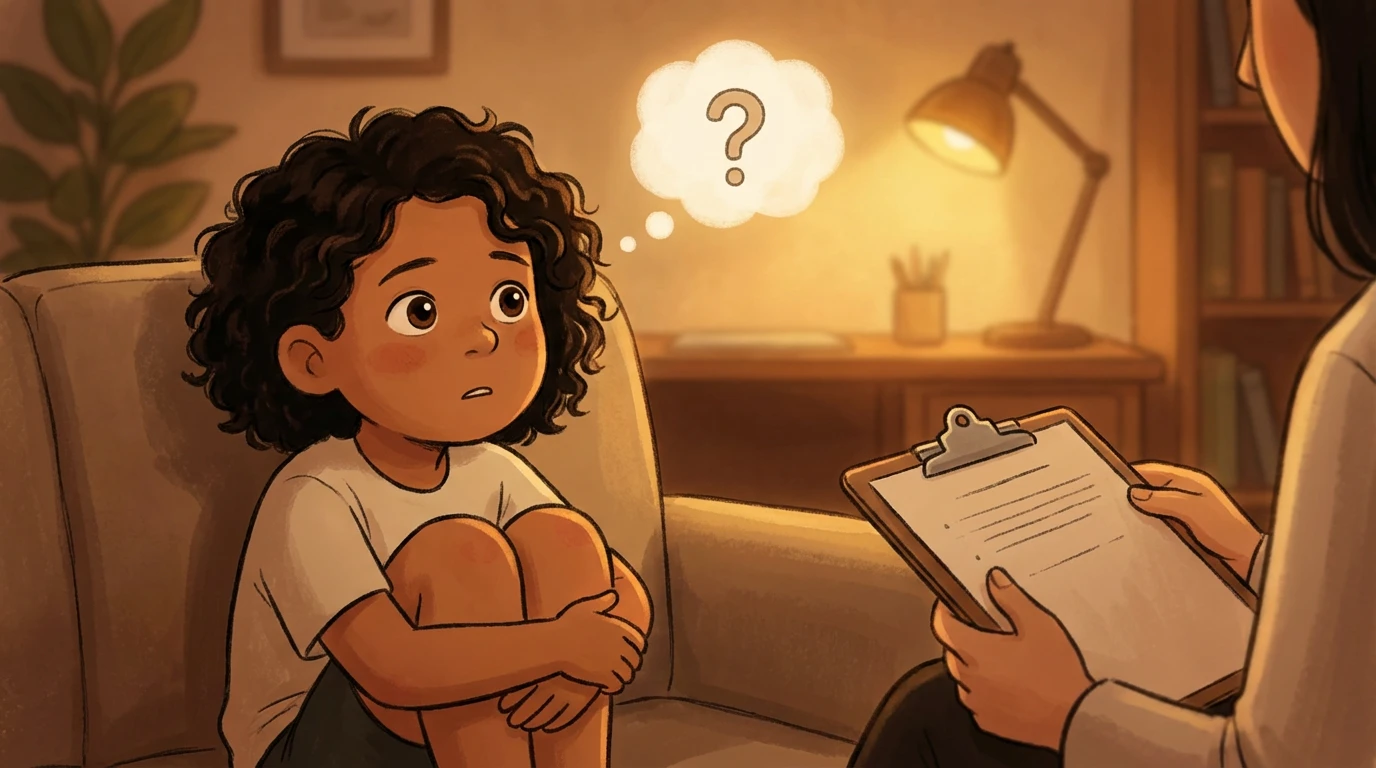
There is a common misconception that child therapy means a kid sits on a couch and talks about feelings for an hour. For anxiety specifically, the most effective approaches are active and structured.
How to find the right anxiety therapist
- Look for CBT or exposure-based trainingCognitive behavioral therapy and exposure-response prevention have the strongest evidence for childhood anxiety. Ask therapists directly what modality they use. If they cannot name one, keep looking.
- Ask about their experience with kidsA therapist who mostly sees adults will approach your eight-year-old differently than a child specialist. Ask what percentage of their caseload is children and what age range they work with most.
- Request a specific treatment planA good therapist should outline what the first few sessions will look like and what progress markers they are watching for. Vague answers like 'we will see how it goes' are a yellow flag.
- Check the fit after three sessionsYour child does not need to love therapy, but they should not dread it. If after three sessions your kid is much more distressed about going, talk to the therapist about adjusting the approach.
- Expect parent involvementEffective child anxiety treatment almost always includes coaching for parents. If the therapist never talks to you about what to do at home, ask why. You are part of the treatment team.
For a deeper dive into evaluating specialists, choosing a therapist who works with anxious kids involves specific questions most parents do not think to ask.
The parent's own anxiety (yes, this part is about you)
Here is a pattern that shows up constantly: a parent brings their child to therapy, and somewhere around session four, the therapist gently suggests that the parent might benefit from some support too.
This is worth hearing out. Anxiety runs in families through both genetics and modeling. If you are an anxious person, your child's nervous system learned some of its responses by watching yours. That is biology, and understanding it helps more than guilt does.
You might notice your own anxiety spikes when your child is anxious. You might find yourself doing extensive reassurance rituals because their distress triggers yours. You might be avoiding situations on their behalf before they even ask. A parent who gets their own anxiety addressed becomes dramatically more effective at supporting their child through theirs.

What to expect in the first few weeks
Therapy for childhood anxiety is not instant, but it is also not endless. Most evidence-based protocols run 12 to 16 sessions. Here is the typical arc:
Sessions 1 to 3: Assessment and relationship building. The therapist figures out what specifically drives the anxiety and builds enough trust with your child to do the harder work later.
Sessions 4 to 8: Active skill-building and exposure. The therapist teaches concrete techniques and then gradually helps your child face the things they fear. In small, controlled steps. With support.
Sessions 9 and beyond: Generalization and independence. The child starts using skills outside the therapy room. You see changes at home and school. Sessions start spacing out.
The part that surprises most parents: your kid might get worse for a week or two when exposure work begins. They are confronting fears they have been avoiding, and the anxiety pushes back before it lets go.
When it is more than anxiety
Sometimes what looks like anxiety is tangled up with something else: depression, sensory processing differences, a trauma history, or situations at school that nobody has told you about.
Children communicate extreme distress with extreme language. A kid who says "I wish I were dead" during a meltdown is usually reaching for the most powerful words they have. But it always warrants a calm, curious follow-up conversation later (not during the meltdown) and, if it happens repeatedly, a professional evaluation.
The 5:1 ratio and why it matters right now
Research on relationships shows that we need roughly five positive interactions for every one negative interaction to maintain a healthy bond. When anxiety is running the household, that ratio takes a beating. Morning battles, bedtime resistance, reassurance loops, meltdowns in public. The negative interactions pile up.
This is another reason to get help sooner rather than later. Every week without support is another week where the relationship absorbs hits. A therapist does not just help the child. They help you stop hemorrhaging connection with your kid during the hardest stretch.

FAQ
Children as young as three can benefit from play-based therapy. For structured CBT and exposure work, most therapists start around age five or six, when kids can participate more actively in learning coping skills.
Keep it simple and concrete. Something like 'You know how your tummy hurts before school? We are going to meet someone who helps kids with that. You will probably play some games.' Avoid framing it as something being wrong with them.
Some initial resistance is normal. Let them know it is not optional, the same way a doctor visit is not optional. Most kids warm up after the first session when they realize it is not what they imagined. If resistance persists after three to four sessions, discuss alternatives with the therapist.
Medication is typically considered when therapy alone is not producing enough improvement, or when anxiety is so severe that the child cannot participate in therapy. A child psychiatrist can evaluate whether medication makes sense alongside therapy. It is rarely the first step.
Most evidence-based anxiety protocols run 12 to 16 weekly sessions. Some kids need more, some need less. A good therapist will set clear goals early and adjust the timeline based on progress rather than running open-ended sessions indefinitely.