TLDR
- Failure alone teaches kids they are failures. Resilience requires failure plus support. Without someone helping them get back up, kids internalize defeat rather than determination.
- Coach the process, not the outcome. Do things with your child instead of for them. Help them organize, brainstorm, and plan. The work stays theirs. The confidence stays theirs too.
- Praise effort, not results. Saying 'you worked so hard on this' builds a growth orientation. Saying 'you're so smart' builds a fixed one that crumbles at the first setback.
- Self-talk becomes their inner voice. The encouraging phrases you repeat now become the soundtrack playing in their head during hard moments for the rest of their life. Choose those phrases carefully.
- Manufactured hardship backfires. Life provides plenty of challenges on its own. Adding extra frustration on purpose makes kids feel uncared for, which destroys the foundation resilience is built on.

The blanket theory of resilience
There is a popular idea that kids need to be toughened up. The world is cold and cruel, so your kid should learn to sleep without blankets.
Which sounds reasonable for about three seconds. Then you realize the goal is to raise a kid who can find blankets, make blankets, and build a world where blankets exist for everyone.
Resilience comes from the experience of things going wrong, having support available, and then picking yourself up to try again. That cycle, repeated hundreds of times across childhood, is the entire recipe.
Kids who fail repeatedly without support do not develop grit. They develop a settled belief that they are the kind of person who fails. Low confidence leads to giving up, which leads to more failure, which confirms the belief.
So how do you give your kid enough room to struggle without leaving them alone in the struggle?
Stop rescuing, start coaching
Here is the shift that changes everything. Coaches help kids develop skills, but kids play the game.
Doing things for your child robs them of the chance to become competent. But doing things with your child, standing nearby while they wrestle with the hard part, teaches them how and builds confidence simultaneously.
Think about the science fair project. The night-before rescue where you build the volcano yourself teaches two lessons: (1) goofing off works because someone will bail you out, and (2) you are not capable of doing it alone.
Giving up instantly
The Big Feelings course will teach you to build real bounce-back
You'll stop over-rescuing and start letting hard moments land, so your child discovers they can survive them.
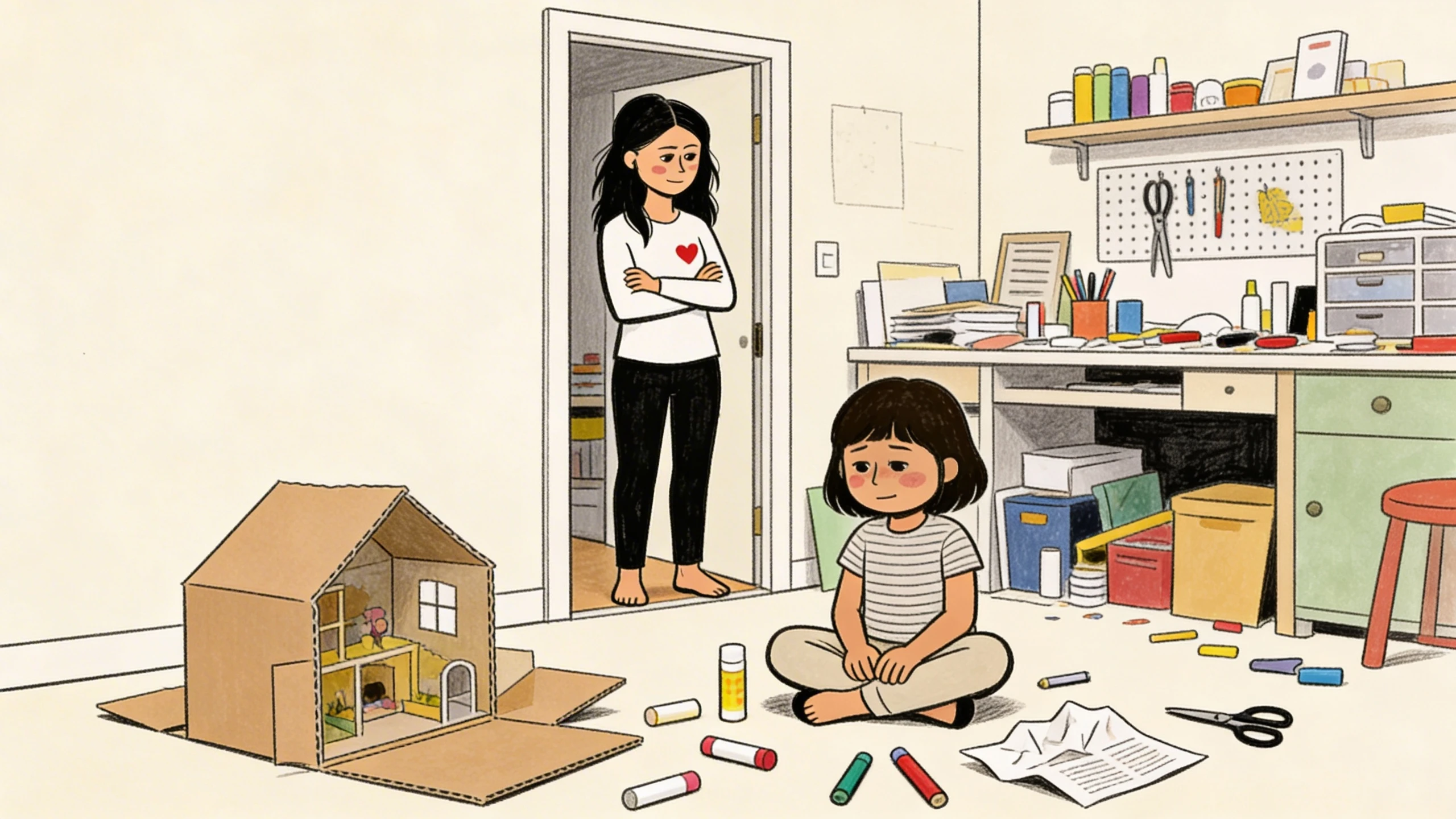
The better version: you help your kid organize their ideas step by step. You resist the urge to improve on their lopsided poster. They finish the thing, and it looks like a kid made it, because a kid did. They walk in hugely proud and having learned something about planning and following through.
The hard part is managing your own anxiety. The impulse to control comes from your nervous system, not from what your child needs.
The scaffolding sweet spot
Developmental researchers call it scaffolding: the framework you provide so your kid can build on top of it. Sometimes that means demonstrating how to do something. Sometimes it means suggesting a strategy. Sometimes it means just standing there, being the safety net.
When to step in
Whether to step in or let them learn the hard way is always a judgment call. But consider what happens when kids watch their parents stand by and let them fail. They do not think I should have practiced more. They think: I am a failure, I cannot manage myself, and my parents did not care enough to help.
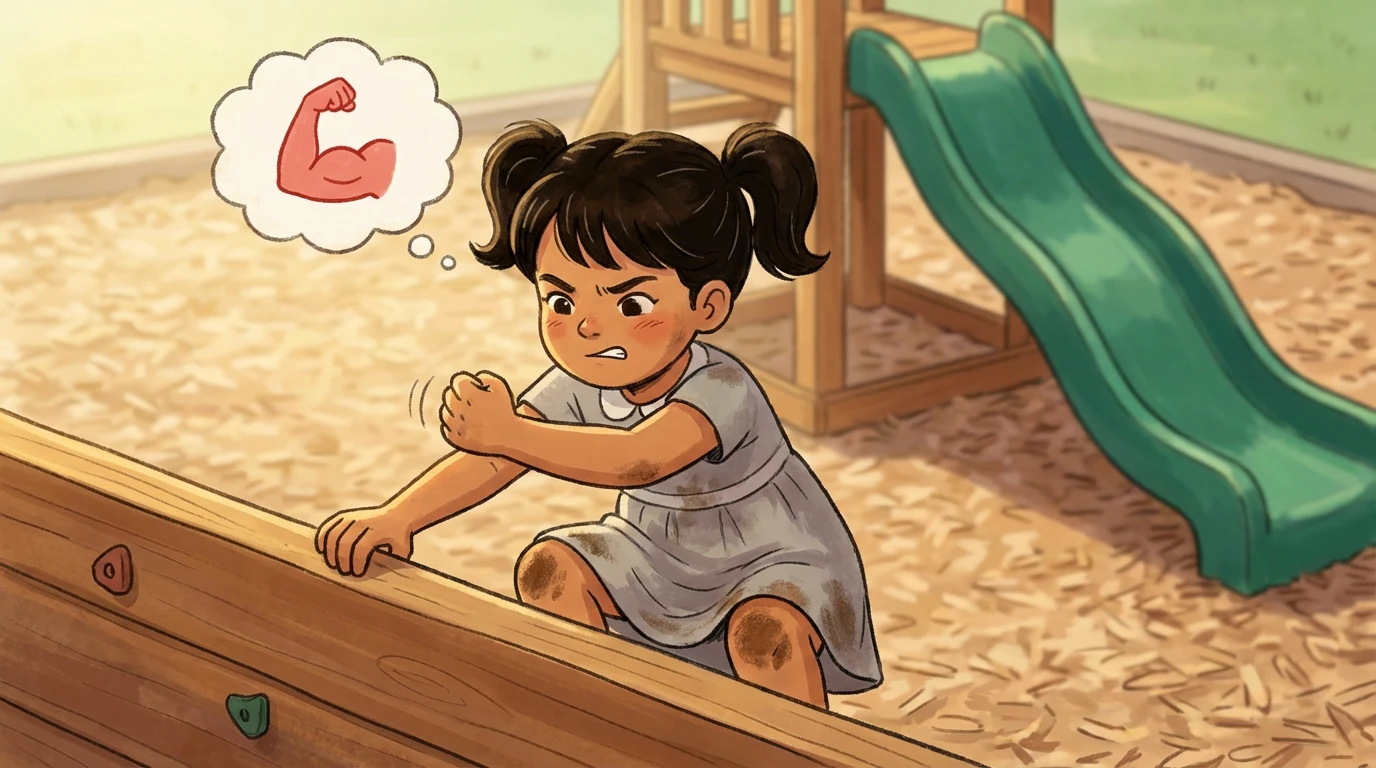
Help with the process, not the product. Organize, brainstorm, spot them on the climbing wall. The work stays theirs. Your presence stays available.
When to step back
The flip side is equally real. Every time you cluck anxiously while your kid climbs a play structure, you communicate two things: this situation is dangerous, and I do not believe you can handle it. Neither message builds confidence.
Stand by. Smile. Ask if they are keeping themselves safe. And when they make it to the top, try: "Look at you. I knew you could do it." That is scaffolding. If they fall, you are there to catch them. It is precisely that safety net that allowed them to try.
The inner voice you are building
Here is the part most parents miss. Every encouraging phrase you repeat now becomes your child's automatic internal voice during hard moments for the rest of their life.
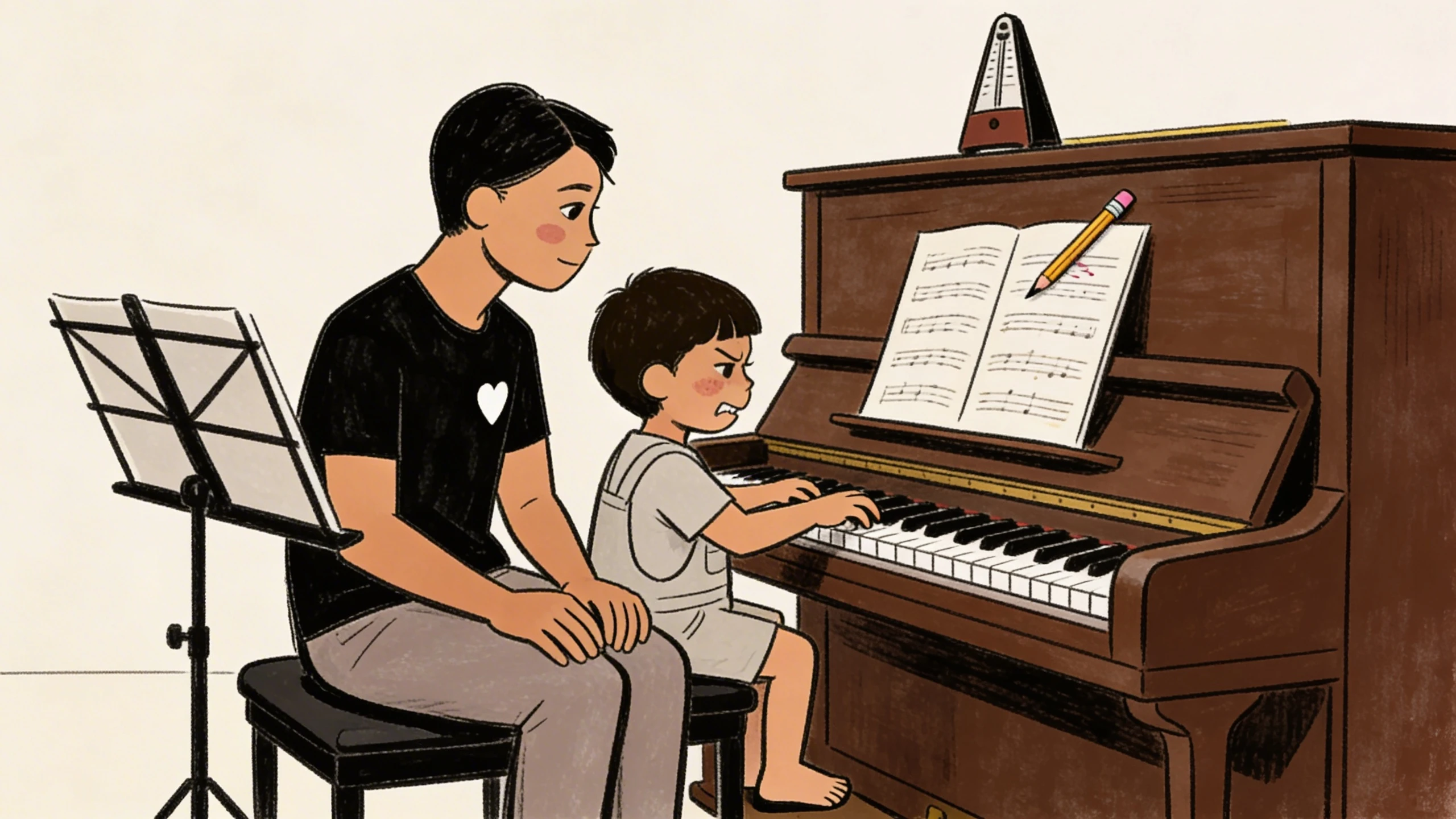
When your son flubs a piano recital or your daughter strikes out with the bases loaded, something fires automatically in their head. If you have spent years saying "practice makes progress" and "if it did not work, try a different way," that is what they hear. If the encouraging voice is missing, the harsh criticizing voice fills the gap instead. There is no neutral setting.
How to build your child's resilience daily
- Describe effort, skip the evaluationInstead of 'good job,' say 'you kept practicing and did not give up. You must feel so good about finishing that.' This puts the evaluation in their hands.
- Add 'yet' to every frustrationWhen they say 'I can't do it,' add the word yet. 'You haven't figured it out yet, but you will if you keep trying.' This reframes failure as temporary.
- Give them a mantra for hard momentsPick a phrase together: 'I think I can' or 'practice makes progress.' Repeat it enough that it fires automatically when things go sideways.
- Model your own positive self-talk out loudSay 'that was hard, but I will try again tomorrow' when you mess up dinner or lose your keys. If you berate yourself, they learn that is what you do after mistakes.
- Let them solve their own problems with backupWhen they hit a wall, resist jumping in. Ask: 'What do you think you could try?' Then support whatever plan they come up with, even the imperfect ones.
This also means watching your own self-talk. If you say "what an idiot" about yourself when you burn the toast, you are teaching the same lesson about how to respond to mistakes. Would you let anyone else talk to you that way? Then stop doing it in front of your kid.
Effort over outcome (and why "good job" falls flat)
Praising effort over outcome is one of those things that sounds simple until you try it in real life. "Good job" leaps out of your mouth before your brain catches up.
The problem with "good job" is that it evaluates without informing. Your kid does not learn what was good about what they did or why it mattered. Worse, it teaches them to look to external sources for validation instead of developing their own judgment.
Try describing what you see instead. "You worked on that for twenty minutes without stopping" gives them specific information and lets them feel proud on their own terms. The point is never the product. You want your kid to keep trying, practicing, improving. You want them to learn that when they work hard, they can handle challenges independently.
Why manufactured hardship backfires
Some parents worry they are too soft. That their kid needs more exposure to difficulty and loss to become tougher. The thinking is that extra hardship builds character.
It does not. There is no benefit to setting your child up for extra frustration. Life delivers plenty of challenges without your help. Those frustrations are built into the process of growing up.
When you manufacture hardship on purpose, your child reads it one way: you do not care enough to prevent unnecessary suffering. From there, the conclusion is fast: I am not worth caring about. That belief is the opposite of a resilience foundation.
The kid who overreacts to every small setback is missing the internal resources to handle disappointment, and those resources come from connection, not from exposure therapy run by their own parents.
The long game
Resilience is a constellation, not a single trait. Resilient kids accept what they cannot change while working to change what they can. They have something they care about. They are connected to people who care about them.
Your child does not need you to have all the answers. They need you close enough that they believe help exists when things get hard. Understanding how your child processes emotions helps you tailor that support to what lands for them.
Every time your kid tries something hard, stumbles, gets support, and tries again, they lay down a neural pathway. The pathway says: I have dealt with hard things before and come out fine. I can handle this.
You are building that pathway every day. Even on the days it does not feel like it.
FAQ
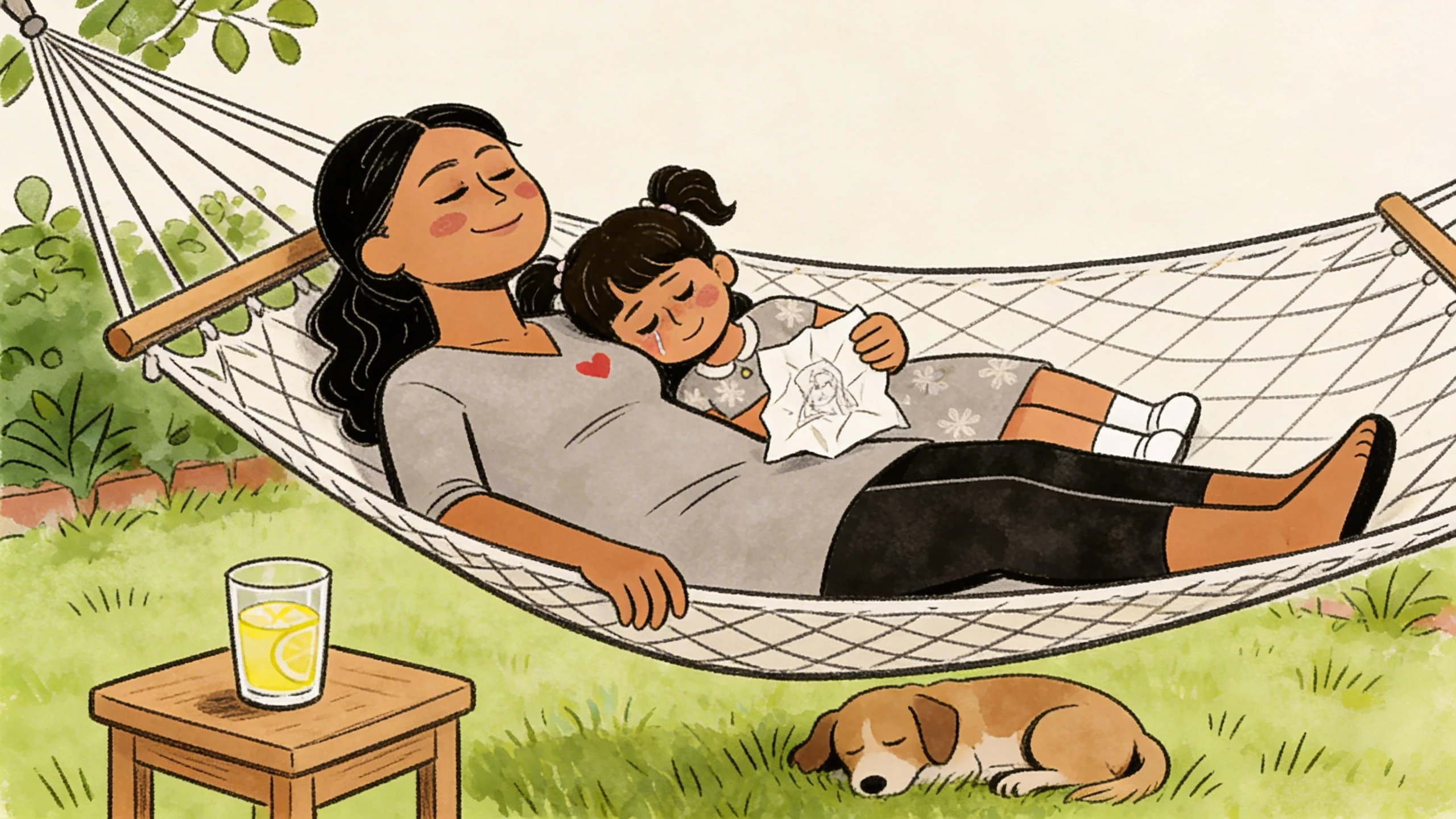
Only if they have support to get back up. Failure plus support builds resilience. Failure alone teaches kids they are the kind of person who fails. The support piece is what transforms a setback into a confidence builder.
Ask yourself: is my child doing the work, or am I? If they are actively problem-solving and you are standing by offering encouragement or the occasional suggestion, you are in the right zone. If you are holding the glue gun, step back.
From the earliest age your child attempts anything independently. Toddlers learning to stack blocks are already practicing. Your job shifts from physical support to emotional coaching as they grow, but the principle stays the same: let them try, stay close, celebrate effort.
Start with tasks just barely beyond their current ability. Success on small challenges builds momentum for harder ones. Use the word 'yet' constantly. And check whether your own reactions to their frustration are accidentally communicating that the situation is hopeless.