TLDR
- Silence is not stubbornness. When a child shuts down emotionally, their prefrontal cortex has gone offline. They cannot talk because the speaking brain is temporarily inaccessible, not because they are choosing to stonewall you.
- Three barriers block emotional expression. The brain's stress response shuts down verbal processing. The child may lack vocabulary for what they feel. Or past experience taught them that showing feelings leads to bad outcomes.
- Forcing talk makes shutdown worse. Demanding explanations during dysregulation confirms the child's fear that emotions are not welcome. Lower your voice, drop the questions, and offer your presence.
- Non-verbal outlets bypass the verbal block. Drawing, tearing paper, stomping on cardboard boxes, or journaling for older kids lets the feelings move through the body when words cannot.
- You initiate the repair. Always. Children do not have the developmental wiring to come find you and say sorry. Checking back in, reconnecting, and resolving conflict is your responsibility every single time.

The child who goes quiet
You know the screaming kid. There are entire parenting books about the screaming kid.
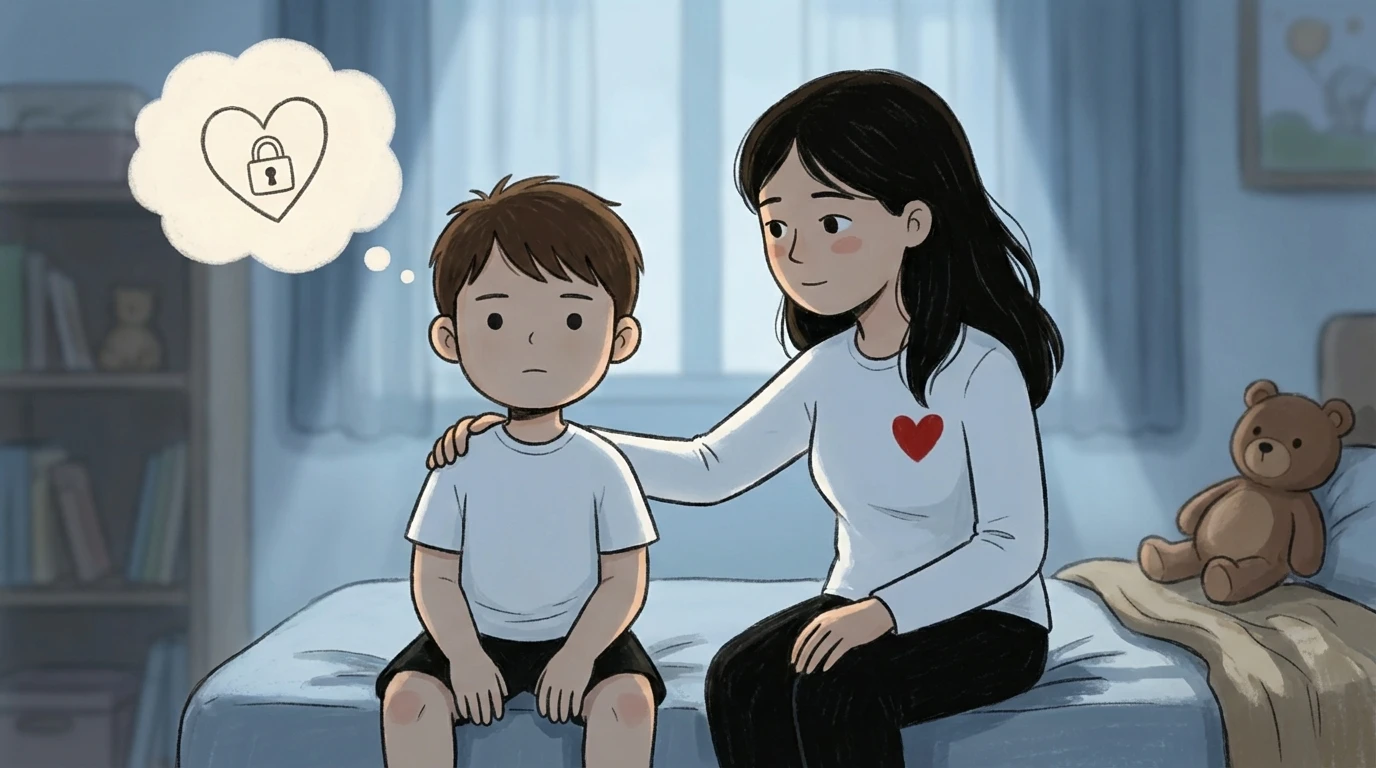
But what about the one who does the opposite? The child who goes completely still when something goes wrong. Eyes glaze. Face flattens. The whole system powers down.
This is the freeze response, and it is every bit as distressed as a full-volume tantrum. Nobody rushes over to help the quiet child. They look "well-behaved." Meanwhile, inside, their nervous system is running the same emergency protocol as the kid throwing cereal across aisle seven.
Blank face, no tears
The Big Feelings course will show you how to reach a shut-down child
You'll learn to lower the emotional temperature until their body feels safe enough to let the feeling through.
Why shutdown happens
Three reasons a child might go blank instead of crying. Sometimes all three are operating at once.
The brain goes offline
Strong emotions activate the fight-flight-freeze stress response. For some kids, the default is freeze. The prefrontal cortex shuts down. Their verbal processing center goes offline the same way a computer screen goes black during a power surge.
Asking "What's wrong?" to a child in freeze is like asking someone to recite poetry while their smoke alarm is blaring.
They do not have the words
Talking about feelings is a learned skill. Evaluate what you feel inside, match it to a word, say that word out loud to another human. That is three separate skills stacked on top of each other. When a shut-down child says "I don't know," they are usually telling the truth.
This is where building a basic emotional vocabulary matters. A child who can say "I feel hot inside" has more options than a child who only has silence.
They learned that feelings are not safe
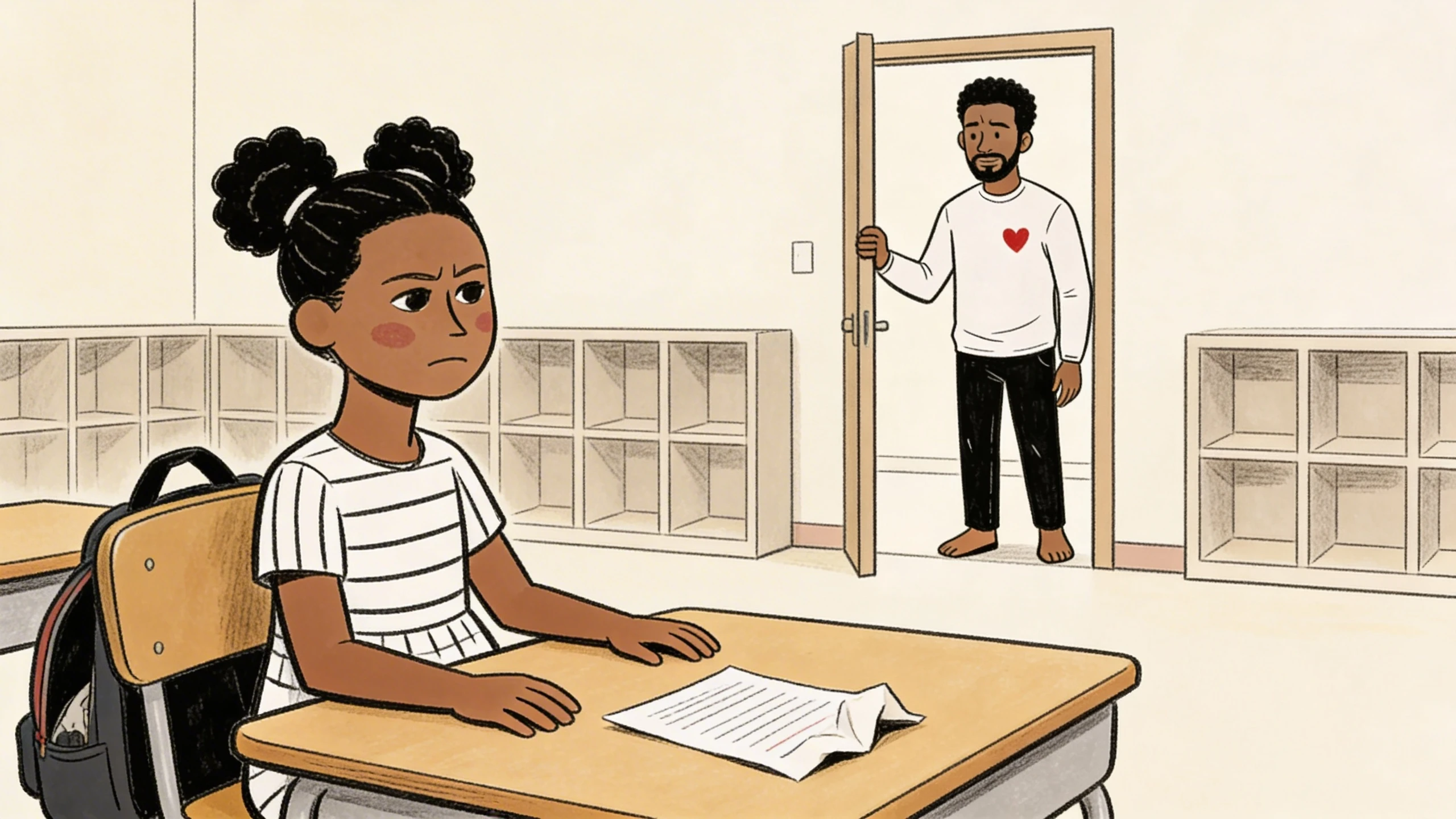
This is the one that stings. Some children shut down because experience taught them that expressing emotions leads to punishment, mockery, or dismissal. They got teased for crying. They got sent away when upset. So they stopped showing it.
A child who has learned that feelings are dangerous will protect themselves the only way they know how: by making sure you never see the feelings at all. If you recognize this pattern from your own childhood, you are not alone.
When emotional shutdown extends into peer relationships and your child withdraws from other kids entirely, that is worth paying close attention to.
What not to do
- Do not raise your voice. A louder volume activates threat detection and pushes the child deeper into freeze.
- Do not demand an explanation. "Tell me what happened right now" is a command their brain cannot execute.
- Do not take it personally. Their blank stare is a stress response, not rejection.
- Do not wait for them to come to you. Children lack the developmental wiring to initiate repair. That job is yours.
- Do not analyze them in the moment. "I think you are upset about the new baby" makes them feel studied, not safe.
What to do instead
Match their volume
They are quiet. You get quiet. Sit near them, not on top of them, not across the room. Close enough that they can feel your presence, far enough that they do not feel trapped.
Your regulated nervous system is the most powerful tool you have right now. Their system will borrow from yours if you give it time.
Use scripts that remove pressure
When you do speak, remove every demand from the sentence:
"You don't have to talk right now. Sometimes I don't want to talk when I'm upset either. When you're ready, I'll be here."
"It sounds like you want to be alone. I'm going to check on you in ten minutes."
"Whatever is going on, we will figure it out together when you're ready."
Zero questions. Zero pressure. The message underneath: you are safe, you are not alone, I am not going anywhere.
Offer non-verbal outlets
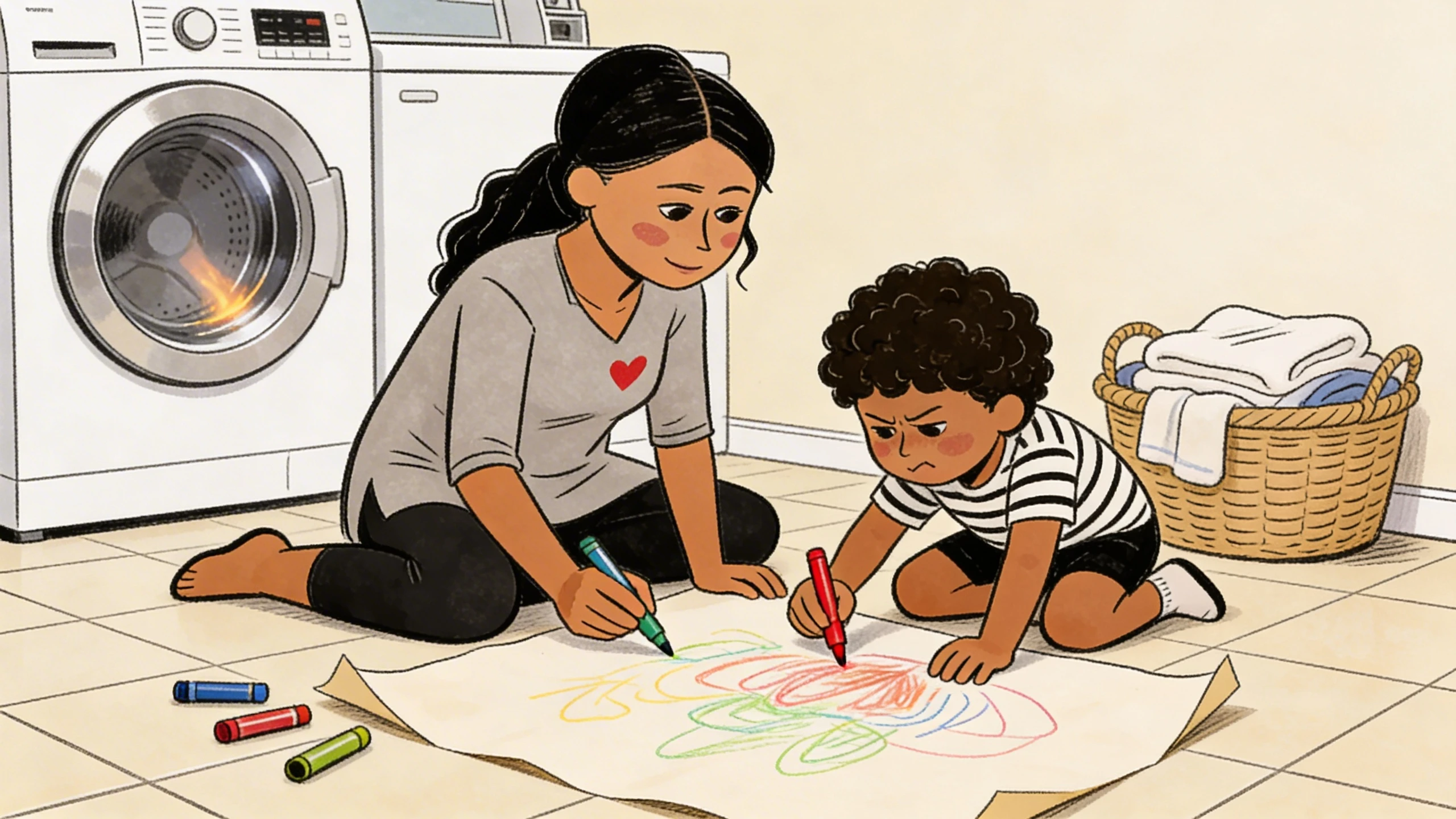
When the speaking brain is offline, the body still works. Drawing lets children externalize what they cannot say (some kids tear the picture up afterward, which is a release in itself). Older children can journal or write a letter to whoever upset them.
Movement works too. Stomping on cardboard boxes, drumming on pots, dancing to something loud. The body processes what the mouth cannot.
Building safety over time
The freeze response did not develop overnight and it will not disappear overnight. You are rebuilding emotional safety rooted in secure attachment, and that takes consistent repetition.
Check in during calm moments
Do not wait for the next shutdown to practice emotional connection. Build a daily habit: "What was the best part of your day? What was the trickiest part?" This creates a predictable space for sharing that is not connected to any crisis.
Share your own stories
"I remember days when I came home from school feeling angry and I didn't even know why. Sometimes I just needed to sit by myself for a while." Personal disclosure normalizes the experience.
Let them see you feel things
If you grew up hiding your emotions, your child is watching you do the same thing. Let them see you say "I'm feeling frustrated right now. I need a minute." You are modeling that feelings exist, they are speakable, and they do not destroy anything.
How to respond when your child shuts down
- Stop talking and get closeSit near your child without speaking. Match their quiet. Let your calm breathing be the only signal. Do not ask questions or make demands.
- Wait for any sign of thawWatch for a shift in posture, a glance toward you, a sigh, or fidgeting. These micro-movements mean the freeze is loosening. Do not rush it.
- Offer one low-pressure sentenceSay something like 'I'm right here' or 'You don't have to talk.' Remove every question mark. Your sentence should contain zero demands.
- Provide a non-verbal outletSet paper and markers nearby. Put on music. Offer something physical to squeeze or tear. Let the body process what the mouth cannot say yet.
- Circle back later the same dayAfter the storm has fully passed, check in. 'Earlier today seemed hard. I just wanted you to know I noticed.' Then stop. Let them decide whether to say more.
When the tears finally come
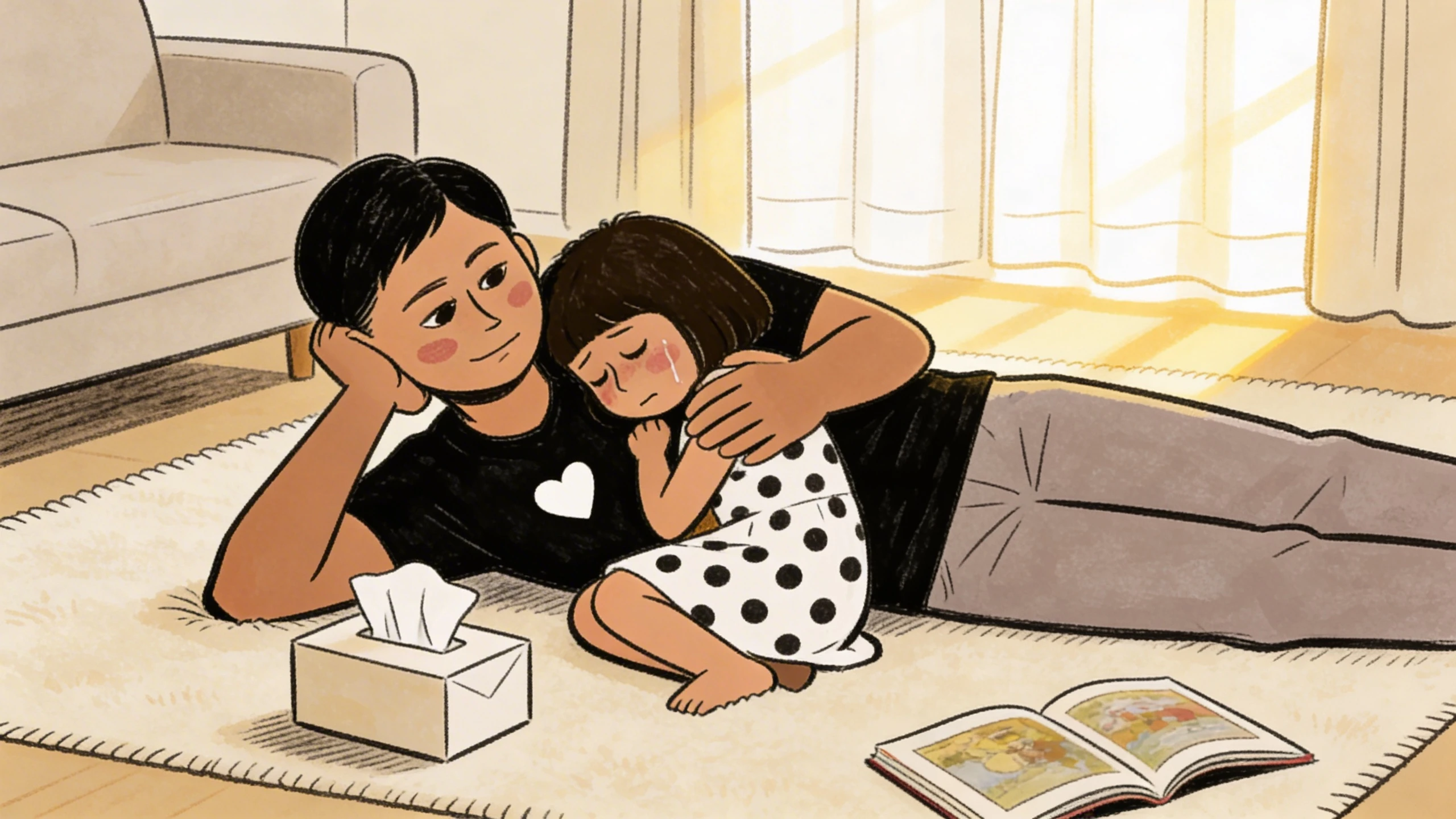
Here is the part nobody warns you about. When you do this consistently, your child will eventually stop shutting down and start crying instead. Hard. For a long time.
This is progress. Crying means the freeze response is loosening. Tears mean your child trusts you enough to be vulnerable. The instinct will be to fix it. Resist that. Hold them if they want to be held. Say "I see your big tears. I am right here."
You might want to check whether your home feels emotionally safe enough for this kind of vulnerability. Small shifts in how we respond make the difference between a child who opens up and one who stays locked.
The long, quiet work
You will not get this right every time. You will ask "What's wrong?" when you should have stayed silent. You will lose patience with the blank stare. You will wonder if any of this is working.
But every time you sit down next to them and say nothing, you are rewiring something. Every time you check back in instead of waiting for them to come to you, you prove that feelings do not drive people away.
The shutdown gets shorter. The thaw comes faster. And one day your kid will look at you mid-crisis and say a word. Just one. You will know what that word cost them.
FAQ
No. The silent treatment is a deliberate choice to withhold communication. Emotional shutdown is an involuntary freeze response. The child is not choosing silence. Their brain has temporarily lost access to verbal processing.
It depends on how entrenched the pattern is. Children who shut down due to a temporary stressor may respond within weeks. Children who learned early that feelings are unsafe may need months of consistent safety-building.
No. Forcing talk during shutdown confirms the child's belief that emotions are dangerous. Offer your presence, remove pressure, and provide non-verbal outlets. When they are ready to talk, they will. Your job is to make sure they know you will be there when that happens.
That is common. Many parents who froze as children find their own child's shutdown triggering. Working through your own relationship with emotional expression, whether through therapy or trusted conversation, will help you stay regulated when your child goes quiet.
If your child shuts down multiple times daily, the episodes last hours, they show no improvement after months of consistent safety-building, or the shutdown is paired with other concerning behaviors like self-harm or complete social withdrawal, consult a child therapist.