TLDR
- Telling kids they're smart backfires. Children praised for intelligence start avoiding challenges because failing would mean they're 'not smart.' Praise the effort instead.
- The word 'yet' rewires how kids see themselves. 'I can't do fractions' becomes 'I can't do fractions yet.' One word turns a verdict into a status update.
- Perfectionism is fear wearing an achievement costume. Kids who quit when things get hard are terrified that struggle means they've hit their ceiling.
- Your reaction to your own mistakes teaches more than any speech. When you laugh off burning dinner or getting lost, your kid files that under 'mistakes are survivable.'
- Growth mindset works best for kids who are already struggling. Research shows the biggest gains happen with students on the verge of giving up, not kids already thriving.

The "I'm not smart enough" trap
Your kid is not lazy. Let's get that out of the way.
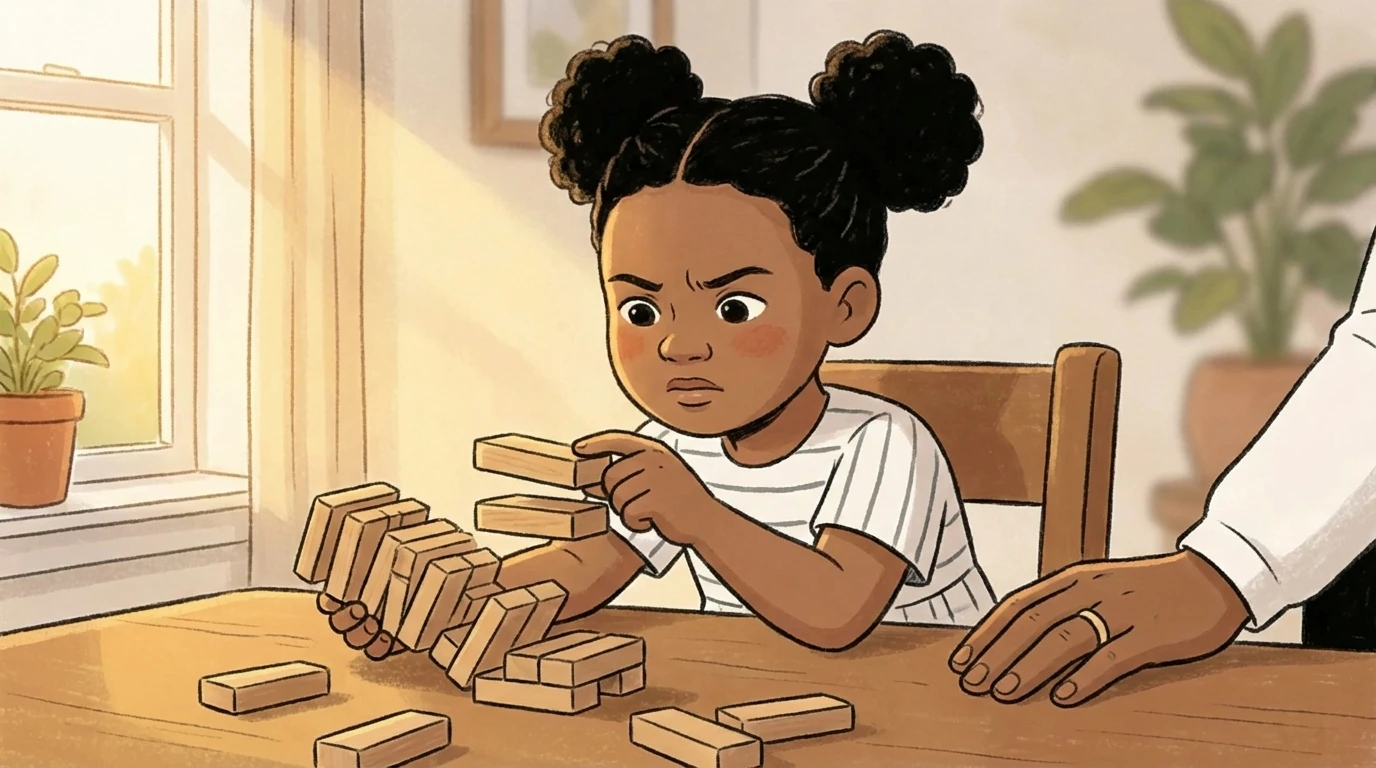
When a child refuses to try or announces "I'm terrible at math" after two wrong answers, the instinct is to assume they need more discipline. But Stanford researcher Carol Dweck's work points to something else: they believe intelligence is fixed, like eye color, and they've just discovered theirs isn't good enough.
Dweck calls this a "fixed mindset." If being smart is something you either are or aren't, then struggling means you've hit your limit. Why keep pushing? Better to not try at all than to try and confirm the worst.
Here's where it gets worse. Praising kids for being smart accelerates this problem. "You're so smart" sounds encouraging, but the child hears a label they have to protect. Next time something is hard, they think: if I were really smart, this wouldn't feel like this. So they avoid the hard thing. The parent sees a kid who won't try. The kid is drowning in motivation, but it's pointed at self-protection instead of learning.
Try harder backfired
The Big Feelings course will show you persistence without toxic positivity
You'll replace hollow encouragement with specific feedback that makes your child want to attempt the hard thing again.
What growth mindset means (and what it doesn't)
Growth mindset is the understanding that brains get stronger through use, the same way muscles grow through exercise. You wouldn't try to bench press 200 pounds on your first day, fail, and conclude "I'm just not strong." You'd work up to it. The brain operates on the same principle.
This is not wishful thinking. In one experiment, researchers spent less than two hours over eight weeks teaching junior high students that their brains could grow like muscles. Those students outperformed their peers on math assessments with zero additional math instruction. The only change was what they believed about their own capacity.
What growth mindset is not
It is not toxic positivity. Growth mindset acknowledges that the struggle is real. The spelling test was hard. The difference is in what that difficulty means: a temporary state you can work through, not a permanent verdict on who you are.
It is also not a magic fix for every kid. Research on the measurable effects of believing effort matters shows the biggest gains happen with students who are already struggling, right at the point where they're about to give up. But for the kid staring at a worksheet thinking I'm too stupid for this, it can be the difference between pushing through and shutting down.

The three sentences that change everything
You don't need a psychology degree. You need three phrases and the willingness to use them on repeat.
"You're not good at that yet"
When a child says "I can't do this," add one word: yet. "I can't do fractions" becomes "You can't do fractions yet." One word turns a closed door into a hallway.
Use their own history as proof. "Remember when you couldn't draw a heart? You practiced every day and now you make great ones. This works the same way."
"This is hard. It's supposed to be hard."
Don't sugarcoat difficulty. Name it. "This is hard. It would be hard for anyone." Then add: "Hard is how your brain gets stronger. You're building mental muscle right now."
Kids need their experience validated before they can hear anything else. Jumping straight to "you can do it" when they feel like they can't just sounds like you're not listening.
"What happened, and what could you try next?"
When something goes wrong, move past comfort-only and toward agency. Martin Seligman, the researcher who pioneered the science of optimism, suggests one question: "Is there something you could do to change the outcome with some personal effort?"
This is about steering kids away from "bad things just happen to me" and toward "I can do something about this." The emotional development quiz can help you gauge where your child stands with this kind of thinking.
How to build growth mindset daily
- Catch yourself praising traitsEvery time you're about to say 'you're so smart' or 'you're a natural,' swap it for effort language. 'You worked through every problem even when it got hard' reinforces the thing they can control.
- Add 'yet' to fixed statementsWhen your child says 'I can't' or 'I'm bad at this,' reflect it back with yet attached. Do this consistently and they'll start adding it themselves.
- Name the struggle out loudSay 'this is hard and that's okay' before jumping to encouragement. Validation first, then reframe. Skipping validation makes everything after it sound hollow.
- Share your own mistakes at dinnerTell your kid about something you messed up today and what you tried next. Keep it casual. Modeling beats lecturing every time.
- Ask 'what will help you do this?'Instead of solving their frustration, ask what they need. Sitting next to them? Doing the first one together? A snack break between problems? Let them problem-solve the process.

When perfectionism hijacks the whole thing
Some kids don't just have a fixed mindset. They have a perfectionist voice on top of it that turns every mistake into a catastrophe. These are the kids who crumple up drawings, quit piano pieces halfway through, or announce "I hate art" because they're terrified of producing something mediocre.
Perfectionism looks like high standards, but it's a fear response. And you can hear it in their self-talk when they spiral into "I'm stupid" and "I can't do anything right".
The NED technique from cognitive behavioral therapy gives kids a framework:
- Notice the negative voice. Recognizing "oh, there's that voice again" creates distance.
- Externalize it. Some kids name the voice "NED" and treat it like an annoying character who shows up uninvited.
- Dispute it. Kids already know how to argue with someone who says something unfair about them. They just need to redirect that skill inward.
One sentence they can hear from you as many times as they need: "You never have to be perfect for me to love you."
The part where you have to go first
Here's the uncomfortable bit. Kids absorb their orientation toward mistakes from watching you, not from listening to your speeches about growth mindset.
If you slam the steering wheel when you miss a turn, mutter about being terrible at cooking when dinner goes sideways, or visibly tense up when your kid brings home a bad grade, they're filing all of that away. Your face when they struggle teaches more than your words when they succeed.
Building motivation that lasts without sticker charts and rewards starts with you showing that effort matters more than outcomes. Not in a speech. In the Tuesday evening moment when you burn the rice, shrug, and say "well, let's try that again with less water."
The contrast between optimistic and pessimistic modeling shows up in tiny moments. "I know we'll find a parking space soon" versus "We'll NEVER find a parking space." Your child is listening to which version you default to. And they're building their own defaults based on yours.

What this looks like six months from now
A child with a growth mindset doesn't stop finding things hard. They still struggle with long division, still get frustrated when the Lego set won't come together, still sometimes want to quit. The difference is the story they tell themselves about that struggle.
Instead of I'm not smart enough, they think I'm not there yet. Instead of walking away, they try a different approach. Instead of avoiding new things, they treat failure as information.
You're not raising a child who never fails. You're raising a child who knows what to do when they do.
The four pessimistic thought patterns (permanence, pervasiveness, personalization, powerlessness) start to loosen their grip. "This always happens" becomes "this happened today." "I'm just bad at this" becomes "I haven't figured this out yet." "There's nothing I can do" becomes "what could I try?"
That shift doesn't require a curriculum. It requires you saying the same few things, over and over, in the moments when your kid most needs to hear them.
FAQ
You can start as early as toddlerhood by praising effort over results and normalizing mistakes. The language gets more sophisticated as they grow, but the core idea that brains get stronger through practice works at any age. Even a three-year-old understands 'you kept trying and you did it.'
Fixed mindset beliefs can shift at any age. Start by changing your praise language and sharing your own mistakes openly. Research shows even brief interventions, under two hours total, can produce measurable changes in how students approach challenges.
The opposite. Growth mindset doesn't reward showing up. It specifically praises effort, strategy, and persistence. A child who didn't try doesn't get told 'great job.' They get asked what made it hard and what they could try differently.
That means they've heard you enough to parody it, which is progress. Keep using it without making a big deal of the sarcasm. Model it in your own self-talk too. Over time the concept lands even when the delivery gets eye-rolls.
You can notice talent, but connect it to what they do with it. Instead of 'you're a natural artist,' try 'you have a real eye for color and you've been practicing so much, look how your drawings have changed.' Talent plus effort is the message.