TLDR
- You do not have to choose which child to help first. Sit down, one kid on each side, and attend to both. Picking one over the other creates a favoritism wound that outlasts the meltdown.
- The child who waits needs a verbal bridge. Say their name, acknowledge their pain, and give a timeline: 'I see you. I am helping your brother first because he is hurt. I am coming to you next.'
- Preventive connection slashes the frequency. Regular one-on-one time with each child reduces simultaneous meltdowns because each kid's emotional tank stays fuller.
- Pre-loaded activities buy you real minutes. An audiobook, a sensory bag, a specific toy kept in reserve. Have something ready for the less distressed child so you can focus on the one in crisis.
- Teaching during the storm is wasted breath. The learning centers of the brain shut down when emotions spike. Connect first. Teach hours later, or even the next day.
The moment it all goes sideways
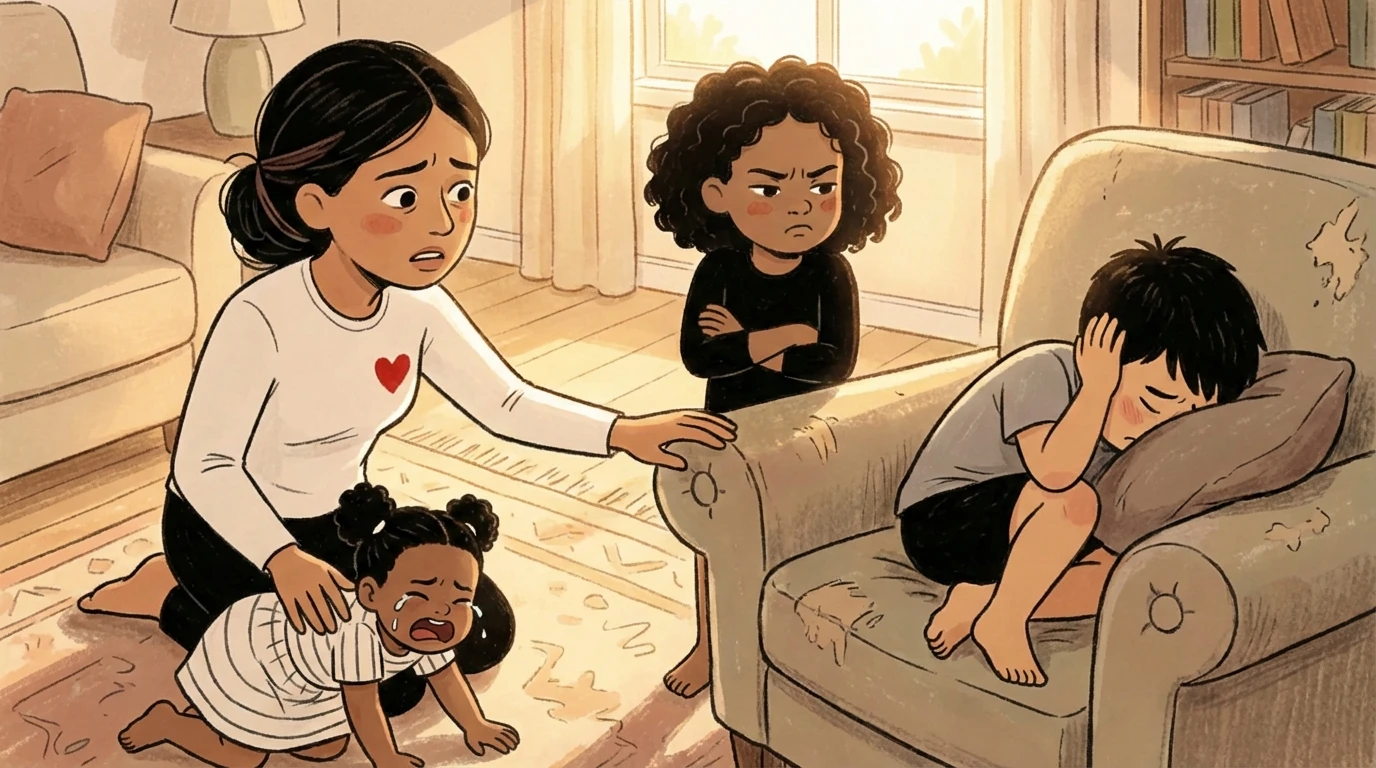
You know the scene. One kid is wailing because their sibling knocked over their block tower. The other is wailing because you looked at them with That Face. And you are standing there with a half-eaten granola bar, wondering if this is the day you lose it.
Two crying children feels like a five-alarm fire. Your nervous system throws you into fix-it mode. But nobody is dying. It is loud and miserable, not dangerous.
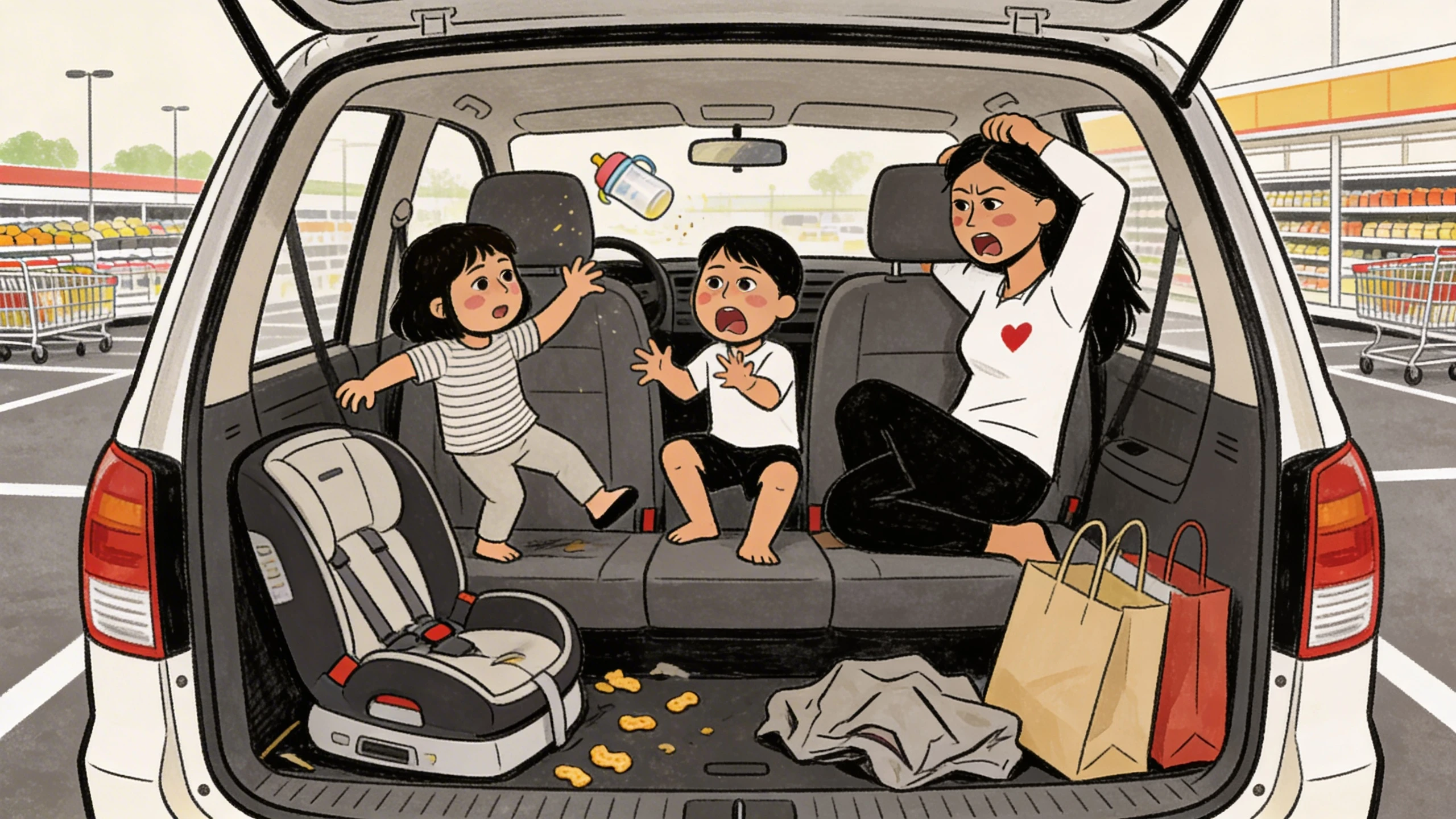
The single biggest mistake is choosing a side. The child you leave behind does not think, "Ah, triage. Reasonable." They think, "I don't matter." That feeling sticks long after the tears dry.
Two kids erupting at once
The Big Feelings course will show you how to triage multiple meltdowns
You'll know which child needs you first and what to say to the one who has to wait.
Both kids, both arms
When two children genuinely need you at the same time, the move is counterintuitive: attend to both.
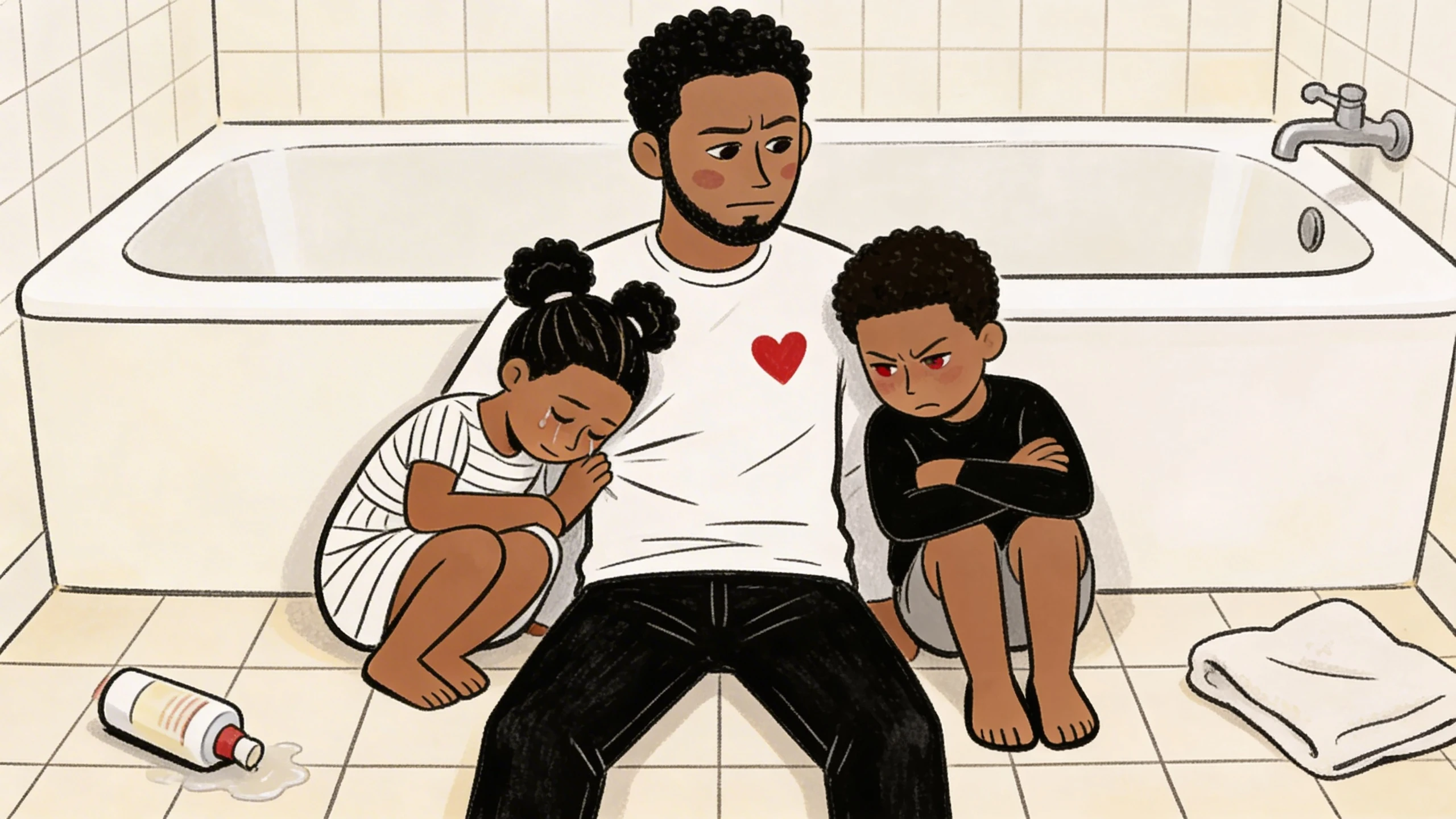
Sit on the floor. One child on your left, one on your right. Keep them arms' length from each other so they cannot escalate, but both within your reach. Then narrate:
"I have two very upset people right now. You both need me, and I am right here. You on this side, you on that side. There is room for everyone."
When you cannot split yourself
Sometimes the math does not work. One child has a bleeding knee and the other is furious about a stolen toy. Physical injury wins. But the child who waits needs a verbal bridge.
"Kaylee, I hear you. You are so mad and you need me. I am cleaning up this cut first, and then I am coming straight to you."
Name them. Acknowledge the feeling. Give a timeline. That verbal thread keeps the waiting child from spiraling into "nobody cares." It will not stop the crying, but it holds connection until you arrive. Understanding why siblings clash helps you stay grounded instead of taking it personally.
The child who insists on hovering
Your four-year-old is mid-meltdown and your six-year-old will not leave the room. Do not fight it. Forcing them away creates a second conflict.
Acknowledge both positions. To the melting-down child: "You don't want your brother here right now. I get that." To the hovering sibling: "You are worried about your sister. She is going to be okay. You can sit right there."
Managing proximity is easier than enforcing distance. Keep the hoverer on one side, the crisis on the other, and let them settle at their own pace.
The pre-game matters more than the crisis plan
The best way to handle two kids melting down at once is to make it happen less often.
Preventive connection is the cheat code. When each child gets regular one-on-one time with you, their emotional reserves run higher. They tolerate more frustration before tipping over and compete less for your attention because they trust their turn is coming.
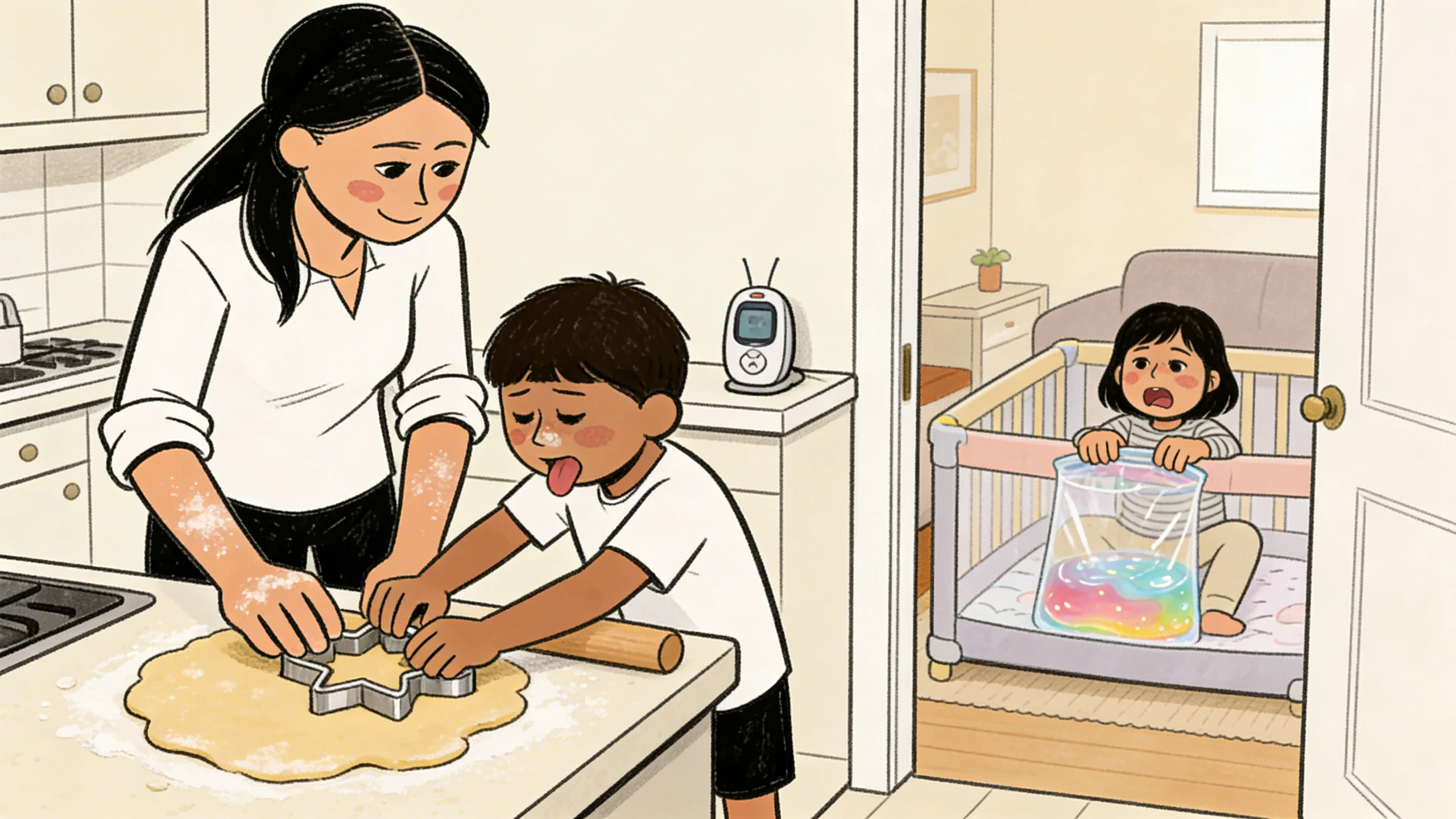
This does not mean scheduled "quality time" with candles and a gratitude journal. It means ten minutes before bed with your full attention on one kid. A walk to the mailbox. Letting them "help" you cook while their sibling watches a show.
How to handle two upset children at once
- Drop to their levelSit on the floor. Standing over two crying children escalates the power imbalance. Getting low signals safety and makes it physically possible to hold both.
- Position one on each sideKeep kids separated by your body so they cannot hit, grab, or scream directly into each other's faces. Your torso becomes the buffer zone.
- Narrate out loudTell them what is happening: 'You are both upset. I am here for both of you.' Verbal narration calms your own nervous system while letting each child know they are seen.
- Breathe before you fixTake three slow breaths. Your children's nervous systems will start to borrow your regulation. If you are in fight-or-flight, they stay there too.
- Connect, do not correctSkip the lecture about who started it. Say 'I am sorry this is so hard' instead of 'If you had not taken her toy, this would not have happened.' Teaching comes later.
- Debrief when everyone is calmHours later, or even the next day, revisit the moment. Name what happened, ask what they felt, brainstorm what could go differently. This is when the actual learning takes place.
What to do with the less upset child
Not every double meltdown is equal. Sometimes one child is in full crisis mode while the other is merely annoyed. When the gap is clear, connect briefly with the calmer child, then redirect them.
"Hey, I can see you are frustrated. I need a few minutes to help your sister. I have something special for you." Hand them an audiobook, a pre-packed activity box, or a sensory bag you keep in reserve for exactly this moment.
The key word is "pre-packed." If you have to assemble an activity while one child screams and the other tugs your sleeve, you have already lost. Keep a box of novel items ready to go and rotate contents every few weeks. For toddlers, a sealed sensory bag of hair gel and glitter works - secure it with enough tape that a determined sixteen-month-old cannot breach it.
The lecture trap
When two children are upset, your anxiety spikes. Anxious parents default to assigning blame and delivering lessons.
"If you had shared the markers like I asked, your sister would not be crying. Next time, listen when I tell you something."
That sentence accomplishes nothing. The prefrontal cortex goes offline when emotions flood the brain. Your child cannot process logic or absorb moral lessons. You are talking to a locked door.
The alternative is embarrassingly simple. "I am sorry this is so hard, buddy." No lesson. No correction. Just meeting them where they are and letting the storm pass. If you are completely overwhelmed by the noise, say so: "I need a second to breathe. I am right here."
Teaching waits until everyone has dry eyes and a full stomach. Bedtime works. The car ride the next morning works. Mid-meltdown never works.
It is okay if you cry too
Sometimes you will not hold it together. Two children are sobbing, dinner is burning, and the dog just ate a crayon. You are allowed to cry.
What matters is what you say about it. "I am feeling overwhelmed right now. That is okay. Everyone needs to cry sometimes, even parents. This is not your fault."
You are modeling that emotions are survivable. Your children are watching you have a big feeling without it destroying you. That is more powerful than any calm-down chart on the refrigerator.
One caveat: if you find yourself crying every time your children get upset, that is a support signal, not a failure signal. You may need someone to help you process your own emotional backlog so you have capacity left for theirs. Taking the parenting battery quiz can help you figure out where your reserves stand.
The thing nobody tells you about the long game
Here is the unexpected payoff of handling double meltdowns with patience instead of panic: your children learn to do it for each other.
When a child watches you hold their sibling through big feelings, they absorb the template. They learn what comfort looks like. They learn that someone in pain does not need a lecture, they need a person who stays.
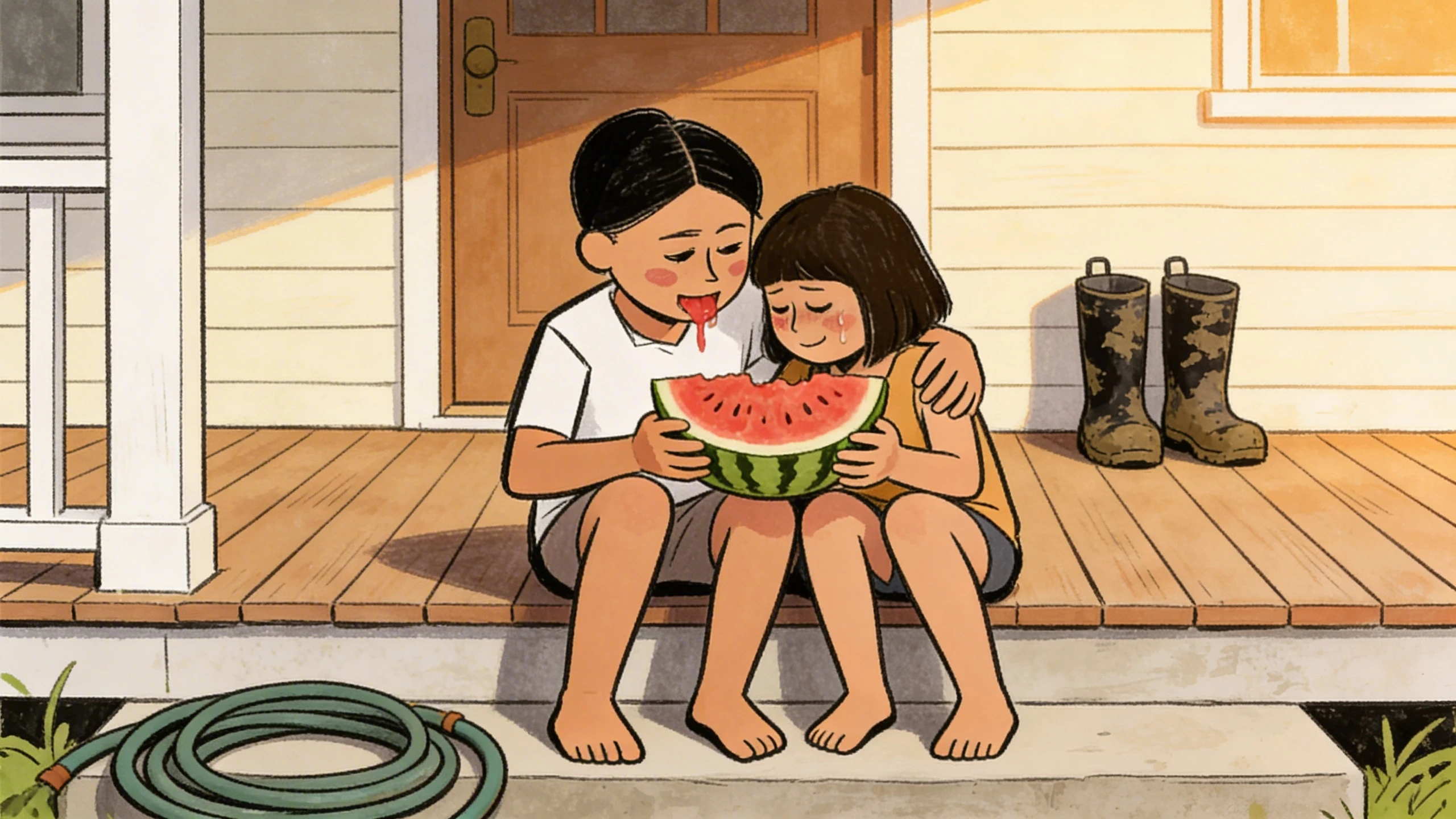
Over time, you will catch your older child sitting next to the younger one during a meltdown, quietly saying, "It is okay. I am here." They did not read a parenting book. They watched.
That is the entire point. You are not just surviving these chaotic double-meltdown moments. You are building people who know how to show up for someone else when things fall apart.
FAQ
Some children are more emotionally intense by temperament. The quieter child still needs acknowledgment, even if they seem fine. Check in with them after the crisis: 'That was a lot. How are you doing?' The child who copes silently still absorbs the stress.
Only if they are physically hurting each other. Otherwise, keeping them both close, one on each side of you, works better. Forced separation often creates a second conflict and sends the message that big feelings must be handled alone.
Three slow breaths before you do anything else. Remind yourself this is not an emergency. Lower your body to the floor, which signals safety to everyone, including you. If you need to step away for thirty seconds, say so out loud and come back.
Talk about it when the house is quiet, not during the crisis. Agree on a basic framework: who takes which child, what language you both use, what you will not do. Consistency between parents reduces confusion for kids and conflict between adults.
Children as young as four can begin imitating comfort behaviors they have seen you model. Do not expect or require it. When it happens naturally, notice it out loud: 'You sat with your sister when she was sad. That was kind.' Praise the behavior and it grows.