TLDR
- Children believe what you say about them. All of it. They are wired to accept parental interpretation of the world, including interpretations of who they are. Negative labels stick just as fast as positive ones.
- 'I'm stupid' is a conclusion, not a feeling. Underneath the self-judgment is frustration, embarrassment, or fear. Address the feeling first and the faulty logic second.
- Generic praise ('You're so smart!') makes it worse. Trait-based praise creates pressure to maintain the label. When kids inevitably struggle, the label collapses and they overcorrect to 'I'm dumb.'
- The word 'yet' is a small but powerful reframe. 'You can't do it yet' transforms a dead-end statement into a timeline. It implies future capability without dismissing current difficulty.
- What you say about your child when they 'aren't listening' lands hardest. Overheard comments to other adults carry extra weight because children assume you have no reason to spin it. They take it as raw truth.

Where "I'm stupid" comes from
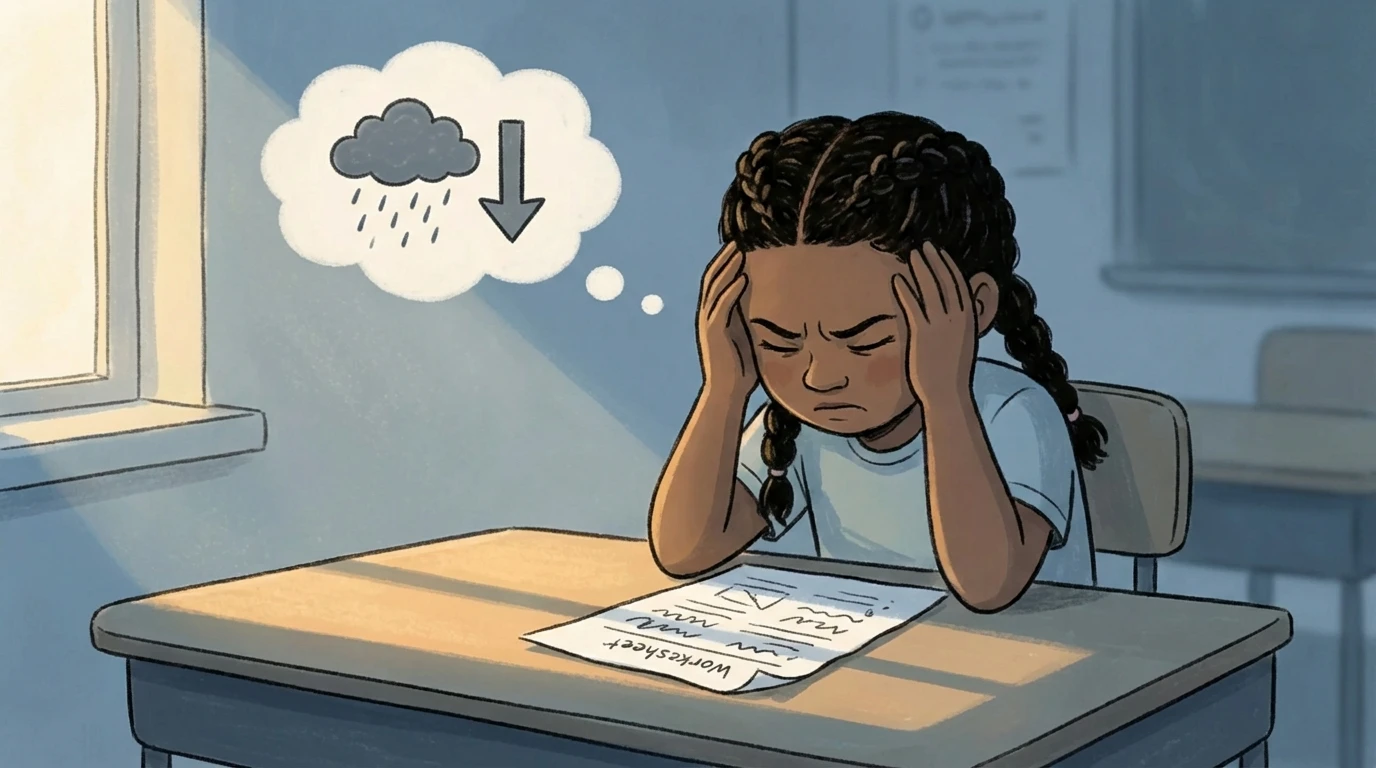
Your child did not invent this phrase in a vacuum. Somewhere between a failed spelling test and an older cousin who laughed at their drawing, they built a theory: when things go wrong, it is because something is wrong with me.
Children overgeneralize from specific failures to global identity. "I got these words wrong" becomes "I'm bad at spelling" becomes "I'm not a good student" becomes "I'm dumb." The slide from a single event to a permanent self-concept happens fast, sometimes in a single afternoon. A four-year-old excluded at recess does not think, "Social dynamics are complex." They think, "Nobody likes me."
And here is the part that stings: sometimes the source is us. The offhand "You'd lose your head if it wasn't glued on" over breakfast. The phone call where you told your sister, "You won't believe the day I've had with that kid." Your child heard all of it. They believed it, because children are wired to believe their parents the same way they believe the sky is blue.
I'm stupid again
The Big Feelings course will show you how to counter self-attack
You'll know what to say after "I can't do anything right" that doesn't sound like empty praise.
The mistakes that make it worse
Arguing them out of it
Your kid says "I'm so dumb" and every parental instinct screams, "No you're not! You're brilliant!" This feels like the right move. It is not.
Here is why: when you contradict their stated experience before acknowledging it, you communicate that their feelings are unwelcome. The child does not hear "You're smart." They hear "Your pain is incorrect." And they stop telling you about it.
Trait-based praise
Telling a child "You're so smart" seems like the antidote to "I'm stupid." But trait praise creates a trap. The child now has a label to protect. Every struggle becomes a threat to the label. So they avoid hard things, quit when it gets difficult, or crumble when they fail.
Praise the verb, not the adjective. "You worked through that whole page" beats "You're so smart" every time, because effort is something a child can always control.
Rushing past the feeling
"Don't say that about yourself!" is a command, not a comfort. The child's self-criticism is painful for you to hear. But your discomfort is not the emergency. Their feeling is. Sit with it for ten seconds before you try to fix it.

What to do instead
Step one: validate the frustration
"You're really disappointed you didn't know those words." Full stop. No "but." No pivot to positivity. Just let them feel heard.
When a child feels safe enough to express vulnerability instead of locking it behind self-criticism, the processing begins. The negative expression comes first because it needs somewhere to go. After venting, most children naturally access other feelings on their own.
Step two: separate the event from the identity
"You forgot your shoes. That does not make you stupid. It makes you a kid who forgot their shoes." Behavior is temporary and specific. Identity is not up for review based on a single Tuesday.
A child who hears "You got these words wrong, and these are hard words" receives different information than a child left in silence to conclude "I'm dumb."
Step three: add "yet"
"You can't do long division yet." One word. Three letters. It transforms a wall into a road. "Yet" signals that current inability is a temporary condition, that future capability is expected and inevitable. It is the growth mindset compressed into a single syllable.
How to respond when your child says 'I'm stupid'
- Pause before you reactYour alarm is valid but unhelpful. Take a breath. A panicked response ('Don't say that!') shuts the conversation down before it starts.
- Acknowledge the feeling underneathSay what you see: 'You're really frustrated that you couldn't get that right.' Name the emotion, not the self-judgment. This tells the child their pain is welcome here.
- Separate the event from identityBe specific: 'You missed three questions on a hard test. That is not the same as being stupid.' Shrink the failure back to its actual size.
- Add 'yet' to their statementReflect their words back with one addition: 'You can't do it yet.' This reframes a dead end as a timeline and implies capability ahead.
- Describe what you observeUse undeniable, specific evidence: 'You read that whole chapter by yourself last night.' Concrete observations are harder to argue with than global praise.
- Let them overhear something goodTell another adult, within earshot: 'She stuck with that math sheet even when it got hard.' Overheard praise lands deeper because the child assumes you had no reason to spin it.

The overhearing trick
When you tell your child directly, "You're capable," they may resist. They have counter-evidence stacked up. But when they overhear you telling their grandmother, "She stuck with that project even after she messed up the first two tries," something shifts. Overheard statements bypass the child's defenses. You were not trying to convince them. You were just saying what you believe.
Use developmental language: "He's getting better at handling mistakes." "More and more often, she picks herself up after a setback." The phrasing matters. "He's resilient" is a fixed trait that creates pressure. "He's getting better at bouncing back" is a process they can continue.
When the inner critic sounds like your voice
Here is the uncomfortable part. Sometimes your child's inner critic is quoting you. Not the words you chose carefully. The ones that slipped out when you were tired: "Why can't you just remember?" "You always do this."
You cannot unsay them. But you can start saying different things, louder and more often. Children's self-concept works more like a running average than a photograph. Every specific observation you make ("You figured out how to fix that yourself") adds a data point that competes with the negative ones.
Model your own mistakes out loud too. "I burned dinner. Good thing that does not mean I'm a terrible cook, just a distracted one today." Your child is watching how you talk to yourself about failure.
Building the longer game
Genuine self-esteem has two parts: the sense that you are valuable regardless of what you do, and the confidence that you can handle hard things. The first comes from unconditional love. The second comes from surviving hard things.
Support without doing it for them. Give your child as much help as they need to succeed, but do not take over. Children need to see the causal link between their effort and the outcome. When they experience "I tried and it worked," they have counter-evidence for next time.
Problem-solve instead of labeling. "You always forget" makes forgetting part of their identity. "It is hard to remember. What could help you remember tomorrow?" makes them the problem-solver instead of the problem.
Watch for perfectionism. A child who melts down over a single wrong answer, who rips up drawings, who refuses to try new things, may believe that anything less than perfect means worthless. Name it when you see it: "That voice in your head is saying you have to get it perfect. That voice is being really bossy right now."

The timeline you are working with
This is not a one-conversation fix. You are rewriting a voice that plays on loop in your child's head. Every time you validate the frustration instead of arguing with the conclusion, you turn the volume down a notch. Every time you describe what you see them do well, you offer a competing track.
Some days they will still say "I'm the worst." You will feel like nothing is working. But the running average is shifting. And one afternoon, instead of "I'm stupid," you will hear, "I can't do this yet." That "yet" is everything.
FAQ
You cannot control what others say, but you can increase the volume of accurate, specific observations at home. Provide enough counter-evidence that the label stops fitting their self-concept over time.
It shuts down disclosure. The child learns self-criticism is not safe to share with you, so they keep doing it silently. Acknowledge the pain first: 'That sounds harsh. What happened?'
Occasional 'I can't do this' is typical. Watch for global statements ('I'm always bad at everything'), daily frequency, and avoiding activities they used to enjoy. Consistent patterns warrant a conversation with a child therapist.
Children as young as four overgeneralize from failures. If negative self-talk is persistent, intensifying, or accompanied by withdrawal from activities and relationships, talk to your pediatrician regardless of age.
Effort praise encourages children to embrace challenges. Trait praise makes them avoid difficulty to protect the label. 'You worked hard on that' gives them something they control. 'You're smart' gives them something they can lose.