TLDR
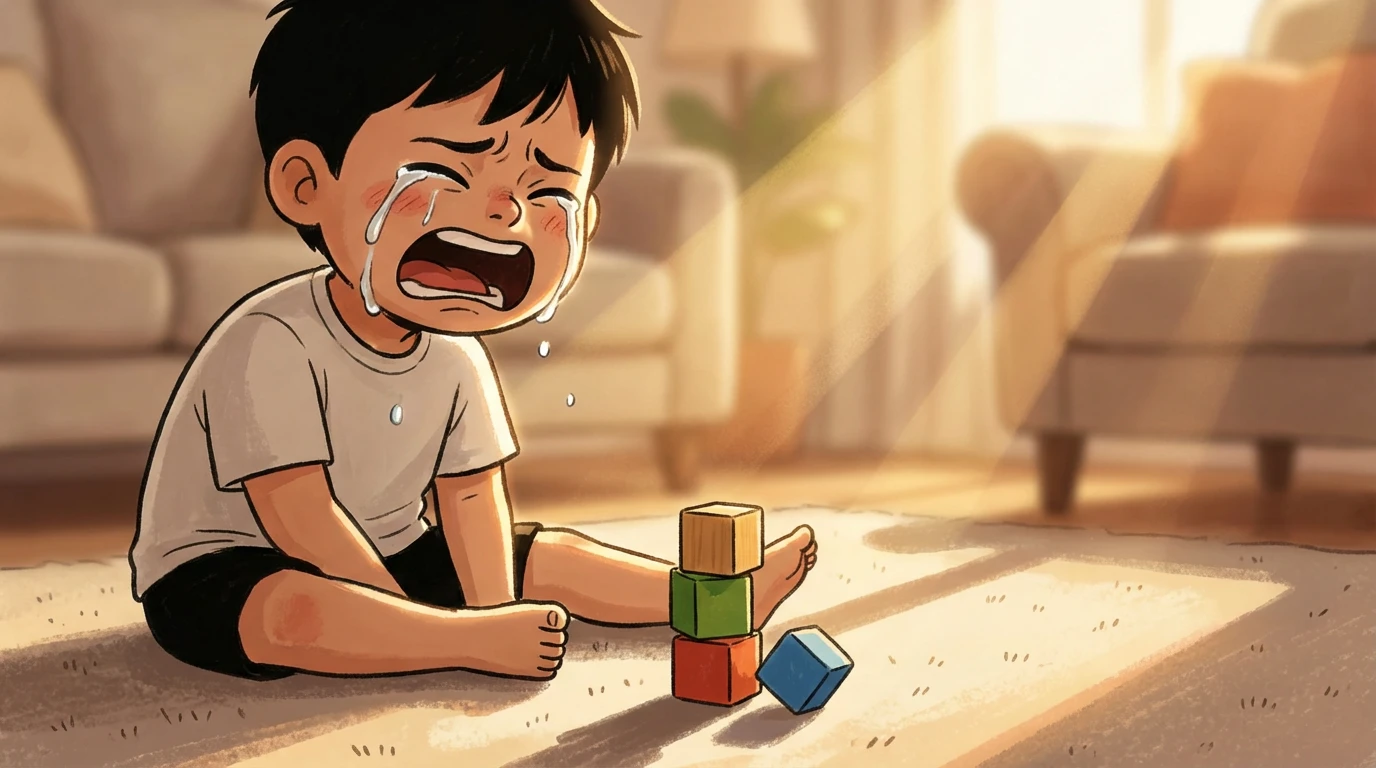
- The meltdown is never about the thing. A child sobbing over a broken cracker is releasing stored frustration, anxiety, and hurt that accumulated all day. The cracker was just the trigger.
- Pessimistic thinking has four patterns you can spot. Permanence, pervasiveness, personalization, and powerlessness. Each one warps a small setback into proof that life is terrible and always will be.
- Empathize before you redirect. Arguing a child out of their feelings shuts down the processing they need. Validate first, reframe second, always in that order.
- Laughter empties the emotional backpack too. Giggling discharges the same pent-up emotional energy as tears. Daily roughhousing or silly games reduce the pressure so small setbacks stay small.
- Self-soothing is a learned skill, not a personality trait. Children build the neural pathways for calming themselves by being physically soothed by a parent, over and over, until the pattern becomes automatic.

The cracker that ended the world
You hand your kid a cracker. It breaks in half. And suddenly you are living inside a disaster movie where the protagonist has been personally betrayed by a snack food.
Ten minutes of sobbing. Over a cracker. You know this is about more than the cracker. But in the moment, knowing that does not make the screaming quieter.
Kids who overreact to small setbacks are carrying a full backpack of unprocessed feelings. Throughout the day, things scare them, frustrate them, embarrass them, or hurt their feelings. Most of those emotions get stuffed down because there was no safe moment to feel them. Then one tiny disappointment lands on top of the pile, and the whole thing avalanches.
The cracker was the last grain of sand. The mountain was already there.
Why some kids blow up and others shrug it off
Four things determine whether a child meets a disappointment with a sigh or a full-body meltdown. Most kids who overreact have at least two of these running simultaneously.
The stuffed backpack
Every human needs a witness for big feelings. When someone you love sits with you while you are sad, you feel safe enough to feel the sadness, and feeling it is the only way it moves through. Kids spend their day at school where expressing vulnerability gets you mocked. So the feelings get shoved down.
A child who overreacts to everything is often a child who has not had enough chances to feel their feelings all the way through.
Anxiety and shaky self-soothing
Some kids have a harder time calming themselves down after something goes wrong. Self-soothing is a learned skill that develops through being physically soothed by a parent, hundreds of times, until the neural pathways fire on their own. If your child is highly sensitive, they may need more repetitions before the skill sticks.
Sobbing over a broken crayon
The Big Feelings course will help you shrink those disproportionate reactions
You'll respond to the small disappointment in a way that teaches proportionality without dismissing the tears.
Pessimistic thinking patterns
Martin Seligman, the researcher who pioneered the study of optimism, identified four thought patterns that turn a small setback into a catastrophe. When your child's reaction seems wildly out of proportion, one of these is running the show.
Permanence: "This ALWAYS happens." The child believes the bad thing is forever. A friend who was busy one day becomes a friend who will never play with them again.
Pervasiveness: "NOTHING ever works out." One bad thing becomes evidence that every area of life is failing. A lost game means they are bad at everything.
Personalization: "It happened because something is wrong with ME." The child takes external circumstances and makes them about their identity. A classmate being rude must mean they are unlikeable.
Powerlessness: "There is nothing I can do." The child sees no connection between their actions and outcomes. Things just happen to them. They are a passenger.
If your child's setback reactions look more like spiraling worry than frustration, anxiety may be amplifying these patterns.

What to do in the middle of the meltdown
Your child is wailing because the blue cup is dirty and they wanted the blue cup. Your instinct is to explain that the green cup holds the same amount of liquid. Resist that instinct.
Empathize before you redirect. Always. When you argue with a child's experience ("But the green cup is fine!"), you communicate that their feelings are wrong. This shuts down the emotional processing they need. The feelings do not disappear. They get shoved back into the backpack for next time.
Instead: "You really wanted the blue cup. That is so frustrating when the thing you want is not available."
You are not solving. You are witnessing. And witnessing is what allows the feelings to move through instead of getting stuck.
Do not try to stop the crying. The sobbing over the blue cup is doing real work. Your child is releasing stored frustration from the entire day (or week). The overreaction is a release valve, and you want that valve open.
Say just enough to keep them feeling safe: "I know this is hard. I am right here." Then wait.
How to help your child recover from setbacks
- Empathize with the feeling firstBefore offering solutions, reframes, or logic, acknowledge what they are experiencing. 'You really wanted that and it did not work out. That is so disappointing.' Full stop. Let them feel heard before anything else.
- Let the tears do their jobCrying releases stored emotional energy. Stay close, stay quiet, and let the wave pass. Trying to stop it forces the feelings back underground where they will fuel the next meltdown.
- Challenge the thought pattern gentlyOnce they are calmer, ask: 'Will this always be true, or could it be different next time?' This targets permanence. 'What parts of your day did go well?' targets pervasiveness. Questions work better than lectures.
- Offer a physical soothing toolTeach them to tap the base of their hand (the karate-chop point) when upset. Practice it together when they are calm so it becomes automatic during distress. A short mantra like 'this will pass' paired with the tapping strengthens the association.
- Retell the story together laterThat evening, revisit what happened. Let them tell it their way, validate the hard parts, then ask: 'Is there another way to see what happened?' This links the feeling brain to the thinking brain and helps them draw healthier conclusions.
Teaching your kid to argue with their own brain
You cannot follow your child around correcting their thinking forever. Cognitive therapists use a process called NED that works surprisingly well with kids.
Notice the voice
Help your child notice when their inner voice is saying something harsh. "Did you hear what your brain just told you? It said you will never be good at this. Is that true?"
Most kids do not realize they have an internal narrator trashing them. Pointing it out is where the whole thing starts.
Externalize the critic
Some kids respond well to giving the negative voice a name. Call it "NED" or whatever ridiculous name your kid picks. When the negative thought becomes something happening to the child rather than something the child believes about themselves, they can fight it.
Dispute the claim
Your child already knows how to argue. (You are aware of this.) They dispute your authority twelve times before breakfast. Now they redirect that skill inward: "NED says nobody likes me. But Layla invited me to her house last week, so that is not true."
Over time, this becomes automatic. The catastrophic thought fires, the dispute fires right after it, and the overreaction loses its fuel. Building these habits is what developing resilience looks like in practice.

The laughter shortcut nobody talks about
Crying is one way to empty the emotional backpack. Laughter is the other. Giggling discharges the same pent-up energy as tears, and it is a lot more fun for everyone involved.
Daily roughhousing, pillow fights, or silly games where you are hilariously incompetent reduce the emotional pressure so that when a setback hits, your child is not already at capacity. For a kid who loves to be right (and if your child overreacts to setbacks, they probably do), play games where you are spectacularly wrong. Let them correct you. The laughter that comes from feeling powerful is exactly the kind of release that prevents meltdowns later.
What your own reactions are teaching them
Your child is watching how you handle disappointment every single day. When you lose your keys and mutter "of course, because nothing ever goes right for me," they absorb the permanence and pervasiveness patterns you are modeling.
Experiment with narrating your own coping out loud. "Well, that did not go how I planned. I am annoyed. But I will figure it out." You are showing them that setbacks are temporary, specific, and something you have power over.
Wondering whether your child's reaction intensity is within the normal range? Assessing their emotional skills can help you decide. And if your child's overreactions are tied to how they see their own abilities, helping them shift toward a growth mindset changes the story they tell themselves after every stumble.

FAQ
It is within the range of normal, though most seven-year-olds can manage minor disappointments without a full meltdown. Frequent intense reactions suggest the child needs help building self-soothing skills. If it is getting worse rather than better, consider a few sessions with a child therapist.
Ignoring teaches the child their feelings are not worth acknowledging, which makes the backpack heavier. Instead, stay present and empathize without trying to fix or stop the reaction. You do not need to talk much. 'I see this is really hard for you' and a nearby presence is enough.
You will likely notice small shifts within two to three weeks of consistent empathy, daily laughter, and cognitive reframing. The neural pathways for self-soothing take months to strengthen. Progress is not linear, so expect rough days mixed in with the improvements.
Dwelling on old slights suggests the child has not fully processed the emotions from that experience. Use the retelling technique: let them narrate the event, validate their feelings, then ask if there is another way to see it. Repeated retelling with a supportive listener helps the brain file the memory as resolved.