TLDR
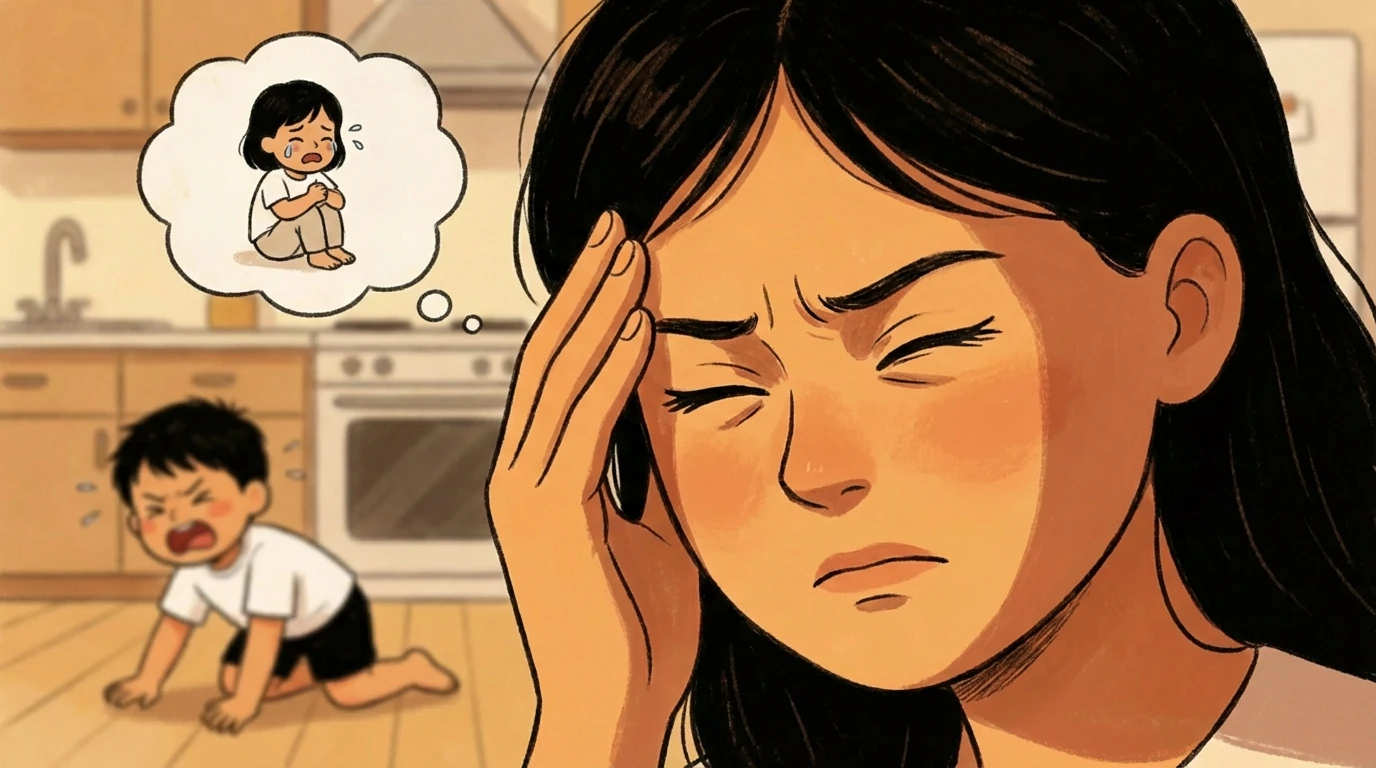
- The reaction that feels out of proportion is out of proportion. When your four-year-old's whining makes you want to scream, that intensity belongs to something older. Your body is responding to a threat that existed decades ago.
- Triggers live in your body, not your thoughts. The clenched jaw, the heat in your chest, the tunnel vision. These physical signals arrive before any conscious thought. Healing happens through body awareness, not by analyzing the story.
- Your child activated this reaction. The emotional charge was already stored. Their behavior was the match, but the fuel was loaded long before they were born.
- Feeling the sensation without acting on it is the work. Every time you notice the trigger and resist lashing out, you reduce its power. The charge fades through feeling, not through willpower or suppression.
- This is lifetime work, and every step counts. You will not fix this in a weekend. But each time you pause instead of reacting, you build neural wiring that makes the next pause easier.

The moment your body hijacks your brain
You are standing in the hallway. Your kid is screaming because you said no to a second popsicle. This is, by any rational measure, a minor situation. And yet your heart is hammering, your jaw is locked, and you can feel something hot and dangerous rising in your chest.
The reaction does not match the moment. You know this. Your thinking brain knows a popsicle standoff is not a crisis. But your body did not get the memo. Your nervous system just flagged this interaction as a threat, and it pulled the response from a file that was created when you were a child.
Your kid does something (whines, defies you, cries in a particular pitch, gives you the silent treatment) and your body reacts as if something terrible is happening. Because in the original recording, something terrible was happening. You just were not old enough to process it at the time.
The nervous system mechanism behind this reaction operates faster than conscious thought. By the time you realize you are activated, you are already in fight, flight, or freeze.
Your kid whined, you snapped
The Breaking the Cycle course will show you what's behind the flash of rage
You'll feel the trigger rise and name its origin instead of letting it hijack the next ten minutes.
Why your kid is the one who finds the buried wire
Your child is the single most effective trigger-finder in your life. They hit every wire you buried, often multiple times a day, with the innocent precision of someone who has no idea they are doing it.
The matches and the fuel
Your child's behavior is the match. The fuel was loaded decades ago. A toddler's defiance might activate the same helpless rage you felt when your own parent dismissed your feelings. A seven-year-old's tears might trigger panic because crying was punished in your house growing up. Your kid's whining might produce a flash of anger that belongs to a much younger version of you.
Your children find these wires so reliably because parenting puts you in the exact emotional conditions (exhaustion, loss of control, dependency, helplessness) that defined your childhood. You are tired, you are needed, and someone smaller than you is expressing big emotions at full volume.
Common trigger patterns
A few of the most common childhood triggers parents report:
- A child's crying triggers rage. Often rooted in homes where crying was met with punishment or withdrawal.
- A child's defiance triggers panic. Common when the parent grew up with authoritarian caregivers where obedience equaled safety.
- A child's neediness triggers suffocation. Frequently linked to childhoods where the parent had to be the caretaker, and now any demand feels like too much.
- A child's silence triggers dread. Often connected to homes where silent treatment was the weapon of choice.

The body is where the work happens
Most parents try to think their way out of triggers. They read articles (like this one), understand the psychology, and believe that awareness alone will fix it. Awareness helps. But triggers live in your body. The clenched gut, the hot face, the arms that want to grab or push away.
The path through a trigger is physical, not intellectual. You have to feel the sensation in your body without acting on it, without running from it, and without analyzing it. When you allow yourself to stay with the discomfort, something shifts. The charge begins to dissipate. Staying present with the sensation allows your brain to finally process the old memory that was never completed.
The ninety-second window
A wave of emotion, felt fully without resistance, peaks and passes in about ninety seconds. The reason triggers feel like they last for hours is that we keep re-triggering ourselves by replaying the story. I cannot believe she just spoke to me like that. My mother would have... I would never have dared... Each loop through the story fires the sensation again.
Drop the story. Stay with the body. Chest tight? Breathe into it. Jaw locked? Notice it. Hands shaking? Let them. Ninety seconds. That is the price of processing what you have been avoiding, possibly for thirty years.
How to interrupt a childhood trigger in the moment
- Notice the body signal firstTriggers live in the body before the brain catches up. A clenched jaw, heat in the chest, tunnel vision, the urge to yell or flee. Name the sensation silently: 'There it is. Tight chest. Racing heart.' This shifts you from reactive mode to observer mode.
- Drop your agenda temporarilyWhatever you were trying to accomplish (getting shoes on, finishing dinner, enforcing a rule) can wait sixty seconds. Release the urgency. The situation is not an emergency, even though your body is screaming that it is.
- Resist the urge to act or speakThe impulse to set your child straight while activated almost always makes things worse. Bite your tongue. Turn away if you need to. A calm parent who paused is more effective than a dysregulated one who powered through.
- Breathe into the sensation without analyzingPlace your attention on wherever the discomfort sits in your body. Breathe into that spot. Do not try to figure out why you feel this way or trace it to a specific memory. Just feel it. The sensation will shift within about ninety seconds if you let it.
- Return and respond from the presentOnce the wave passes, you are back in the room with your actual child, not the ghost of whoever hurt you. Now you can set the limit, offer the comfort, or hold the boundary from a regulated place.

What you are healing when you pause
When you pause instead of reacting, you prove to your nervous system that the old threat is over. The parent who yelled, the caregiver who withdrew love, the household where emotions were dangerous: those conditions no longer exist. You are safe.
Every time you feel the trigger and choose not to act on it, you reduce its power. The neural pathway that once fired automatically starts to weaken. The reaction that used to take over in half a second arrives with a one-second delay, then two, then five. In those few seconds, you have a choice, and choice is what was missing in your childhood.
This is the deeper work behind breaking patterns you inherited. Surface strategies (staying calm in the moment, using scripts, counting to ten) are useful, but they fail on your worst days because the trigger overwhelms them. Healing the trigger itself is what makes them stick.
When the charge starts to fade
You will know it is working when an interaction that used to send you into orbit produces a milder reaction. Your daughter screams at you and instead of rage, you feel a pang of sadness. Your son slams his door and instead of the urge to rip it off the hinges, you feel tired. The sadness and tiredness are the real feelings underneath the anger. Anger was always the bodyguard. When the bodyguard steps aside, the vulnerability comes through.
That is progress. It looks like a parent standing in a hallway, feeling sad instead of furious, and then walking into their child's room to sit down and listen.
The shame trap (and how to sidestep it)
The biggest obstacle to this work is shame. Not your child's shame. Yours. The voice that says: A good parent wouldn't feel this way. A good parent wouldn't want to scream at their kid. Something is wrong with me.
That shame keeps triggers locked in place because shame makes you avoid looking at the wound. You push the feeling down, power through, and promise to do better next time. But "better" without processing is just white-knuckling, and it breaks down the moment you are tired enough, stressed enough, or activated enough.
Self-compassion is the container that makes healing possible. When you notice a trigger and think, "That reaction came from somewhere old, and I am working on it," instead of "I am a terrible parent," you create enough safety to feel the feeling. Without that safety, the feeling stays buried and waits for the next activation.
If you want to identify which specific patterns you carry from your own upbringing, this quiz can help you map them. Knowing your particular wires makes it easier to recognize them in real time.
What about your kids while you do this work
Your children do not need you to be healed before you can parent them well. They need you to be honest. A parent who says, "I got really activated just now and I need a minute to calm down," is teaching their child more about emotional regulation than a parent who never loses composure.
The reparenting work happens alongside your actual parenting. You will lose it sometimes and react from the old place. Then you will go back, repair, reconnect, and try again. Your kids will watch you do this. They will learn that big feelings are survivable, that mistakes get repaired, and that the people who love them are willing to keep growing.
That is the cycle you are building to replace the one you inherited.

FAQ
Normal frustration matches the situation. You feel annoyed, you deal with it, and it passes. A trigger feels bigger than the moment warrants. Your heart races, your vision narrows, and you feel an urgent need to control the situation or flee. If your four-year-old whining makes you feel like screaming, that intensity gap is the signal.
You can make real progress on your own by noticing triggers, feeling the body sensations, and resisting the urge to act. But if you find yourself stuck in the same patterns despite consistent effort, or if the emotions feel too overwhelming to sit with safely, a therapist trained in trauma can accelerate the work.
Occasional ruptures in the context of a loving relationship do not cause lasting harm. What matters is repair. Go back, apologize, name what happened, and reconnect. Children are wired for connection and respond well to genuine repair at any age.
Whoever notices first calls it. Say out loud, 'I am triggered right now and I need a minute.' Tag out if you can. If you cannot, both of you focus on safety only. No teaching, no correcting, no limit-setting beyond physical safety. Debrief together after the kids are in bed.