
TLDR
- Testing limits is their job. Children are wired to probe boundaries the way scientists poke at hypotheses. Every time they ignore your rule, they're collecting data on whether it's real. Your consistency is the answer.
- Repeating yourself teaches them to ignore you. If you say 'stop' five times before you act, your child learns the first four are just noise. State the limit once, pause, then follow through.
- Your emotional reaction is the reward. A big reaction from you (yelling, threatening, lecturing) is more interesting to a child than compliance. The calmer and more boring you are, the less payoff the testing provides.
- Follow-through is the whole game. A boundary without a consequence is a suggestion. You don't need to be harsh. You need to be predictable. Every single time.
- They need you to hold the line more than they need you to be nice. Kids with consistent boundaries feel safer, have fewer meltdowns, and paradoxically cooperate more. The short-term tears are buying long-term security.

Why they heard you and did it anyway
Your child is running an experiment.
When you say "don't throw the food" and your toddler locks eyes with you and drops a fistful of pasta on the floor, they are asking a very specific question: Is this a real boundary, or does it have give?
Boundary-testing is a developmental task, not a character flaw. Toddlers, preschoolers, and school-age kids all do it. The method gets more sophisticated with age (a two-year-old throws the food; a seven-year-old argues about why the rule is unfair), but the underlying question is the same.
Here's what's happening in their brain:
- Cause-and-effect learning. A toddler who pushes a block off a table watches it fall, picks it up, and does it again. Limit-testing is the social version of the same experiment. If I do this, what happens?
- Autonomy development. Your child is learning where their will ends and yours begins. Pushing back is how they map those borders.
- Safety-checking. This sounds backward, but kids test boundaries to confirm they exist. A boundary that holds is a wall they can lean against. A boundary that collapses is a wall they can't trust.
The testing gets worse when boundaries are inconsistent. If you hold the limit on Monday but give in on Wednesday because you're exhausted, your child just learned that persistence works. Intermittent reinforcement (sometimes yes, sometimes no) produces more testing behavior than consistent reinforcement, not less. It's the slot machine principle: unpredictable payoffs keep you pulling the lever.
The three responses that make it worse
Most parents rotate through a handful of reactions when a limit gets ignored. Three of them reliably make the problem bigger.
The repeat-and-escalate spiral
You say "stop" nicely. They ignore you. You say it louder. They ignore you. You say it with a threat attached. They might stop, or they might keep going because they've learned the first three rounds don't count.
Repeating a limit without following through teaches your child exactly how many times they can ignore you. If you always act on the fifth ask, congratulations: you've trained them to tune out the first four. When you feel your frustration building after the second ignored instruction, that's your signal to act, not to repeat.
The explosion
You've asked nicely three times. Nothing. So you snap. You raise your voice, maybe grab the toy, maybe send them to their room with a door slam.
The problem: your child just got the biggest, most interesting response of the day. A dramatic reaction is more stimulating than compliance. Kids who get a huge emotional payoff for limit-testing will do it again because the show was worth the price of admission.
The cave
You said no screen time before dinner. They asked again. You said no. They whined. You said fine, ten minutes. Every time you cave after initial resistance, you prove that your limits are negotiable. The child's takeaway is correct: if I push hard enough, the boundary moves.
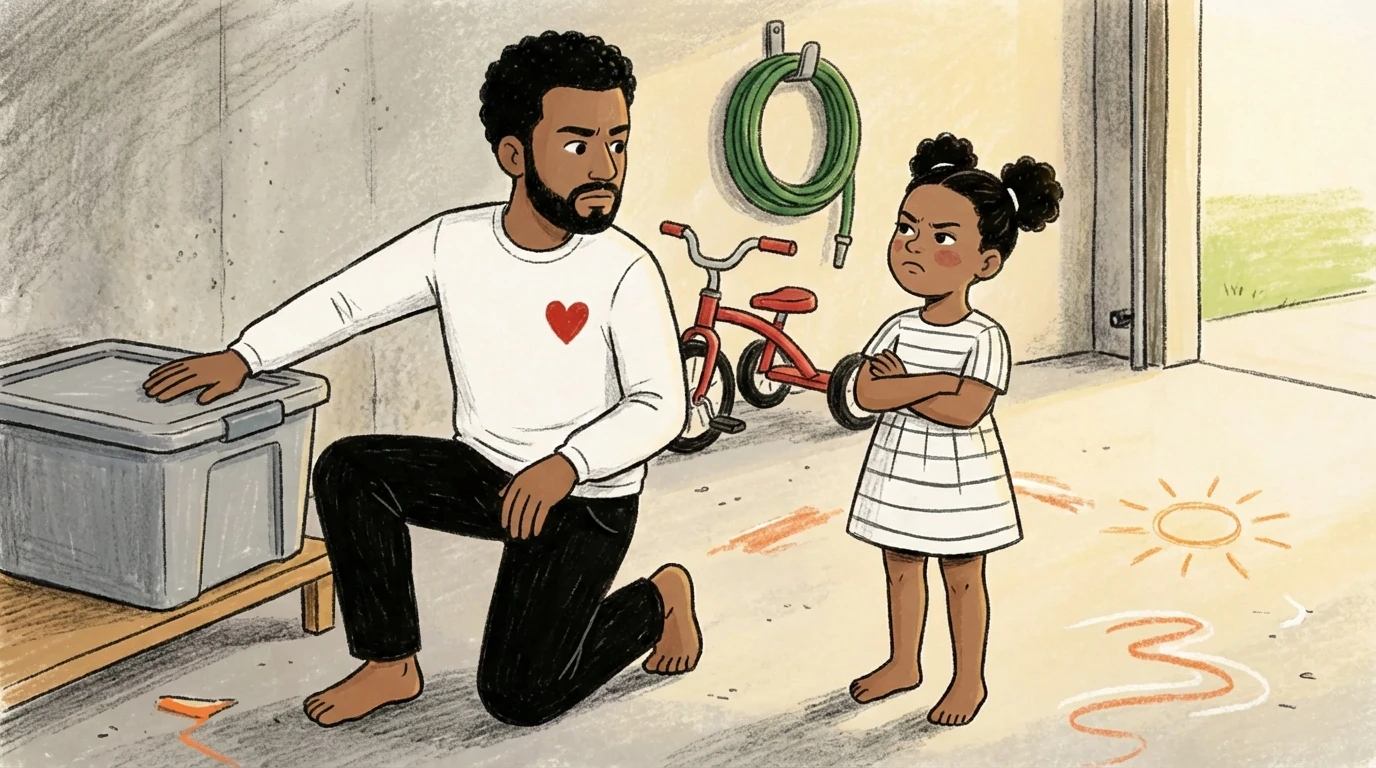
Eye contact, then defiance
The Discipline Without Punishment course will show you what to do after they deliberately ignore you
You'll have a calm next move ready for the moment they look at you and do it anyway.
What to do instead (the boring parent method)
The most effective response to a child ignoring your limit is also the least satisfying one. Be boring.
State the limit once
Use short, present-tense language. "The blocks stay off the table." "We're leaving the park now." "Hands are not for hitting."
No justification. No "because I said so." No three-paragraph explanation about why this rule exists. Short sentences land harder than lectures when a child is in testing mode. Their brain is not in a state to absorb your reasoning. Save the explanation for later.
Pause
Give them five to ten seconds. Kids process language slower than adults, and that gap widens when emotions are involved. If you say "stop" and immediately escalate because they haven't complied in two seconds, you're not giving the instruction time to land.
The pause also communicates something: you're not worried. You're not frantic. You said the thing and you're waiting, because you know what happens next.
Acknowledge, then follow through
If they continue after the pause, name what you see. "You really want to keep doing that. The answer is still no. I'm putting the blocks away now."
Then do it. Move the blocks. Leave the park. Remove the object. The follow-through is the boundary. Everything before it was just words.
No countdown. No "I'm going to count to three." Countdowns teach kids they have three more seconds of free rein. Just act.
Stay emotionally flat afterward
No lecture. No "See what happens when you don't listen?" No disappointed head shake. Move to the next activity. The less emotional charge you attach to the moment, the less interesting it is. Boring consequences get tested less.
When the ignoring escalates into full defiance, the same principles apply with higher stakes, but the foundation is identical: state, pause, act, move on.
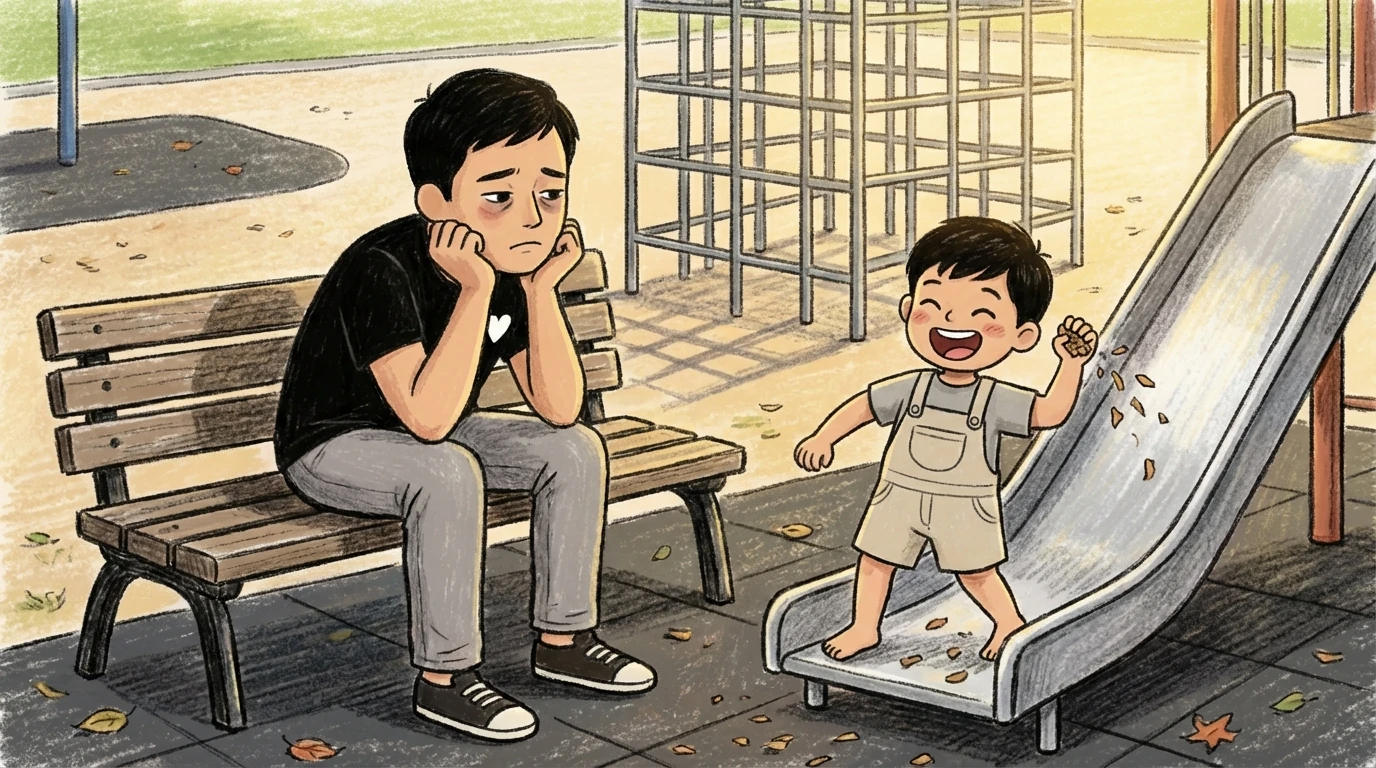
The boundary sandwich (for when you need more than one sentence)
Sometimes a bare restatement isn't enough. The child is upset, the situation is charged, and you need a structure. Try the three-part sequence: acknowledge, hold, redirect.
"You want to keep playing. I get it. We're leaving now. Do you want to walk to the car or should I carry you?"
This works because of the order. Acknowledgment first opens the channel (a child in emotional flood can't process an instruction until they feel heard). The boundary in the middle is sandwiched between two things that feel tolerable. The choice at the end gives them a scrap of control, which is usually what they were fighting for in the first place.
Why choices matter
The more control children have over their daily lives, the less they need to fight you on the non-negotiables. A child who gets to choose their cereal, pick their shirt, and decide which shoe goes on first has enough autonomy that the limits you do set feel less oppressive.
This works because limit-ignoring is often about power, not about the specific thing you said no to. They don't desperately need to throw blocks at the table. They need to feel like their preferences count for something.
If both caregivers aren't enforcing the same boundaries, the testing increases because the child has discovered a loophole worth exploiting.
When the testing gets physical
There's a line between a child ignoring "stop throwing blocks" and a child who responds to limits with hitting, kicking, or throwing things at you. If your child's reaction to a boundary consistently includes physical aggression, that's a signal the regulation skills need more support than boundary-holding alone provides.
Watch for patterns, not isolated incidents. A three-year-old who swats at you once when you take the iPad is having a bad moment. A three-year-old who hits, kicks, or throws things every time you set a limit needs a different approach.
How to hold a limit your child is ignoring
- State the limit once, clearlyUse simple, present-tense language: 'The blocks stay off the table.' No justification, no lecture. Short sentences land harder than long explanations when a child is already testing.
- Pause and waitGive them five to ten seconds. Kids process language slower than adults, especially when emotions are running. The pause also shows you're not rattled.
- Acknowledge the feelingSay what you see: 'You really want to keep throwing those.' This names their experience without backing down from the boundary. It catches kids off guard because they expected a fight.
- Restate and follow throughIf they continue, say: 'I told you the blocks stay off the table. I'm going to put them away now.' Then do it. No countdown, no second warning.
- Stay boring afterwardNo lecture about why they should have listened. No guilt trip. Move on to the next activity. The less emotional charge you give the moment, the less reason they have to repeat it.
The long game (it's longer than you want)
You will set the same limit dozens of times before it sticks. That's how learning works.
Toddlers need many repetitions of a boundary before it becomes internalized. The prefrontal cortex, the part of the brain responsible for impulse control, is still under construction until the mid-twenties. You're asking hardware that isn't finished yet to run software that requires it.
The evidence your approach is working won't be the absence of testing. It will be the speed of the recovery. A two-year-old might rage for twenty minutes after you hold a limit. Six months of consistency later, the same child might whimper for thirty seconds and move on. That compression is the progress.
Every time you hold the boundary the same way, you're adding one more data point to your child's mental model: That wall is real. I can lean on it. And a child who trusts the walls can stop banging into them.

FAQ
Sometimes yes, sometimes no. Toddlers genuinely forget. Preschoolers test whether the boundary has changed since yesterday. School-age kids weigh whether the consequence is worth it. All of these are normal cognitive processes, not personal attacks on your authority.
Once. State the limit, give a brief pause for processing, then follow through with the consequence. Repeating the same instruction five times teaches your child that the first four don't count.
Kids exploit gaps between caregivers because it works. If one parent holds the limit and the other caves, the child learns to route all requests through the easier target. Get on the same page privately, then present a united front.
Research consistently shows the opposite. Children with consistent boundaries feel safer and report stronger relationships with their parents. Kids don't need you to be lenient. They need you to be predictable.