TLDR
- Public and private discipline should look identical. If your approach changes depending on who is watching, your child learns that your limits are negotiable under the right conditions. Consistency across settings is what makes boundaries trustworthy.
- Your embarrassment is the real enemy, not your child's behavior. Most parents crack down harder or give in faster in public because of how they feel, not because of what their child needs. Recognizing this is half the battle.
- Leaving is always an option and sometimes the best one. Abandoning a full grocery cart feels dramatic. It is also the clearest message you will ever send about how seriously you take your own limits.
- Strangers' opinions carry zero weight. A person who watches you parent for ninety seconds has no useful feedback for you. Their judgment is based on a sliver of context and a lifetime of their own baggage.
- A quiet voice beats a loud one every time. Lowering your volume when you feel pressure to escalate is the single most effective move you can make. It calms your child and reclaims your own regulation.
Why public discipline feels so much harder
You would handle this at home without thinking. Your kid throws a toy, you take the toy away, you move on with your day. Nobody applauds. Nobody glares.
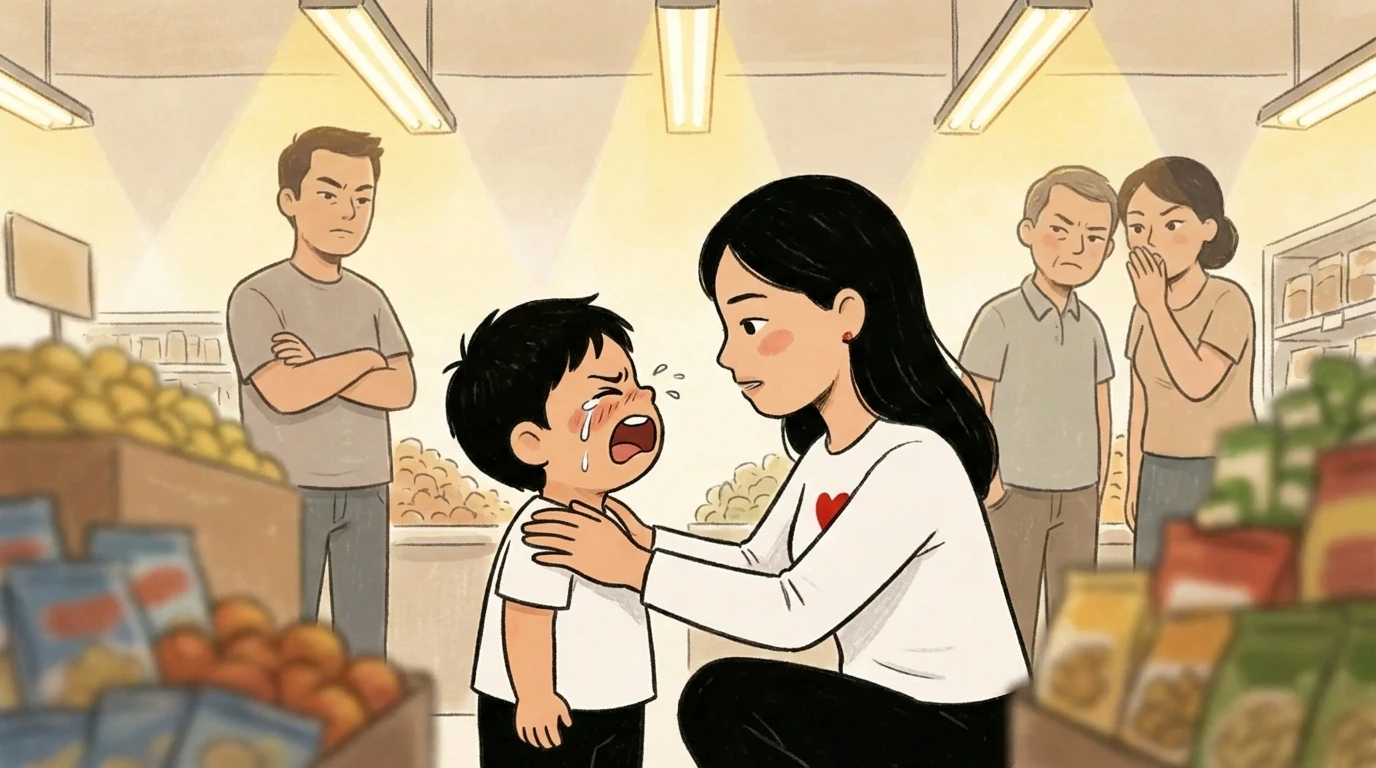
Put that same moment in a Target checkout line and suddenly your heart rate doubles. The behavior is identical. The only thing that changed is the audience.
Your brain is now running two programs at once: managing your child and managing the perception of every adult within earshot. That split attention is why you either freeze, overreact, or cave to something you would never allow at home.
Here's what's happening in your nervous system. The feeling of being watched triggers a social threat response. Your body releases cortisol as if you were in danger. That cortisol tells you to do something fast, to end this, to make the spectacle stop. So you either:
- Crack down too hard. You grab, you hiss, you threaten punishments you'll never follow through on. This is performing "strict parent" for the audience.
- Give in immediately. You hand over the candy bar, the toy, whatever stops the noise. This is performing "I have this under control" for the audience.
Both responses are about the audience. Neither is about your child.
The one rule that fixes most of it
Parent your child the same way you would if you were alone in your living room. That is the entire strategy. Everything else is a variation on this theme.
If you would set a limit calmly at home, set it calmly here. If you would give your child a choice at home, give them the same choice here. If the answer would be no in your kitchen, the answer is no in the cereal aisle.
The consistency is the point. Kids test boundaries in public because they've learned (or suspect) that public pressure changes the rules. Every time you prove them right, the public testing increases. Every time you prove them wrong, it decreases.
This does not mean being harsh. It means being the same. Your child needs to know that the parent they get at the playground is the same parent they get at the dinner table. That predictability is what makes them feel secure, even when they're screaming about it.
What to do when they melt down in public
The public meltdown is its own category of parenting trial. But the discipline piece within it follows a simple sequence.
Step one: drop the volume
When your child escalates, your instinct is to match them. Resist it. Lower your voice instead. Get close to their ear if you need to. A whisper in a loud moment is more powerful than a shout in a quiet one.
Step two: give a choice with two acceptable outcomes
"You can sit in the cart or you can walk next to me. Which one?" Both outcomes work for you. The child gets agency within your limits. This is the core of the discipline approach that builds cooperation over time.
Step three: follow through without delay
If they pick neither, you pick for them. Calmly. Without negotiating. The moment you start explaining why for the third time, you've already lost the boundary.
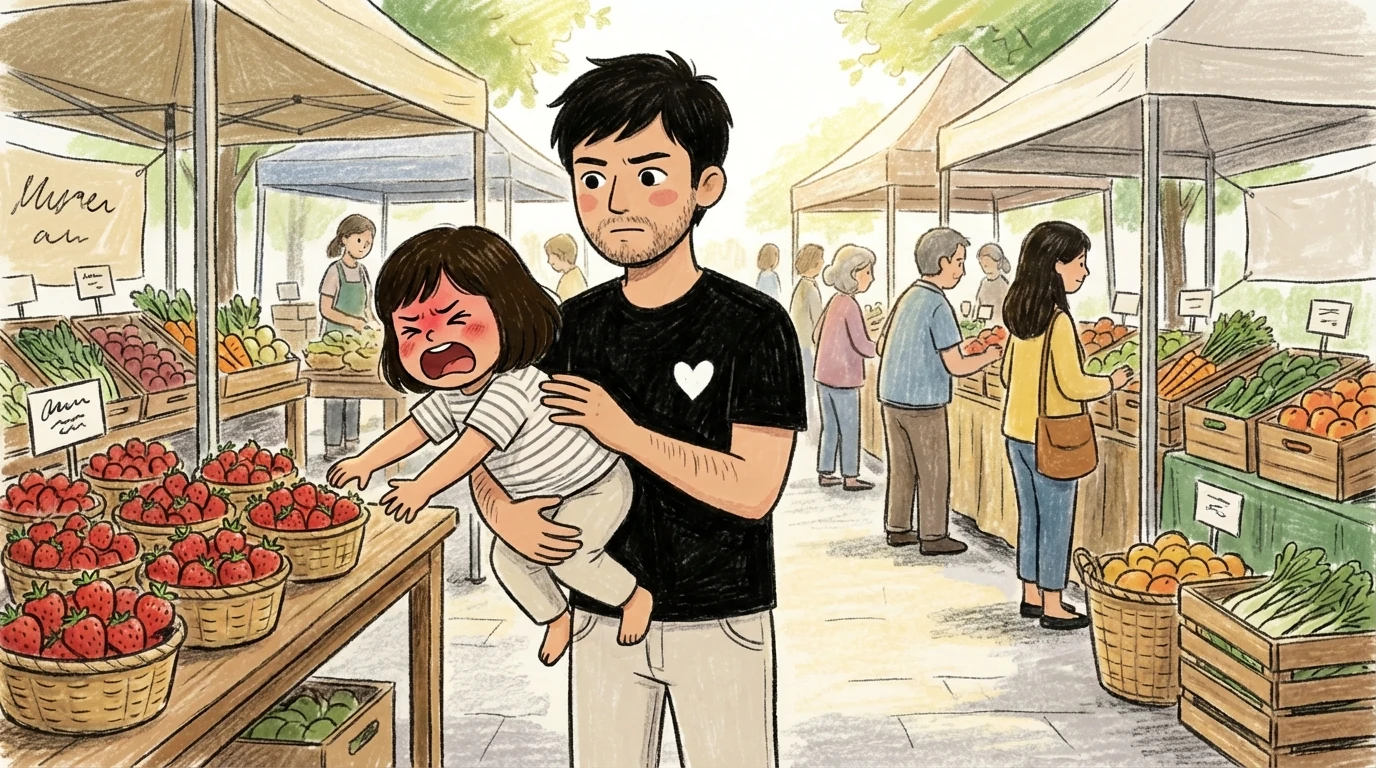
Following through in public feels harder because you're aware of judgment. Follow through anyway. The stranger who raises an eyebrow at you scooping up a screaming preschooler will never think about you again. Your child will remember that you meant what you said.
Strangers watching you parent
The Discipline Without Punishment course will show you how to hold firm with an audience
You'll handle the grocery store meltdown the same way you would at home, without performing for the crowd.
The audience problem (and how to ignore it)
Let's be honest about what the audience is doing to you. You're not worried about your child's development in the moment. You're worried that the woman behind you in line thinks you're a bad parent.
That fear is the single biggest reason parents abandon their own approach in public. You know what to do. You've read the books, you've practiced the scripts. But the second someone watches, you lose confidence.
Here's what helps: remember that handling criticism about your parenting is a skill, not a personality trait. The judgment from strangers feels personal because your nervous system processes it that way. But a stranger in a grocery store has seen approximately ninety seconds of your life. Their opinion is based on less information than a weather forecast.
Some scripts for dealing with commentary from bystanders:
- The classic: "We're fine, thanks." Flat tone. No smile needed.
- The redirect: "This is between me and my kid." End of conversation.
- The exit: Say nothing. Pick up your child. Walk away.
You do not owe explanations to people who are not raising your child with you. If you and your partner already disagree about discipline sometimes, adding a stranger's opinion to the mix helps nobody.
When public behavior involves other kids
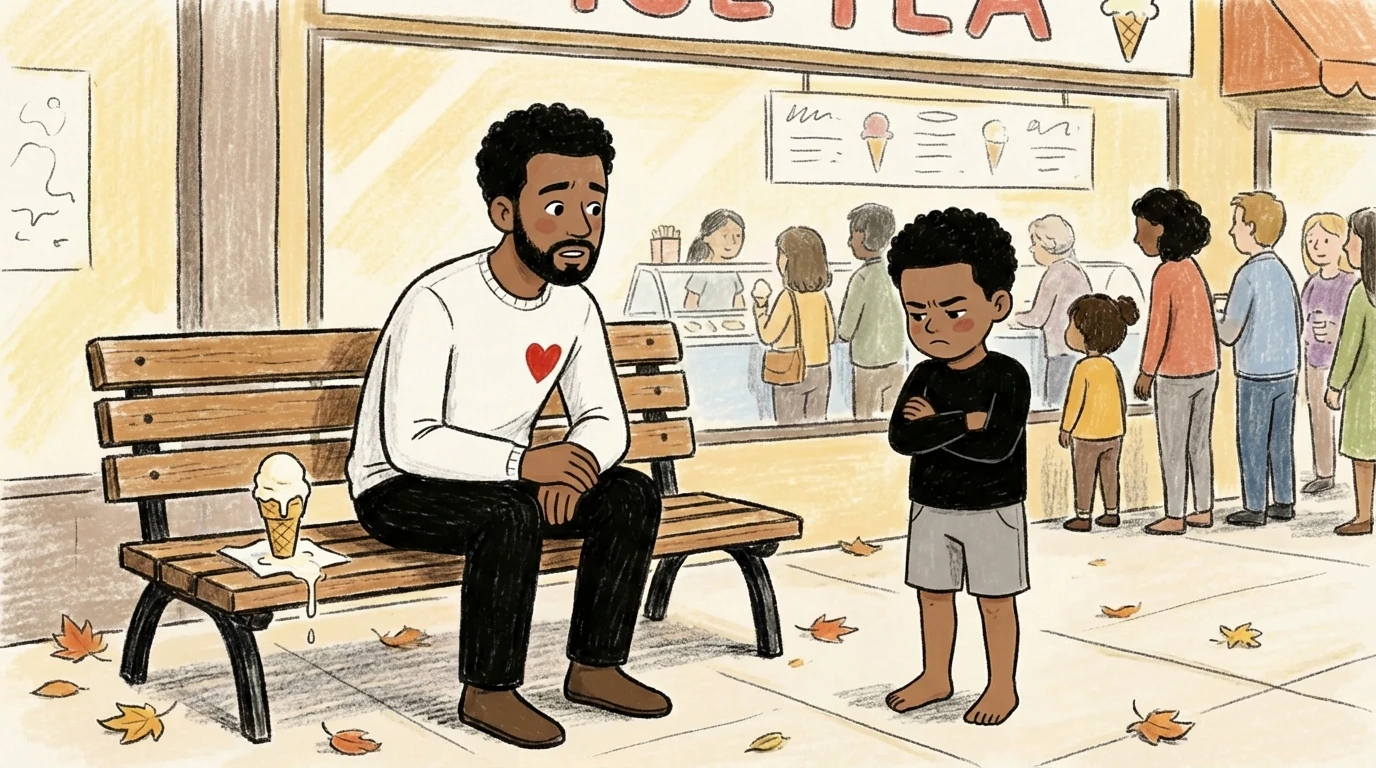
The calculus changes slightly when your child's behavior affects another child. If your kid pushes or hits someone at the park or daycare, you need to act faster and more visibly, not because of the audience, but because another child is involved.
The sequence:
- Separate immediately. Get between the children. Body first, words second.
- Check on the other child. This models empathy and shows the other parent you take it seriously.
- Address your child briefly. "Hitting hurts. We're leaving the playground now."
- Leave. The consequence is immediate and clear. You can process and talk about it later.
The temptation here is to over-apologize to the other parent while under-addressing your own child. That is performing for the audience again. Handle your child first. A brief "I'm sorry about that" to the other parent is sufficient.
How to hold a boundary in public without losing your composure
- Lower your voice instead of raising itWhen you feel the urge to get louder because people are watching, go quieter. A low, steady voice signals to your child (and your own nervous system) that this situation is under control. Whispering is more effective than shouting in a crowded store.
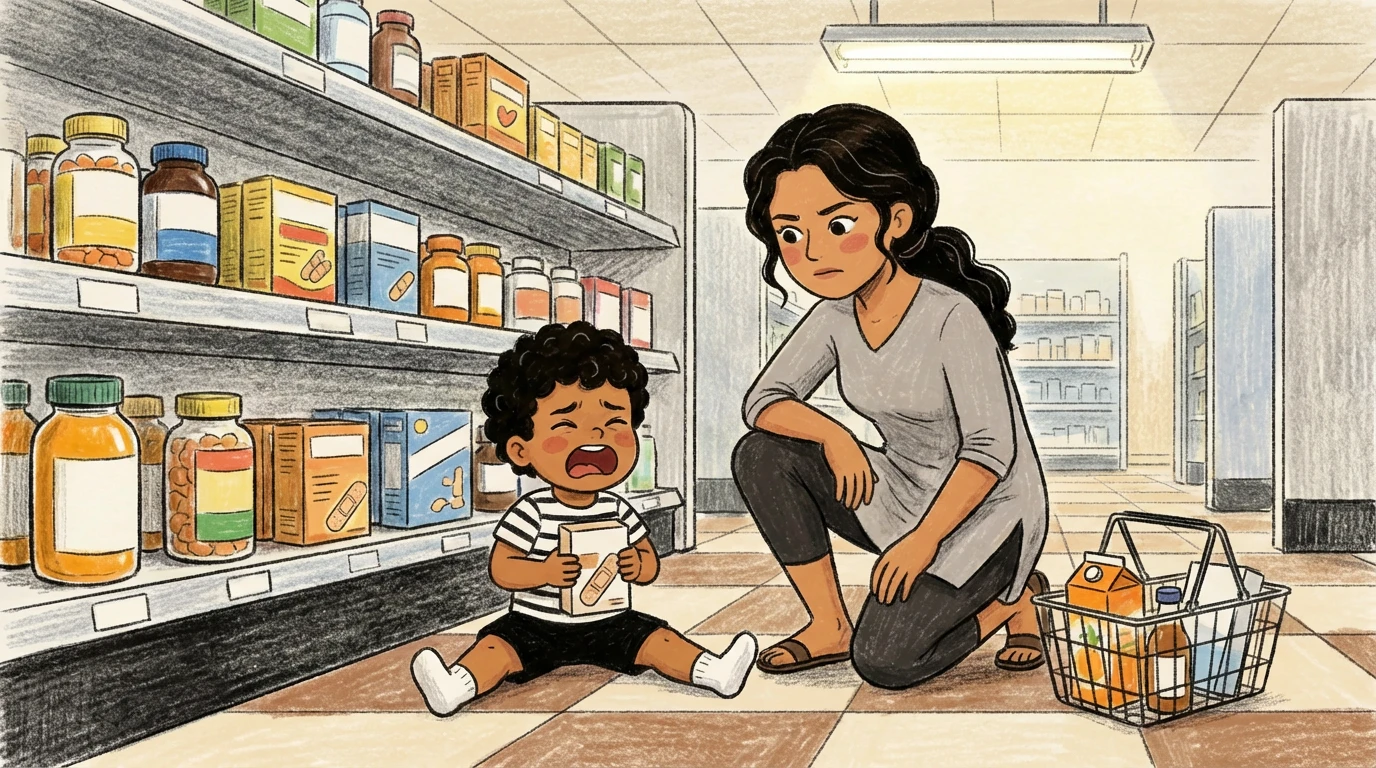
- Get on their physical levelCrouch down so you are eye to eye. This blocks out the audience for both of you and creates a private conversation in a public space. It also reduces the power dynamic that fuels defiance.
- State the limit onceSay it clearly: 'You can walk or I will carry you. Those are the choices.' One sentence. No explanation, no negotiation, no repeating. Repeating a limit tells your child the first statement was optional.
- Follow through without hesitationIf they choose not to walk, pick them up. If they throw the item, the item goes back on the shelf. The follow-through is the boundary. Words without action are suggestions.
- Leave if you need toAbandon the cart. Walk out of the restaurant. Leave the playground. Your errands are not more valuable than teaching your child that limits hold everywhere, not just at home. You can come back tomorrow.
After the public moment
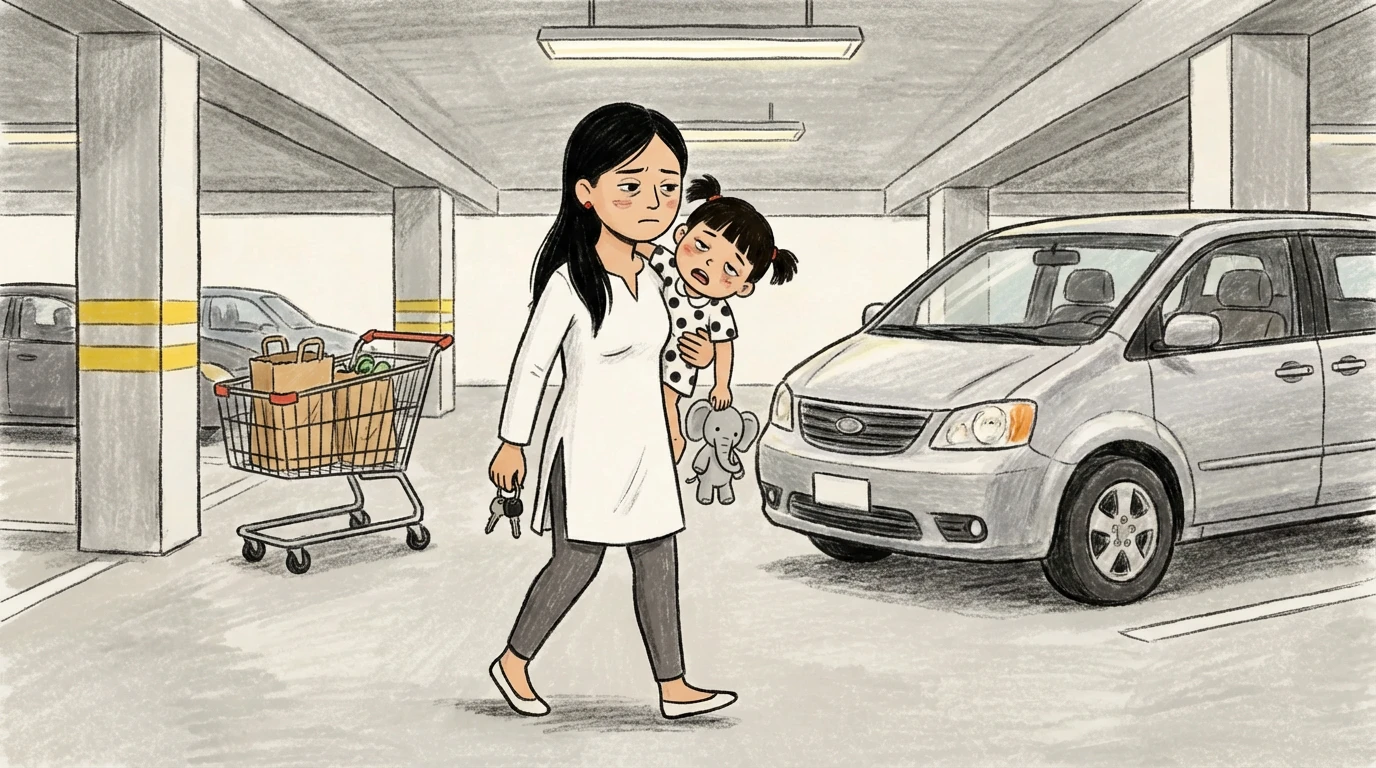
You left the store. The meltdown is over. Your child is strapped into the car seat making that post-crying hiccup sound. Now what?
Do not rehash it in the car. Their cortisol is still elevated. Yours is too. Anything you say right now will be processed through the stress filter, not the learning filter.
Wait. Get home. Let everyone regulate. Then, later, you can circle back: "Remember when you threw the cereal box at the store? That wasn't okay. Next time, you can tell me you're upset with your words."
The part that matters most comes after the dust settles. If you handled the public moment poorly (you yelled, you squeezed their arm too hard, you said something you regret), own it. Self-compassion after a rough public moment is what keeps you from spiraling into shame that makes the next public outing even harder.
Your parenting strengths do not disappear because you had a bad fifteen minutes at Costco. One rough outing does not define your approach. How you recover from it does.
FAQ
It depends on the child's age. Toddlers have no memory bridge between the grocery store and the car ride home. Address the behavior briefly in the moment with a short, clear limit. Save the longer conversation for later, but the initial boundary needs to happen when the behavior happens.
That is escalation, and it is predictable. Your limit interrupted what they wanted, so they increase the volume to see if public pressure will make you fold. Stay the course. If the screaming becomes unmanageable, calmly remove yourselves from the situation. The limit still holds.
You do not owe strangers an explanation. A flat 'We're fine, thanks' ends most encounters. If someone persists, walk away. Their opinion about your parenting is based on thirty seconds of context and zero knowledge of your child. It carries no weight.
A bribe offered mid-meltdown teaches your child that losing it in public earns a reward. A planned incentive discussed beforehand is a different thing. 'If we finish our errands calmly, we'll stop at the park' is a deal. 'I'll buy you candy if you stop screaming' is a ransom payment.