
TLDR
- Punishment stops behavior in the moment but makes it worse over time. Research shows punished kids lie more, feel worse about themselves, and develop less empathy and self-discipline.
- Most 'consequences' are just punishments in a nicer outfit. If you decided and imposed it, it's a punishment. Natural consequences (you forgot your lunch, you're hungry) are the ones that teach.
- Your child already knows what's right. The problem is impulse control. Their prefrontal cortex won't finish developing until around age 25. They need skill-building, not threats.
- Connect first, correct second. A child who believes you're on their side will work with you. A child on the defensive will work against you.
- Repair replaces punishment as the consequence that teaches. Helping your child fix what they broke builds empathy, accountability, and problem-solving skills all at once.
Why punishment keeps backfiring
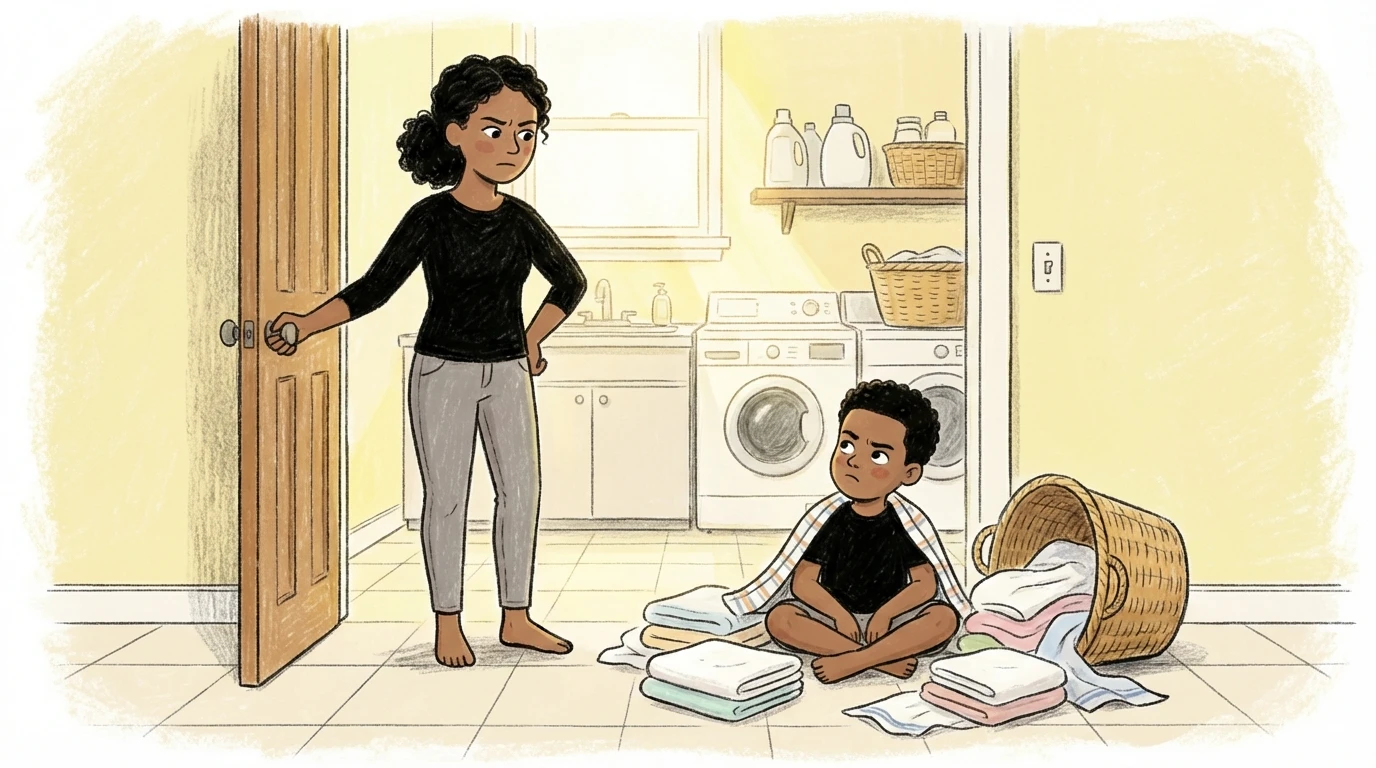
You took away screen time. The behavior stopped for two days. Then it came back, plus your kid started hiding things from you. So you escalated. Took away dessert. That worked for a week. Now your child eats cookies behind the couch and lies about it.
This cycle has a name: the punishment treadmill. A National Institute of Mental Health study found that time-outs produce temporary compliance while increasing overall misbehavior. Children subjected to love withdrawal show worse emotional health and less developed morality.
When you punish, your child's brain goes into fight-or-flight. The reasoning centers shut down and self-defense takes over. They're not reflecting on what they did wrong. They're reviewing why they were right and plotting how not to get caught next time.
The swimming pool comparison makes this obvious. If your kid couldn't swim, you wouldn't stand at the edge threatening to take away dessert. You'd teach them to swim. Emotional regulation is the same kind of skill. Emotion coaching builds it. Punishment does not.
Freezing mid-misbehavior
The Discipline Without Punishment course will give you what to do in that blank moment
You'll replace the freeze with a clear next step that addresses the behavior without escalating it.
The word "consequences" is doing a lot of heavy lifting
Parents love the word "consequences" because it sounds more thoughtful than "punishment." But let's run the test.
Your child hits their sibling. You take away screen time. Who decided that consequence? You did. Who imposed it? You did. If you chose it and enforced it, it's a punishment. The relabeling changes nothing about the brain chemistry involved.
Natural consequences are different. Your kid forgets their lunch and goes hungry at school. Another child won't play with them after they grabbed a toy. Nobody orchestrated these outcomes. They arose directly from the situation, and they're excellent teachers.
The practical distinction: natural consequences teach. Parent-imposed "consequences" breed resentment. And a resentful child focuses on avoiding getting caught, not on learning accountability.
What to do instead: the connect-and-teach approach
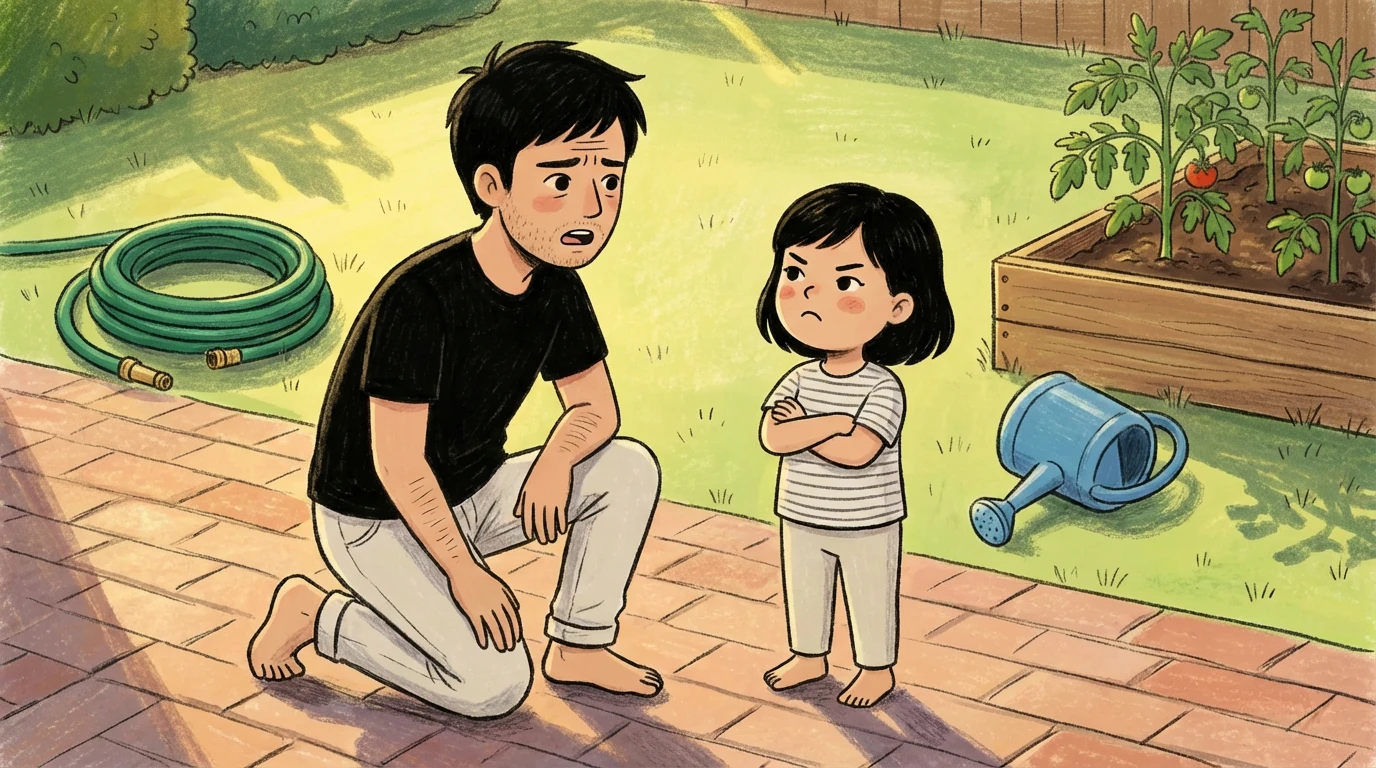
So you've decided to stop punishing. Now your kid throws a block at a friend and you're standing there thinking okay, now what?
Step one: set the boundary
This comes first because safety comes first. Say it clearly: "I won't let you throw blocks at people." If you need to physically intervene (catch their arm, move them away from the other child), do it. You're not being passive. You're being the boundary.
There's a whole framework behind gentle parenting that gets misread as permissive. It isn't. You're holding firm limits. You're just not adding suffering on top.
Step two: acknowledge what's underneath
Your child threw that block because something was happening inside them that they couldn't manage. Maybe they were furious their friend took the truck. Maybe they were exhausted. Bad behavior comes from bad feelings. Name what you see: "You were so angry when he grabbed the truck."
This does two things at once. It tells your child you see them (not just their behavior), and it begins building their emotional vocabulary. A kid who can say "I'm mad" is a kid who's one step closer to not throwing things.
Step three: redirect to what they can do
"You can tell him 'I was using that' or come get me for help." Give them the script. They don't have the words yet. That's your job.
How to respond without punishing
- Pause before reactingTake one breath. If you're activated, your child reads it as danger, and their fight-or-flight response kicks in harder. Your calm is their safety signal.
- State the boundary clearlyShort and specific: 'I won't let you hit.' If needed, physically intervene. Catching an arm mid-swing is setting a limit, not punishing.
- Name the feeling underneathSay what you see: 'You're so frustrated your tower fell.' You're building the language your child needs to eventually self-regulate.
- Offer what they can doReplace the 'don't' with a 'do.' Instead of 'stop screaming,' try 'you can stomp your feet to show me how mad you are.' Give the energy somewhere to go.
- Wait, then guide repairOnce emotions settle (not before), help your child figure out how to fix what happened. 'Your brother was upset when you knocked his tower down. What could help him feel better?'
The repair conversation that replaces grounding
Here's where the real teaching happens. Once your child is calm (and this might take five minutes or an hour, there's no timer), sit with them and have the conversation.
Don't lecture. Ask. "What happened?" Let them tell their version. Then: "How do you think your sister felt when that happened?" Then: "What could you do to make it better?"
This sequence does what punishment claims to do but can't: it builds empathy, accountability, and problem-solving skills. Your child is thinking about the impact of their actions on another person. When they were grounded, they were thinking about how unfair you are.
A child who helps rebuild their sibling's block tower because they chose to is learning something real. A child who sits in their room for ten minutes because you told them to is learning that the people with power make the rules.

When they keep doing the same thing
You've connected. You've set limits with empathy. They threw the block again tomorrow. Your brain is screaming see, this doesn't work either.
Two things are likely happening. First, your child may have big feelings stored up that are leaking out as behavior. Think of it like a full cup. Every small frustration adds more water until the cup overflows. The block throwing might have nothing to do with blocks and everything to do with a rough week at preschool.
Second, check your expectations against their developmental capacity. A one-year-old cannot learn to leave the TV remote alone through consequences. A four-year-old will dawdle at bedtime because their brain is wired that way, not because they're defiant. Match the expectation to the age, and you eliminate half the conflicts.
If you're curious about where your instincts tend to land on these questions, the parenting style quiz can help you spot patterns you might not see from the inside.
The transition period is real
If you've been punishing and you stop, brace yourself. Your child was obeying out of fear of losing privileges. Remove the fear and the obedience goes with it.
This does not mean the approach isn't working. It means your child needs time to build a new reason to cooperate, one based on connection rather than fear. Prioritize the relationship first. Listen. Extend emotional generosity. Show up with humor when you can.
You don't need to announce that you've stopped punishing. Just start doing it differently. Self-regulate, connect, ask questions instead of issuing verdicts. When your kid notices and asks what changed, you can say: "I think you'll learn more from this."
The research on empathy-based approaches reducing aggression backs this up. Children who feel understood act out less. Children who feel punished act out differently, often in ways that are harder to detect.

It gets easier (and then it gets automatic)
The first few weeks of dropping punishment feel like you're doing nothing. You set a limit and your kid tested it. You connected and they cried. You helped them repair and it took twenty minutes you didn't have.
But here's what's happening underneath. Every time you stay present during a hard moment, you're building the neural pathways your child needs to regulate their own emotions. Every repair conversation is a rep of a skill they'll use for the rest of their life. Every boundary you hold with empathy proves that limits and love exist in the same sentence.
You're not raising a kid who behaves because they're scared of you. You're raising a kid who behaves because they don't want to be the kind of person who hurts others. And that distinction, between fear-based compliance and genuine moral development, is the whole game.
FAQ
You're still setting firm limits. The difference is you're not adding suffering on top. 'I won't let you hit' plus physically blocking the hit is a consequence. Taking away screen time three hours later for an unrelated reason is punishment. Limits without punishment produces more cooperation, not less.
Natural consequences are great teachers precisely because you didn't create them. Forgot your lunch, you're hungry. Left your bike in the rain, it's rusty. The key test: if you orchestrated it or made sure it hurt, it's punishment wearing a natural consequences costume.
Start with your own behavior. When your child sees one parent responding differently, it still builds those neural pathways. Over time, share what you're noticing. Most partners come around when they see the results, not when they hear the theory.
Around three, children can do simple repair with your help: picking up something they knocked over, bringing a sibling a toy. By five or six, they can brainstorm repair ideas independently. By eight, many kids will initiate repair without prompting if the family expectation is clear.
Decades of research support it. Studies on love withdrawal show it produces worse behavior and weaker moral development. Martin Hoffman's work on empathy-based discipline, Elizabeth Gershoff's meta-analysis on punishment, and longitudinal studies all point the same direction: guidance builds better outcomes than punishment.