TLDR
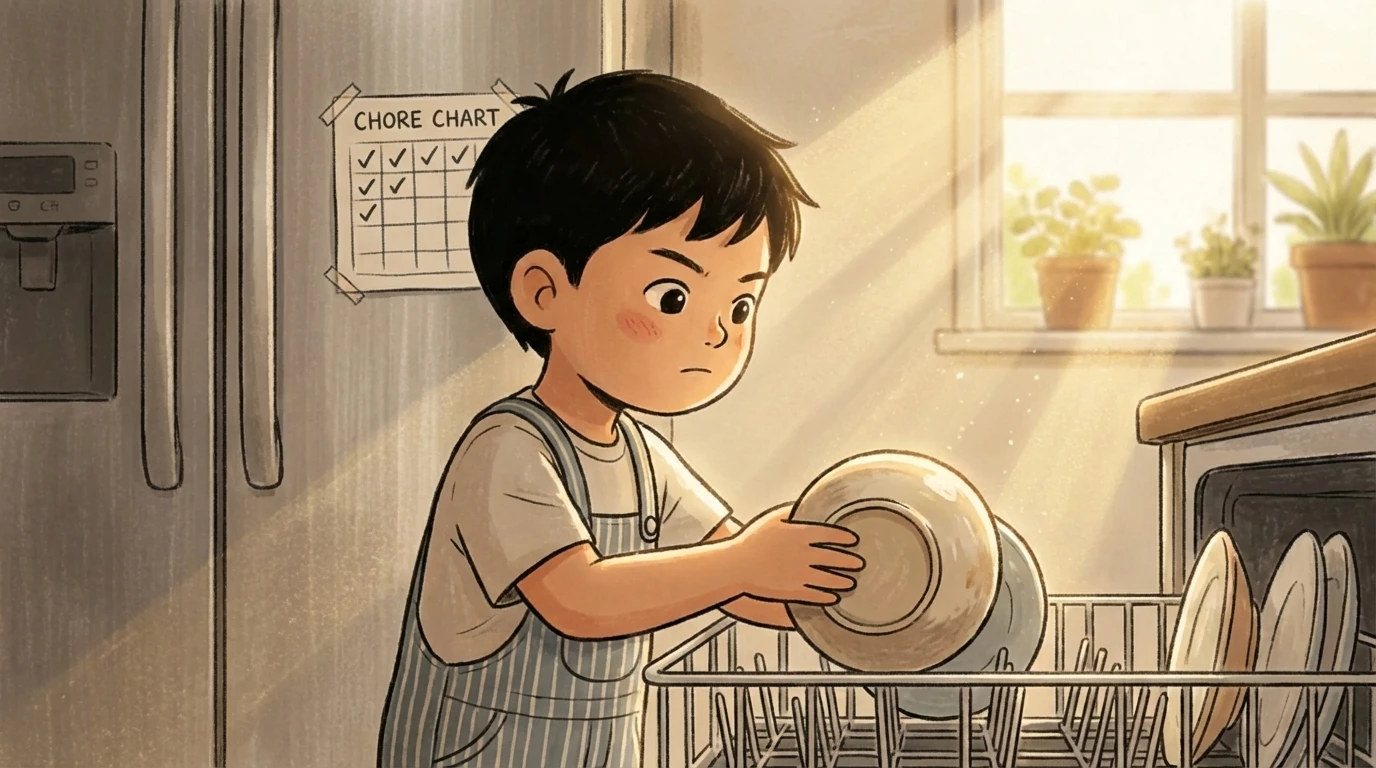
- Reminding is the job, not the problem. Kids lack natural incentive to clear dishes. Cheerful reminders are the bridge to automatic habits, not evidence that something is broken.
- Connection is the real motivator. A smile and a genuine thank-you after chores does more than any sticker chart. Kids cooperate because they want your warmth, not your approval rating.
- Work together before expecting solo performance. Send a kid off alone to clean and you get avoidance. Work alongside them and you get a teammate.
- Tone makes or breaks the whole system. The difference between reminding and nagging is your voice. Same words, different emotional charge, completely different outcome.
- Routines eliminate most of the friction. When chores happen at the same time in the same sequence every day, kids stop needing you to say anything at all.
Why the tenth reminder makes you want to scream
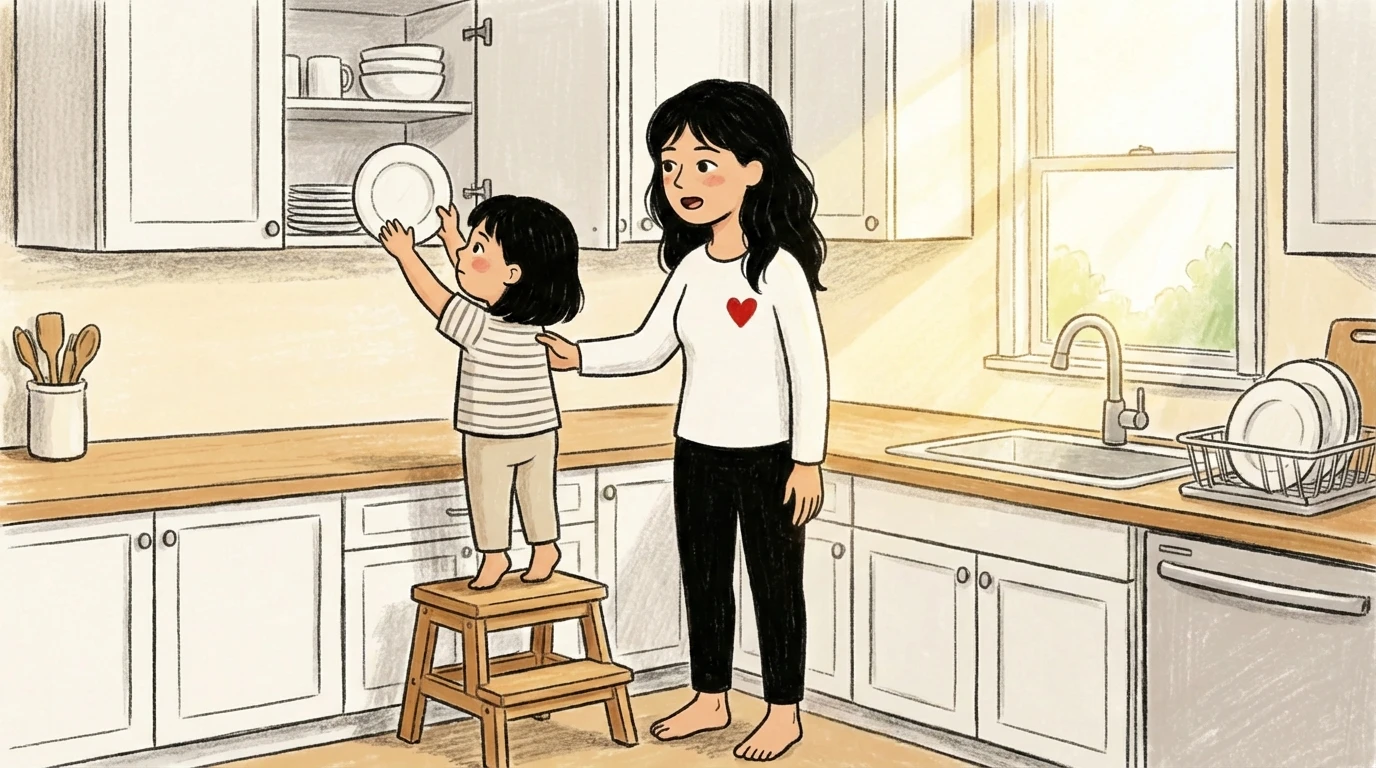
You said it nicely the first time. Firmly the third time. By the seventh, your voice has that edge. By the tenth, you're standing in the doorway wondering why a human you are raising cannot carry a plate four feet to the sink.
Every irritated reminder makes the chore less likely to happen next time, not more. When the emotional charge around a task turns negative, kids start avoiding even the thought of it. The chore becomes loaded with tension, and tension is the last thing that builds habits.
The way out involves rethinking what reminders are for. They are the scaffolding, not the failure. And they work best when they sound nothing like nagging.
Asking for the fifth time
The Discipline Without Punishment course will show you how to get chores done without repeating yourself
You'll set up a system where dishes move to the sink without a single reminder or nagging cycle.
The four things chores need to compete with screen time
Kids skip chores for the same reason you skip folding laundry when your phone is right there. Chores lose the competition for attention unless they meet at least one of four needs.
Fun
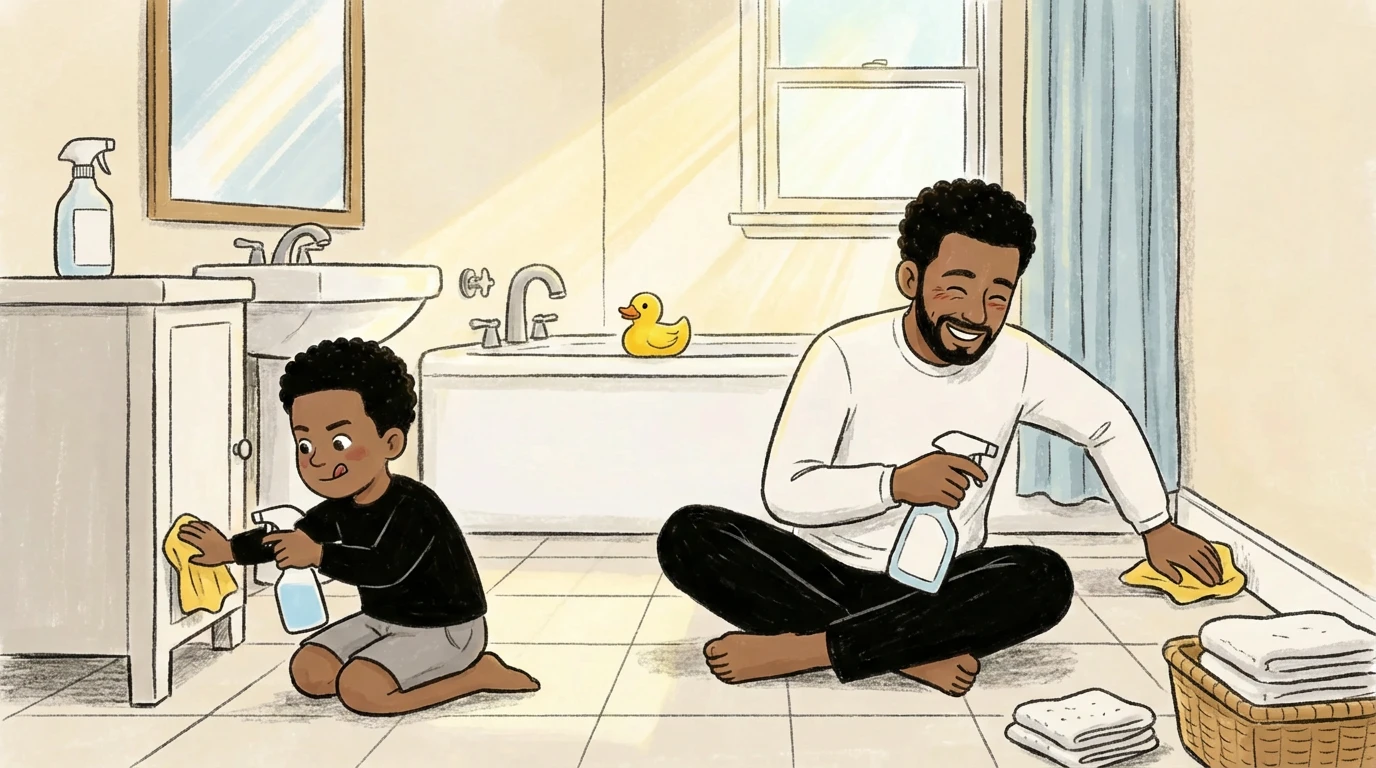
If doing chores feels like punishment, kids will treat them like punishment. Play music during cleanup. Race the timer. Let your five-year-old spray the counter with a squirt bottle. The bar is low. You do not need to turn dishwashing into Disneyland. You need it to not feel like detention.
Mastery
Kids get hooked on getting good at things. Point out competence: "You matched every sock in that pile." Over time, kids start chasing the satisfaction of a job done well, the same way they chase the next level in a video game.
Connection
This is the big one. Kids will scrub a toilet if you're scrubbing the bathtub next to them and singing badly. They will not scrub a toilet if you sent them upstairs alone. Working together is the engine, not a crutch.
Contribution
"Everyone works together at our house." That sentence, repeated over years, becomes an identity. Kids who see themselves as contributors build real independence over time, and they carry that identity into adulthood.
How to build chore habits that stick
The secret to ending the reminding cycle is making chores automatic. You want the behavior to run on autopilot, like brushing teeth.
How to build a chore routine kids follow
- Pick a consistent triggerAnchor the chore to something that already happens every day. Clearing plates happens right after the last bite. Making the bed happens right after feet hit the floor. The trigger is the cue.
- Work alongside them at firstBe the coordinator, not the boss. Your twelve-year-old makes eggs while your eight-year-old makes toast and you troubleshoot. Gradually step back as they master the steps.
- Post a visual routinePrint the sequence and stick it on the fridge or bathroom door. Let kids help make it. Photos of them doing each step turn it from your schedule into their schedule.
- Remind cheerfully every single timeYes, every time. Use a silly voice, a song, a ridiculous countdown. The reminder is not the problem. The irritation in the reminder is the problem.
- Thank them like you mean itA genuine smile and a specific thank-you after the task. Not 'good job.' Try 'the kitchen looks great because you cleared all that.' Kids repeat behaviors that get them warmth.
- Stay at the table for mealsMost nagging happens because kids bolt from the table and the dishes stay behind. Sit with them. One calm reminder at the natural end of the meal replaces five shouted across the house.
The reminding phase is temporary. After enough consistent, low-drama repetitions, the behavior becomes a habit. One day the plate is already in the dishwasher and nobody said a word.
When they still won't do it
Sometimes you have done everything right and your kid is still sprawled on the couch claiming they "forgot" to feed the dog, who is staring at them with an empty bowl.
Before you lose it, check for one of these:
They need to be babied first. Kids hold it together all day at school. They come home and their executive function is spent. Meet the need for connection first, then set the expectation. Ten minutes of roughhousing before chore time pays for itself.
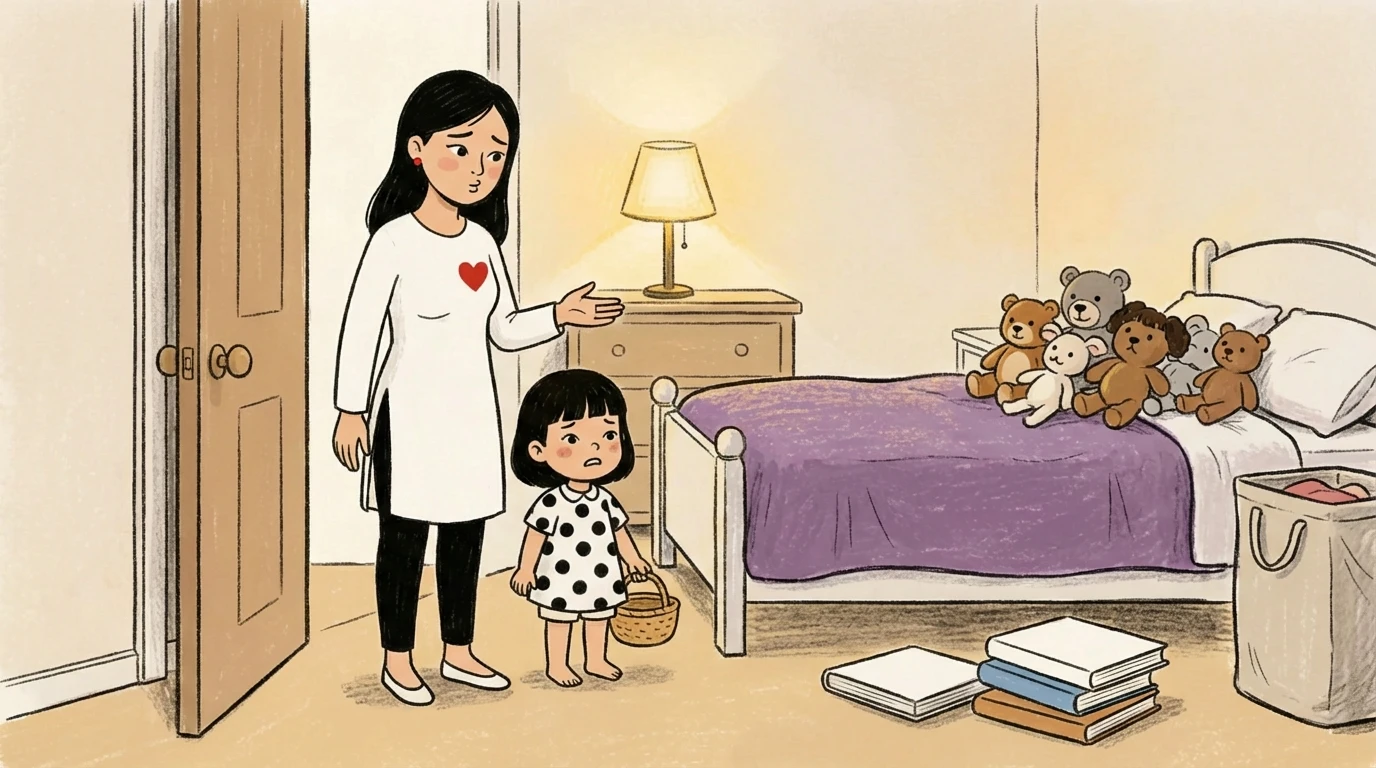
The task is too big. "Clean your room" is a massive project with seventeen sub-tasks and no starting point. "Put all the books on the shelf" is a chore. A kid can finish that and feel something.
The consequence is emotional, not logical. If skipping chores only produces an angry parent, kids learn to manage the anger (by hiding, lying, or going limp) rather than doing the chore. Empathize first: "I know, wouldn't it be great if dishes washed themselves?" Then redirect: "Come on, let's go."
Age-appropriate expectations
- Toddlers (2-3): Put clothes in the hamper. Wipe a surface with a cloth. "Help" load the washer. They will be terrible at all of this and love every second.
- Preschoolers (4-5): Set the table. Sort laundry by color. Water plants. Feed pets with supervision. They can handle tasks with 2-3 steps.
- School-age (6-9): Clear and load dishes. Make their bed. Take out trash. Sweep a floor. They can follow a posted routine independently, with cheerful reminders.
- Tweens (10-12): Cook simple meals with you as assistant. Do their own laundry start to finish. Clean a bathroom. They can manage a weekly chore schedule.
During the school year, keep expectations modest. An hour of chores on Saturday is plenty. Summer is when you teach the bigger life skills.
If you're unsure what's realistic for your kid's age, take our age-appropriate chores quiz and get a personalized breakdown.
The nagging-to-reminding voice makeover
Here is the hardest part. You have to change your voice.
Nagging sounds like: "I've told you three times already. Why can't you just do it?" The words carry disappointment and a little bit of what is wrong with you. Kids hear all of that louder than the actual words.
Reminding sounds like: "Dishes, buddy. Let's roll." Or singing it. Or doing a dramatic countdown. When everyone is laughing, nobody is fighting. The power struggle cannot exist alongside genuine fun.
If getting your kid to listen feels like a bigger problem than just chores, start there. The chore battle might be a symptom of a listening pattern that needs work.
And if your older kid has stopped doing chores entirely, the answer is usually something other than taking things away.
The long game
You are building a person who can take care of themselves and others. Kids who have household responsibilities are more likely to help people outside the home, too. They see contributing as part of who they are.
One day your kid will cook you dinner. They will do the dishes without being asked. And you will think about all those mornings you sang a silly song about putting the cereal bowl in the sink, and it will have been worth every one.
FAQ
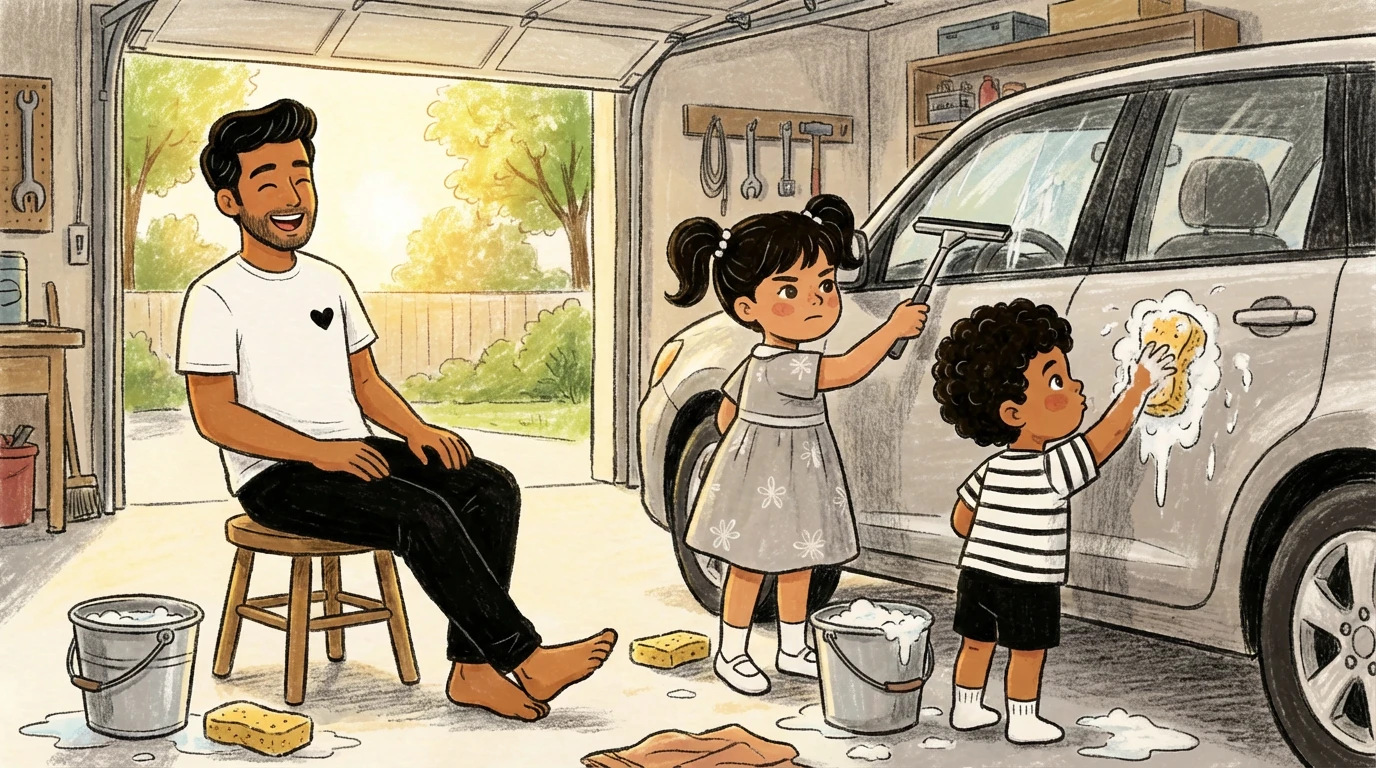
Tying allowance to daily chores lets kids opt out by deciding they don't care about the money that week. Keep regular chores as non-negotiable family contributions. Save payment for extra tasks beyond their usual responsibilities, like washing the car or organizing the garage.
Lower your standards and raise your appreciation. If the dresser drawers are a mess but the clothes are in them, that counts. Focus on what they did right. Kids who feel criticized for imperfect work stop trying. Kids who feel noticed for effort try harder next time.
As young as two. Toddlers love helping, even badly. Let them put socks in the hamper and wipe tables with a cloth. The earlier they start, the more natural it feels. Waiting until they're old enough to do it well means missing the window when they want to.
Reward charts work short-term but rarely stick. The problem is they position chores as something unpleasant that needs external compensation. A better long-term motivator is genuine connection, your warmth and appreciation after the task, paired with consistent routines that make chores automatic.
Avoid comparing siblings out loud. Each kid has a separate relationship with you and with chores. Work on the resistant kid's connection needs individually. Sometimes the refusal is about fairness, sometimes about autonomy. Address what's underneath rather than forcing compliance.