
TLDR
- External rewards kill the behavior they're meant to encourage. Once you remove the sticker or the treat, the desired behavior disappears because the child never learned to value it for its own sake.
- Connection is the most powerful motivator you have. Children cooperate with people they feel close to. Fifteen minutes of undivided attention after a separation does more than any token board.
- Kids already want to be good. The problem is rarely motivation. The problem is usually overwhelming emotions or a missing skill. Address those, and cooperation follows.
- Praise the process, not the person. Instead of 'Good job,' describe what you see: 'You stuck with that puzzle even when it got tricky.' This builds a growth mindset that lasts.
- Build an inner compass, not an external scoreboard. Help your child notice how it feels inside when they make a choice they're proud of. That internal signal becomes their guide for life.
The sticker chart trap
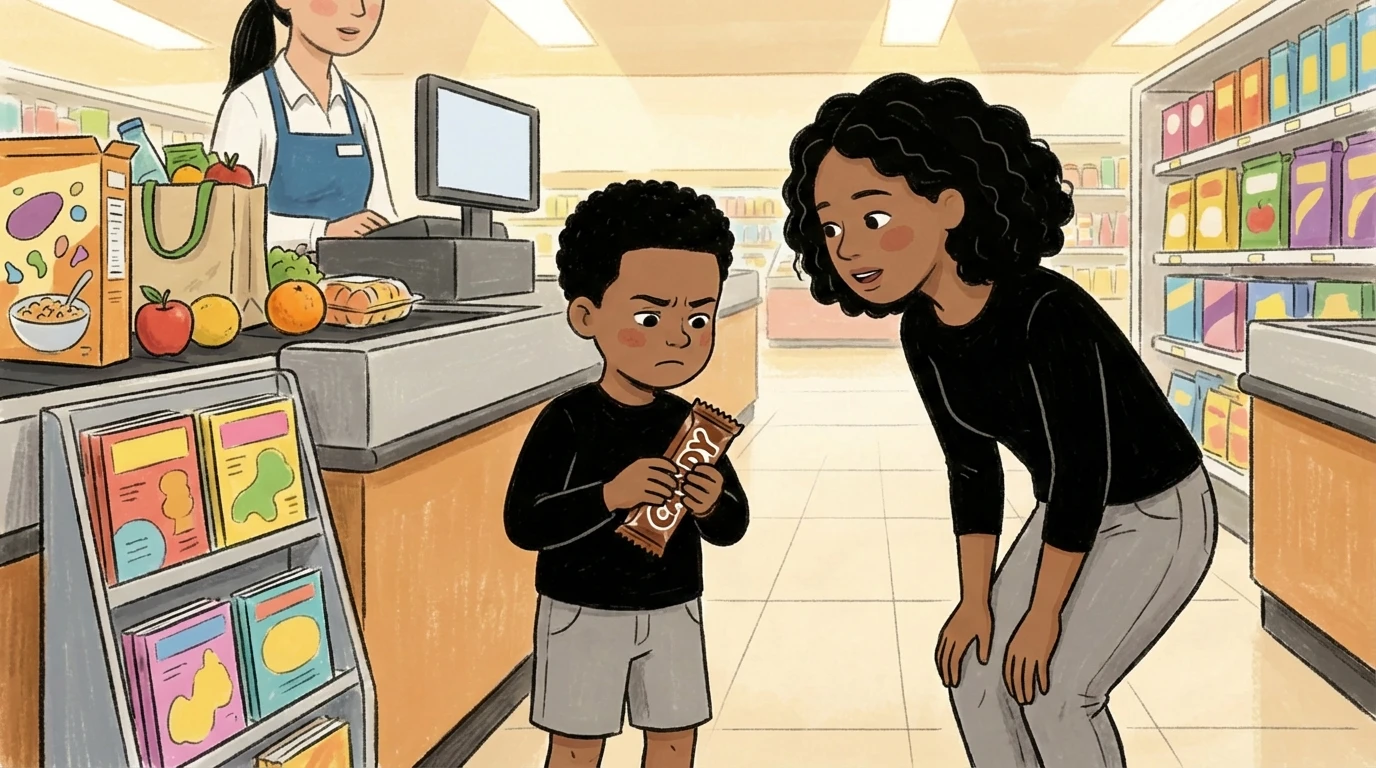
You bought the stickers. You made the chart. You stuck it on the fridge with the good magnets. And for about four days, it worked beautifully. Your kid was putting shoes away, brushing teeth without a fight, saying "please" like a tiny diplomat.
Then day five hit, and the question changed. Instead of Should I put my shoes away? it became Is anyone watching? Do I still get a sticker for this?
External rewards work fast and they stop working faster. When you reward a behavior, you get more of it short term. Remove the reward, and you often get less of the behavior than before you started. The child learned to do the thing for the sticker, and without the sticker, the thing has no value.
It gets worse with food. Pay a kid to eat broccoli and they'll learn to hate broccoli with a dedication usually reserved for bedtime. Praise sharing with a cheerful "Good sharing!" and your kid shares only when someone's looking. The reward replaces the internal motivation that was trying to develop on its own.
So what do you do instead? You work with the motivation system your child already has, the one that runs on connection, not currency.
Sticker chart stopped working
The Discipline Without Punishment course will help you build motivation that doesn't need a prize
You'll watch them do the thing because it matters to them, not because something shiny is attached.
Why kids cooperate (and why they stop)
Think about the last time your kid refused to do something they clearly know how to do. Put on their jacket. Come to the table. Stop poking their sibling. The default assumption is that they need more motivation (bigger reward) or more consequences (scarier punishment).
Almost never is the problem that kids don't know what's right. They know exactly what you want. They have a competing priority that feels more urgent: the emotion flooding their system, the disconnection from you, or the developmental inability to connect a future reward with a present impulse.
A three-year-old cannot think If I don't hit my brother now, I'll get a sticker later, and after five stickers I get hot chocolate. That prefrontal cortex math doesn't come online until much later. So sticker charts for toddlers are asking a fish to climb a tree.
Connection drives cooperation
When kids feel disconnected from you (busy morning, long day apart, one too many corrections in a row), they shift into self-protection mode. Why would they give up what they want to do what you want? There's no relationship payoff.
Fifteen minutes of undivided attention after you've been apart can shift your child's cooperation for the rest of the evening. Phone off, to-do list forgotten, just being with them. Not teaching, not correcting. Within days, you'll see a difference. The warm relationship becomes the reason they choose to follow your lead, even when it's hard.
Emotions run the show
When your kid knows the right thing and still does the wrong thing, big feelings are usually driving the bus. Jealousy, fear, frustration: these are what behavioral scientists call "crimes of passion." No sticker chart on earth competes with overwhelming emotion in a five-year-old.
The only way through is to help them feel the feeling. Empathize first, teach later. "You're really mad your sister got the blue cup. That's so frustrating." Once the emotional wave passes, the rational brain comes back online and learning can happen.
Building the inner compass
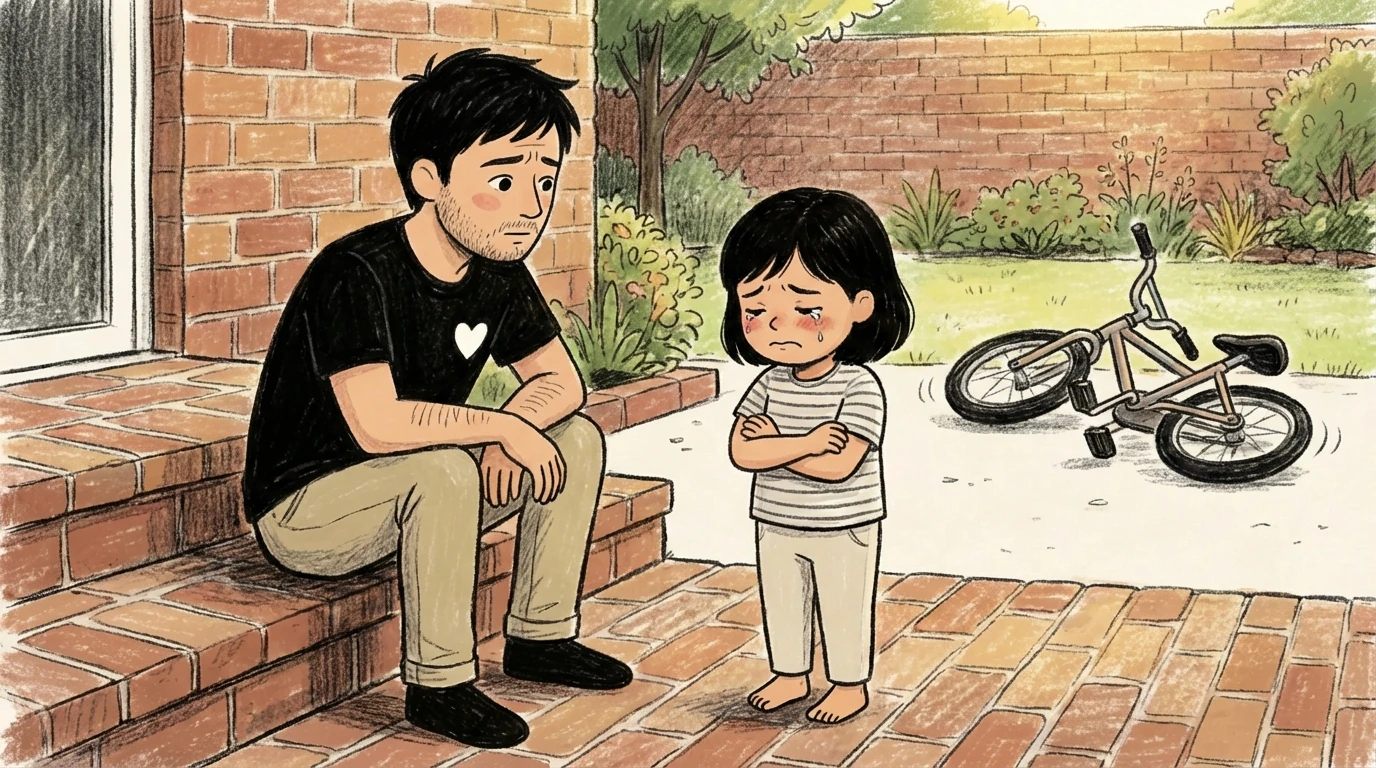
The goal of all this is to move your child from What will I get? to What kind of person do I want to be? Researchers call this developing an "inner compass," and it happens in stages.
Start with noticing
Instead of telling your kid they did a good job (which is your evaluation of them), ask them to notice how it felt. "You finished your homework before dinner. How does that feel inside?" You're pointing them toward their own internal signal.
This is the opposite of a traffic light chart where a teacher decides who's green and who's red. With an inner compass, the child evaluates themselves. They learn to recognize the satisfied feeling that comes from a choice aligned with who they want to be.
Name the positive opposite
Every annoying behavior has a flip side, the thing you want. Leaving the table early? The positive opposite is sitting through dinner. Whining for a toy? The positive opposite is asking in a regular voice.
When you catch the positive opposite happening, describe it specifically and immediately. "You asked for more pasta in such a clear voice." Not "Good boy" (vague, evaluative, and gendered). Not "It's about time" (grudge-holding). Just name what you saw, right when you saw it. The specificity matters because it tells the child exactly which behavior worked.
Scripts that replace "If you do X, you get Y"
The hardest part of dropping rewards is knowing what to say instead. Your mouth opens and the bribe comes out before your brain catches up. Here are replacements for the most common scenarios.
How to motivate without bribes
- Validate the want, hold the limitWhen your child wants something, acknowledge it without shaming: 'You really want that. I get it. It's not in our plan for today.' Frame refusals as priorities, not deprivation.
- Describe what you seeReplace evaluative praise ('Good job!') with specific observation: 'You shared your markers with your friend. Did you see how her face lit up?' This helps kids notice the intrinsic reward.
- Offer the choice, not the rewardInstead of 'If you clean your room, you can have screen time,' try 'Your room needs cleaning. Do you want to start with the books or the clothes?' Autonomy motivates.
- Connect before you correctBefore giving any instruction, spend a few seconds making eye contact and connecting. A hand on the shoulder, their name, a moment of warmth. Then make your request.
- Ask how it feels insideAfter your child makes a good choice, ask 'How does that feel?' rather than offering your own judgment. This builds their inner compass over time.
When they want the reward anyway
Your kid comes home from school and asks for a sticker chart. The school uses one, their friends talk about theirs, and now they want the same thing at home. This is normal. The desire to track their own good choices is healthy; only the framework needs adjusting.
You can say: "You want to keep track of choices you feel proud of? I love that. Tell me about a choice you made today that felt really good inside." You're redirecting from external tracking to internal awareness without dismissing what they're asking for.
If your child insists on making their own chart, let them. The key is that they evaluate themselves, not you. You don't add or remove stickers. You don't tie the chart to prizes. They own the process, and it becomes a tool for self-reflection rather than performance for your approval.
The long game with intrinsic motivation
Identity formation is slow. Every time your child gives up something they want in the moment because the relationship with you matters more, they're building the muscle of self-discipline. Over time, this practice compounds. They stop doing the right thing for you and start doing it because that's who they are.
A child who earns money to buy something they want learns what a dollar costs. A child who repairs a relationship after they've damaged it learns the weight of their actions. A child who notices the feeling in their body when they make a choice they're proud of has a guidance system that works whether you're in the room or not.
That internal signal is worth more than every sticker chart you'll ever make. It follows them to school, to friendships, to decisions you'll never see them face. And it started because you stopped bribing and started connecting.
If you're wondering where your current approach falls on the spectrum, take a look at your parenting style and see what's already working.
FAQ
Rewards can produce short-term compliance, especially for simple, non-emotional tasks. The problem is what happens next: once the reward disappears, the behavior often drops below where it started. For emotionally driven behavior in young children, rewards are particularly ineffective because the child can't override big feelings for a delayed payoff.
You don't need to fight the school system. At home, redirect the framework. When your child mentions their color or sticker, ask how the choice felt inside rather than praising the external rating. Over time, they learn to value their own internal compass alongside whatever system school uses.
That means the bribe pattern is well-established, and your child has learned to expect it. Start small: pick one routine and drop the reward. Replace it with connection and specific descriptions of what you see. It takes a few weeks for the shift to land, but it does land.
Children under three lack the brain development to connect current behavior with delayed rewards, so external systems are pointless anyway. By four or five, you can start asking 'How did that feel inside?' By six or seven, most kids can articulate their inner compass with surprising clarity.
Evaluative praise ('Good job!') functions similarly to rewards because the child performs for your approval. Descriptive feedback ('You stuck with that even when it was hard') points the child toward their own experience. The distinction matters: one creates dependence on external validation, the other builds self-awareness.