TLDR
- Lying is a developmental milestone, not a moral failure. When your child lies, they are demonstrating theory of mind: the ability to understand that your knowledge differs from theirs. This cognitive leap typically appears between ages three and four.
- Kids who get punished for lying become better liars. Harsh consequences do not build honesty. They build stealth. The child learns to avoid detection, not to value truth.
- Most lies come from fear, not malice. Children lie to avoid punishment, to get something they want, to feel in control, or because they genuinely cannot tell the difference between what happened and what they wished happened.
- The single best predictor of honesty is whether the truth feels safe. If your child believes telling the truth will be met with calm curiosity instead of an explosion, they will tell you what happened. Every time you stay steady, you are building that safety.
- Stop asking questions you already know the answer to. Asking 'Did you wash your hands?' when you can see they are dry is a trap. State what you observe instead. Traps erode trust faster than lies do.
Your kid just lied to your face
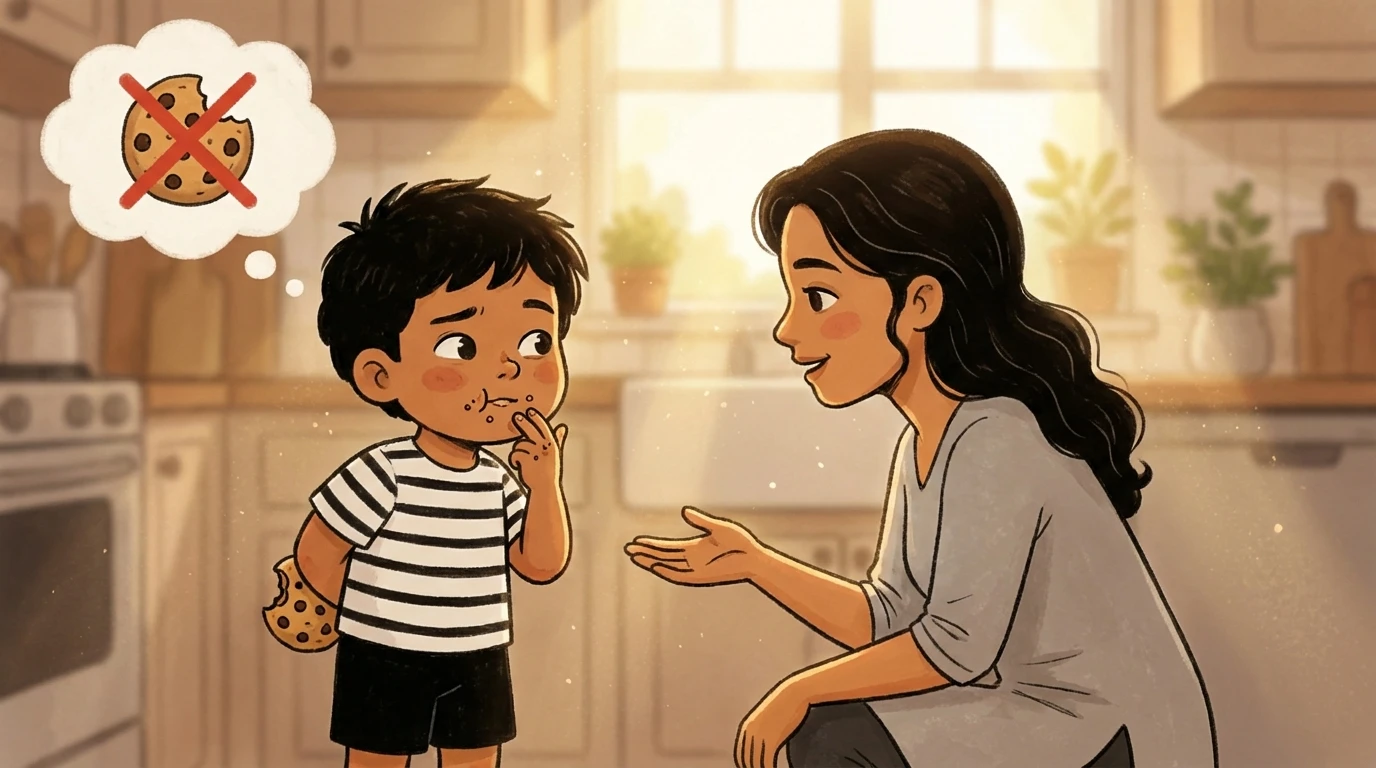
The cookie crumbs are on their shirt. The marker is still uncapped in their hand. And they looked you dead in the eye and said "I didn't do it."
I am raising a tiny con artist. But here is what just happened inside your child's brain: they held two competing realities at once, predicted what you would think, and constructed an alternative version of events. That requires planning, working memory, and an understanding that other people have minds separate from their own.
Developmental psychologists call this "theory of mind." The ability to lie means your child's brain is expanding, not that their character is shrinking. It shows up around age three or four, and every typically developing child does it. Your job is to respond with the right goal: building honesty, not punishing deception.
Why kids lie (it is almost never about being sneaky)
There are about seven reasons a child lies, and spite is not on the list.
To avoid punishment. If telling the truth has historically ended badly, the math is simple: lie and maybe get away with it, or tell the truth and definitely get in trouble.
To get something they want. Your child says they have not had breakfast because they want the special treat. They just want the donut and have not figured out they could have both.
Because they genuinely do not know the difference. Young children blur the line between what happened and what they wished happened. A four-year-old who says "yes" when asked if they washed their hands might wish they had.
The less obvious reasons
To protect someone's feelings. As empathy develops, kids start telling white lies. "I love this drawing, Grandma." That is social awareness working.
To feel some control. Children have very little say over their daily lives. Lying gives them one domain where they hold all the cards. This gets worse during big transitions and upheaval in their developing world, when the only thing they can control is the story they tell.
To stay connected. Some kids exaggerate or invent stories to get attention. The behavior looks like showing off. Underneath, it is a child trying to belong.
Chocolate face, clean story
The Discipline Without Punishment course will teach you honesty-building responses to lies
You'll make telling the truth feel safer than covering it up, starting from the very next lie.
What makes lying worse
Here is the part that stings. If your child lies frequently, the first place to look is your own reaction to the truth.
Punishment trains better liars, not more honest kids. When a child gets punished for lying, they learn that getting caught is expensive. Punitive responses erode the trust that honesty depends on. The child enters fight-or-flight, the learning centers of the brain go offline, and they stand there looking chastened, absorbing nothing.
The trap question problem
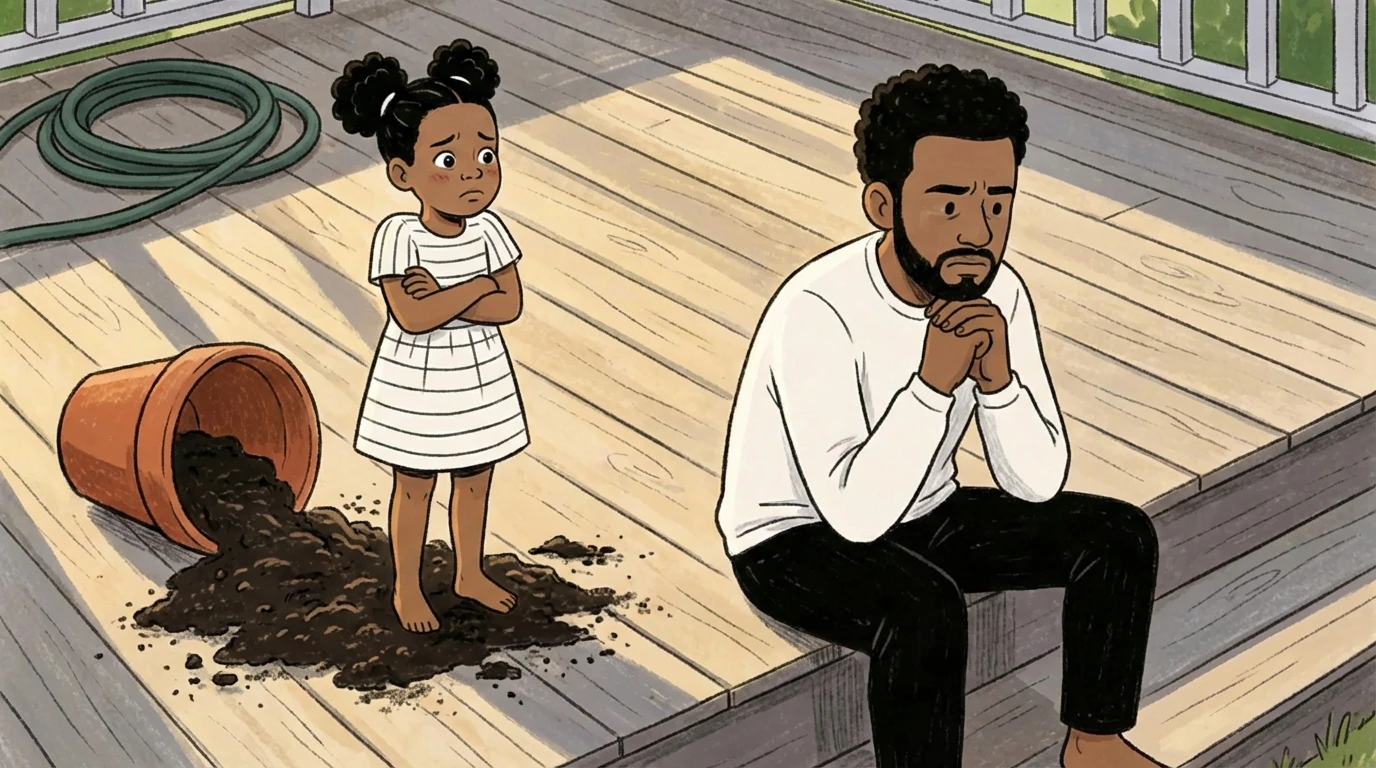
"Did you eat the last cookie?" You know they did. So why are you asking?
You are testing them, and they can feel it. Asking a question you already know the answer to is a trap with no winning move. Stop asking. State what you see. "I notice the cookie jar is empty and there are crumbs on your shirt." That is an observation, not a test. It gives your child room to respond honestly.
How to build a house where the truth is safe
The goal is not a child who never lies. That child does not exist. The goal is a child who feels safe enough to tell you the truth even when the truth is unflattering.
How to respond when your child lies
- Stay calm and drop the interrogationYour reaction in the first three seconds sets the tone. If you blow up, the child learns that truth is dangerous. Take a breath. You can address this without urgency.
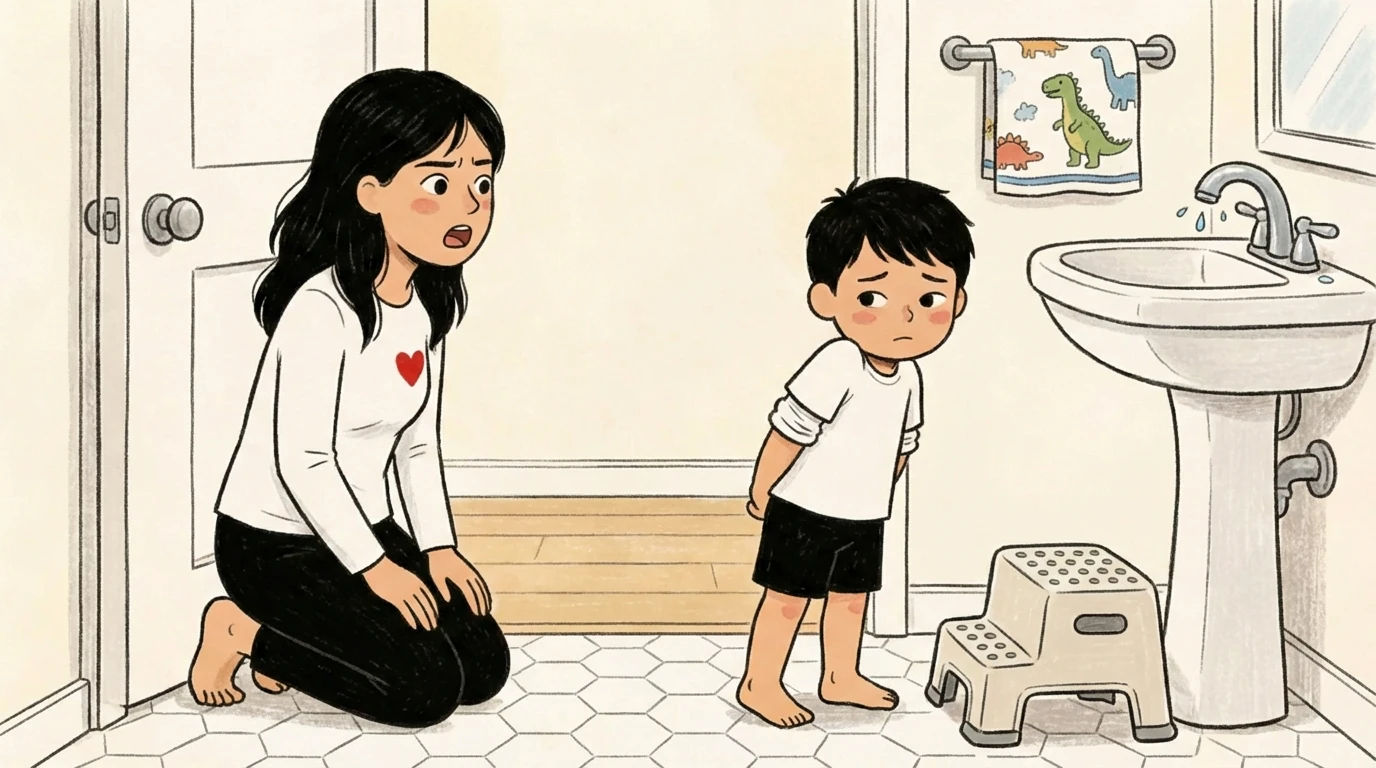
- State what you observe, do not askReplace 'Did you break this?' with 'I see the vase is broken and you were the only one in the room.' Facts, not accusations. This removes the trap and invites explanation.
- Name the wish behind the lieSay: 'You told me you finished your homework because you really want screen time right now. That makes sense.' Connecting with the desire underneath reduces shame and opens the door to honesty.
- Offer a do-over without punishmentTry: 'I am going to go get a glass of water. When I come back, I will ask you again, and if you have a different answer, that is completely fine.' This gives dignity and time to self-correct.
- Praise the truth when it comesWhen your child tells you something hard, make a big deal of it. 'Thank you for telling me that. I know it was hard. That took guts.' Honesty should feel better than lying, every single time.
Model it yourself
Your child watches everything. If you tell the person at the movie theater your ten-year-old is nine to get the child price, your kid just learned that lying is fine when it saves you money.
When you get caught in your own white lie, own it out loud. "I just told Grandma I loved the sweater and I do not. I should have said thank you without pretending." That confession teaches more than any lecture about truth-telling.
Focus on truth-telling, not on lying
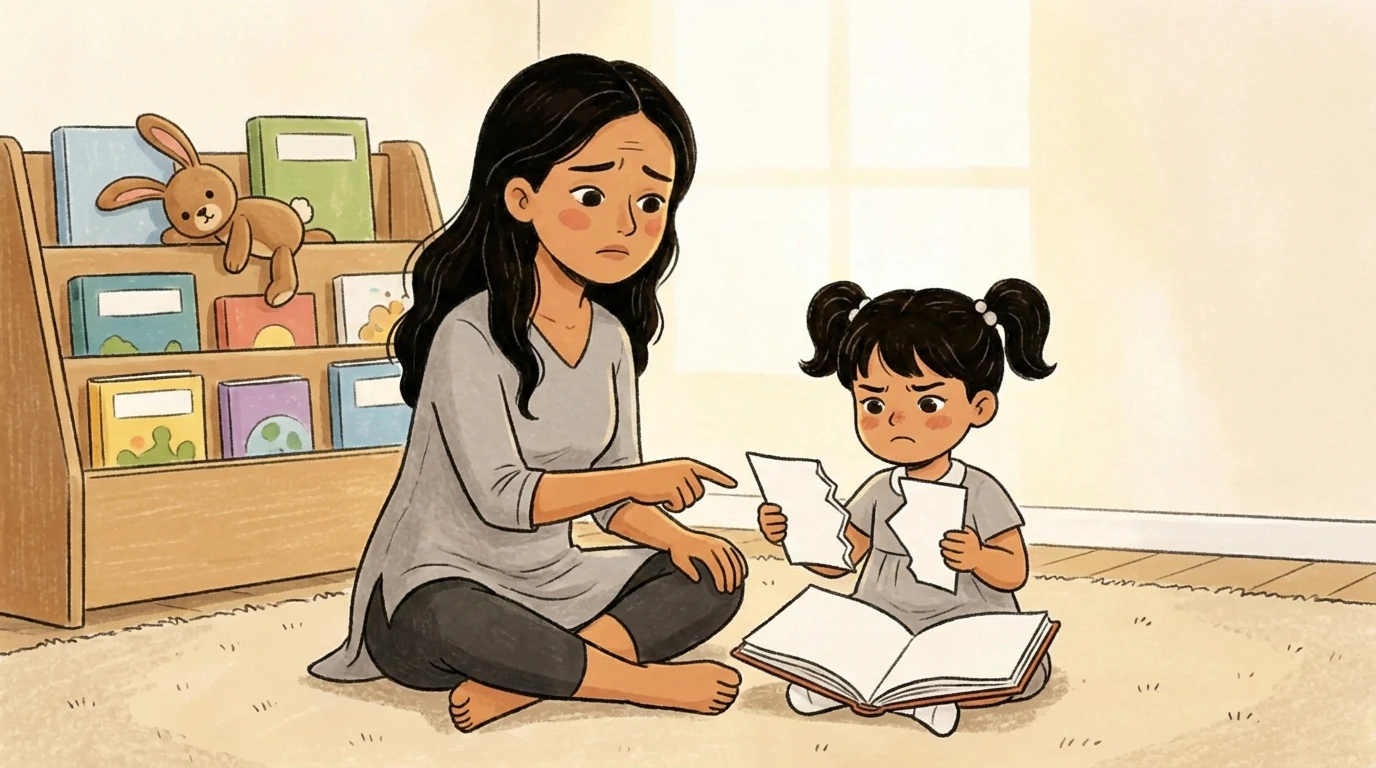
There is a difference between "We do not lie in this house" and "In this family, we tell the truth, even when it is hard." The first one focuses on what the child did wrong. The second focuses on what the family values. Shame-based framing makes a child feel defective. Value-based framing gives them something to live up to.
Script that works: "In our family, we always tell the truth, even when we think it means we will not get what we want. It helps us trust each other and solve problems together."
The age-by-age reality
Lying changes as kids grow, and so should your response.
Two to three: wishes, not lies
At this age, lying is barely lying. Your toddler says they washed their hands because they wish they had. They are blurring the line between reality and desire because their brain has not separated the two yet. State what you see, acknowledge the wish, redirect. "I know you wish your hands were clean. Let's go do it together."
Four to six: the experimental phase
This is peak lying territory. Your child has discovered they can influence what other people believe, and they are running experiments. "What happens if I tell my friend my dad has a race car?" They are testing social dynamics and the boundaries of what is real. Stay curious. Get down to their level. Ask: "Help me understand, why did you want me to think that?"
Seven and up: social and self-protective lies
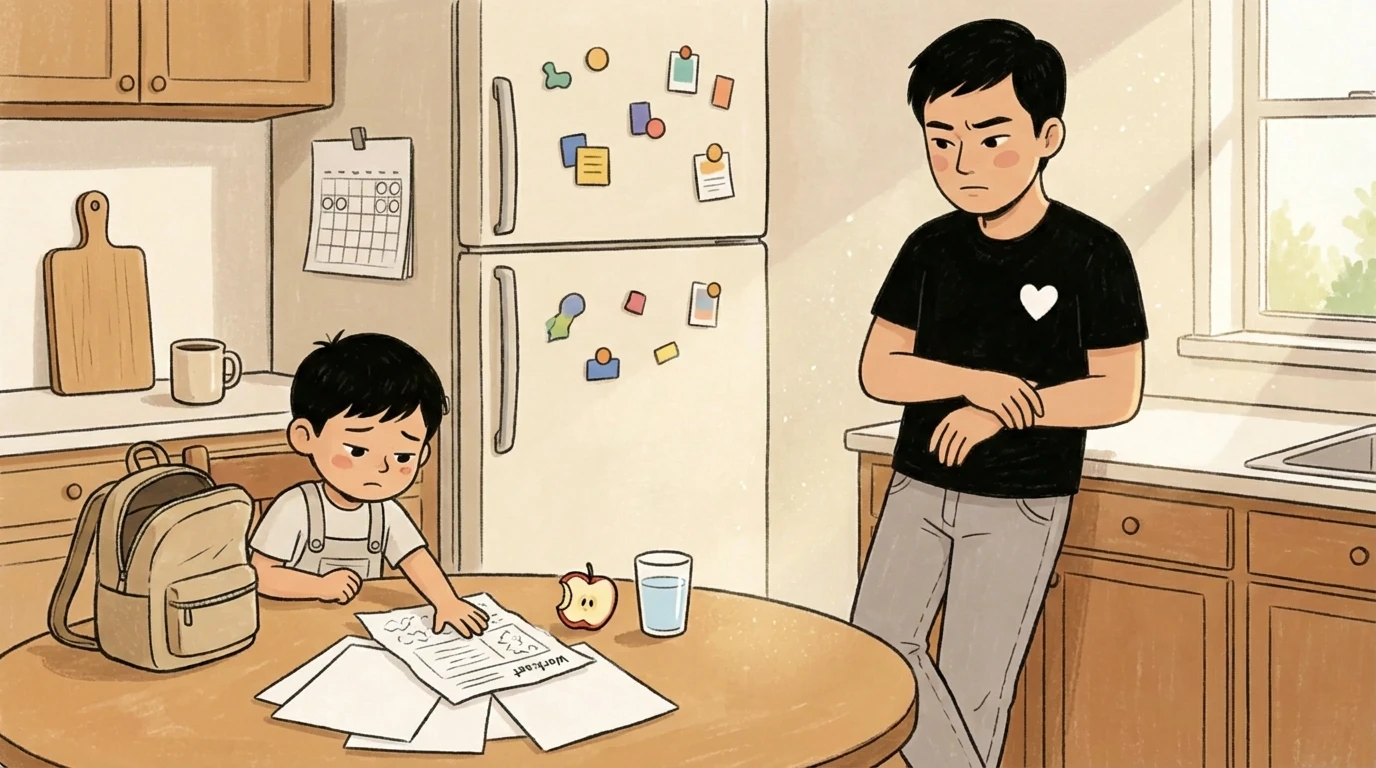
Older kids lie to protect their social standing, to avoid disappointing you, or because they have learned that the truth has costs. If your school-age child lies frequently, look at whether telling you the truth has historically been safe rather than reaching for stricter consequences. A child who worries that honesty will spiral into self-blame will choose the lie every time.
The long game
Every lie is a window into what your child needs. They need to feel safe. They need to believe that honesty will not cost them the relationship.
You will not get this right every time. You will ask the trap question. You will react before you think. When that happens, repair it. "I asked you something I already knew the answer to, and that was not fair. Let me try again."
The child who grows up in a house where truth-telling is met with steadiness becomes the teenager who calls you at midnight from a party that went sideways. That call only happens if years of small moments taught them the truth is safe to bring home.
FAQ
Completely normal. Four is the peak age for experimental lying because children have just developed theory of mind and are testing what they can influence. The frequency drops as they mature, especially if honesty is consistently met with calm instead of anger.
Punishment teaches kids to lie better, not less. It increases fear of getting caught without building any desire to be honest. Focus on making truth-telling safe and praising honesty when it happens. Natural consequences still apply, but the lie itself should be addressed through connection, not penalty.
Some children lie to feel in control, to test social dynamics, or because they blur the line between wish and reality. If your child lies when the stakes are zero, they may be experimenting with how deception works rather than trying to avoid trouble. Stay curious about the function of the lie.
Use simple language: a truth is something that happened, a lie is saying something that did not happen on purpose, and a story is something we make up for fun that everyone knows is pretend. Practice with games like 'two truths and one made-up thing' to make the distinction concrete and low-stakes.