TLDR
- Picky eating is genetic, not your fault. Toddlers who rejected unfamiliar berries in the wild survived longer than adventurous eaters. Your child inherited that same wiring.
- Pressuring kids to eat makes pickiness worse. When you override your child's body signals with 'just one more bite,' you erode the self-regulation that prevents eating problems later.
- A food may need ten exposures before a child tries it. Offering broccoli once and declaring your kid hates vegetables is like quitting a language after one lesson.
- You control what is on the plate. They control what goes in their mouth. This division of responsibility removes power struggles and keeps mealtimes from becoming battlegrounds.
- Pickiness is temporary. Taste buds change as kids grow. Nearly all children come to enjoy the foods they have watched their parents eat over time.
The day your good eater disappeared
You had a baby who ate everything. Sweet potato puree, mashed avocado, salmon right off your fork. You were the parent smugly watching your eight-month-old devour hummus while other toddlers survived on crackers.
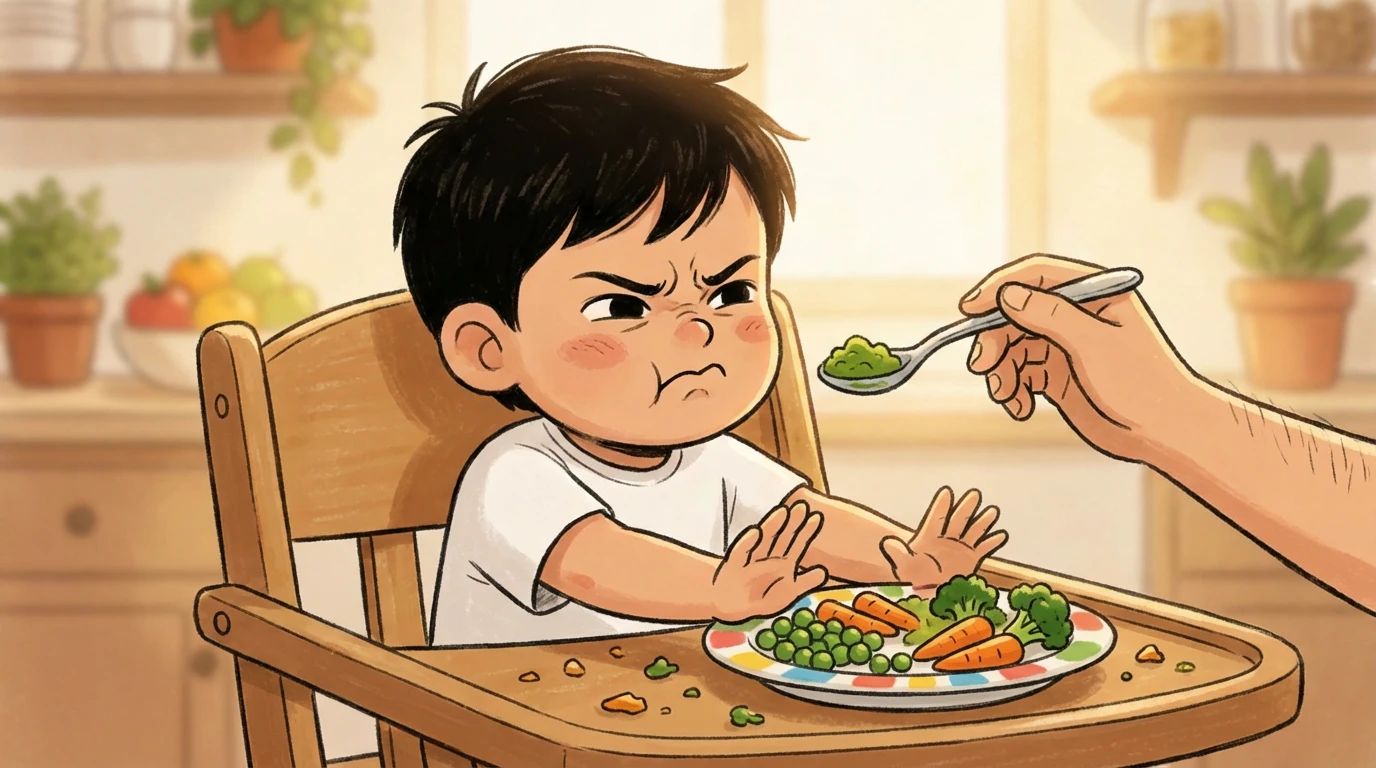
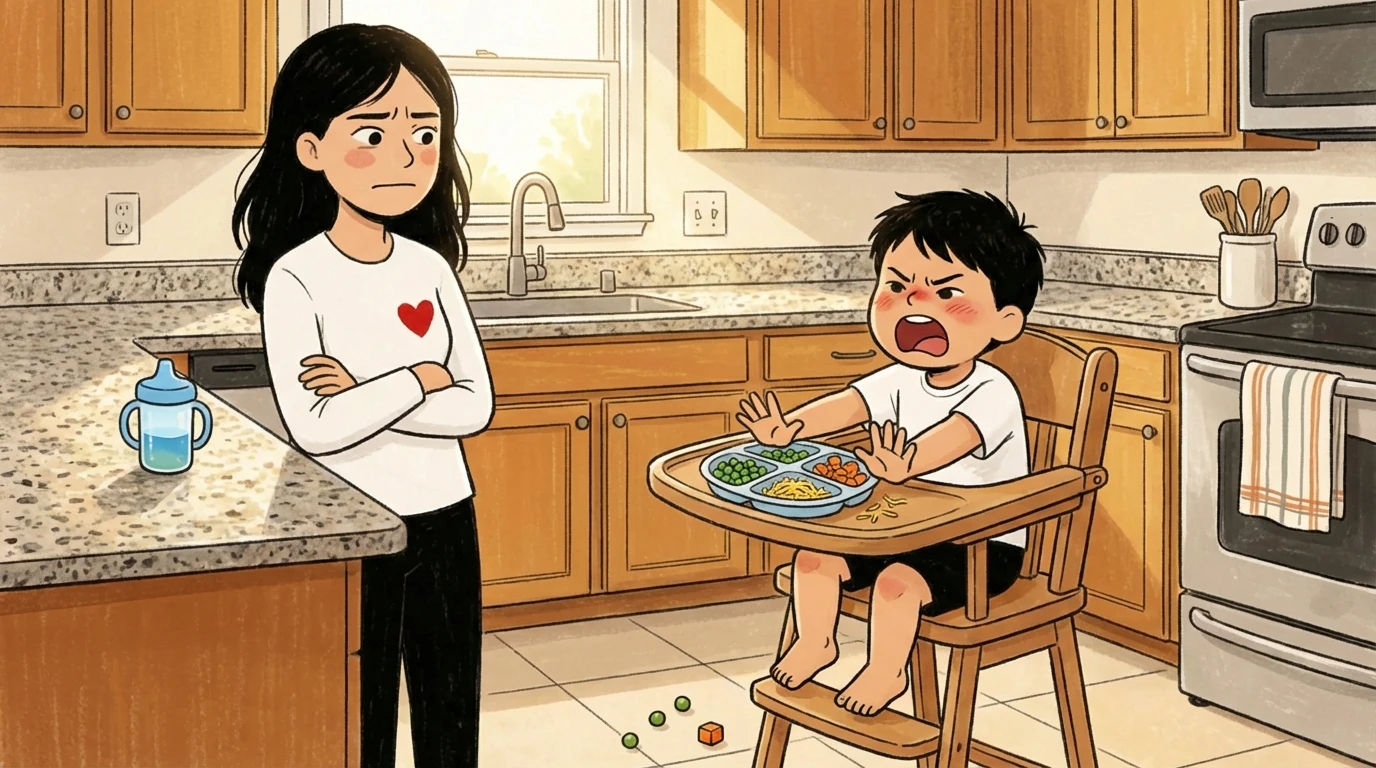
Then around 18 months, it stopped. Your child looked at a green bean like you had placed a live insect on their plate. Dinner became a hostage negotiation. Pasta with butter. Maybe crackers. Milk. More milk.
This shift is one of the most predictable things in child development, and almost every parent takes it personally. You did not break your child's appetite. Biology flipped a switch.
The evolutionary logic behind food rejection
Here is why your toddler suddenly hates everything: toddlers are genetically programmed to reject unfamiliar foods because unfamiliar foods could be poisonous. This is called food neophobia, and it peaks between ages 2 and 6.
A million years ago, the toddlers who wandered away from camp and ate random berries did not make it. The suspicious ones, the ones who refused anything they had not seen their parents eat a dozen times, survived. You come from a long line of picky toddler eaters.
This is the same developing brain that produces tantrums, separation anxiety, and an obsessive attachment to one specific cup. The prefrontal cortex will not be fully online for years. Until then, your child's gut reaction to unfamiliar food is: suspicious, reject, scream about it.
Why the timing feels like a betrayal
Pickiness arrives right when your child transitions from purees to real food. They ate everything as a baby because they had no choice and no opinions. Now they have both. What feels like regression is a developmental leap. Your child has preferences, will, and the word "no."

Why pressuring your child backfires
Every instinct tells you to push. Just one bite. You liked this yesterday. Can you try it for me?
You cannot win a fight with someone about their own body. Every child is born with internal cues that tell them how much they need. When you override those cues with pressure, you erode the self-regulation that prevents eating problems down the road.
Kids who get pressured to eat more than they want learn to ignore their own fullness signals. That pattern follows them into adulthood.
The power struggle trap
Toddlers do not need much food. Many eat a ton one day and almost nothing the next. Children do not starve themselves. But when parents panic about intake and turn meals into battles, the child starts refusing food not because they are not hungry but because the table has become a place where their autonomy gets crushed.
The division of responsibility is the framework that fixes this: you decide what is offered, your child decides how much they eat and whether they eat at all. It sounds terrifying. It works.
Foods they used to eat
The Peaceful Mealtimes course will show you why the rejection phase ends
You'll see the developmental pattern behind the refusals and stop blaming yourself for every uneaten plate.
What to do instead (the strategies that work)
Offer variety in small portions
Put four or five small portions of different foods in front of your child. A few peas, a slice of cheese, some torn-up bread with peanut butter, cucumber wheels, a scrambled egg. When everything is small, nothing is overwhelming, and you are not married to any single item.
Once a toddler starts eating one thing, they often branch out to other foods on the plate. But if you serve one big pile of something they are not feeling today, you get total rejection and a request for crackers fifteen minutes later.
A muffin tin works brilliantly. Each cup holds a different food, nothing touches, and it looks interesting. Most little ones hate when foods touch, and a muffin tin solves that.
Expect ten exposures before acceptance
You offer carrots. Your child ignores them. Tuesday, ignored. Wednesday, pushed off the plate.
Research says a child may need to see a food ten times before they will try it. Not eat it. Try it. Ten calm, no-pressure exposures where the food is just there, available, not the subject of a negotiation. Most parents give up around attempt three and conclude their kid is a confirmed carrot hater.
Keep putting it on the plate. Do not comment on it. The transition from baby food to toddler eating is longer than anyone warns you.
Model eating without performing it
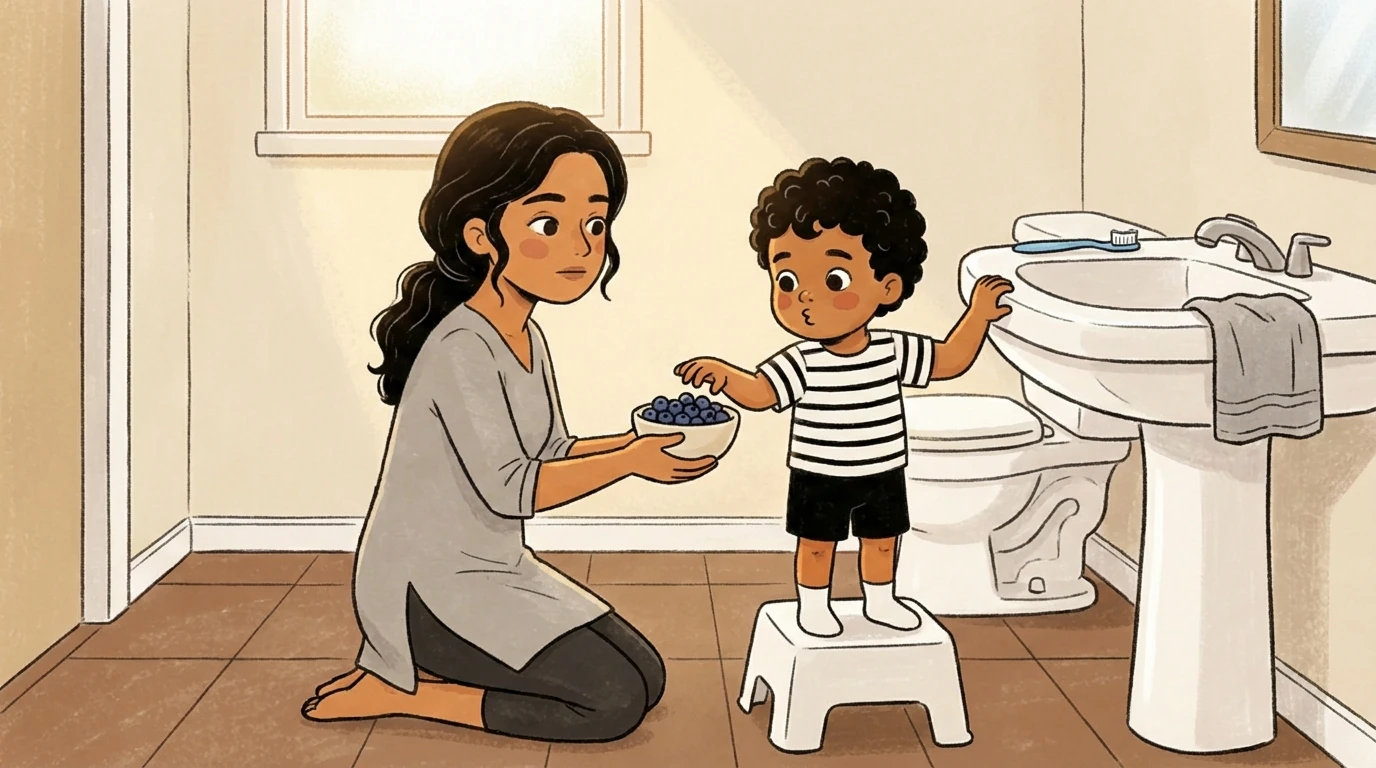
Your child watches everything you eat. Whatever you eat regularly becomes their definition of normal food. The single most powerful thing you can do for your child's eating is eat the food yourself and visibly enjoy it.
Say "delicious" and mean it. Do not say "this is so good for you." Health lectures do not motivate toddlers. Genuine enjoyment does. When you take a bite of roasted broccoli and your face says you like it, your child files that away. Weeks or months later, they will want to try what you are having.
The flip side: if you eat junk food in front of your child, that becomes their comfort food template. Kids want what they see their parents eat.
Keep sweets out of the equation
Once a toddler discovers sugar, biology takes over. Humans are wired to prefer sweet tastes. It is blood chemistry, not a failure of willpower in a two-year-old.
The recommendation from every feeding expert is the same: delay introducing sweets as long as possible and do not keep them in the house. Make fruit the default treat. When your child melts down because they want cookies, empathize ("You love cookies. We don't have cookies at home, but we have strawberries") and hold the line.
Hunger eventually wins, and the healthy food on the table starts looking better.
The milk problem nobody warns you about
Milk is nutritious. It is also the escape hatch that lets picky toddlers skip solid food. More than 16 to 24 ounces per day interferes with iron absorption and fills them up so they skip meals.
Move milk to snack time. Pair it with fruit. At meals, offer water. This one change makes more difference than any amount of vegetable hiding or creative plating, because a toddler who arrives at dinner with a stomach full of milk has no reason to try the sweet potato.
How to handle a meal your toddler rejects
- Serve five small portionsInclude at least one item you know they currently accept. Make portions tiny. A tablespoon of each is plenty. The goal is a plate that looks approachable, not intimidating.
- Eat the same food yourselfDo not hover or watch them eat. Sit down, eat your own meal that includes the same foods, and let them see you enjoying it. Your attention on their plate creates pressure.
- Skip the commentaryNo 'good job eating your peas.' No 'you didn't touch your chicken.' Commenting turns eating into a performance. Let the food be neutral.
- Leave rejected food availableDo not remove foods they push aside. Leave everything on the plate. Many toddlers circle back to foods midway through a meal once the pressure is off.
- End without bargainingWhen they signal they are done, they are done. No negotiating for one more bite. Clear the plate, offer the next snack at the scheduled time, and move on.
When to stop worrying (and when to call the doctor)
Most picky eating resolves on its own. Taste buds change as kids grow, and virtually all children come to enjoy the foods they have watched their parents eat. The window before age three is the most receptive for new foods, so keep offering variety now even when it feels pointless.
The same developmental patterns that produce picky eating produce tantrums, bedtime resistance, and every other toddler behavior that makes you question your sanity. It is all connected.
Call your pediatrician if your child is losing weight, refuses entire food groups for months, gags or vomits regularly with certain textures, or seems to be in pain while eating. Those signal something beyond developmental pickiness.
For everyone else: patience, variety, and the willingness to serve broccoli for the ninth time knowing it is going on the floor.
FAQ
Food neophobia peaks between ages two and six, then gradually fades. Most children eat a much wider range of foods by school age, especially if they have been consistently exposed to variety without pressure. Some selectivity is normal even in older kids.
Do both. Serve vegetables as themselves so your child learns to recognize and accept them. Also blend spinach into spaghetti sauce or add pureed cauliflower to mac and cheese for extra nutrition. Hiding vegetables just means treating them as a legitimate ingredient.
For a few days, a healthy toddler will be fine. Over weeks, a diet that limited misses key nutrients. Limit milk to 16 to 24 ounces per day, move it to snack time, and keep offering a variety of solid foods at meals. Hunger will eventually win.
It hurts in the long run. Making a special meal teaches your child that the family meal is not for them. Instead, put a few simple toddler-friendly extras on the table alongside whatever you are eating, like cheese slices, a hard-boiled egg, or veggies with hummus.
See your pediatrician if your child is losing weight, refuses all foods in a major food group for months, regularly gags or vomits with certain textures, or seems to be in pain while eating. Most pickiness is developmental, but those signs warrant a professional evaluation.