
TLDR
- Gentle parenting includes firm limits. It is not permissive. You say no, hold boundaries, and follow through. The difference is how you hold them.
- Connection is the discipline strategy. A child who feels safe with you is a child who cooperates. Research on attachment confirms this consistently.
- Your feelings matter too. You do not have to suppress your own emotions. You regulate them so you can respond rather than react.
- It came from real frustration. Most parents who land here grew up with authoritarian parenting and are trying to break a pattern without losing structure.
- It works across ages. The tools shift from toddlers to teens, but the core principle stays: boundaries held with respect.

The word "gentle" is doing a lot of damage
Half the internet thinks gentle parenting means you sit cross-legged on the floor, whisper validation at a child who just threw a shoe at your face, and wait for enlightenment to strike.
The other half thinks it means no rules, no consequences, and children running the household while parents smile through gritted teeth.
Both versions are wrong. Gentle parenting is a framework built on four pillars: empathy, respect, boundaries, and understanding. The "gentle" refers to how you treat your child's emotions, not whether you have rules. You absolutely have rules.
The confusion comes from social media clips that show the empathy part and skip the boundary part. A 60-second video of a parent validating feelings looks permissive if you never see the follow-through that happens next. The full picture includes what comes after the validation: the limit stated clearly, the follow-through without negotiation, and the consistency that teaches a child the rules are real even when they are delivered calmly.
What it looks like on a Tuesday night
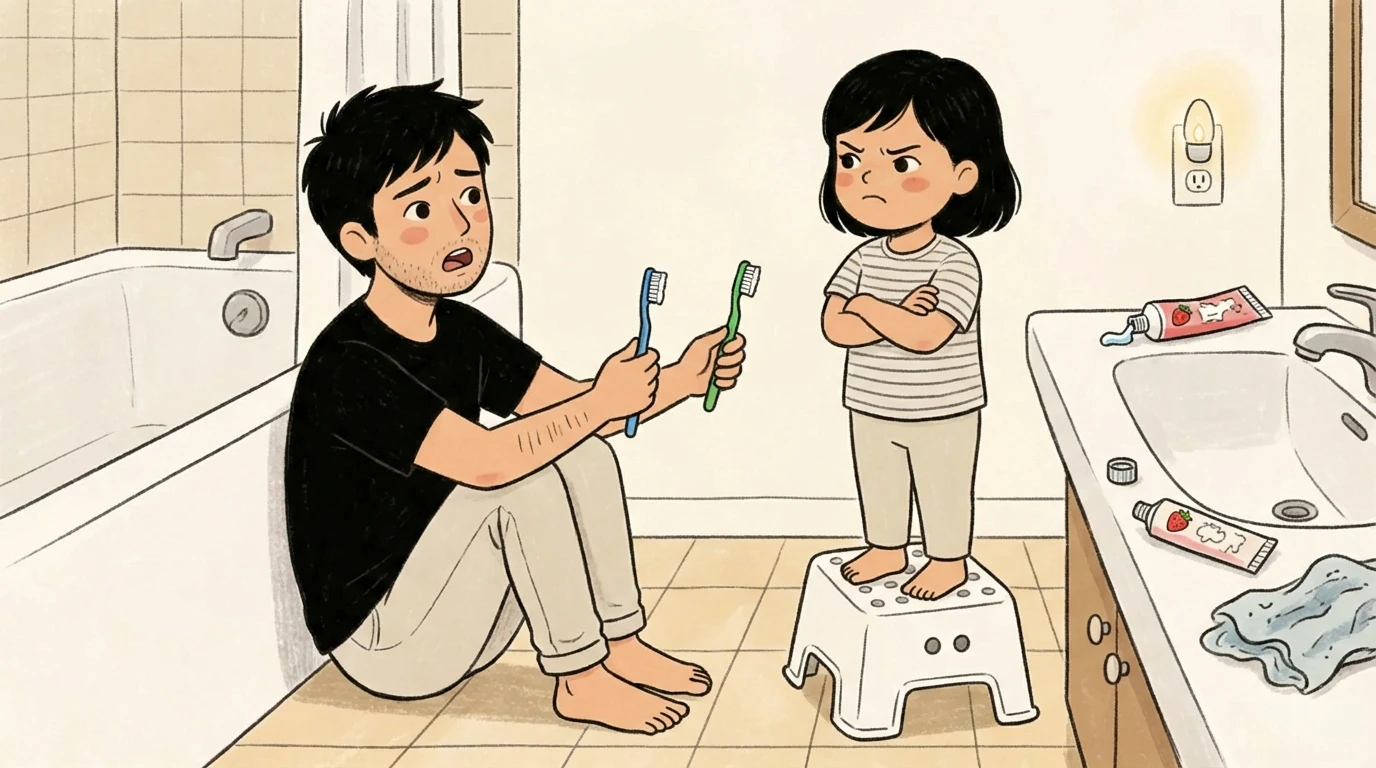
Your four-year-old refuses to brush teeth. In an authoritarian household, the parent forces compliance or threatens a consequence. In a permissive household, the parent gives up and hopes dental hygiene happens eventually.
In gentle parenting, the boundary stays: teeth get brushed. But the approach changes. You might offer a choice ("Do you want the blue toothbrush or the green one?"). You might acknowledge the feeling ("You hate stopping your game. I get it."). And then you follow through. Teeth get brushed.
The boundary did not move. The method of enforcement changed. No yelling. No threats. No bribing with screen time. But also no shrugging and walking away.
Yelling after preaching calm
The Intentional Parenting course will show you what gentle requires
You'll know exactly where firmness belongs so the gap between your philosophy and your Wednesday night stops shrinking you.
Here is the thing that trips people up: this takes longer in the short term. A threat produces immediate compliance. Gentle parenting produces a child who cooperates because they understand the reason and trust you, which takes repetition. The payoff comes months later, when your child starts brushing teeth without a fight because the routine feels predictable and fair rather than forced.
The four pillars in practice
Empathy means you acknowledge what your child feels before correcting their behavior. "You're so mad" before "but we don't hit."
Respect means you speak to your child the way you would speak to a friend's child. No sarcasm. No belittling. No "because I said so" as the entire explanation.
Boundaries mean you hold limits firmly and consistently. You are allowed to say no. You are expected to say no. A lot.
Understanding means you consider what is developmentally possible. A two-year-old who grabs toys is not being selfish. Their brain cannot share yet. Research on the parent-child connection consistently shows that children meet expectations more readily when they feel understood.
Where people get it wrong
The biggest misunderstanding is confusing empathy with agreement. You can validate that your child is furious about leaving the playground and still leave the playground. Those two things coexist. Saying "I know you're upset, you were having so much fun" does not mean you sit back down on the bench. You say the words, pick up the bag, and walk to the car.
"But my parents yelled and I turned out fine"
Maybe. Or maybe you turned out anxious, conflict-avoidant, and unable to set boundaries in your own relationships. Many parents choosing gentle parenting are actively breaking patterns from their own childhood. That takes serious self-awareness. It also means sitting with the uncomfortable realization that people who loved you made choices that hurt you, and that you can love them and still choose differently for your own kids.
The goal is to raise children who hear "no" from someone who also hears them.
The permissiveness trap
Some parents swing so far from their own strict upbringing that they land in permissiveness and call it gentle parenting. No bedtime. No limits on screens. Letting a child hit because "they're expressing feelings."
That is fear of being your parents dressed up as gentle parenting. The real thing requires you to be the authority. An authority who listens, explains, and stays regulated, but an authority nonetheless. If your child is hitting, you stop the hitting. If bedtime is 7:30, bedtime is 7:30. You can be warm about it, but the boundary does not bend because the child is upset. If you find yourself unable to hold limits, understanding the real difference between punishment and discipline can help clarify what structure looks like without control.
How to practice gentle parenting daily
- Pause before reactingWhen your child does something that spikes your stress, take one breath before responding. The pause is where gentle parenting lives.
- Name the feeling firstBefore correcting behavior, acknowledge the emotion driving it. 'You wanted that toy and she took it. You are so angry.' Then address the action.
- Hold the boundary without threatsState the limit clearly and follow through. 'I will not let you hit. I am going to move your hands.' No countdown. No if-then warnings.
- Offer limited choicesGive your child two acceptable options. This respects their autonomy within the boundary you set. Both options must be ones you can live with.
- Repair when you mess upYou will yell. You will lose patience. Come back, apologize, and try again. Repair teaches more than perfection ever could.
It is not about being calm all the time
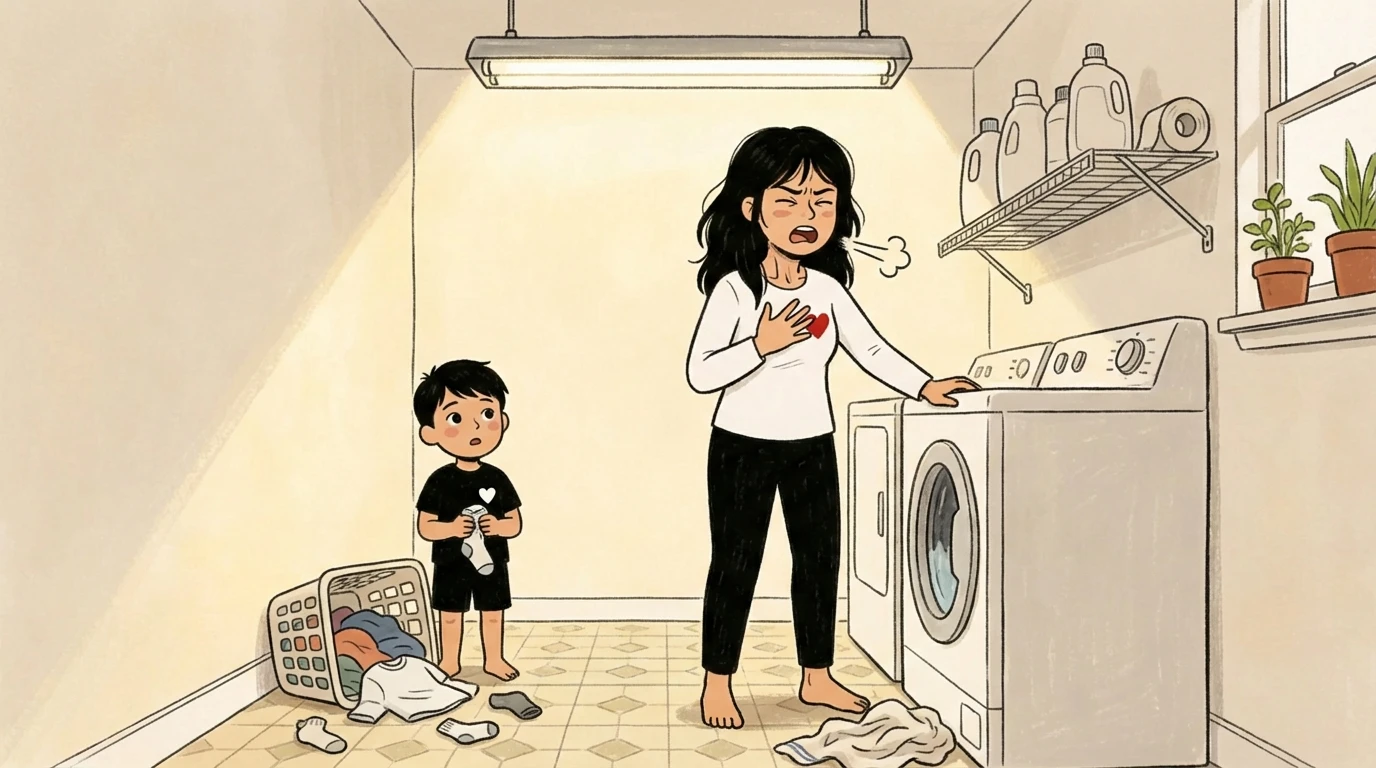
This is the part nobody puts on Instagram. Gentle parenting asks you to regulate your own emotions while your child is completely dysregulated. That is wildly difficult on four hours of sleep.
You will yell. You will snap. You will say something you regret at 6:45 a.m. on a school morning. Gentle parenting is a commitment to coming back, repairing, and trying again. The calm voice is the goal, not the prerequisite.
The repair matters more than the rupture. A child who watches you lose your temper and then come back to say "I should not have yelled, I am sorry, you did not deserve that" learns something powerful about relationships: people who love you own their mistakes.
If you want to figure out where your own parenting tendencies lean, a quick quiz on parenting style can give you a useful starting point.
Why parents choose this (and stay with it)
The first two weeks are brutal. Your child tests every boundary because this approach is new and they need to confirm the limits still exist. Behavior often gets worse before it gets better. This is called an extinction burst, and it is completely normal. Your child is running an experiment: "Do the rules still apply if I push harder?" Your job is to prove that they do, every single time, without losing your cool (or at least repairing when you do).
But then something shifts. Your child starts coming to you with problems instead of hiding them. The tantrums shorten. The cooperation happens without bribes. You stop dreading bedtime.
The relationship becomes the discipline tool. Your child cooperates because losing your connection feels worse than losing the toy. That is the whole framework in one sentence.
It also spills over. Parents report calmer conversations with partners, fewer conflicts with their own parents, and a sharper awareness of their own emotional patterns. And once you commit to this approach, the next question is inevitable: does gentle parenting mean letting kids do whatever they want? (Spoiler: no.)

The bottom line
Gentle parenting is boundaries held by someone who gives a damn about the person on the other side of those boundaries. You still say no. You still enforce bedtime. You still take the marker away from the toddler drawing on the couch.
You just do it while remembering that the small human in front of you is doing their best with a brain that is still under construction.
FAQ
Strong-willed children respond better to gentle parenting than to authoritarian approaches because power struggles escalate with them. They need to understand the reason behind a rule. Give them that, hold the boundary, and their cooperation improves over time.
Stop the hitting by blocking or moving their hands. Say 'I will not let you hit me.' Validate the feeling underneath. Do not lecture in the moment. Address the behavior later when everyone is calm.
Yes. Decades of developmental psychology research support the authoritative parenting style, which gentle parenting closely mirrors: high warmth, high expectations, firm boundaries, emotional responsiveness. It consistently produces the best outcomes across cultures.
You can start at any age. Older children may initially distrust the shift because it feels unfamiliar. Be consistent, explain what you are doing differently and why, and give them time to adjust.
Permissive parenting avoids boundaries. Gentle parenting holds them firmly. The difference is that gentle parenting adds empathy and respect to the enforcement. You still say no. You just explain why and acknowledge how it feels.