TLDR
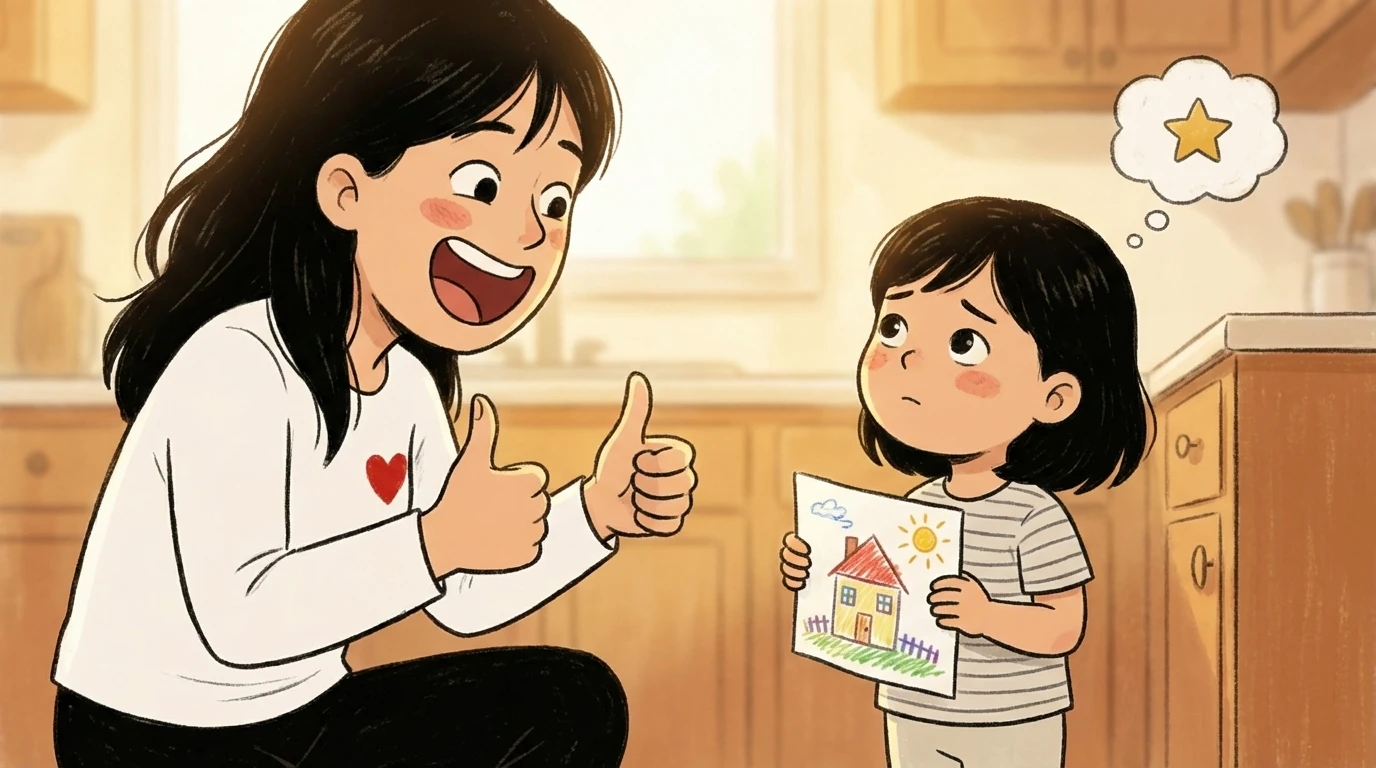
- Person praise ('you're so smart') makes kids avoid hard things. Children who hear they are talented start dodging challenges because failure would threaten their identity. They play it safe.
- Process praise ('you tried three different ways') builds persistence. When you name the effort or strategy, kids learn that hard work is what matters. They take on harder tasks and recover faster from mistakes.
- The best praise describes, it does not evaluate. Saying 'I noticed you shared your snack without anyone asking' does more than 'good boy.' Description gives information. Evaluation creates dependence.
- You can start rewiring your praise habit today. Replace one 'good job' per day with a specific observation. The shift is small but the downstream effect on motivation is measurable within weeks.
The praise trap
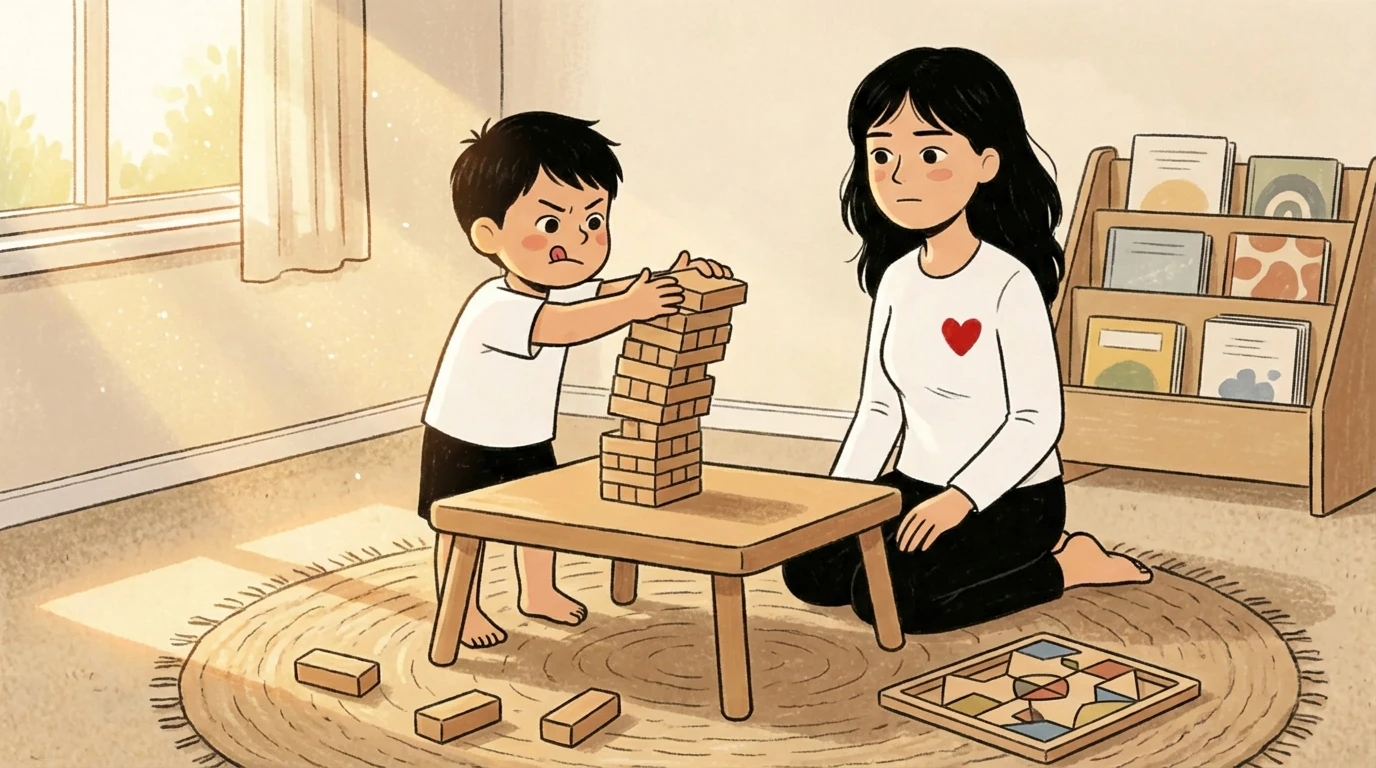
You say "good job" roughly four hundred times a day. After the tower. After the drawing. After they put on shoes without a hostage negotiation. It flies out automatically, like a verbal tic you picked up from every other parent at the playground.
Here is the problem. Carol Dweck's research at Stanford showed that kids who hear "you're so smart" start avoiding hard tasks. They pick the easy puzzle. They quit faster when something gets difficult. The praise that was supposed to build confidence did the opposite: it made them fragile.
The reason is logical once you see it. If being smart is why you succeed, then struggling means you might not be smart. And if your entire identity rests on that label, you will do anything to protect it. Including never trying anything where you might fail.
This applies to every parenting style on the spectrum. Whether you run a tight ship or a loose one, the words you use when your kid does something shape what they try next.
The same pattern runs through classrooms. Teachers say "good job" on autopilot dozens of times per lesson, and kids learn to gauge their performance by watching adult faces instead of checking their own work. A child who spent three years collecting "good jobs" at home arrives at school already wired to perform for approval. They raise their hand not because they know the answer but because they want the teacher's nod. By second grade, the praise-dependent kids are the ones who crumble when a paper comes back with red marks - because they never built an internal system for judging their own progress. The school environment amplifies whatever praise pattern you set at home.
What process praise sounds like
Process praise names the effort, the strategy, or the specific thing you noticed. It sounds boring. That is a feature.
The effort version
"You worked on that for twenty minutes without stopping." "You kept going even after it fell apart twice." These sentences point at something the child controls. They chose to persist. You are telling them you saw it.
This is where a growth mindset gets built. Children learn that ability grows through effort because you keep pointing at the effort instead of the outcome.
Good job on repeat
The Intentional Parenting course will replace empty praise with words that land
Your child will attempt hard things without glancing at you for approval first, because your feedback finally builds real confidence.
The strategy version
"You tried stacking the big blocks on the bottom this time." "You sounded out each part of that word separately." Strategy praise teaches kids that there are different approaches to problems, and that picking a better one is a skill, not luck.
Picture a five-year-old building a Lego spaceship. The first attempt collapses because the wings are too heavy. Instead of saying "nice try" or swooping in to fix it, you say "You put the wings right at the top - what if you moved them lower where the base is wider?" The child rebuilds with the wings lower. It holds. You say "You changed where you put the heavy pieces and it worked." That sentence connects the decision to the result. The child walks away knowing that when something breaks, you change the strategy. Not that you wait for an adult to tell you whether you did a good job.
The observation version
"I noticed you let your sister go first." "You chose the red paint for the sky, that is different." These are mirrors, not evaluations. You are reflecting back what happened without a gold star attached.
Why "good job" creates approval addicts
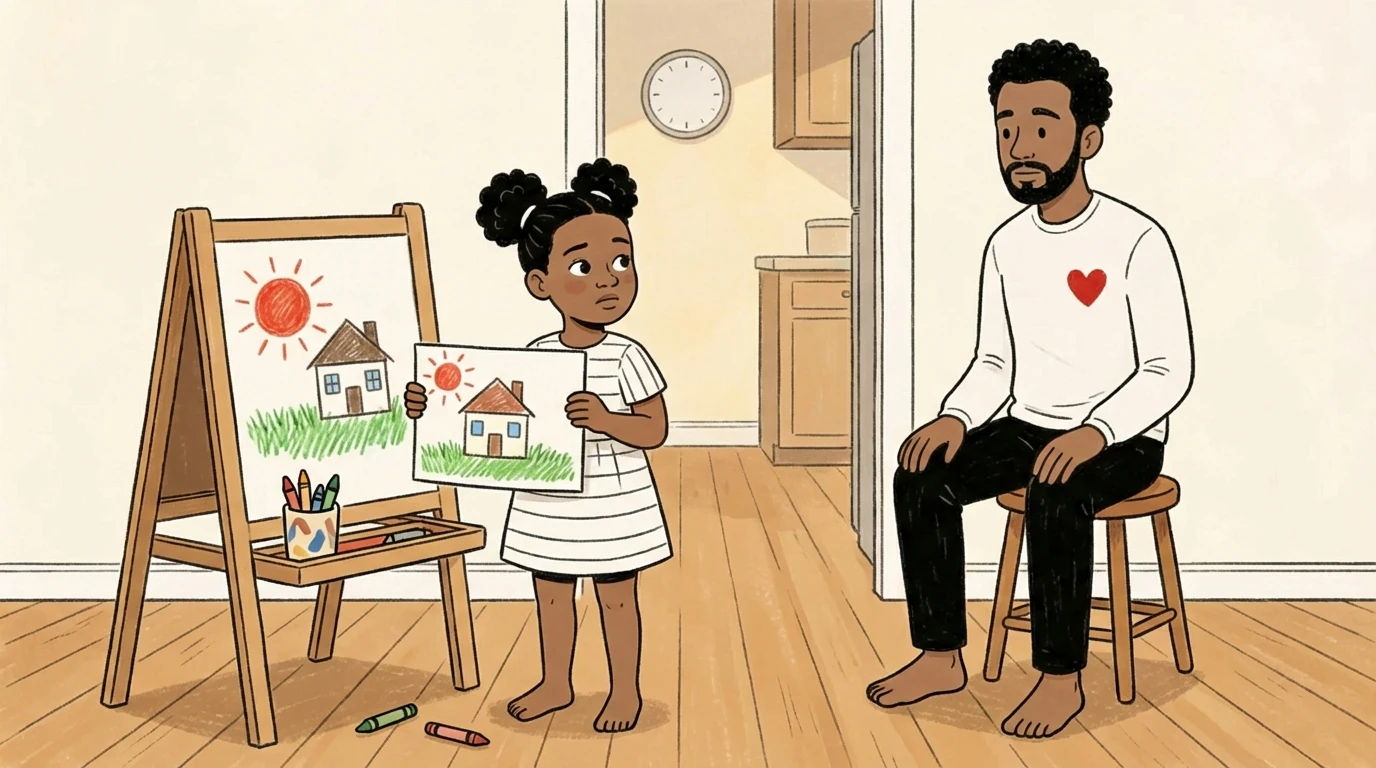
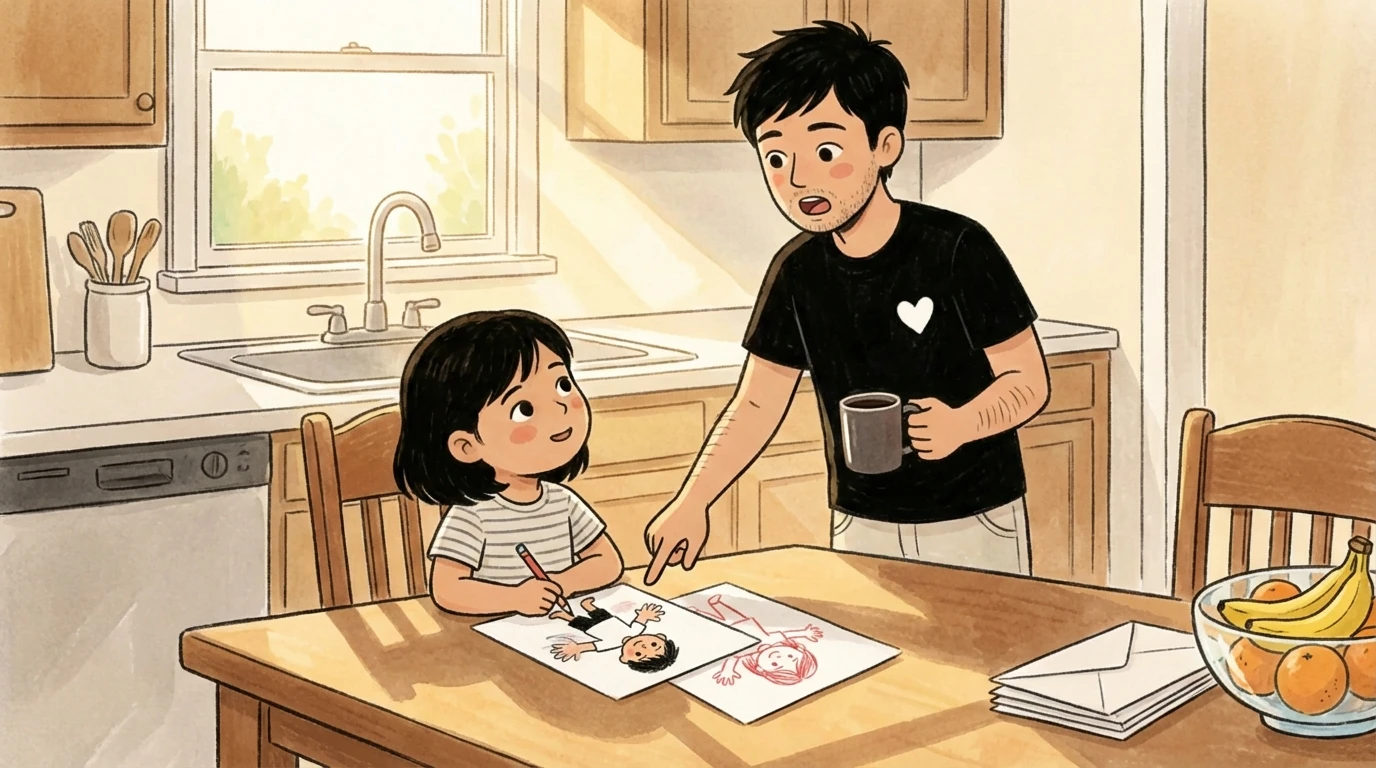
Watch a three-year-old who has been marinated in "good job" since birth. They finish a drawing, and instead of looking at it, they look at you. They are seeking your verdict, not seeking your opinion.
That glance is the problem. A child who needs your approval to know whether their work is good has outsourced their entire evaluation system. They cannot enjoy their own accomplishments without checking your face first.
Alfie Kohn calls this "praise junkies." The more you evaluate, the more they need you to evaluate. The less they trust their own judgment. And the pattern follows them to school, to friendships, to jobs.
The alternative is asking instead of telling. "What do you think about it?" "Which part was hardest?" "Would you do anything different?" These questions build the kind of genuine self-esteem that does not collapse the first time someone criticizes their work.
The shame connection
Here is where praise gets tricky. Person praise ("you're such a good kid") and person criticism ("you're being bad") are two sides of the same coin. Both teach a child that their behavior defines who they are.
A child who believes they are "good" when they comply and "bad" when they mess up develops shame as a default response to mistakes. The fix is the same in both directions: describe the behavior, not the person. "You hit your brother" instead of "you're mean." "You waited your turn" instead of "good job."
These patterns do not expire at age eighteen. Adults who grew up on person praise often struggle with feedback at work because any criticism feels like an identity attack, not information about a task. They chase promotions for validation the same way they once chased gold stars. In relationships, they need constant reassurance that they are "good enough" because they never built an internal metric for that. The praise language you use with a four-year-old echoes into boardrooms and marriages decades later. Knowing that can feel heavy, but it also means the small shift you make this week has a longer reach than you think.
Practical scripts for the first week
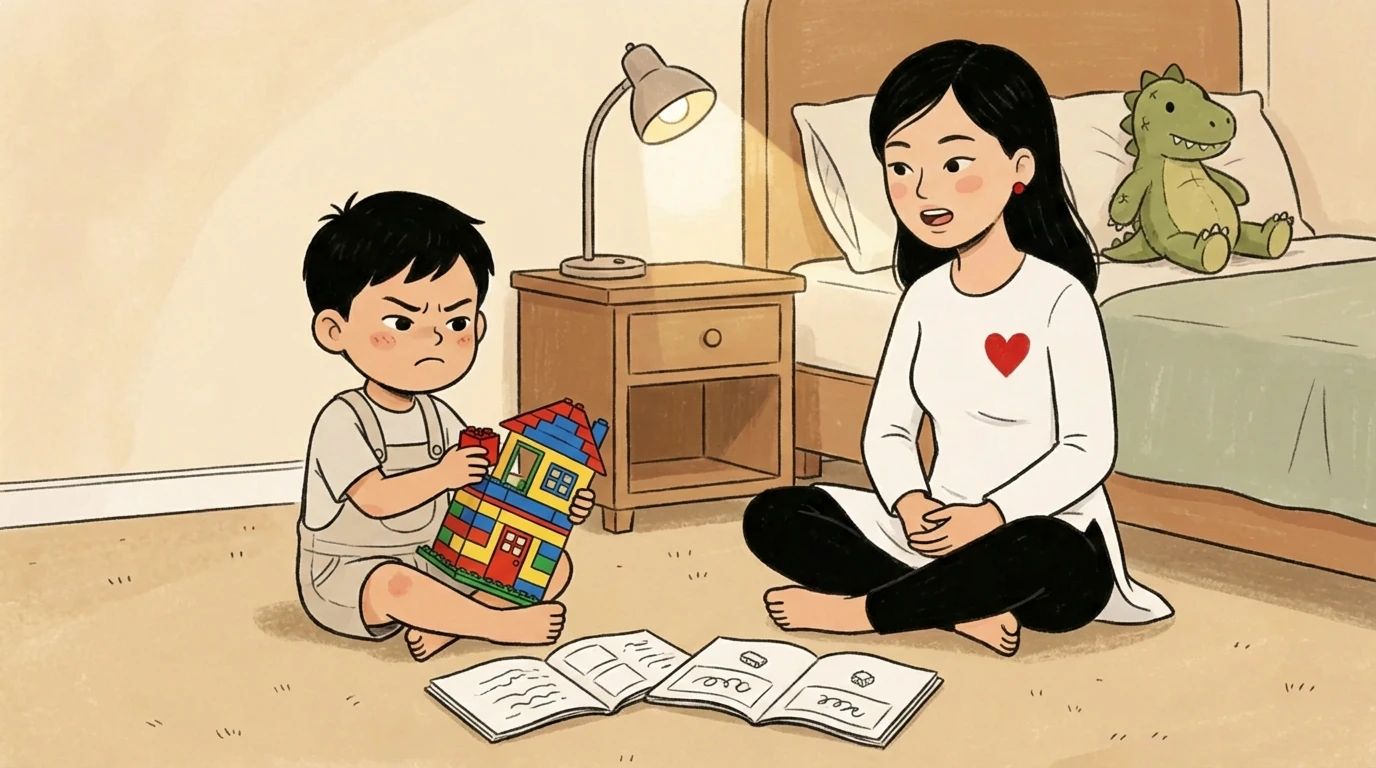
Replacing a reflex takes repetition. Here are swaps you can start using today.
Instead of "Good job on your test," try "You studied for that every night this week."
Instead of "You're so talented at drawing," try "You added a lot of detail to the hands this time."
Instead of "Good job for sharing," try "You noticed they wanted a turn and offered it."
Instead of "That's beautiful," try "Tell me about this part right here."
The key is specificity. Generic praise ("awesome!") teaches nothing. Specific observation ("you tried a completely different approach the second time") teaches everything. It also shows your kid that you were paying attention, which, let's be honest, is what they want more than any gold star.
When praise operates like a reward system, kids optimize for the reward rather than the activity itself. They draw to get your reaction, not because drawing is satisfying. Removing the evaluation and replacing it with description gives the activity back to them.
You can also check how your current communication patterns land and see where the gaps are.
The first week challenge
Changing how you praise feels strange at first. You will open your mouth, "good job" will be halfway out, and you will have to physically stop yourself and say something descriptive instead. That awkward pause is normal. Your kid might even look confused when you say "you used the eraser three times and kept going" instead of "great drawing." They are recalibrating, just like you are. Give yourself a week of clumsy attempts before judging whether this works. Start with one swap per day - pick a single moment where you would normally say "good job" and replace it with one specific thing you noticed. By day three, you will catch yourself doing it without thinking. By day seven, the old reflex starts to weaken.
How to praise kids in a way that builds real confidence
- Describe what you seeInstead of evaluating with 'great job,' narrate the specific thing you noticed. 'You used three different colors in that corner' gives your child real information about what they did.
- Name the effort or strategyPoint out how they approached the task. 'You tried it a different way when the first one did not work' teaches them that persistence matters more than talent.
- Ask what they thinkTurn the evaluation back to them. 'How do you feel about it?' builds internal standards instead of dependence on your approval.
- Skip the labelReplace 'you are so smart' with 'you figured that out.' Replace 'good job' with 'you were really patient waiting in that line.' Describe the action, not the identity.
- Notice struggle without rescuingWhen they are working hard, say 'this is a tough one and you are sticking with it.' Acknowledging difficulty without fixing it tells them struggle is normal and survivable.
FAQ
Telling kids they are smart makes them avoid challenges because failure would mean they are not smart after all. Praise the strategy instead: 'You figured out a new way to solve that.' This keeps the focus on effort, which they can control.
Frequency matters less than type. A child who hears ten specific observations per day develops differently than one who hears ten hollow 'good jobs.' If your praise describes something real, you are unlikely to overdo it.
Redirect to their own assessment. 'What do you think about it? Tell me about this part.' You are teaching them to evaluate their own work rather than outsourcing that judgment to you every time.
From toddlerhood. A two-year-old stacking blocks benefits from 'You kept trying even when it fell down' just as much as a ten-year-old working on math. The language scales with age, but the principle works from the start.