

TLDR
- Two things matter: warmth and structure. Every parenting style is a combination of how loving you are and how many boundaries you hold. Drop either one and the research shows problems.
- Authoritative parenting wins on every measure. Higher academic achievement, lower aggression, lower rates of substance abuse, better mental health. Decades of studies, same result.
- Authoritarian parenting gets compliance, not cooperation. Yelling and punishment suppress behavior in the moment but predict worse behavior over time. The harder you squeeze, the more they push back.
- Permissive parenting feels kind but leaves kids unequipped. Love without limits produces adults who struggle with impulse control, rule-following, and relationships.
- Your default style was set in your own childhood. You're probably parenting the way you were parented, or overcorrecting in the opposite direction. Both can be changed.
The two-axis framework
Researchers have studied parenting styles since the 1960s, and after decades of data, the whole field comes down to two measurements. Diana Baumrind first identified three styles in 1966. Maccoby and Martin added the fourth in the 1980s by splitting Baumrind's categories along two clean dimensions.
Warmth: How emotionally available, affectionate, and involved you are. Does your kid feel loved? Do they feel safe coming to you when something goes wrong?
Structure: How consistently you set limits, enforce boundaries, and follow through on consequences. Does your kid know what the rules are? Do the rules hold when they push?
Every parenting approach lands somewhere on those two axes. The four classic styles are just different combinations of high or low on each.
Authoritative: the one that works
High warmth, high structure. You love your kid fiercely AND you hold the line. You explain why the rule exists, you listen when they push back, and then the rule still stands.
This is the style backed by the strongest research outcomes. Kids raised by authoritative parents show higher academic achievement, lower aggression, lower rates of substance abuse, and better mental health. The data has been consistent for sixty years across cultures, income levels, and family structures.
The catch: it's the hardest style to maintain. It takes patience and the willingness to sit with your child's disappointment without caving or escalating. You have to tolerate the tantrum while the boundary holds.
What it looks like
Your five-year-old wants a third popsicle. You say no. They cry. You get on their level: "I hear you. You really want another one. The answer is still no, and it's okay to be upset about that." Then you wait.
That interaction teaches your kid three things at once: feelings are valid, limits exist, and the person holding the limit isn't going anywhere.
No style fits exactly
The Intentional Parenting course will help you build your own approach
You'll stop trying to match a textbook category and start making decisions from a framework shaped around your actual family.
Authoritarian: obedience now, problems later
High structure, low warmth. Rules everywhere. Explanations nowhere. Punishment stands in for discipline, and the parent's word is final because the parent said so.
This style looks like success short-term. The kid complies. The house is quiet.
But the longitudinal data tells a different story. Authoritarian parenting is the strongest predictor of increased aggression over time. The behavior that gets suppressed in the moment comes back louder later. Studies tracking children from preschool into adolescence find that harsh, control-heavy parenting at age four predicts more defiance, not less, by age ten.
The escalation trap
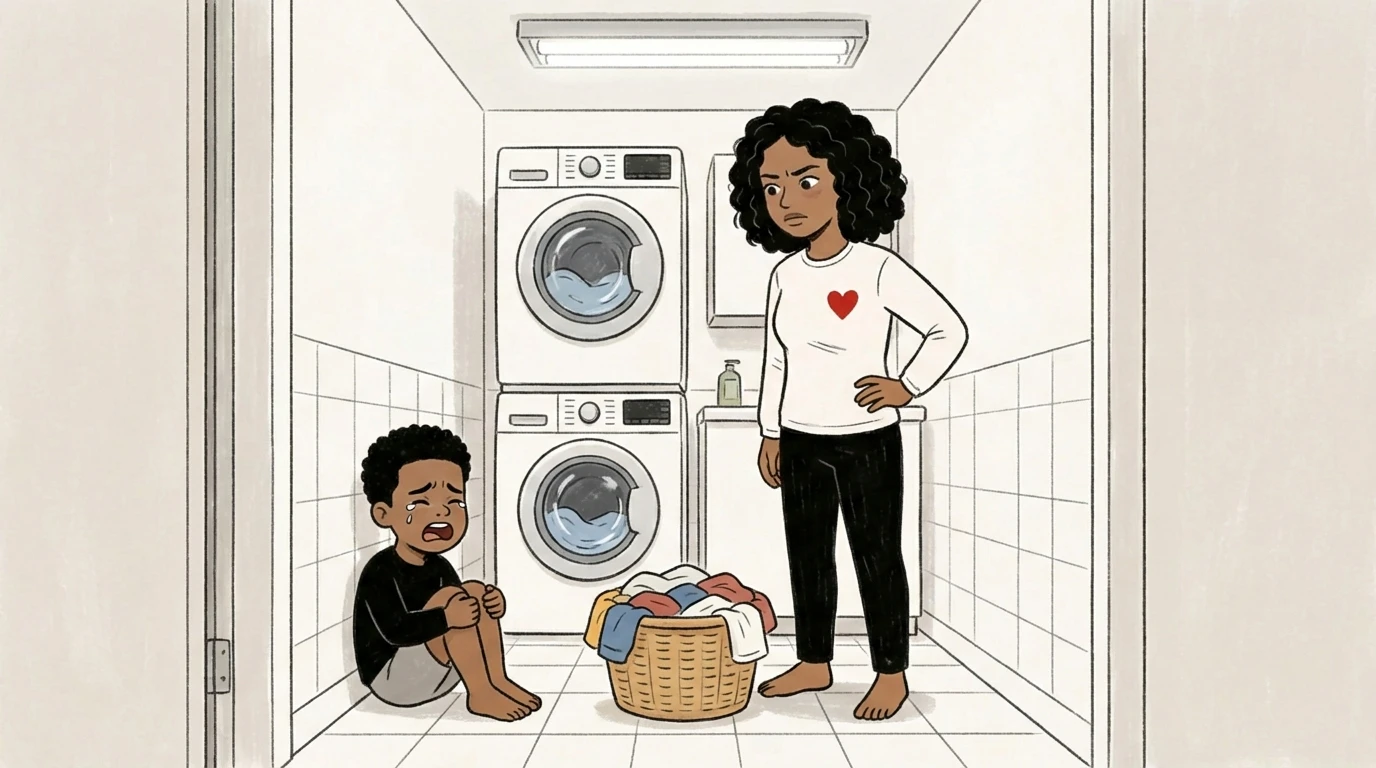
A child underperforms at school. The parent responds with anger and shame. The child performs worse on the next round of problem-solving tasks. The parent escalates. A feedback loop locks into place.
Authoritarian parenting survives because it provides immediate relief. Your kid stops the behavior right now, and your nervous system registers that as "it worked." But the behavior returns worse, you escalate, and three years later you have a defiant eight-year-old. The short-term payoff keeps the parent trapped in a pattern that makes the long-term problem worse.
Permissive: love without guardrails
High warmth, low structure. You adore your kid. You play with them, you listen, you make them feel like the center of the universe. But when they cross a line, you negotiate, bribe, or let it slide.
Permissive parents often arrive here as a reaction. Maybe they grew up with an authoritarian parent and swore they'd never make their kid feel the way they felt. So they swung to the opposite extreme.
Kids raised permissively develop high self-esteem initially, but struggle with impulse control, rule-following, and relationships as they grow up. They have difficulty in structured environments and are more likely to act out at school.
The gentle parenting confusion
People see "gentle parenting" and hear "permissive parenting." They picture a parent watching their kid hit another child while whispering about big feelings.
That's permissive. Gentle parenting (which is a modern label for authoritative parenting) includes firm limits, real consequences, and high expectations. The "gentle" part refers to how you deliver the limit, not whether you have one.
Uninvolved: the style nobody admits to
Low warmth, low structure. The parent is checked out, whether from chronic stress, mental health struggles, or sheer exhaustion.
This produces the worst outcomes by every measure. Highest rates of antisocial behavior, substance abuse, and contact with the juvenile justice system.
Most uninvolved parents are drowning, not choosing neglect. The fix is support for the parent. Postpartum depression, financial strain, lack of a co-parent, working three jobs: these are the conditions that produce disengagement. Blaming the parent misses the point when the system around them has already failed.

Where do you fit?
Nobody sits in one quadrant all day. You might be authoritative at breakfast, permissive by dinner, and borderline authoritarian during the bedtime meltdown.
What matters more than a label is knowing which dimension you drop first when you're running on empty.
If you tend to drop warmth under stress (you get sharp, cold, impatient), your work is reconnecting before correcting. If you tend to drop structure (you cave, let things slide), your work is holding one boundary today even when the crying starts.
Take the parenting style quiz if you want a clearer picture. But you probably already know. Think about last Tuesday at 6 PM. That's your real style.
How to identify and shift your parenting style
- Notice your default under stressPay attention to what you do when your kid pushes a limit and you're tired. Do you yell and double down? Give in to stop the noise? Walk away and disengage? Your stress response reveals your default quadrant.
- Score yourself on warmth and structureRate yourself 1-10 on each. Warmth: how often your child hears affection, gets your undivided attention, feels emotionally safe. Structure: how consistently you hold boundaries and follow through on consequences.
- Pick the weaker dimensionIf you're high warmth but low structure, add one consistent boundary this week. If you're high structure but low warmth, try 10 minutes of child-led play with zero corrections.
- Replace one reaction per dayPick one moment each day where you catch your old pattern and try the authoritative response instead. Name the feeling, hold the limit, skip the lecture.
- Track what changes in your childWithin two weeks of consistent shifts, most parents notice their child testing limits less. Write down what you see. The evidence keeps you going when old patterns pull you back.
The one thing every style gets wrong
Every style except authoritative makes the same mistake: it treats warmth and structure as a tradeoff. As if being loving means you can't be firm. As if holding boundaries means you can't be kind.
The entire point of authoritative parenting is that those two things work together, not against each other. You can hold a limit and hold your child at the same time. You can say "no" and "I love you" in the same breath. Structure without warmth is control. Warmth without structure is indulgence. Both together is parenting.

Your style is a starting position, and you can move from wherever you are right now. The research is clear about where to aim: be warm, be structured, explain why, and stay in the room when it gets hard.
FAQ
Yes, and most parents are. You might hold firmer boundaries with a spirited older child and go easier on a mellow younger sibling. What matters is that every child in your house gets both warmth and structure. Watch for the kid who gets all structure and no warmth, or all warmth and no limits.
No. Gentle parenting is authoritative parenting with a friendlier name. It includes firm limits, real consequences, and clear expectations. Permissive parenting skips all of that and just provides warmth. The confusion comes from the label, not the practice.
That is normal. Most couples land in different quadrants. Agree on the big boundaries, support each other in front of the kids, and argue about tactics in private. Kids can handle two different styles. They struggle with two parents undermining each other.
It produces compliance in the moment, which is why it persists. But longitudinal research consistently shows higher rates of aggression, anxiety, and relational problems in adulthood. Short-term obedience is not the same as long-term wellbeing.
Yes. Your default was shaped by how you were raised, but it is not locked in. Start with one change: add warmth if you lean authoritarian, add a boundary if you lean permissive. Small shifts compound. Consistency matters more than perfection.