TLDR
- Age is the worst predictor of readiness. Some kids are ready at 20 months. Others at 3.5 years. The average for boys is 38 months. Comparing your child to anyone else's timeline wastes energy.
- Physical readiness comes first. Dry diapers for two hours, predictable pooping schedule, and the ability to walk to a bathroom. These are non-negotiable prerequisites the child's body must hit before training works.
- Emotional readiness is harder to spot. A child who can follow two-step instructions, shows interest in the toilet, and tells you when they're wet is emotionally ready. A child who screams at the sight of a potty is not.
- Starting too early creates power struggles. Pushing a child whose body or brain isn't ready turns potty training into a control battle. The child learns that the toilet is a source of conflict, and you lose months undoing that association.
- Peer influence often flips the switch. Children who resist parental encouragement sometimes become interested overnight after watching an older friend use the toilet. Social motivation is powerful at this age.
Why readiness matters more than your timeline
You've been changing diapers for two years. You're done. Your back hurts from the changing table. Your partner keeps sending you links to "3-day potty training" methods. Preschool starts in September and requires kids to be trained.
None of that is readiness. That's your readiness. And yours doesn't count here.
Potty training is a "my body, my way" situation. Your child controls the muscles involved. You can provide the potty, the encouragement, and the underwear with dinosaurs on them. You cannot make a human being pee on command. Parents who try to force the issue before the child's body and brain are ready end up in power struggles that derail training entirely.
The research is clear: children who start training before they're ready take longer to finish than children who start later. So "getting a head start" is an illusion. You're just starting the clock on a longer, harder process.
One dry diaper this morning
The Potty Training course will help you read the real signals
You'll spot genuine readiness cues and skip the false starts that burn out both of you.
The physical signs that matter
Dry diapers between changes
If your child's diaper is consistently dry for two-hour stretches, their bladder has matured enough to hold urine. This is biology, not behavior. You can't teach it or rush it.
Check diapers after naps. If they wake up dry regularly, that's a strong signal. If the diaper is soaked every time, the bladder isn't there yet.
Predictable bowel movements
When your child starts pooping at roughly the same times each day, their digestive system has developed a pattern. This predictability means you can anticipate needs and reduce guesswork.
Walking to and sitting on the potty
Your child needs to physically get to the bathroom, pull pants down (or at least help), and sit on a potty without losing balance. Motor coordination is a prerequisite, not a bonus. A child who can't manage their own clothing needs more time.
The behavioral signs you're looking for
Interest in the bathroom
Your child follows you into the bathroom. Asks what you're doing. Wants to flush. This curiosity means the concept is landing. They understand that humans use toilets, and they're gathering data.
If your child has zero interest in what happens in there, they're telling you something. Listen.
Communicating needs
Your child doesn't need to speak in full sentences. They need to communicate "I need something" in some way, whether that's words, signs, pulling at their diaper, or doing the unmistakable potty dance. The communication piece matters because they'll need to signal the urge before the urge wins.
Can they follow simple instructions like "bring me your shoes" or "put the cup on the table"? If they can follow basic expectations, they can follow "tell me when you feel like you need to go."
Discomfort with wet or dirty diapers
Some children genuinely don't care. The diaper is wet. So what. They have blocks to stack.
Children who pull at a wet diaper, ask to be changed, or announce that they've pooped are showing a preference for being dry. That preference is the internal motivation that makes training stick. External rewards like stickers and candy are short-lived when a child lacks this drive.
If your child is completely unbothered by a full diaper, no bribe changes the underlying indifference.
When to wait (even if the signs seem close)
Big life changes are happening
A new sibling, a move, starting daycare, or any other major transition eats up your child's emotional bandwidth. Training during upheaval almost always backfires. Wait until life stabilizes.
Your child says no
If you introduce the potty and your child wants nothing to do with it, that's not a problem to solve. That's information. The more you push against a clear "no," the harder the eventual "yes" becomes. A child-led approach works better here: make the potty available, mention it casually, and let your child come to it.
You're feeling pressured
Grandma trained you at 18 months. The preschool deadline is approaching. Your neighbor's kid has been using the toilet since before they could walk (allegedly).
External pressure is not a readiness sign. If you start training because someone else thinks you should, you'll bring anxiety into the process. Your child will match it with resistance.
How to build readiness (without calling it training)
You can lay groundwork months before the training weekend. None of this feels like potty training to your child, and that's the point.
Make the bathroom familiar
Change diapers in the bathroom instead of the nursery. Place a small potty in the corner and let them sit on it (clothed, even) whenever they want. Zero pressure.
Narrate your own process
"My bladder feels full. I'm going to the bathroom." Sounds weird. Works brilliantly. Your child learns the cause-and-effect chain: body signal, recognition, action.
Use peer influence
Children who resist parental encouragement often become fascinated when they see an older child use the toilet. Arrange time with older kids. Let your child observe.
A child with no internal motivation to use the potty will sometimes develop that motivation overnight after watching a friend do it. The desire to be like bigger kids is a powerful engine.
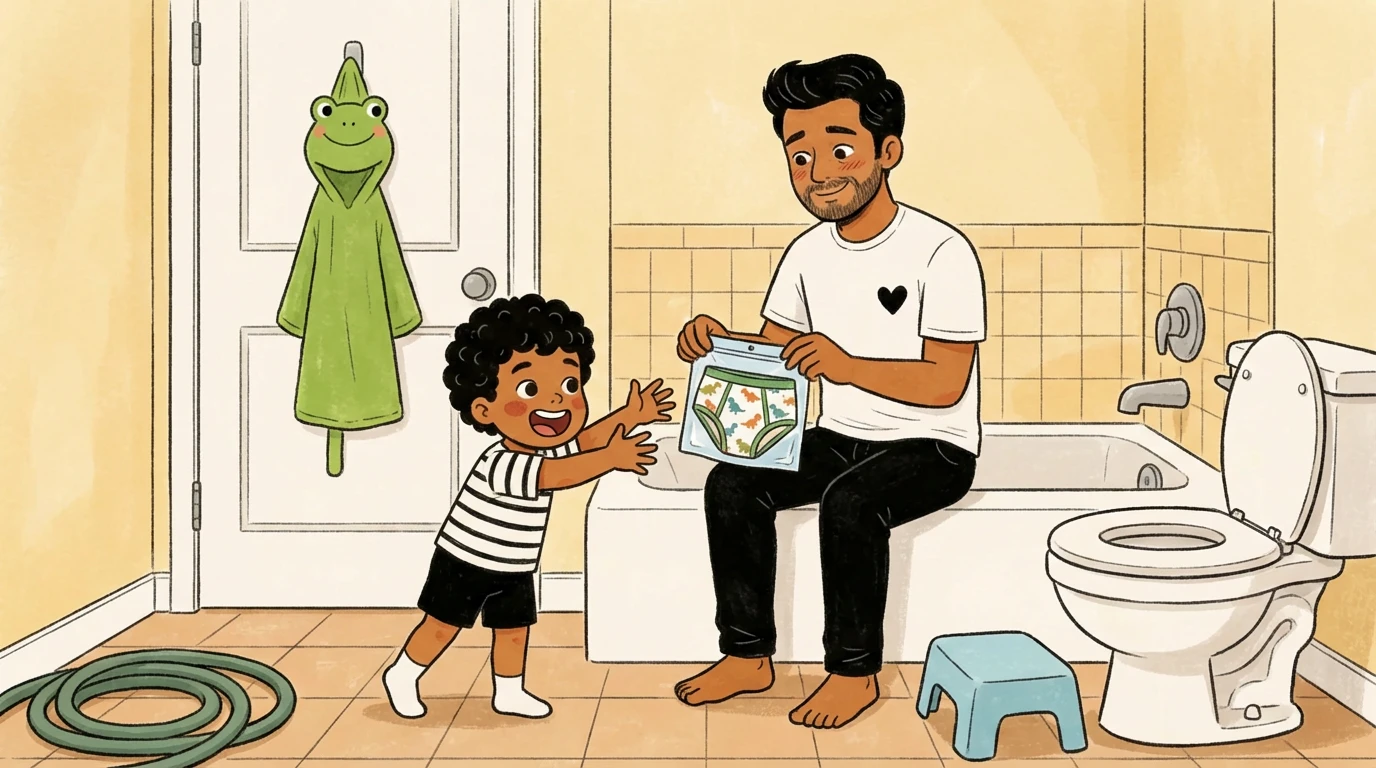
Let them pick underwear
When your child shows interest, take them shopping for underwear. Let them choose. Ownership creates investment in the process. Don't push them to wear it yet.
Not sure if your child is showing enough signs? A structured readiness quiz can help you assess where they stand right now.
How to assess potty training readiness
- Check bladder maturity firstMonitor diapers for a week. If your child stays dry for two-hour stretches regularly and wakes from naps dry, their bladder can hold enough to make training feasible.
- Watch for bowel predictabilityNote whether pooping happens at roughly the same times each day. Predictable patterns mean you can anticipate needs and get your child to the potty in time.
- Test motor skills casuallyCan your child walk to the bathroom, sit on a small potty without toppling, and pull elastic-waist pants up and down? If they need help with all three, wait on training.
- Look for communication signalsYour child needs to tell you they have to go before it happens. Words, signs, or even a specific facial expression all count. The signal must come before the event, not during.
- Gauge their interest honestlyDoes your child follow you to the bathroom, ask about the toilet, or show discomfort in wet diapers? Genuine curiosity or discomfort is internal motivation. Indifference means they're not there yet.
The late trainer question
Your child is three and a half and couldn't care less about the potty. They are perfectly happy in diapers. Your pediatrician says they're fine. But you're starting to worry.
The average potty training age for boys is 38 months. That's an average, which means half of all boys train later than that. Late trainers are often children who simply aren't bothered by wet or dirty diapers. They lack the internal incentive that makes other children eager to switch.
For these kids, external rewards rarely work long-term. Peer influence and framing toilet use as a grown-up milestone ("when you're ready to wear underwear every day, your teacher will be so impressed") tend to work better than any sticker chart.
Summer is your friend. Warm weather means your child can go bottomless in the backyard, which removes the clothing barrier and makes the body-signal-to-action connection faster.
You cannot win a power struggle over someone else's body. Sidestep the battle. Remove pressure, provide motivation through peer exposure, and let the child come to readiness on their own timeline. When they do, training usually happens fast.
FAQ
Talk to your pediatrician if your child shows no interest by age 4 or was previously trained and regressed for weeks. Before that, variation is normal. Boys average 38 months. Some children train closer to 4 and are completely healthy. Medical concerns are rare but worth ruling out if progress stalls entirely.
Yes, if they can communicate needs through signs, gestures, or consistent nonverbal signals. The requirement is communication, not speech. A child who grabs their diaper area or does a specific dance when they need to go is communicating readiness. They just need a way to tell you before the urge wins.
On average, yes. Studies consistently show boys train a few months later than girls. But averages hide massive individual variation. Some boys train at 22 months. Some girls train at 3.5 years. Your child's specific readiness signs matter infinitely more than population averages.
Rewards can jumpstart interest but rarely sustain it if the child lacks internal motivation. A child who doesn't care about being wet won't care about stickers for long. Peer influence, underwear ownership, and connecting toilet use to desired activities tend to create more durable motivation than external prizes.
Partial readiness means you're close but not there. If your child has bladder control but zero interest, wait. If they're interested but can't stay dry for an hour, their bladder isn't ready. You need the physical, behavioral, and communication pieces working together. Missing one or two signals means trying again in a few weeks.