
TLDR
- Babies learn nothing from screens. Under age 2, the brain builds language, attention, and attachment through live human interaction. Screens cannot replicate the back-and-forth exchange that wires early development.
- One hour is the research-backed ceiling for ages 2 to 5. The American Academy of Pediatrics recommends no more than 60 minutes daily of high-quality content with parent involvement. The average U.S. preschooler gets four hours.
- What screens displace matters more than screen time itself. Every hour on a screen is an hour not spent climbing, pretending, building, or talking with a caring adult. Those activities wire focus, self-control, and problem-solving.
- Not all content is equal. Slow-paced, prosocial shows like Daniel Tiger and Bluey teach cooperation and emotional skills. Fast-paced shows overstimulate and shorten attention spans.
- Screens used for soothing create a long-term problem. Children who are routinely handed a device when upset never build internal coping skills. The convenience now costs you flexibility later.

What the guidelines say
The American Academy of Pediatrics has published age-based screen time recommendations for years. Most parents have heard some version, usually delivered with a side of guilt by a pediatrician who does not live in their house.
- Under 18 months: No screen media at all, except video calls with family
- 18 to 24 months: If you introduce screens, choose high-quality content and watch it together
- Ages 2 to 5: No more than one hour per day of high-quality programming, co-viewed with a parent
- Over 5: Set consistent limits, keep screens out of bedrooms, and protect sleep
Those numbers sound clean. Real life is messier. At least 90% of U.S. parents report that their children under 2 watch some form of electronic media. The average preschooler logs over four hours daily. The guidelines exist in one world, and most families live in another.
Why under-2 is different from every other age
Babies do not learn from screens. This is one of the clearest findings in early childhood research, and it persists no matter how "educational" the app claims to be.
Children under 2 build language, attention, and cognitive skills through live, back-and-forth interaction with people. A parent's face is more interesting to a baby than any high-contrast graphic. A real conversation (even the kind where the baby just babbles back) does more for brain development than the fanciest app on the market.
When a baby stops crying because you hand them a phone, that is a startle response, not soothing. The novel stimulus grabs their attention the way a loud noise would. It works once or twice. Then it stops working, and you need a louder stimulus. This is the opposite of teaching your baby to regulate.
The one exception: video calls with grandparents or far-away family. Those are interactive, relationship-building, and paired with your warm narration.
Googling contradictory screen limits
The Screen Sanity course will replace the guesswork with age-matched plans
You'll know exactly what fits your child's age and stop second-guessing every screen decision.

Ages 2 to 5: the one-hour threshold
After age 2, something shifts. Preschoolers can learn from educational programming, especially slow-paced, prosocial shows. Daniel Tiger, Bluey, Sesame Street, and Mr. Rogers all fall into this category.
What "high-quality" means
Children who watch shows depicting kindness and cooperation are more likely to act kindly. Children who watch shows featuring bratty characters or cartoonish violence mimic what they see. Your three-year-old does not distinguish between a lesson and entertainment.
Fast-paced shows (Cocomelon, Paw Patrol) overstimulate developing brains. The rapid scene changes train attention to expect constant novelty, which makes slower activities feel unbearable by comparison.
Co-viewing changes everything
Sit next to your kid and watch with them. Ask questions: "What do you think Daniel Tiger is feeling?" or "Why did Bluey's dad make that face?" You are building emotional vocabulary and connection at the same time.
The problem: the entire reason most parents turn on the screen is to get 30 minutes of uninterrupted time. Co-viewing defeats that purpose. Be honest about which sessions are for your kid and which are for your sanity. Both are legitimate.
What screens take away
Here is the part that matters more than any time limit. The real risk of screens is what they replace.
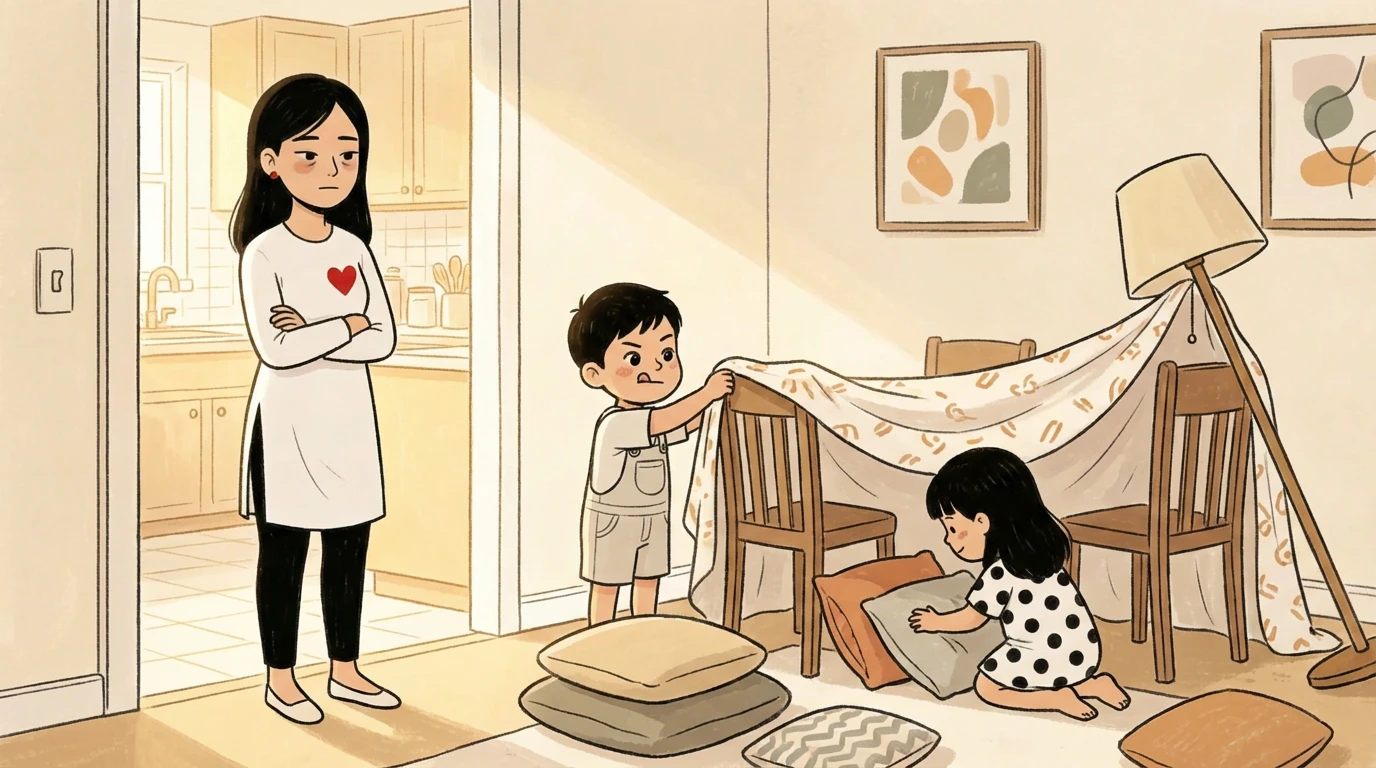
Young children's brains require climbing, running, building, pretending, drawing, and talking with adults who respond. These activities wire the circuits for focus, self-control, and problem-solving. Every hour on a screen is an hour those circuits go unbuilt.
The displacement checklist
Before you stress about minutes, ask yourself:
- Does my child still get bored sometimes?
- Do we still read, laugh, and play together most days?
- Is there time for open-ended, unstructured play?
- Is my child sleeping enough?
If the answer to all four is yes, your screen use is probably fine. If screens are crowding out play or sleep, that is the signal to cut back. There are plenty of screen-free activities that require zero preparation.
Screens and sleep: the non-negotiable boundary
Turn off all screens at least one hour before bedtime. Keep all devices out of bedrooms. This is the one guideline where the research leaves zero room for negotiation.
Screen light interferes with melatonin production. Stimulating content activates the brain at exactly the moment you need it winding down. And a device in the bedroom means the child controls when the screen turns off, which is never when they should.
The evening routine swap
Replace the evening screen with something that decelerates: a bath, a book, quiet play with blocks or puzzles. The first week will feel harder. By week three, you will wonder why you ever fought bedtime with a tablet in the mix.
Using screens without guilt
Making dinner while a toddler watches one episode of Daniel Tiger is not a parenting failure. Putting on a movie during a long flight is not going to derail anyone's development. Letting a sick kid rest with a show while you take care of a newborn is survival, and survival counts.
It comes down to whether screens are an occasional tool or a daily default. One causes no measurable harm. The other displaces the experiences your child's brain needs most. If you are unsure where your family falls, the screen dependence quiz can help you take an honest look.
What to do instead of handing over the phone
When your toddler melts down, reach for a hug before you reach for the tablet. When your preschooler says "I'm bored," let the boredom sit for ten minutes. Children who never learn to sit with discomfort become adults who cannot put their phones down. Put your own phone away during meals. Narrate the choice: "I will check my messages later. Right now I want to hear about your day."
How to set screen time boundaries by age
- Under 2: skip screens entirelyBabies learn through live interaction, not apps. The only exception is video calls with family. If you need a break, audiobooks or music work without the developmental cost.
- Ages 2 to 5: cap at one hourChoose slow-paced, prosocial shows. Co-watch when you can. Set a predictable routine so your child knows when screen time starts and ends without negotiation.
- Pick a consistent screen time slotFriday movie night, one show after lunch, Sunday morning cartoons. Predictability reduces begging and conflict more than any amount of explaining.
- Keep screens out of bedroomsNo exceptions. Screens in bedrooms disrupt sleep, remove parental oversight, and put the child in control of when the device turns off.
- Turn off screens one hour before bedReplace with a bath, book, or quiet play. The first week will be rough. By week three, bedtime will be easier than it was with screens.
- Model what you want to seePut your phone away at meals. Narrate the choice: 'I will check this later.' Your child watches your habits more closely than any show.

When babies cry and you reach for the phone
Every parent has done it. The baby is screaming, you are exhausted, and the phone is right there. But a crying baby's learning systems are offline. They cannot absorb anything from a screen while distressed. The sudden quiet you get is a startle response, not regulation.
What the baby needs is you. Your voice, your body, your presence. That interaction is doing more for their brain than any app ever could.
The long game
Starting without screens is easier than reducing screen time later. A toddler who has never watched TV does not miss it. But once the habit forms, cutting back feels like punishment to everyone involved.
If you are already deep in screen territory, do not panic. Reduce gradually, replace with connection, and expect pushback. The protests when you say "time's up" are normal. Acknowledge the feeling ("I know it is hard to turn it off"), hold the boundary, and redirect: "Do you want to pick the music for our dance party?"
Your child's brain is building itself right now. The raw materials it needs are climbing, pretending, talking, and being bored with nothing to do. Screens are fine in small doses. They are no substitute for the real thing.
FAQ
Yes. Video calls with family are the one screen exception for babies. They are interactive, paired with your narration, and strengthen real relationships. The AAP specifically excludes video chatting from its under-2 restriction.
No. Technology is designed to be intuitive. Children pick it up quickly at any age. Self-regulation, focus, and imagination are built in the early years and cannot be easily developed later. Those skills matter more than early device familiarity.
Acknowledge the feeling without caving. Say something like 'You are upset that the show is over. That makes sense.' Then redirect to a physical activity. Connection with you after screen time replaces the dopamine hit that just got interrupted.
Research links background TV to more aggressive behavior in three-year-olds regardless of whether the child appeared to be watching. It also disrupts parent-child conversation. If nobody is watching, turn it off.
No. Guilt helps nobody. Screen time as an occasional tool while you cook dinner or take a shower is perfectly fine. The concern starts when it becomes the daily default that replaces play, conversation, and outdoor time.