TLDR
- Overtiredness makes kids wired, not sleepy. A child who missed their sleep window gets a cortisol surge that looks like hyperactivity. Pushing bedtime later backfires every time.
- Screens sabotage melatonin for hours. Blue light tells the brain it's daytime. Two hours of screen-free time before bed is the minimum for the brain to start producing sleep signals.
- Control-seeking is developmental, not defiance. Toddlers are wired to push for autonomy. Giving them small bedtime choices (which pajamas, which book) satisfies the drive without derailing the routine.
- Separation anxiety peaks at bedtime. Being alone in a dark room is the hardest version of separation. Kids who seem clingy at night are running a normal attachment program, not manipulating you.
- Fear of the dark is real brain activity. Imagination develops faster than the ability to distinguish real from imaginary. Dismissing the fear makes it worse. Acknowledging it shrinks it.
The overtired trap
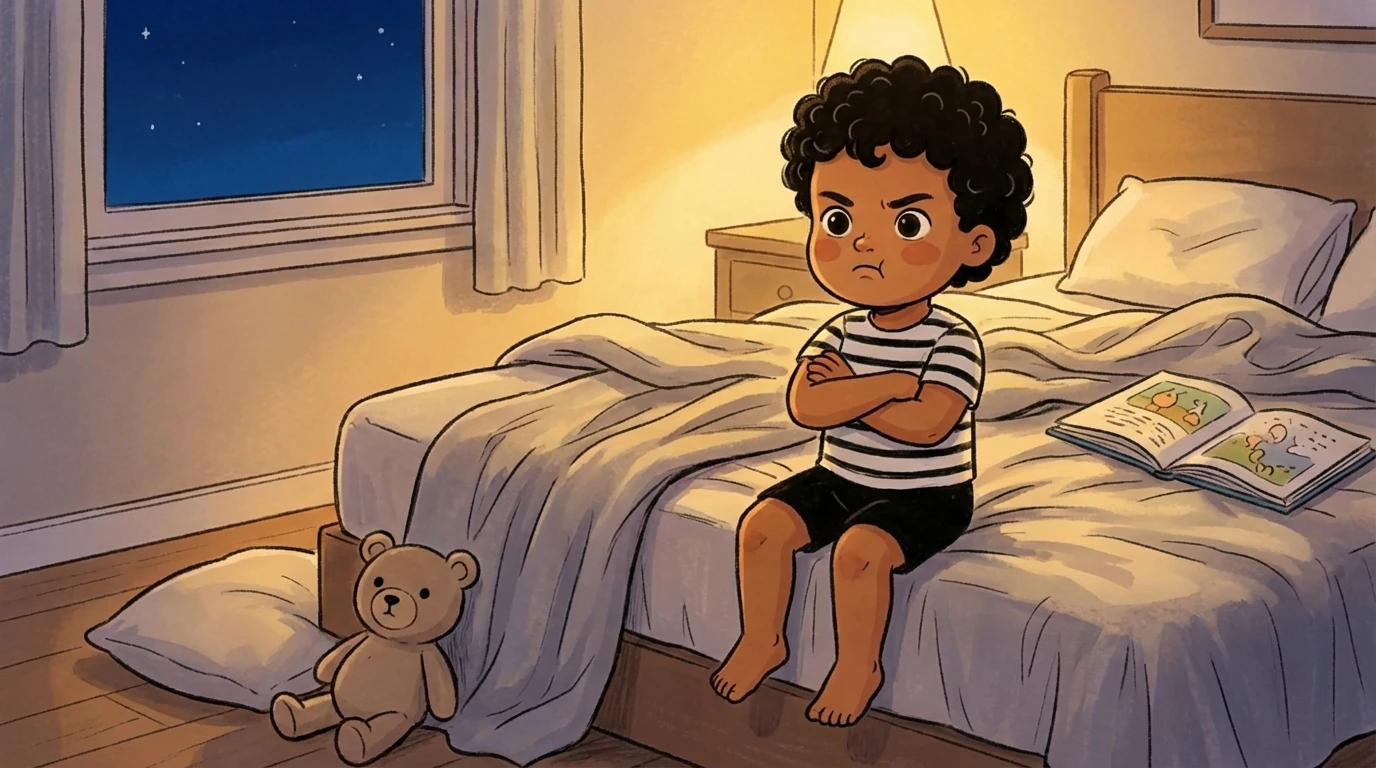
Tired kids don't yawn and rub their eyes like the parenting books suggest. They bounce off walls. They get silly. They pick fights with siblings over who looked at them wrong. And you think, well, clearly this child is nowhere near ready for bed.
They're past ready. A child who has blown through their sleep window gets hit with a cortisol dump that mimics a second wind. The body's stress response kicks in to keep them functional, and now you're trying to put a cortisol-buzzed kid into a dark, quiet room. Good luck.
The fix is boring but effective: move bedtime earlier, not later. If your kid is melting down at 7:30, try starting the routine at 6:45. You'll feel ridiculous putting a child to bed while the sun is still up. Do it anyway.
How to spot the window
Watch for the subtle signs before the wired phase hits. A brief pause in activity. Slower movements. Staring at nothing for a beat too long. That's your window. Once the giggling-and-running phase starts, you've missed it, and you're in for a fight.
Stalling at lights out
The Sleep Solutions course will show you what's behind the stalling
You'll spot the real reason behind the water requests and extra hugs, then cut bedtime battles short.
Screens are working against you
Blue light from tablets, phones, and TVs sends a direct signal to your child's brain: stay awake. The brain responds by suppressing melatonin, the hormone that makes falling asleep possible. Two hours of screen time before bed and your child's brain chemistry is fighting sleep, no matter how many stories you read or how dim you make the room.
This explains the kid who was running around the yard all afternoon but still can't settle at 8 PM. Physical tiredness and brain-readiness for sleep are two different systems. Screens hijack the second one.
The two-hour rule (and how to get there)
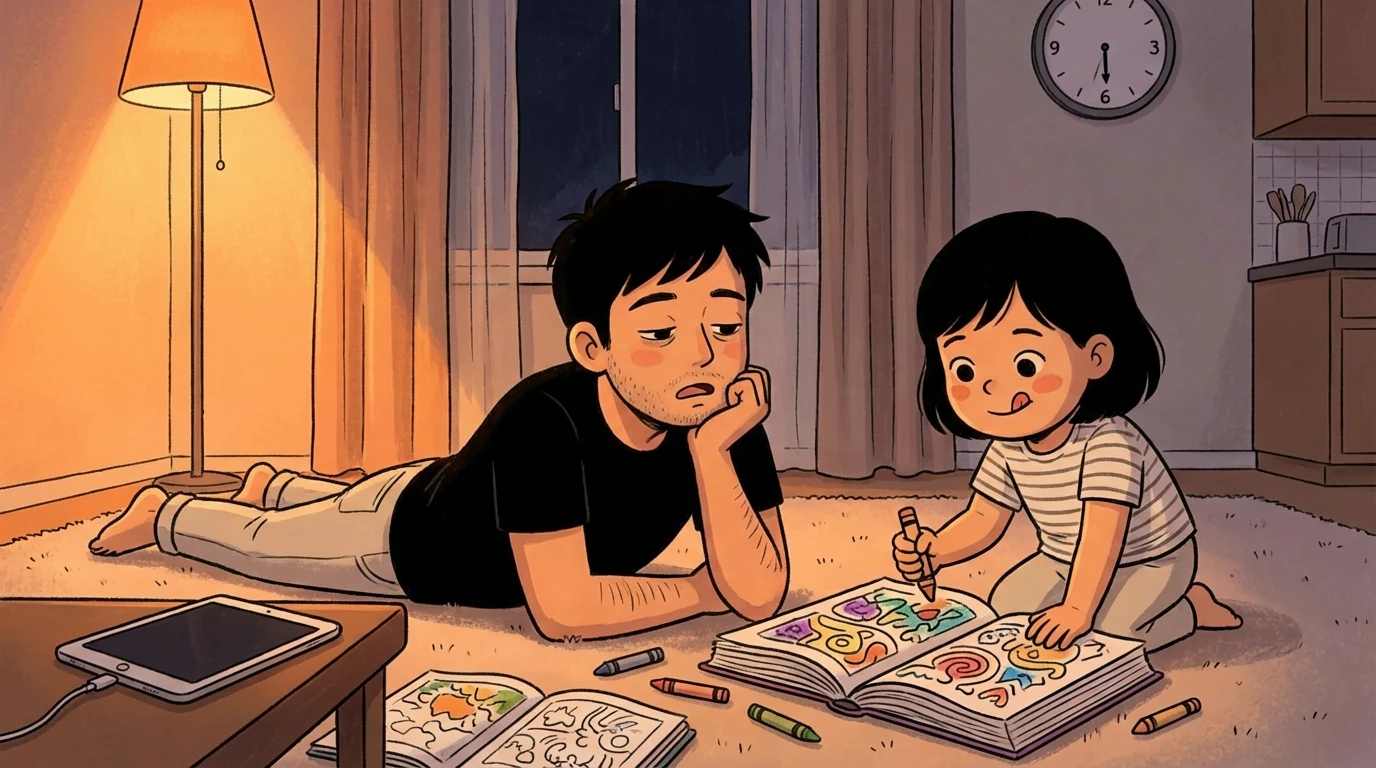
End all screens two hours before bedtime. If that feels impossible tonight, cut back by fifteen minutes every few days until you reach the full two hours. Swap screens for coloring, building, or just plain old messing around with toys on the floor. The brain needs those two hours to start producing the sleep signals that make bedtime work instead of war.
The power struggle you keep losing
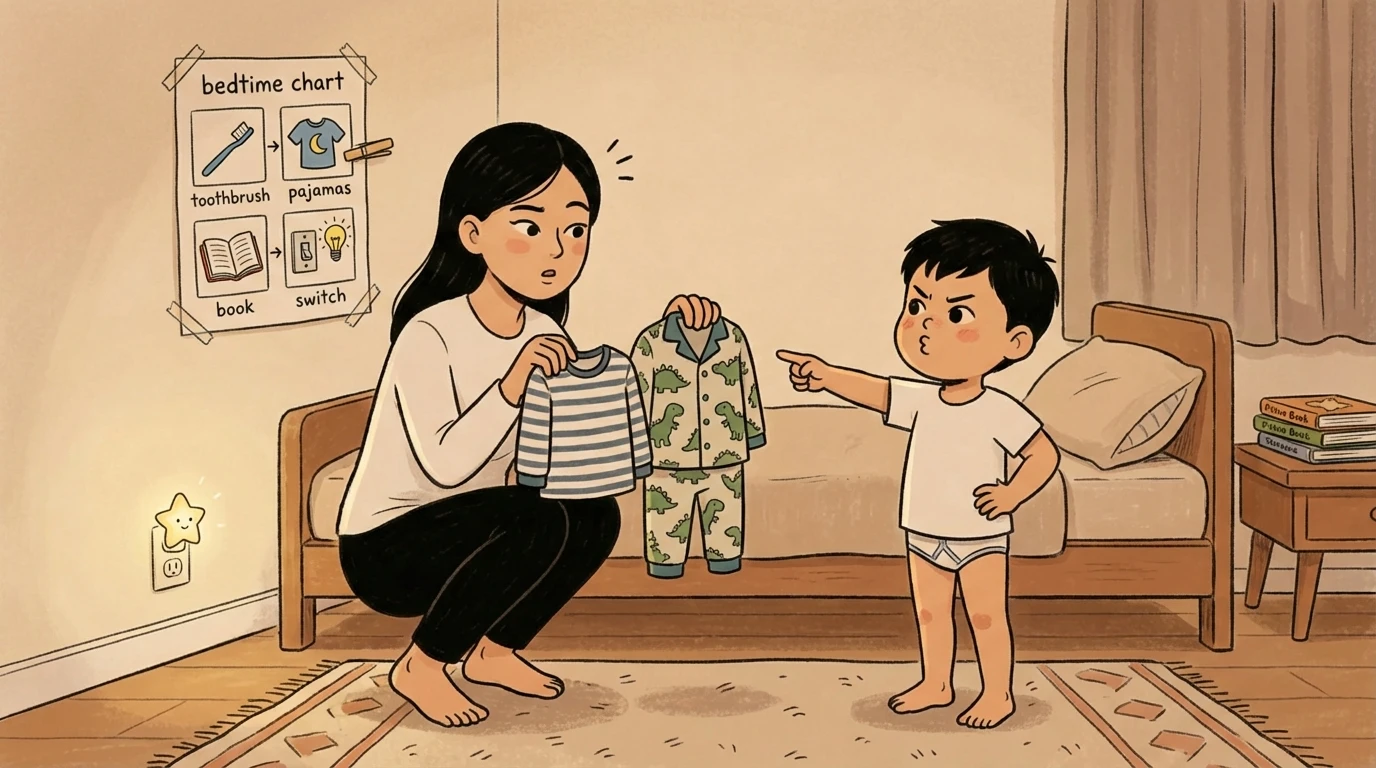
Your toddler wants to do everything on their own terms. You've seen this at meals, at the park, getting dressed. Bedtime is no different. When you announce "time for bed," you're telling a tiny person whose entire developmental mission is autonomy that they have zero say in what happens next.
Of course they resist. The drive for control is hard-wired. You're not going to override it, so use it.
Give choices that don't matter to you but feel huge to them. Which pajamas? Which two books? Lights off or nightlight? Do they want to walk to the bedroom or be carried like a sack of potatoes? Every choice they make is one less thing they need to fight about.
How to reduce bedtime battles with choices
- Offer two options, not open-ended questionsSay 'Do you want the blue pajamas or the dinosaur ones?' instead of 'What do you want to wear?' Open-ended questions overwhelm toddlers and create longer negotiations.
- Set the environment an hour earlyDim lights, close blinds, play quiet music. When the house itself signals sleep, your child's brain starts winding down before you say a single word about bedtime.
- Let them sequence the routineMake a visual chart of bedtime steps (brush teeth, pajamas, books, lights out) and let your child decide the order. The steps don't change. The sequence is their call.
- Use a transition warningGive a five-minute and two-minute heads-up before the routine starts. Bedtime announced without warning triggers the same [meltdown as any abrupt transition](/blog/tantrums/transition-meltdowns/).
- Stay cheerful while holding the boundaryTheir job is to test the limits. Your job is to hold them without getting angry. A flat, bored 'Yep, it's still bedtime' works better than a lecture about why sleep matters.
Separation anxiety wearing a bedtime costume
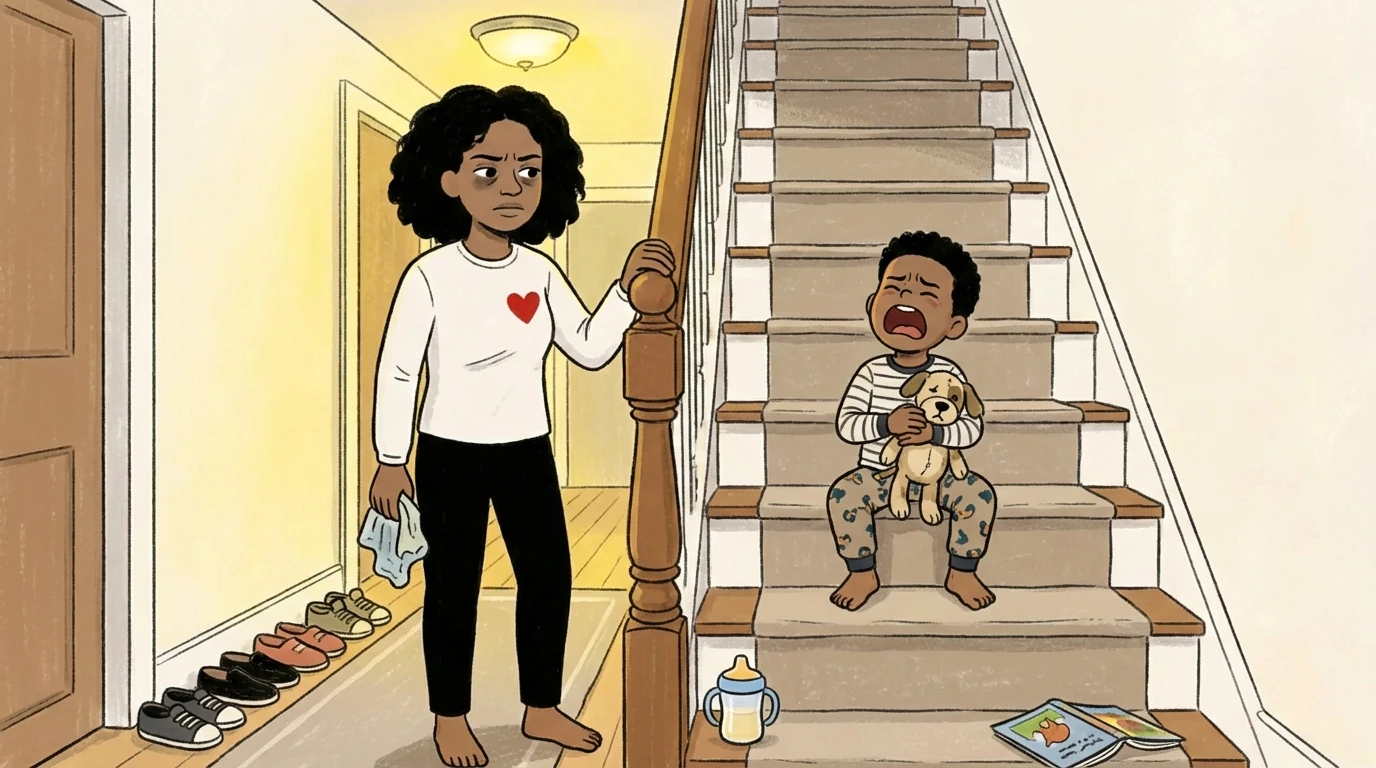
For young kids, bedtime means one thing: you're leaving. And their brain, which is built to keep you close, sounds every alarm it has. The water requests, the extra hugs, the "I need to tell you one more thing" parade, all of it is separation anxiety dressed up as stalling.
Your child can only hold one thought at a time. "You're leaving" fills the entire container. "You'll be back in the morning" can't fit in there yet. So they do the only thing that makes sense to a small brain running a proximity alarm: they keep you in the room as long as possible.
The fix is a connection bridge. Leave something physical that represents you. A worn t-shirt under their pillow. A heart drawn on their palm in washable marker. A photo of you on the nightstand. These objects give the brain something concrete to hold onto when the abstract idea of "you'll be back" isn't enough.
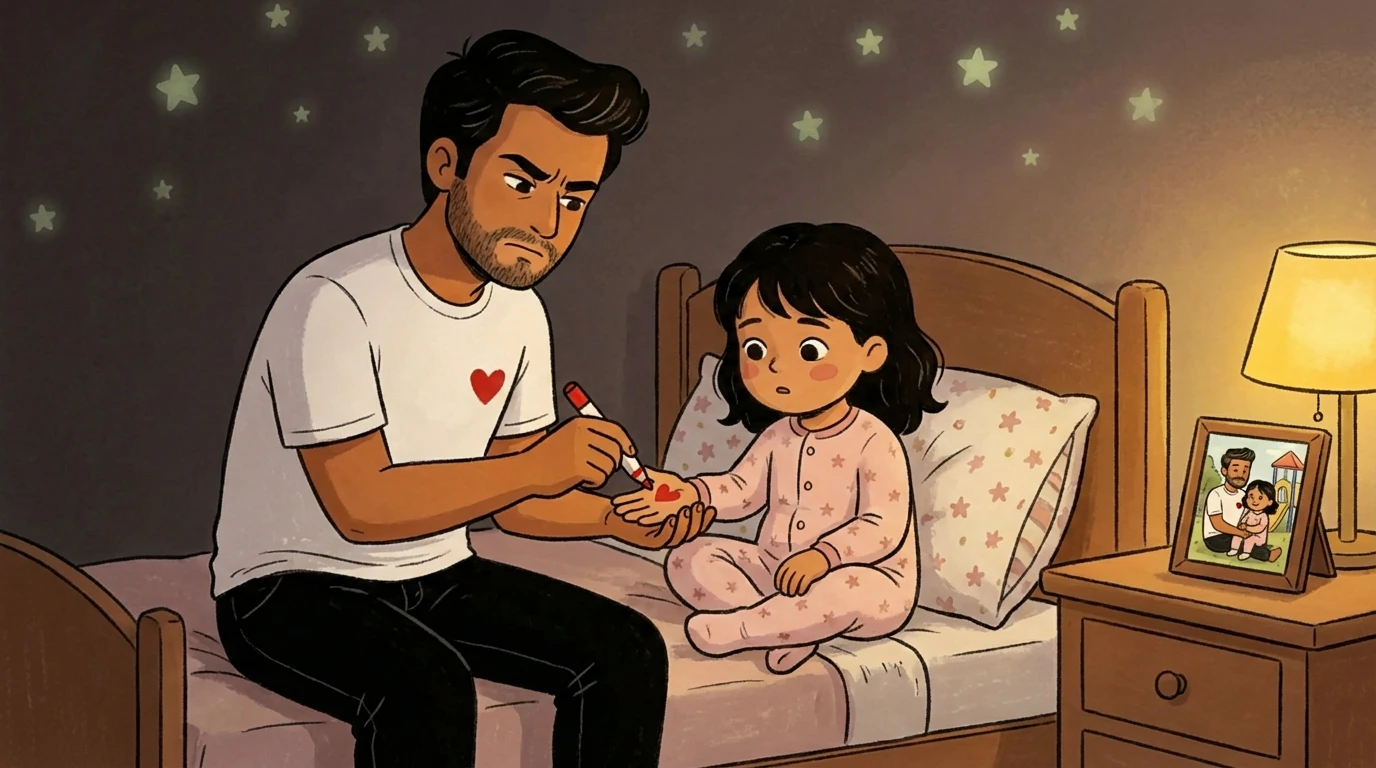
The "one more thing" loop
You'll know separation anxiety is the driver when the requests escalate after you say goodnight. First it's water. Then the bathroom. Then a question about tomorrow. Then a hug. Each request buys another thirty seconds of your presence, and your child will keep inventing them as long as they work. The script that breaks the loop: "I'm going to check on you in five minutes. I'll be right outside." Then come back in five minutes. Reliability teaches them that leaving doesn't mean gone.
Fear of the dark (and why monster spray backfires)
Your child's imagination is developing faster than their ability to reality-test. They can conjure a monster under the bed but can't yet dismiss it as fictional. That gap between imagination and logic is where bedtime fears live.
Telling them there's nothing to be afraid of doesn't help, because their experience says otherwise. And monster spray, bed-checking rituals, and closet inspections? Those confirm the threat is real enough to require countermeasures. You've just made the monster more believable.
Instead, get curious. Ask what they're worried about. Let them describe it. Then work on building their sense of competence: "What could you do if you felt scared?" A flashlight by the bed, a brave-word they can whisper, a stuffed animal assigned as the room's security guard. The goal is getting them to feel capable of handling the fear, not proving the fear is irrational.
Putting it together
Most bedtime battles have one primary driver on any given night. Some nights it's overtiredness. Some nights it's the iPad they watched until 6:30. Some nights it's pure control-seeking. And some nights, honestly, it's all of them at once.
Start with the simplest fix. Move bedtime earlier. Cut screens. Offer two choices. If those don't move the needle within a week, you're probably looking at anxiety or fear as the engine, and that takes a slower, more intentional approach to your bedtime battle style.
The good news: bedtime battles are temporary. Every single one of these causes has a developmental expiration date. Your kid will outgrow the separation anxiety, develop the logic to dismiss the monsters, and eventually choose sleep over resistance. Your job right now is to keep the routine steady and your voice boring until they get there.
FAQ
Developmental leaps, new siblings, schedule changes, or even a growth spurt can reset bedtime behavior overnight. Look at what changed in the last two weeks. If nothing obvious stands out, check the sleep window. Kids who suddenly resist often need an earlier bedtime, not a later one.
That depends on why they're fighting. If it's overtiredness or control-seeking, adjusting the schedule and offering choices works faster than waiting out the crying. If it's separation anxiety or fear, crying it out tends to make both worse. Match your response to the cause.
Twenty to thirty minutes for toddlers, up to forty-five for older kids who need reading time. If your routine regularly runs over an hour, your child is likely stalling because they need more control in the process or more connection time earlier in the evening.
Almost never. Kids who fight an early bedtime are usually overtired, and pushing it later increases cortisol, making the fight worse. Try moving bedtime fifteen minutes earlier for a week before going later. The results surprise most parents.