
TLDR
- Strong-willed is a temperament trait, not a behavior problem. Research identifies persistence, intensity, and low adaptability as inborn traits present from birth. Your child didn't choose to be difficult. Their nervous system is wired for resistance to external control.
- Standard discipline makes it worse. Punishment, time-outs, and escalating consequences trigger the exact fight response that makes strong-willed kids dig in harder. Force meets force, and nobody wins.
- They need to feel like they chose it. Autonomy is the key. Strong-willed children cooperate when they feel they have a say. Offering controlled choices within firm limits gives them agency without giving up authority.
- Connection is your only use. A strong-willed child cooperates with people they trust and feel close to. If the relationship is strained, compliance disappears entirely.
- The trait that exhausts you now will serve them later. Persistent, determined kids become adults who hold their ground, resist pressure, and take initiative. The wiring is an asset in the long run.

The child who would rather lose everything than back down
You've taken away screen time, dessert, the trip to the playground, and the birthday party. Your child looked you in the eye and said "I don't care."
And the worst part is, they meant it. A strong-willed child will forfeit every privilege you own rather than comply under pressure. Where another kid would cave after losing one thing, yours digs in deeper with each escalation. You're running out of things to take away, and they're running out of nothing.
This is a temperament trait, not a discipline failure. Researchers who study child temperament have identified a cluster of traits that show up together: high persistence, high intensity, low adaptability to change, and a strong negative reaction to being controlled. These traits are observable from infancy. They run in families. And they don't respond to the standard parenting playbook.
Consequences are the wrong tool for a child whose nervous system treats external control as a threat.
What "strong-willed" means in practice
The biology behind it
When people say a child is strong-willed, they usually mean the child is difficult, argumentative, and exhausting. But temperament research tells a more specific story. Strong-willed children score high on three measurable dimensions:
Persistence. They don't give up. On anything. Including the argument about whether they need to wear pants today. This trait makes them relentless problem-solvers and equally relentless opponents when they disagree with you.
Intensity. Every emotion arrives at full volume. Joy is ecstatic. Frustration is volcanic. There is no "mildly annoyed" setting. Their nervous system only has one speed, and every feeling comes through at full blast.
Low adaptability. Transitions are brutal. New situations feel threatening. Changes to routine trigger the fight response. The child who melts down every time you take a different route home has a brain sounding an alarm because something expected didn't happen.
The defiance trap
Here's where most parents (and many professionals) go wrong. They see the behavior and label it defiance. Once it's labeled defiance, the logical response is to crack down harder. More consequences. Firmer tone. Show them who's in charge.
With a strong-willed child, cracking down harder is like pouring gasoline on a campfire. You're triggering the exact neurological response that makes them fight back. Their brain reads your escalation as a threat, shifts into fight mode, and doubles down. You haven't taught them to comply. You've taught them that you're an adversary.
This is the distinction between a strong-willed child and a truly defiant child. A strong-willed child cooperates willingly with people they feel connected to and respected by. A child with an oppositional pattern resists across all settings and all relationships. If your child listens perfectly to their soccer coach but fights you on everything, that's not pathology. That's a relationship signal.
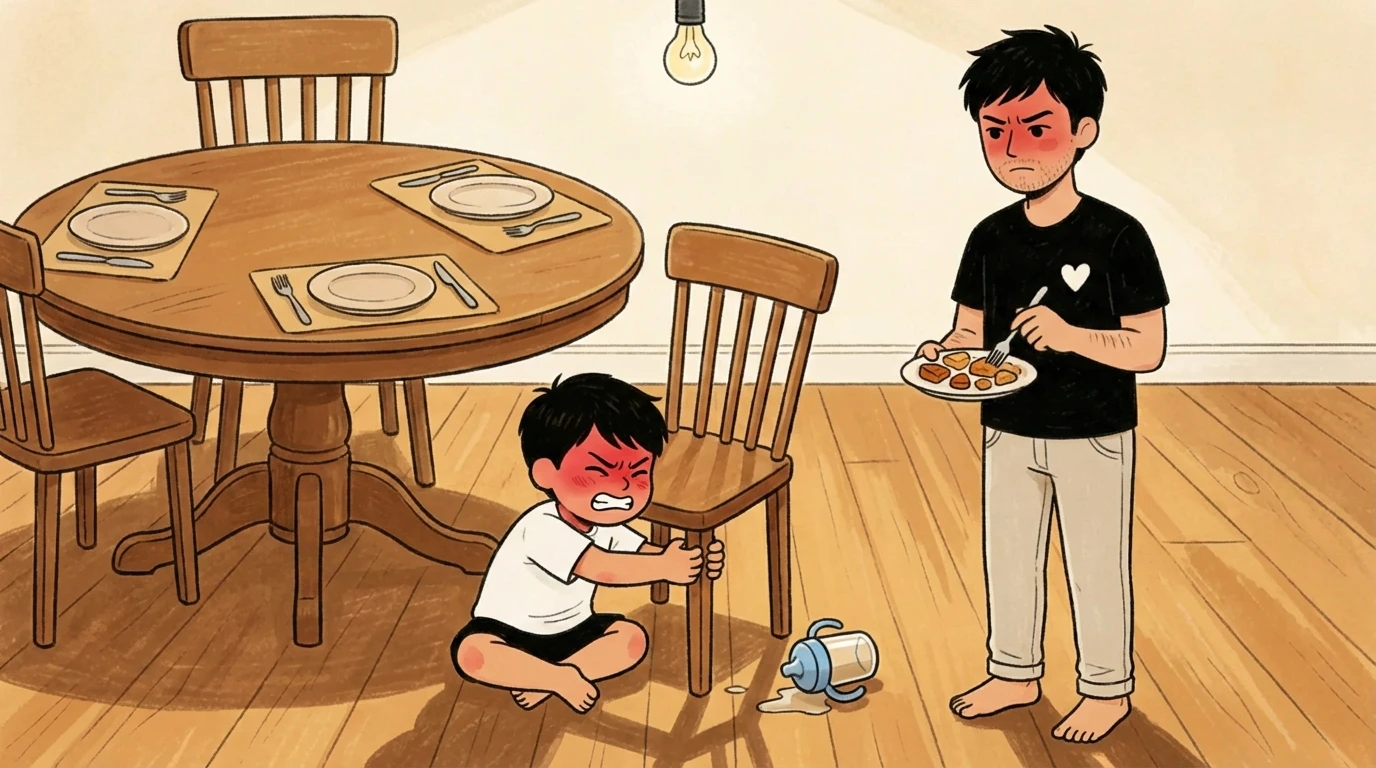
Shoe standoff every morning
The Spirited Kids course will show you what's behind the refusal
You'll read their stubbornness as temperament, not defiance, and the standoffs will shrink on their own.
Why standard discipline fails these kids
Punishment triggers the fight response
Time-outs, taking things away, counting to three, lectures, raised voices. These tools work on children who are motivated by avoiding displeasure. A strong-willed child is motivated by something deeper: autonomy. Punishment doesn't just fail to motivate them. It activates the part of their brain that says "I will not be controlled."
You can see this in real time. You announce the consequence. Their jaw sets. Their fists clench. Their voice gets louder. They're not processing your lesson. They're preparing for battle.
Rewards work once
Sticker charts, earning screen time, "if you do X, you can have Y." Strong-willed kids see through the mechanics immediately. The first time, they might play along. By the third time, they've decided the reward isn't worth the surrender of autonomy. The strong-willed child would rather have nothing and keep their independence than have everything and feel controlled.
People sometimes use this as evidence that gentle approaches don't work with these kids. But the opposite is true. What fails is any system that tries to control the child from outside. What works is building the conditions where the child chooses cooperation from inside.

How to set a limit with a strong-willed child
- State the limit once, clearlySay what's happening, not what's stopping. 'We're leaving the park in five minutes' instead of 'stop playing.' One sentence. No explanation yet.
- Acknowledge what they want'You wish you could stay all day. I get it. This park is your favorite place.' Feeling heard reduces the need to fight.
- Hold the line without escalatingWhen they protest, don't repeat the rule louder. Say 'I know' and wait. Silence after a firm limit is more powerful than ten repetitions.
- Offer a choice within the boundary'Do you want to walk to the car or do you want me to carry you?' The limit stays. The child gets agency over how they meet it.
- Follow through calmlyIf they don't choose, choose for them without anger. Pick them up, walk to the car, let them scream. Your calm body teaches more than your words.
What works instead
Give them information, not orders
Strong-willed kids resist commands but respond to information. "Put your shoes on" triggers a fight. "We're leaving in five minutes and the ground outside is wet" lets them decide for themselves. The shoes go on because it was their idea.
You're respecting how their brain works. These children need to understand the reason before they act. "Because I said so" is the single least effective phrase in your vocabulary with this child.
Let them feel the natural consequences
A strong-willed child learns from experience, not from warnings. If they refuse the jacket, let them be cold (when it's safe to do so). If they won't eat dinner, let them be hungry until breakfast. The lesson from reality lands harder than any lecture, because reality doesn't have a power dynamic. There's no one to fight against.
Protect the relationship above all else
Here's the part that changes everything: a strong-willed child cooperates with people they feel genuinely close to. If they trust you, if they feel you see them as good (not bad, not broken, not a problem to solve), they will move mountains for you. Voluntarily.
But the moment they sense your disappointment, your frustration, your belief that something is wrong with them, the cooperation evaporates. Your opinion of them is the most powerful lever you have. And they can detect a fake positive like a smoke detector detects fire.

Playing the long game
The parents who raise strong-willed kids well share one thing: they stopped trying to win. They stopped keeping score. They stopped treating every interaction as a test of authority. Instead, they started treating their child's persistence as a feature, not a bug.
Your child's stubbornness is practice for every hard thing they'll face. The five-year-old who won't back down from an argument with you is the fifteen-year-old who won't back down when a friend offers them something they know is wrong. The intensity that burns through your patience today becomes passion and leadership tomorrow. The low adaptability that makes mornings miserable teaches them to plan, prepare, and create structure for themselves.
You don't need to break the will. You need to work alongside it. Set fewer limits, hold them firmly, deliver them with warmth, and let your child discover that cooperating with you feels better than fighting you. That discovery can't be forced. It can only be experienced, one Tuesday evening at a time.
FAQ
No. Strong-willed temperament is a normal variation in how children are wired. ODD is a clinical pattern where defiance shows up across all settings and relationships, not just with parents. Most strong-willed kids cooperate well with teachers, coaches, or grandparents they feel connected to. If the resistance is universal and escalating, a professional evaluation helps sort it out.
The intensity stays. The difficulty doesn't have to. Strong-willed kids who receive empathic, firm parenting become teenagers who resist peer pressure, advocate for themselves, and hold their ground when it matters. The trait that exhausts you at four protects them at fourteen.
It works better than punishment, but it requires holding limits firmly while staying emotionally connected. The common mistake is confusing gentle with permissive. Strong-willed kids need clear, consistent boundaries delivered without hostility. They fall apart when limits disappear and when limits come with contempt.
If the intensity was there from birth, if the child cooperates in some relationships but not others, and if the resistance is about autonomy rather than malice, it's temperament. Parenting style shapes how the temperament expresses, but it didn't cause the wiring.
Pick your battles wisely and hold the ones you pick completely. A strong-willed child learns nothing from a limit you set and then abandon under pressure. Choose fewer limits, make them non-negotiable, and let the small things go without guilt.