
TLDR
- Repair is the skill, not perfection. Every parent loses it. What separates good-enough parenting from damaging parenting is what happens in the ten minutes after.
- Say sorry first, explain second. Lead with 'I'm sorry I yelled at you.' No preamble, no justification. The apology lands before the explanation.
- Own your feelings without assigning blame. Say 'I was frustrated' instead of 'You made me so mad.' Your emotions are yours. Full stop.
- Tell them what you'll do differently. An apology without a plan becomes hollow after the third time. Name one concrete thing you'll change.
- Silence is worse than an imperfect apology. When you say nothing, your kid fills the gap with their own story. Usually that story is 'it was my fault.'
You lost it. Now what?
You said you wouldn't yell. Deep breaths, count to ten, walk away if you need to. And then your kid dumped an entire bowl of oatmeal on the dog for the second time today, and something in your chest snapped, and you heard yourself shouting before your brain caught up.
Now it's quiet. The kid is in the other room. The dog is sticky. And you're standing in the kitchen with that familiar pit in your stomach.
You didn't break anything. But you do need to go back and fix it.
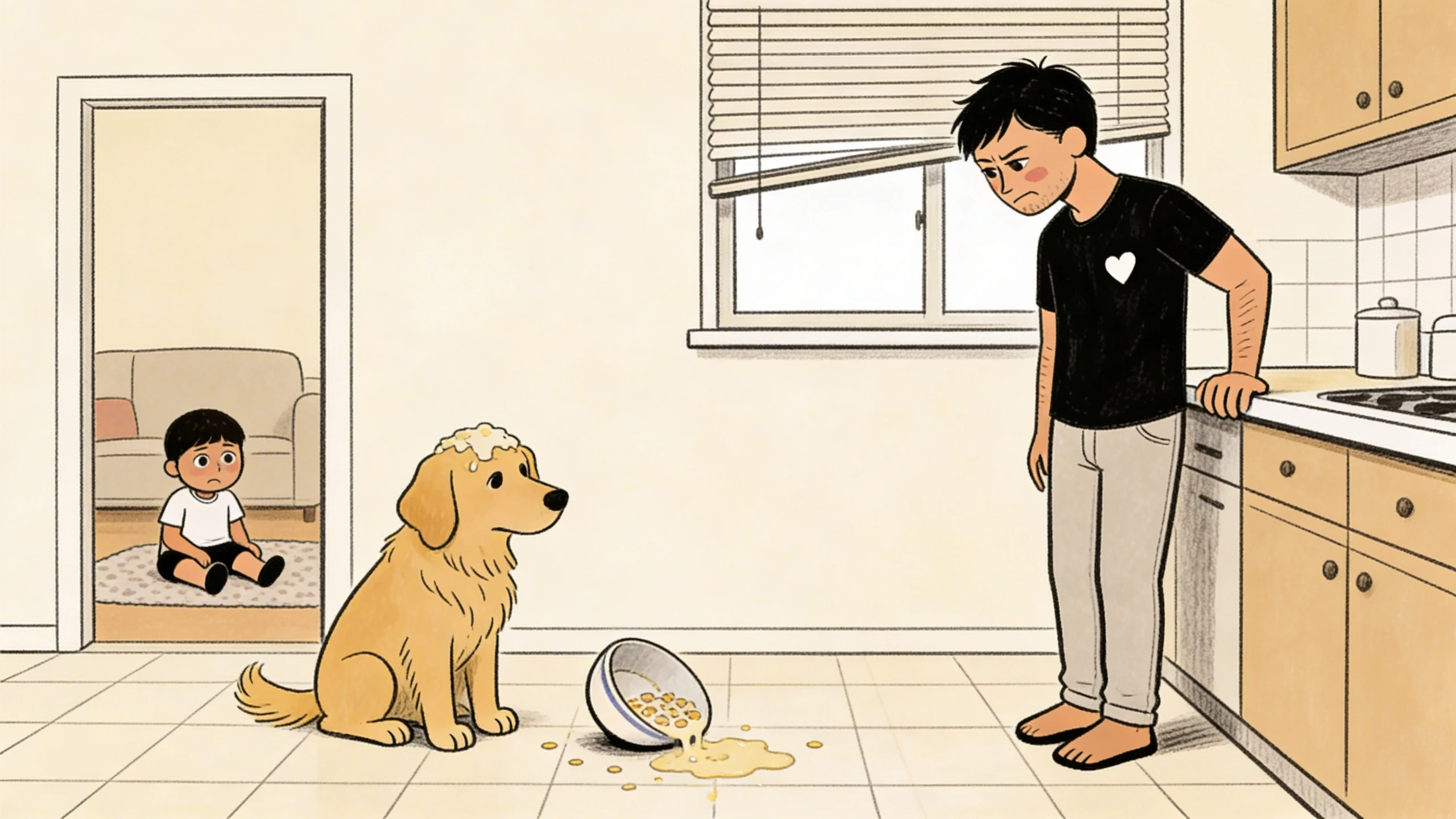
The moment after you lose your temper is the most powerful teaching opportunity you'll get all week. Your kid just watched you do the exact thing you tell them not to do. What happens next determines what they learn from it.
Standing in their doorway afterward
The Calm Parent course will walk you through repair that lands
You'll know exactly what to say and when, so the apology strengthens your connection instead of sounding hollow.
Why saying nothing is the worst option
Here's where most parents go wrong. You feel terrible, so you do nothing. You wait for the mood to pass. Maybe you're extra nice at dinner.
Your kid won't forget. And your silence isn't neutral. When you say nothing after a blowup, your child is left to interpret the situation on their own. Kids are meaning-making machines with limited data. Without your input, they'll write their own story. That story almost always ends with "it was my fault."
A young child cannot distinguish between "my parent is upset" and "my parent is upset at me because I'm bad." Their brains don't have the wiring yet to separate your emotional state from their own worth. Even if you've calmed down, your kid doesn't know that. They're sitting with the version of you that yelled, waiting to find out what it means.
What silence teaches
When repair doesn't happen, kids absorb rough lessons: that it's okay to hurt someone and never acknowledge it, that apologizing means weakness, that big feelings are dangerous. These aren't lessons you'd choose. But they're the ones that land when the conversation never happens.
What repair teaches
When you go back and own what happened, your kid learns that mistakes are survivable. That relationships can handle conflict. That the people who love you will humble themselves to make things right. That's a skill they'll use in every friendship and relationship they'll ever have.
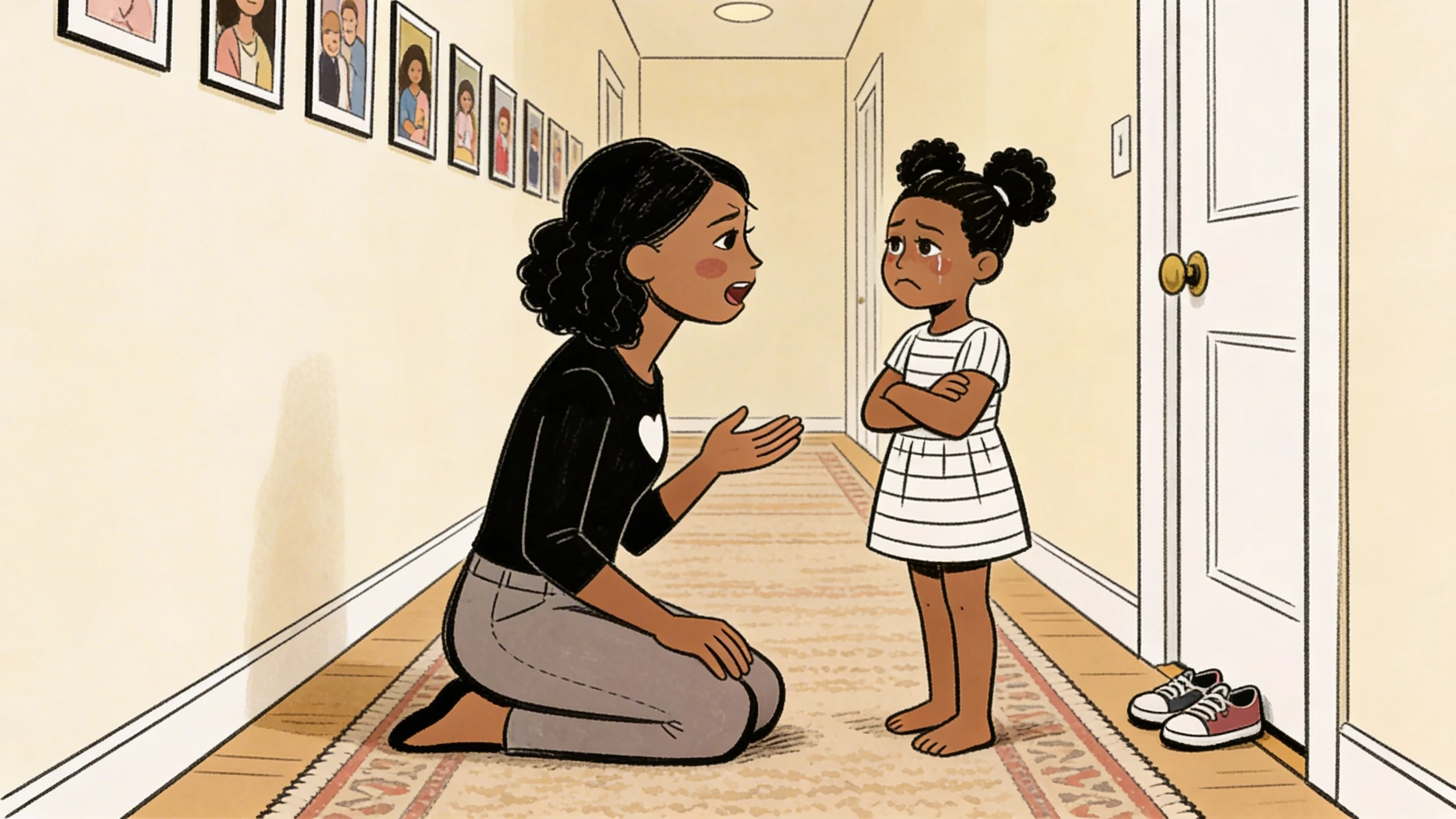
The five-part apology that takes sixty seconds
You don't need a therapy degree for this. You need sixty seconds and the willingness to feel a little uncomfortable.
How to apologize to your child after losing your temper
- Start with sorryGet on their level physically. Eye contact. Say the words: 'I'm sorry I yelled at you.' No warm-up, no qualifiers. The apology comes first.
- Tell the story simplyConnect your feeling to your action: 'I was frustrated, and I yelled.' Keep it to one sentence. It's a model for how to name what happened, not a debrief.
- Name their experienceSay what they probably felt: 'That probably scared you' or 'You might have felt sad when I raised my voice.' You're giving them words for something they can feel but can't articulate.
- Reassure them of your loveSay 'I love you' directly. Kids need to hear that your anger doesn't cancel your love. Say it even when it feels obvious to you - children need to hear love stated plainly after a rupture.
- Name what you'll do differentlyGive them one specific plan: 'Next time I feel that frustrated, I'm going to step outside and take three breaths before I say anything.' Concrete beats vague. Always.
The whole thing takes less time than making a cup of coffee. And it teaches your child five things at once: mistakes happen, feelings have names, actions have consequences, love survives conflict, and grown-ups can change.
The three ingredients that make it real
Not all apologies land the same way. The difference between a repair that works and one that bounces off is usually one of three missing pieces.
Humility
Your body language matters more than your words here. If you're standing over your kid with arms crossed, delivering a technically correct apology, they're reading your posture. Get low. Make eye contact.
"I lost my cool and it wasn't okay for me to take it out on you." That sentence, said at eye level, does more work than a paragraph of explanation from across the room.
Ownership
"I was frustrated" is a repair. "You made me so mad" is a second injury. The difference is three words, but the message is completely different. One says "my feelings are my responsibility." The other says "your behavior controls my emotions, and that's your problem now."
Kids who hear "you made me" learn that they're responsible for adult feelings. That's a weight no child should carry. Forcing kids to say sorry while modeling blame yourself teaches them that apologies are performances, not repairs.
Responsibility
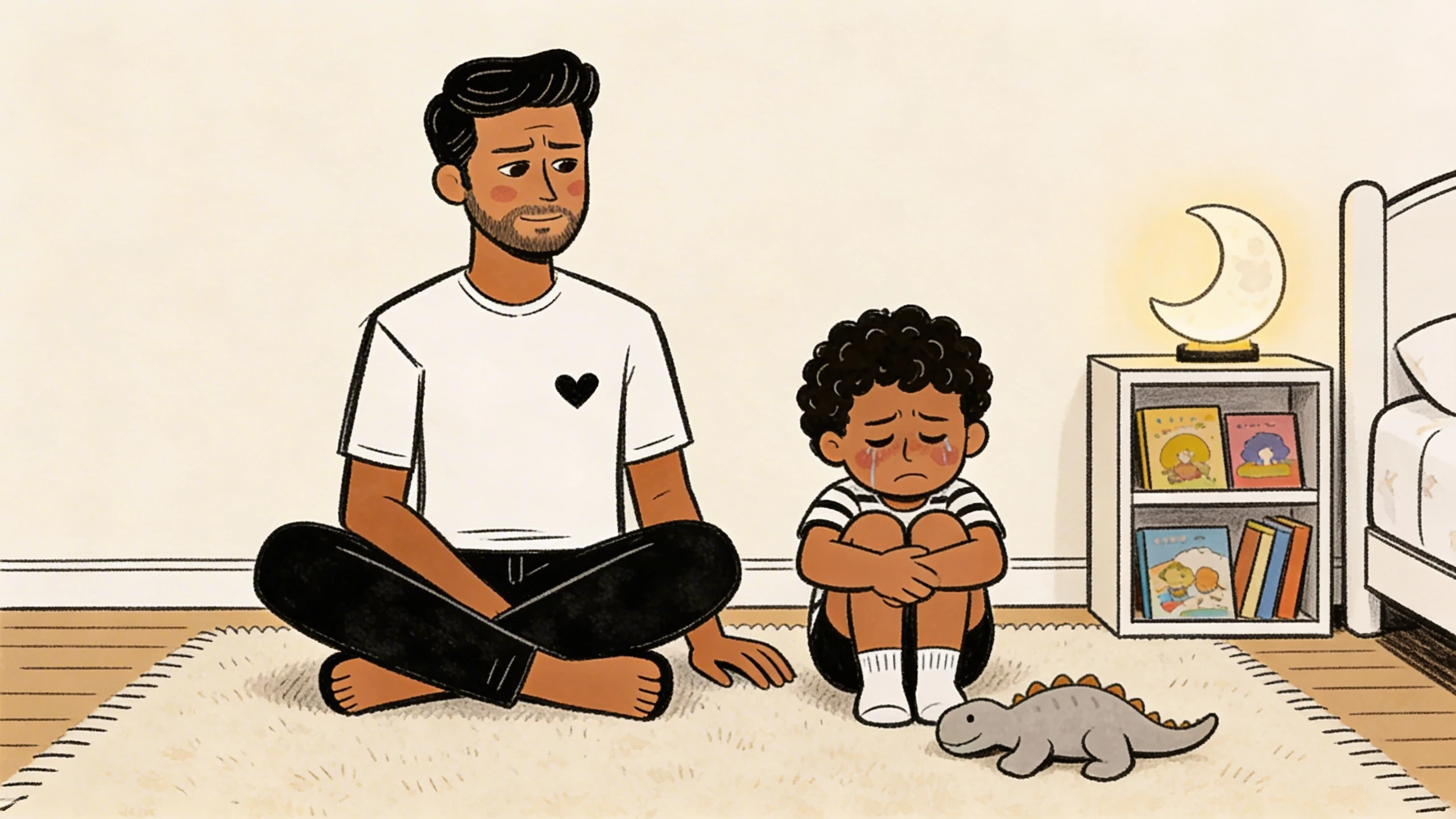
This is where apologies either build trust or erode it. If you say sorry but change nothing, your kid notices. And if they're old enough, they'll call you on it. "You always say sorry but then you do it again."
When that happens (and it will), don't get defensive. They're right. The correct response is: "You're right. I hear you. I'm going to make a plan to do better." Then make an actual plan.
Ask yourself one question when you're calm: "What's one thing I can do so I don't lose it next time?" Maybe it's going to bed earlier because you're running on four hours of sleep. Maybe it's recognizing that 5 PM is your danger zone and building in a buffer. Maybe it's putting your phone down when the kids are melting down so you have one fewer stimulus competing for your attention.
Pick one thing. Do it today.
What about when you weren't wrong (but you were too harsh)?
Sometimes you set a limit that needed setting, but the way you delivered it left a mark. Your kid says "you hurt my feelings," and your first instinct is to say "well, you shouldn't have done the thing."
Both things can be true. The limit was correct AND your tone was too sharp. You can acknowledge their feelings without abandoning the boundary.
Try: "I can see that upset you. I don't want to hurt your feelings. And what I said is still true: we don't throw toys at people. Let's talk about why."
You're apologizing for how you enforced it, not for the rule itself. This distinction matters. Kids need you to deliver those limits without making them feel deeply bad about who they are.
The self-compassion piece you're probably skipping
If you're reading this article, you're already the kind of parent who cares about getting it right. Which means you're also probably the kind of parent who beats yourself up for hours after losing your temper.
That guilt spiral feels productive. It isn't. Shame doesn't make you a better parent. It drains the exact emotional resources you need to do better next time. Every minute you spend mentally replaying the yelling is a minute you're not spending on the one thing that helps most: figuring out what support you need to regulate better tomorrow.
Give yourself the compassion you wish you'd gotten as a kid. You're a human learning alongside your children. You made a mistake. You reflected on it. You're here, reading about how to fix it. That's the whole point.

The brain science working in your favor
Every single time you catch yourself mid-yell and choose to stop, or go back after and repair, you're rewiring your brain. The neural pathways for self-regulation get stronger with use. The first ten times are brutal. The twentieth time is easier. The fiftieth time, you catch yourself before the volume goes up.
Your kid's brain is changing too. As you regulate better, they regulate better. Emotional regulation is contagious in a family. The work you do on yourself ripples outward in ways you won't see for months, and then one day your four-year-old takes a deep breath in the middle of a meltdown and you realize where they learned it.
FAQ
No. Kids don't lose respect for parents who apologize. They lose respect for parents who pretend they're always right. Owning a mistake and making it right shows strength, not weakness. You can apologize for yelling and still hold the boundary that caused the conflict.
They understand more than you think. Toddlers pick up tone, body language, and emotional energy long before they understand every word. A simple 'I'm sorry I yelled, I love you' at eye level lands even with a two-year-old. Start the habit now.
That's a signal you need more support, not more willpower. Identify your triggers: sleep deprivation, a specific time of day, chronic stress. Pick one concrete change. If the pattern persists, a parenting class or a few sessions with a therapist can help you break cycles you inherited.
Wait until you're calm. An apology delivered while you're still activated can come out wrong or turn into another argument. Take five minutes, ten minutes, whatever you need. Then go back. The repair doesn't expire.
It is never too late. Children are wired for connection and remarkably responsive to genuine repair at any age. Your first apology might surprise them. Keep going. Consistency over time rebuilds trust even after long gaps.