
TLDR
- The explosion has a fuse, and you can see it. Most parental blow-ups start with gathering kindling: you mentally compile a list of everything your kid has done wrong. The moment your inner monologue turns prosecutorial, that's your warning.
- Your body decides before your brain does. Fight-or-flight hijacks your prefrontal cortex in about three seconds. Physical interventions (longer exhale, cold water, walking away) work because they interrupt the hijack. Reasoning with yourself does not.
- The urgent feeling means wait, not act. That overwhelming need to teach your child a lesson RIGHT NOW is stress hormones talking. Any lesson you deliver while triggered will teach the wrong thing.
- Your calm is your child's calm. Young kids cannot regulate their own emotions. They borrow yours. When you stay regulated during their meltdown, you're building the neural pathways in their brain that will let them self-regulate later.
- This is a practice, not a personality trait. The first ten times you catch yourself are brutal. By the fiftieth, you notice the heat before your voice goes up. Neurologists confirm: every time you override the urge to react, you're strengthening calmer wiring.
The moment before you lose it
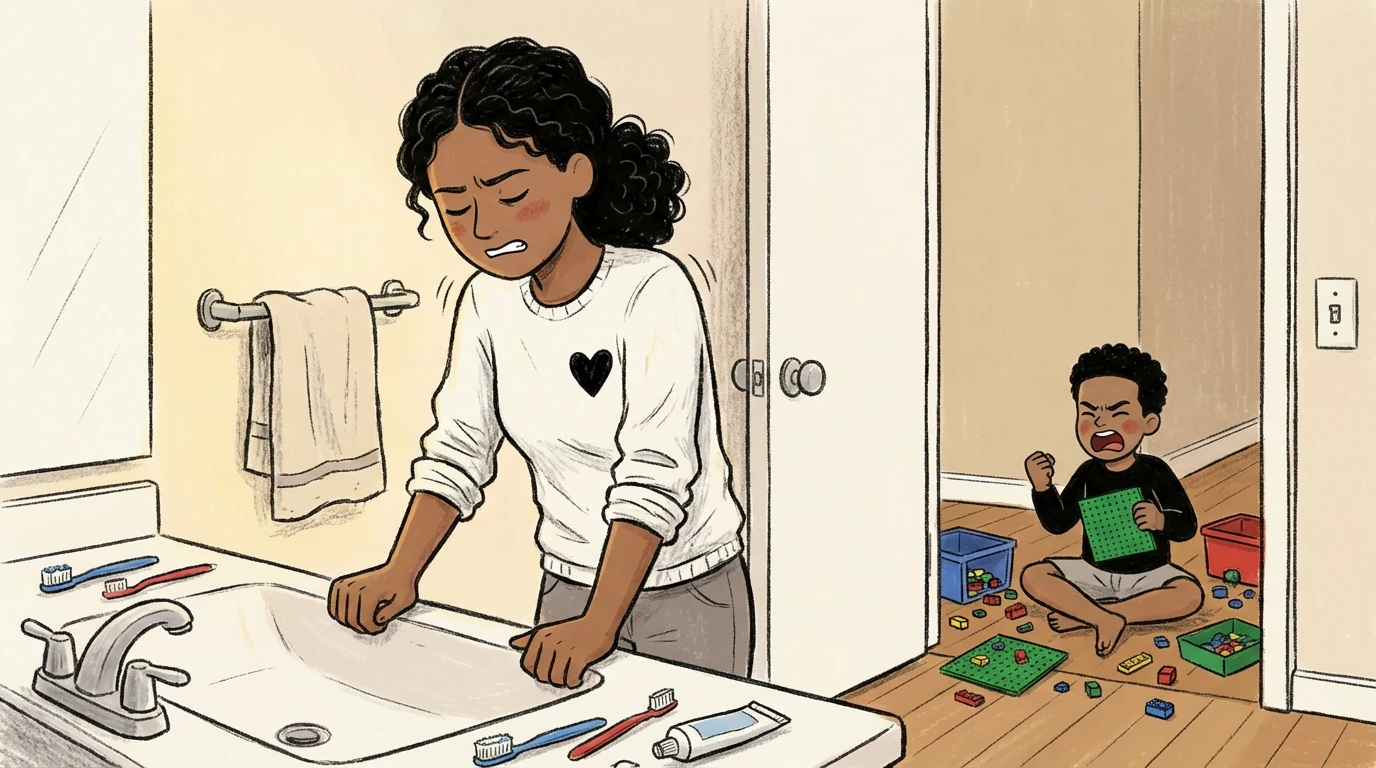
You've asked your kid to clean up three times. You said it nicely. You said it firmly. You said it with "the voice." And now your five-year-old is staring at you with the serene confidence of someone who has never worried about consequences, and dumping more Legos onto the floor.
Something in your chest tightens. Your jaw clenches. There's a hot feeling climbing your neck.
That heat is your fight-or-flight response, and it's about three seconds from taking over your brain. Once it does, your prefrontal cortex goes offline. You're reacting from the same brain region your ancestors used to run from predators.
By the time you're yelling, the battle is already lost. The window for staying calm is tiny. Everything here is about what to do inside that window.
Every button, methodically pressed
The Calm Parent course will show you how to stay neutral when they escalate
You'll stop white-knuckling the counter and feel steady while your child tests every limit.
Why your buttons exist in the first place
Your kid didn't install those buttons. You arrived at parenthood with them pre-loaded.
At least half the time you lose it, you were already in a bad mood before they did anything. You slept five hours. You skipped lunch. You've been touched by small humans for eleven hours. The Legos were a spark. The fuel was already stacked.
The kindling problem
There's a specific mental pattern that predicts a blow-up: gathering kindling. Your inner monologue starts building a case. They never listen. They do this every time. They know exactly what they're doing.
The moment you catch your thoughts turning prosecutorial, that's your cue. Not to act on the anger, but to interrupt it.
Your kid's temperament is a multiplier
Some kids push buttons more intensely and persistently than average. If you're parenting a strong-willed child, the same techniques apply, but you'll need them more often. That's not a failure. That's just the math of temperament.
The three-second window
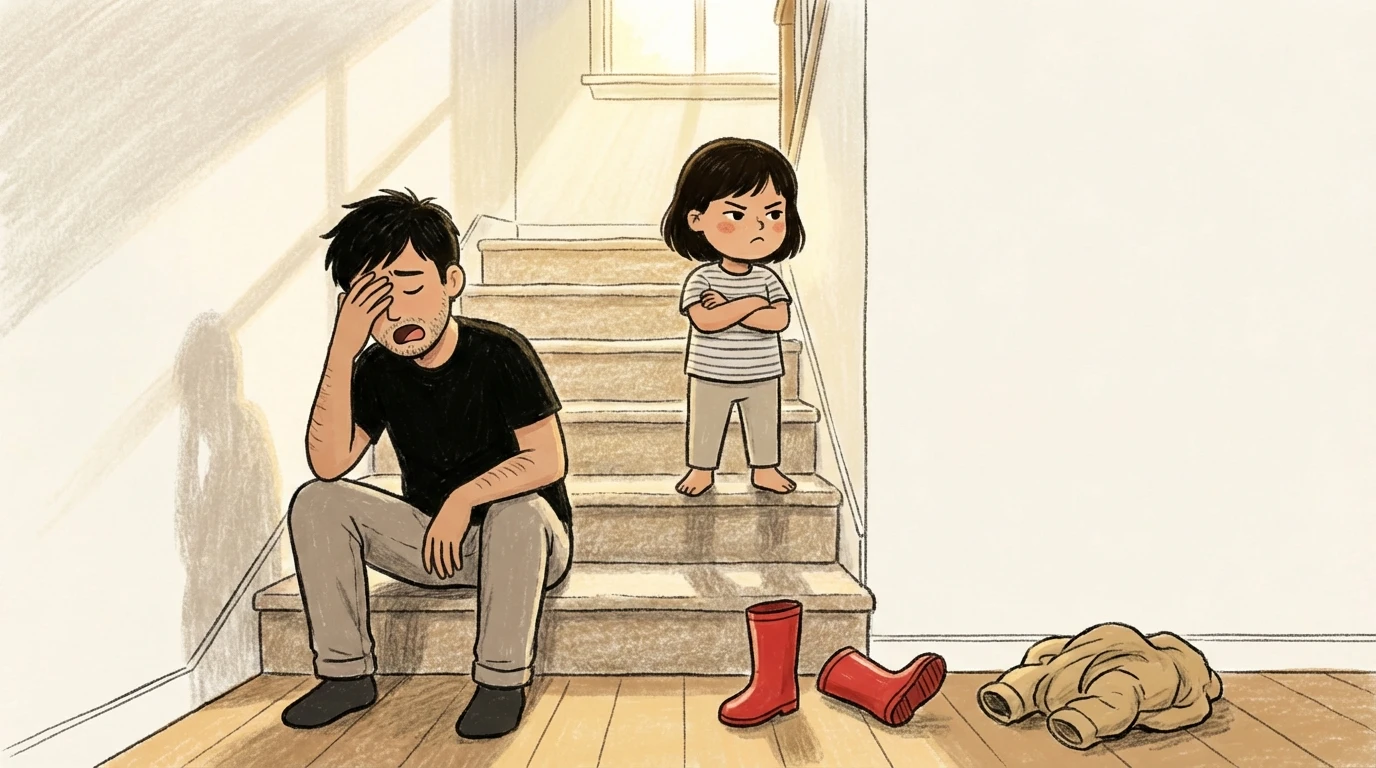
You have about three seconds between the heat rising and your higher brain checking out. Here's what to do with them.
How to stay calm when you feel the heat rising
- Close your mouthStop talking mid-sentence if you have to. Whatever you were about to say will make things worse. Silence is always better than the next sentence when you're triggered.
- Drop your agenda for ninety secondsThe Legos, the shoes, the homework can wait. Turn your body away. Shake out your hands to release the tension that's pooled in your fists.
- Breathe out longer than inFour counts in, six counts out. The longer exhale activates your parasympathetic nervous system and reverses the stress response. Two rounds can pull you back from the edge.
- Tell yourself it's not an emergencyYour body is screaming that you need to act NOW. That's adrenaline, not reality. Your kid doesn't need a lesson this second. You know where they live.
- Splash cold water on your faceIf breathing isn't enough, get to a sink. The temperature shock redirects your brain from the trigger to your body. It's a physiological reset button.
The feeling of urgency, the one that says you need to set this child straight immediately, is the signal to wait. Any lesson you teach will land ten times better in five minutes when your brain is back online.
What's happening in your child's brain while you lose it
When you raise your voice, your child's nervous system flips into fight, flight, or freeze. The learning centers of their brain shut down. They cannot process whatever you're trying to teach. The only thing registering is that the person they depend on feels unsafe.
Your calm regulates your child's nervous system. Young kids can't do this for themselves. Their neural pathways for self-regulation are still under construction. They borrow your regulation until they build their own. When you stay calm during their worst moment, you're building architecture in their brain that will let them manage emotions for the rest of their life.
When the trigger runs deeper than today
If certain behaviors set off something closer to rage than ordinary frustration, pay attention. You might be running old software from your own childhood. Your nervous system learned early that certain situations are threats, and it's still responding to a template written decades ago.
You don't need to solve your entire history before breakfast. Just name it: This reaction is bigger than the situation. Something old is getting triggered. That naming alone creates a sliver of space between the trigger and your response.
After you've already lost it
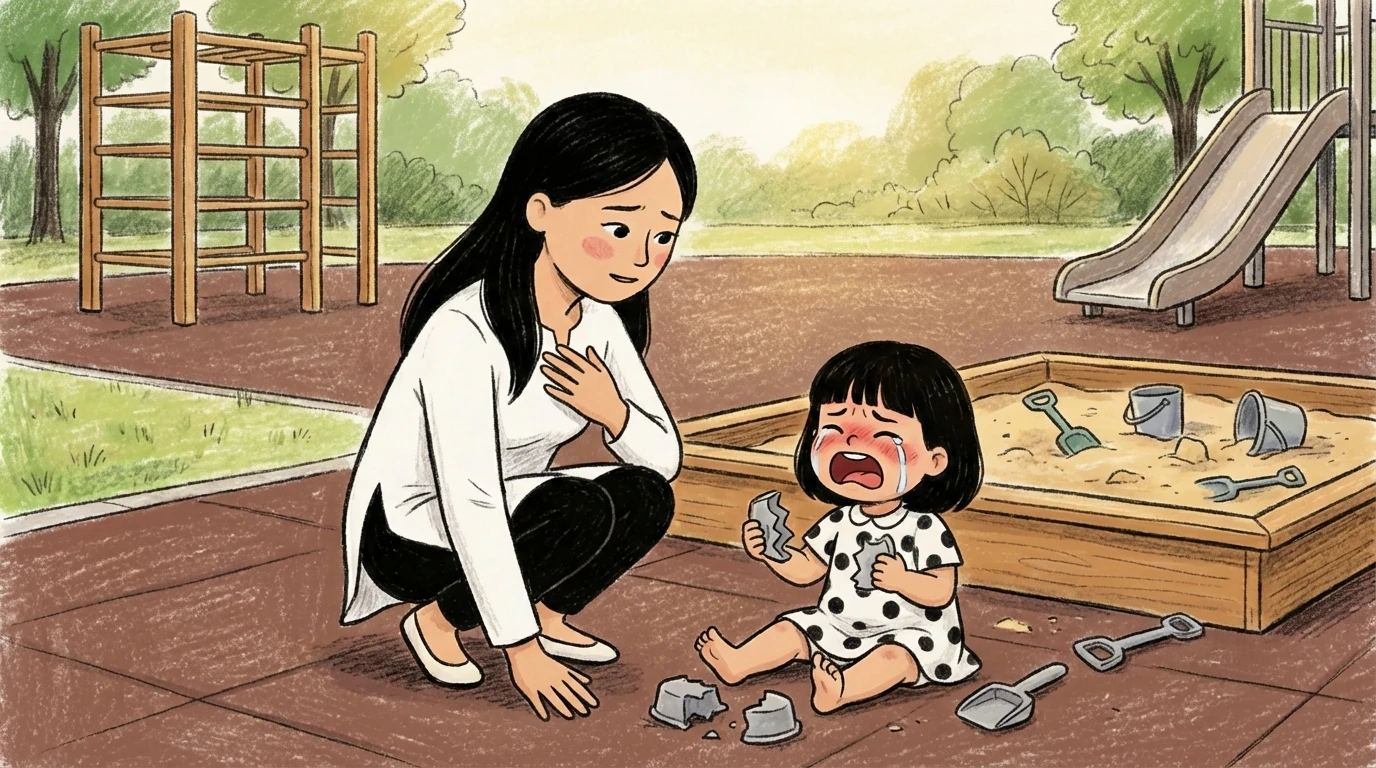
You didn't catch it in time. You yelled. Your kid is upset, or worse, they've gone quiet and blank because they've learned to shut down.
Now what?
Go back. Get on their level. Say three things: what happened ("I yelled, and that wasn't okay"), what was going on for you ("I was frustrated and lost my cool"), and what you'll do differently ("Next time, I'm going to walk away and breathe before I talk").
That sixty-second repair teaches your kid that relationships survive conflict and that grown-ups own their mistakes. It matters more than the yelling did.
The two traps after a blow-up
The brush-off: It wasn't that bad, kids are resilient, they'll be fine. You still owe them the acknowledgment.
The shame spiral: I'm a terrible parent, what's wrong with me. Shame drains the exact resources you need to do better. Self-compassion restores them. Treat yourself the way you want to treat your kids.
The long game: filling the tank before it runs dry
The reactive approach is catching yourself mid-yell. The preventive approach is making sure you're not running on fumes by 4 p.m.
Sleep is the foundation
Everything else collapses without it. Your stress tolerance, your patience, your ability to think before you speak. If you're irritable every day, that's not a willpower problem. That's a sleep problem, or a help problem.
Find your recharge and protect it
Ask yourself: What would fill my tank right now? A bubble bath. Calling a friend. Sitting in the car for five minutes before you walk in the door, breathing, reminding yourself that the next few hours are kid time and then you get your time. Those five minutes can be the difference between a calm evening and a meltdown (yours).
Know what you're good at
Take stock of your strengths so you know what to lean on when the hard moments hit. You already have tools. You just forget about them when your nervous system is on fire.
What changes when you get this right
The first few times you stop yourself, it feels absurd. You close your mouth mid-sentence and walk away. Your kid stares at you like you've broken. But you're modeling something powerful: a person feeling something enormous and choosing not to let it run the show.
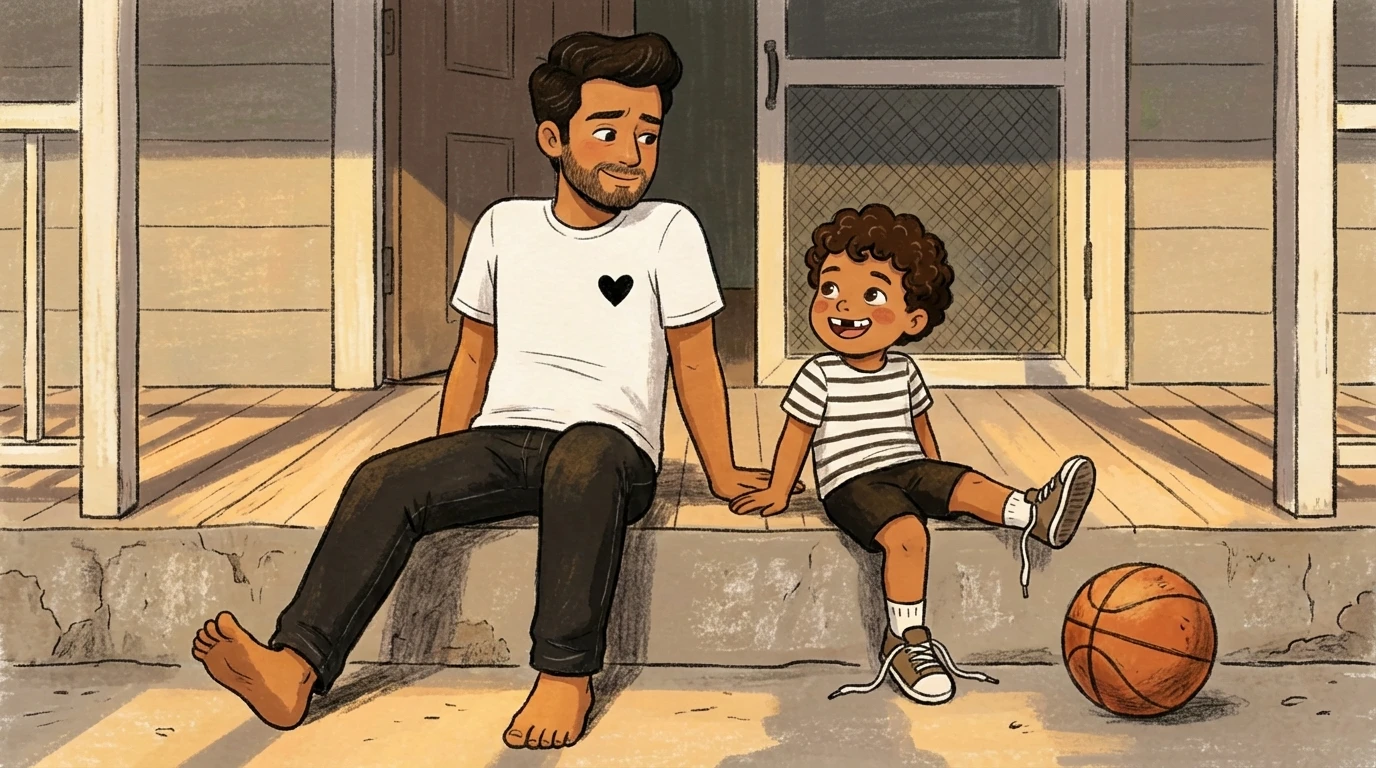
Over time, something shifts. Your kid starts taking deep breaths when they're upset because they've watched you do it. They start saying "I need a minute" instead of throwing things. They cooperate more, because a child who feels safe with you wants to work with you.
Every time your prefrontal cortex overrides the urge to react, you're rewiring your brain. The neural pathways for self-regulation get stronger with use. The first time is the hardest. The fiftieth is almost automatic.
You won't get it right every time. You'll miss the three-second window, say the thing you swore you wouldn't say, and then you'll repair and practice some more. That's the whole game. Parents who've been dealing with defiance for years say the same thing when they crack this: the kid didn't change. They did.
FAQ
Stop mid-yell. Close your mouth even if you're mid-word. It feels ridiculous the first time, but you're modeling exactly the self-regulation you want your child to learn. Every time you stop sooner, you're training your brain to catch the heat earlier next time.
No. You still set limits, clearly and firmly. You just do it after you've calmed down, when your brain can think straight. Limits delivered from a calm state stick better because your child's learning brain is online, not in fight-or-flight mode.
Most parents notice they're catching themselves faster within two to four weeks of deliberate practice. The full rewiring takes a few months. The progression goes from yelling and regretting, to catching yourself mid-yell, to noticing the heat before you open your mouth.
Kids have an instinct for finding your triggers, but it's rarely calculated. They push because they need something, usually connection or help with a big feeling. The worse the behavior, the more help they need. Your buttons exist because of your own history, not because your kid installed them.
You can only control your own responses. Your child will notice the difference. Often when one parent shifts, the household dynamic changes enough that the other parent starts adjusting too. Model what you want to see without lecturing your partner about it.