
TLDR
- Deep belly breaths physically change your nervous system. Slow breathing decreases stress neurotransmitters. Your body reads a deep breath as proof that no tiger is chasing you, and it starts standing down.
- You cannot use good parenting strategies while dysregulated. You may know every gentle-parenting script on the internet. If your heart rate is above 100, none of them will come out of your mouth correctly.
- The goal is returning to center, not staying centered. You will get triggered. Every parent does. The skill is noticing it early enough to pull yourself back before you say something you will replay at 2 a.m.
- Your body holds the key your mind keeps losing. When you shift attention from your racing thoughts to what your body feels, the inner critic goes quiet. Body awareness bypasses mental chatter.
- Negative thoughts create negative moods, and the cascade is fast. One thought like 'He should know better by now' triggers a mood, which triggers another thought, and within seconds you are parenting from fear instead of presence.
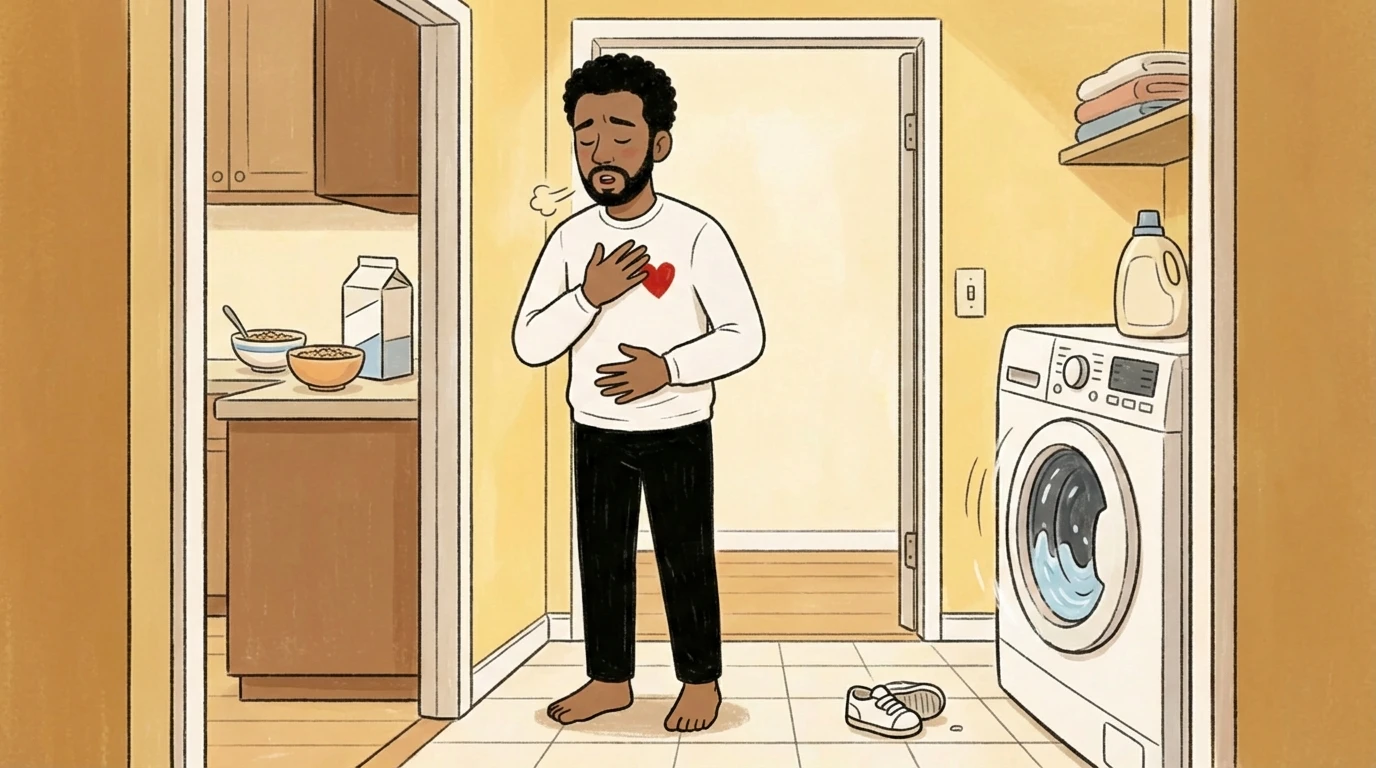
The most underrated parenting skill has nothing to do with your child
You have read the books. You have bookmarked the scripts. You know you are supposed to validate feelings and stay calm when your kid pitches a bowl of oatmeal across the kitchen at 7:14 a.m.
And then it happens, and you yell anyway.
The gap between knowing what to do and being able to do it has a name: dysregulation. When your nervous system is in fight-or-flight, the thinking part of your brain goes offline. Your carefully memorized scripts are locked in a room you cannot access.
So before we talk about what to say to your child, we need to talk about what to do with your body.
Why breathing works (and it is not because you are "calming down")
When you are stressed, your body runs on shallow chest breathing. Adrenaline is up. Cortisol is circulating. Your nervous system is scanning for threats, and your four-year-old whining about the wrong cup registers as one of them.
A slow, deep belly breath sends a signal to your nervous system that there is no actual emergency. The logic is evolutionary: if a predator were chasing you, you would not pause to breathe deeply. So when you do, your body reads it as evidence of safety and starts dialing down the stress hormones.
This is not a willpower trick. It works at the level of neurotransmitter activity, which means it works whether you believe in it or not. Three deep breaths will buy you about four seconds of access to the part of your brain that knows the difference between a crisis and a spilled drink.
Stop, drop, breathe
The simplest framework for using this in real time:
- Stop whatever reactive thing you are about to do
- Drop your agenda for this second (yes, they still need to put shoes on, but that can wait ten seconds)
- Breathe three slow breaths into your belly
The entire intervention is the pause. It creates a choice point between your child's behavior and your response.
Deep breaths felt ridiculous
The Calm Parent course will give you regulation tools that work mid-chaos
You'll use techniques built for a loud kitchen, not a meditation cushion, and feel the difference.
Your body knows things your mind is too busy arguing about
Most of us live almost entirely in our heads. We analyze the tantrum instead of noticing that our shoulders are at our ears and our jaw is clenched tight enough to crack a walnut.
When you move your attention from your thoughts to your body, the inner critic loses its microphone. You redirect your attention to what your feet feel like on the floor, whether your stomach is tight or soft. You do not have to fight negative thoughts. You just go somewhere they cannot follow.
Parents do not have forty-five minutes for meditation. Parents have the eleven seconds between "he hit me" and whatever comes out of your mouth. Body awareness fits in that window.
What to do with your body when you notice tension
Try this: the next time you feel your temperature rising, stop talking. Put one hand on your chest and one on your belly. Breathe so that only the belly hand moves. Do this for three breaths.
You will notice something odd. While you were focused on your hands and your breathing, your mind went quiet. You did not have to tell it to be quiet. You moved your attention somewhere it could not follow.
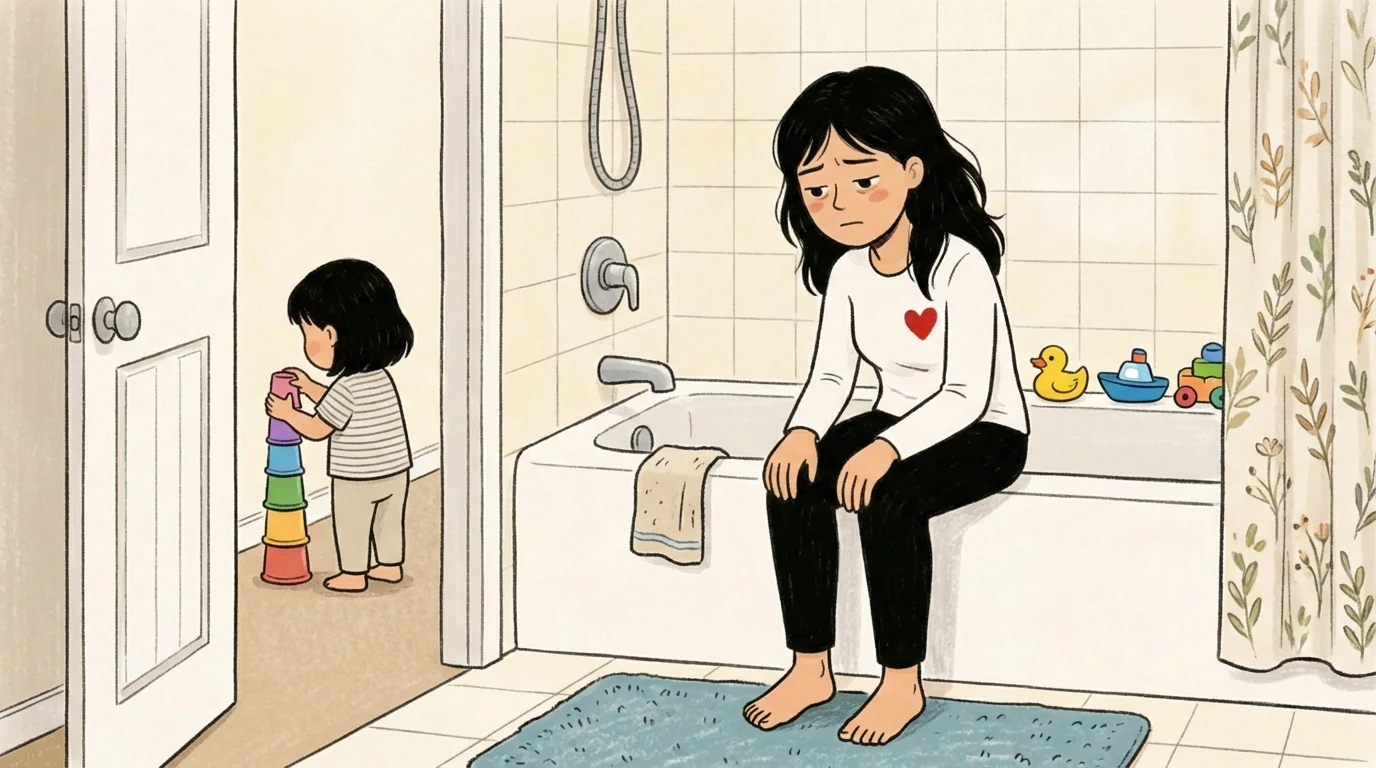
The thought cascade that sets you up to fail
Your mood did not come from nowhere. It started with a thought you probably did not even notice.
Your kid forgets his backpack for the third time this week. Somewhere below conscious awareness, a thought fires: "He would lose his head if it were not attached." That produces a flicker of irritation, which primes your brain for the next thought: "I cannot do everything for him forever." By the time he walks back through the door, you are several thoughts deep into a story about his future incompetence, and he has no idea why you look so angry.
The cascade is self-reinforcing. Each negative thought makes the next one more likely, and within seconds you are parenting from a projection instead of from what is in front of you.
Catching it before the spiral
The fix is noticing. When you feel your temper rising, stop and ask yourself: "What was the thought?" Not the feeling. The thought underneath it.
You will often find something rigid. "He should know better." "She always does this." These are stories, not facts.
Once you see the thought, it loses some of its power. You do not need to replace it with something positive. You just need to see it for what it is: one interpretation that could be read several ways.
How to use mindfulness when you are about to lose it
- Notice you are escalatingCheck for tight jaw, raised shoulders, chest breathing, or the urge to lecture. These physical signs arrive before the yelling does. Catch them early.
- Stop talking immediatelyDo not finish the sentence. Whatever you were about to say from a dysregulated state will not land the way you want it to.
- Put your hands on your bodyOne hand on your chest, one on your belly. This gives your brain a physical task and redirects attention out of your head.
- Take three belly breathsBreathe so only the belly hand moves. Slow exhales. Each breath sends a safety signal to your nervous system that dials down cortisol.
- Name the thought underneathAsk yourself what triggered the spike. Find the rigid thought. Seeing it clearly reduces its power over your next move.
- Re-engage from a calmer placeOnce your breathing is slower and your shoulders have dropped, go back. You may say the same thing you were going to say, but it will sound completely different.
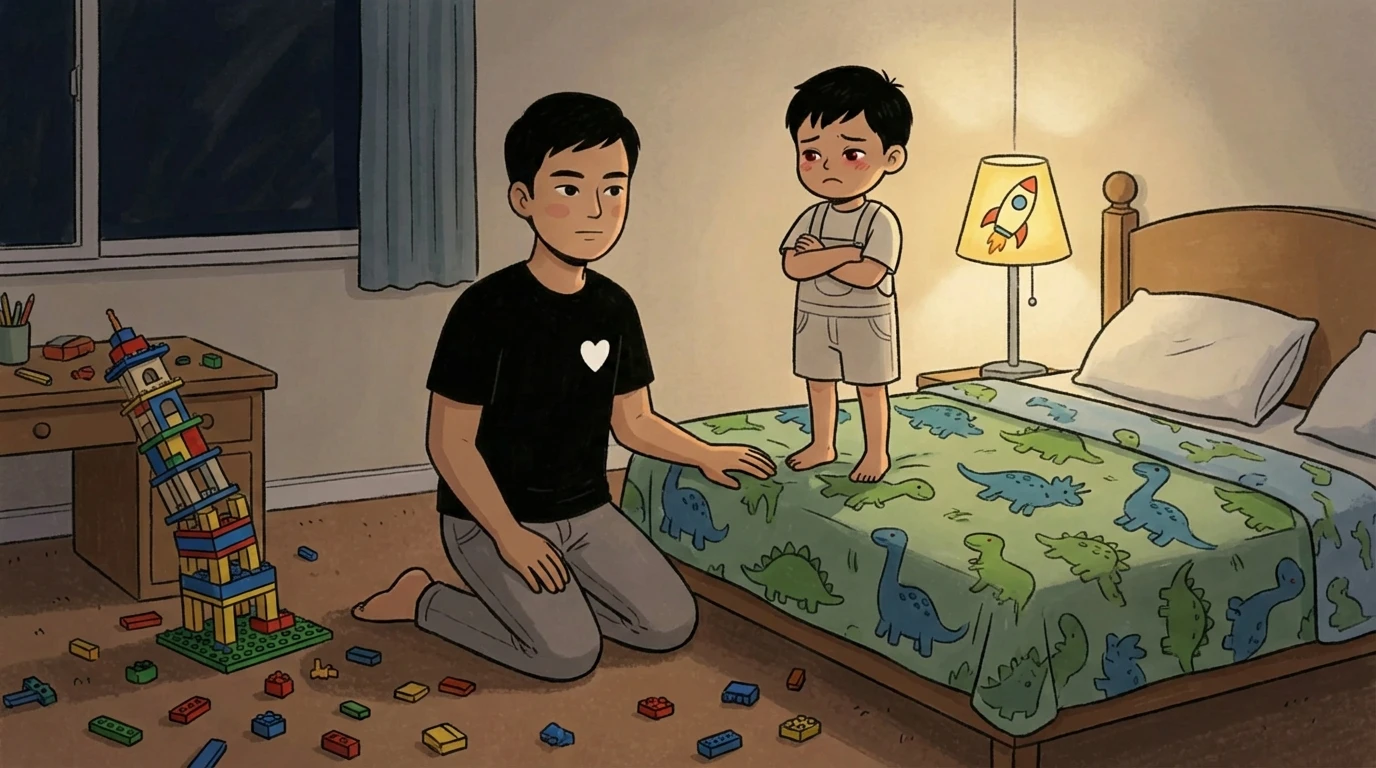
What your kid learns when they watch you breathe
Every time you pause instead of reacting, your child sees an adult who is angry and choosing not to act on it. They see that big feelings do not have to turn into big actions.
This is the same skill you are trying to teach them with a calm-down corner. You are showing them it works by doing it yourself, in the middle of a real situation where you are genuinely upset. Children do not learn emotional regulation from instructions. They learn it from watching someone they love do it imperfectly, repeatedly, in front of them.
The twenty-minute version (for when you have real time)
Everything above is crisis-mode mindfulness. The stuff you use when the oatmeal is already airborne. But there is a longer version, and it recharges the reserves you are running on.
Twenty minutes of body-focused activity each day rewires your baseline. Yoga, walking, even deliberate yawning (yes, really) shift your nervous system toward calm over time.
Practical options that work with kids around
- Walk around the block and pay attention to your feet, not your phone
- Put on a song and dance with your kids (movement plus connection plus oxytocin release)
- Trade hand massages with your partner for five minutes after bedtime
- Do three minutes of stretching while dinner heats up
You are not trying to become a meditator. You are building a slightly larger gap between stimulus and response. Twenty minutes a day makes that gap wider within weeks.
The part nobody tells you about this work
No one sees you choosing to breathe instead of yelling. Your kid will not say, "Thank you for regulating your nervous system, that was very considerate."
But you will notice. Fewer mornings that start with everyone crying. A slow shift from reacting to choosing.
The goal was never perfection. The goal was always returning to center one more time than you lose it. And every time you come back, the path gets shorter.
FAQ
Three is enough to interrupt the stress response. You do not need ten or twenty. Three slow belly breaths, with the exhale longer than the inhale, will measurably lower your heart rate and give your prefrontal cortex a few seconds to come back online.
Pick a physical cue you can train yourself to notice: clenched jaw, tight fists, heat in your chest. Practice noticing that cue during low-stakes moments so it becomes automatic during high-stakes ones. The more you practice when calm, the more accessible it becomes when you are not.
No. Anger is a normal human emotion. It comes up in every close relationship. Mindfulness means noticing your anger and choosing how to act on it instead of letting it drive your behavior automatically. You can be angry and still respond thoughtfully.
Yes, and you should. Dancing together, walking while paying attention to your body, or simply pausing to breathe before you respond all count. Your children benefit from watching you practice, because it teaches them the skill by example.
Breathing gives you access to the part of your brain that already knows what to do. It does not replace parenting knowledge, but it makes that knowledge available in the moments when you need it most, which is when your stress response wants to lock it away.