TLDR
- Burnout has a formula, and it runs on self-criticism. Exhaustion plus guilt plus isolation creates a loop where every well-meaning suggestion feels like another thing you're failing at. Break the loop at the self-criticism link and the rest starts to loosen.
- Your anger is the check engine light, not the engine. When you're snapping at everyone by 4 p.m., that's not a personality flaw. Anger sits on top of fear, grief, or powerlessness. Address what's underneath and the anger loses fuel.
- Standard recovery advice fails because it adds to the load. Exercise more, eat better, meditate. When you can barely get through dinner, each suggestion registers as proof you're doing it wrong.
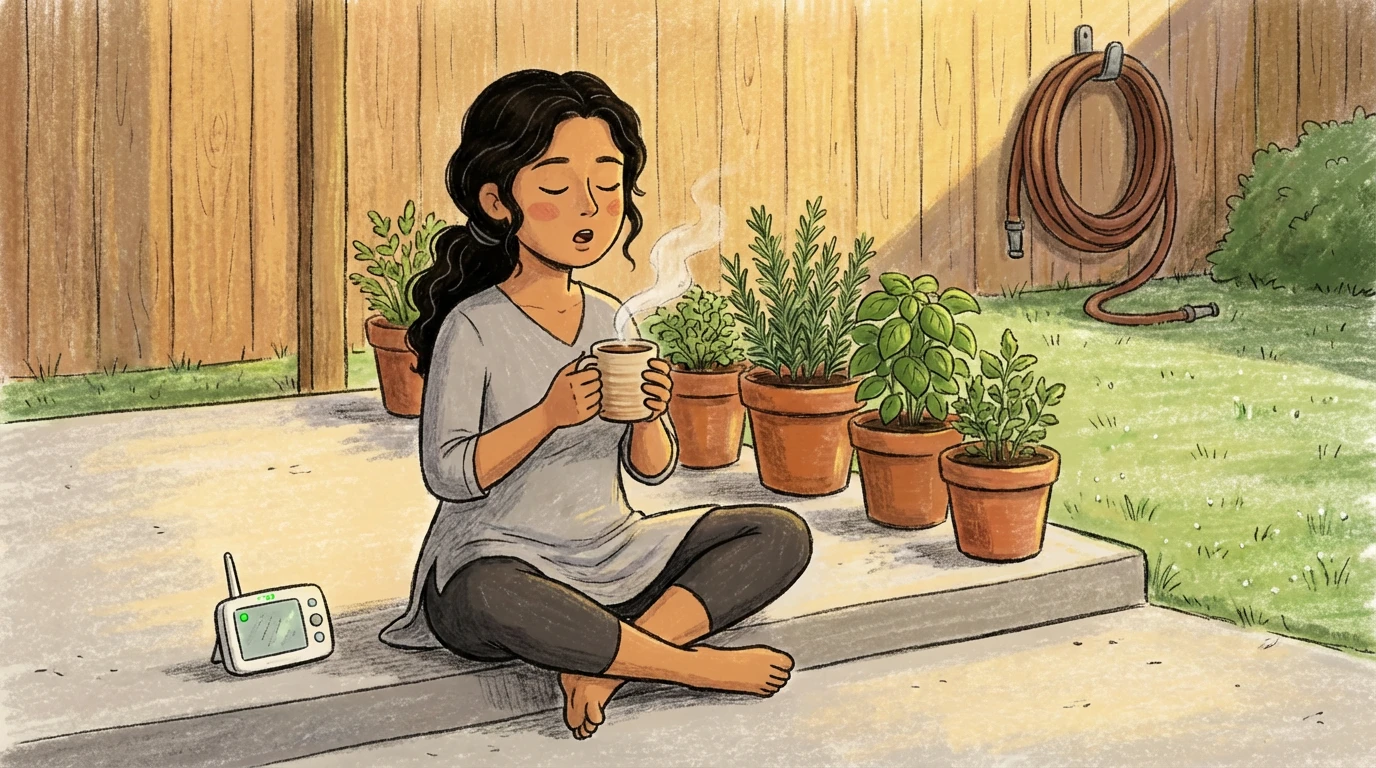
- Five minutes of something that fills you up changes the math. You don't need a spa weekend. A hot cup of coffee in silence, five minutes of music, sitting in the sun. Start there.
- Your kids would rather have a rested parent than a productive one. Wrinkled laundry never hurt a child. A parent running on fumes and resentment does.
The week it stopped being tiredness
You remember tiredness. Tiredness went away with sleep. This is different.
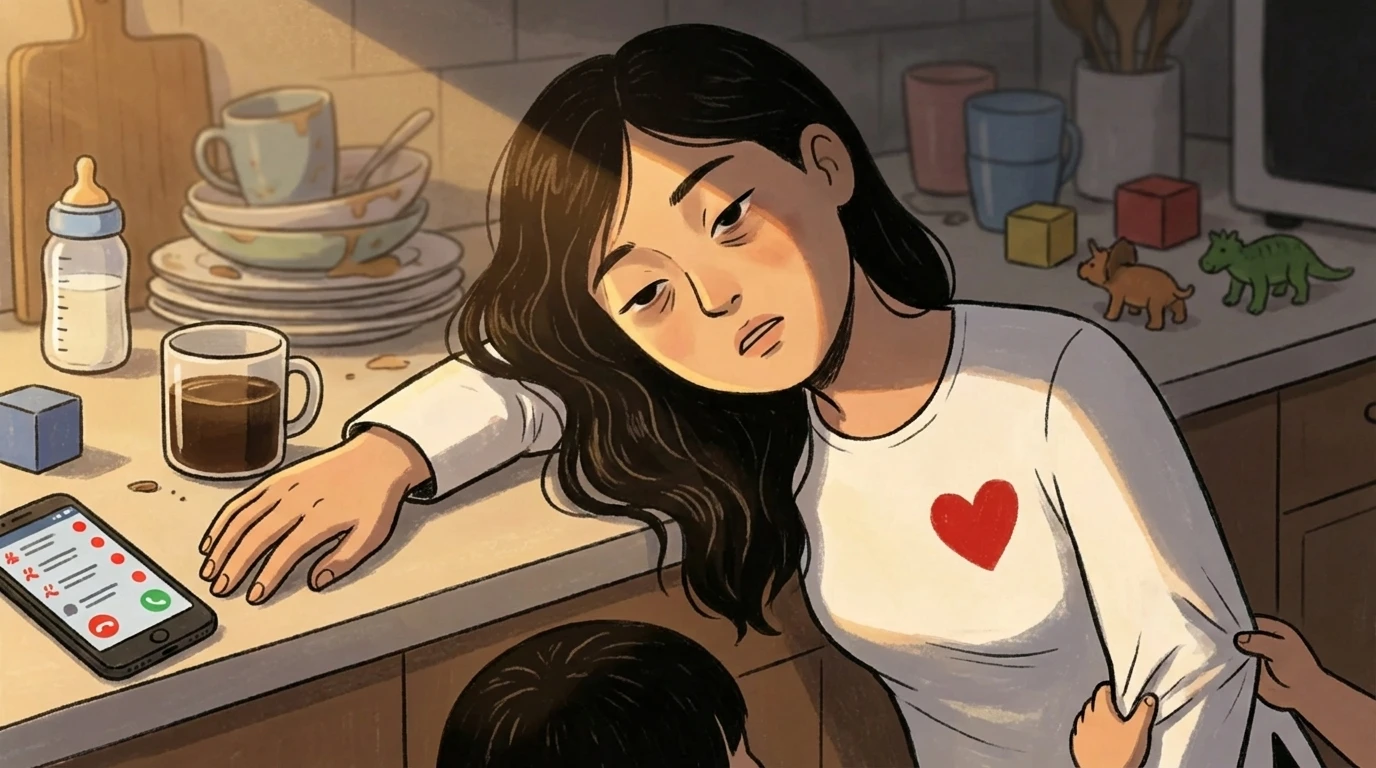
This is sitting in the car after daycare drop-off and not having the energy to turn the key. This is your partner asking what's for dinner and feeling your whole body flood with rage because you don't know, you never know, why is everything your job.
Burnout is being tired of being tired, with no end date on the calendar. And the path out is shorter than you think, once you stop trying to fix it with the same strategies that got you here.
Empty tank, hollow feeling
The Calm Parent course will help you recover capacity before it's gone completely
You'll start feeling something again when your kid asks you to play, instead of performing presence on autopilot.
Why the usual advice makes it worse
You've heard the list. Exercise. Drink more water. Meal prep on Sundays. Get up before the kids for "me time." Take vitamins. Hire a cleaner.
Every item on that list is a thing to do, added to the schedule of someone who already can't get through their existing list.
The criticism trap
When you're running on empty, your inner critic gets loud. Other parents seem to manage. What's wrong with you? Each suggestion ("Have you tried yoga?") lands as evidence of personal failure. You're not hearing helpful advice. You're hearing here's another thing you should be doing and aren't.
Dr. Kristin Neff's research on self-compassion maps this loop precisely: exhaustion fuels self-criticism, self-criticism amplifies the exhaustion, and the whole thing feeds on isolation. The fix is at the self-criticism link, not at the to-do list.
What burnout costs your parenting
Stress floods your body with cortisol, which eats through patience like acid. You snap at minor provocations. You sigh at your kids without meaning to. Your four-year-old asks you to watch something and you physically cannot make yourself care.
A child with an emotionally unavailable parent acts out more, not less. They push harder because they're trying to get a response from the person they need most. Which makes you more depleted. Which makes them push harder.

The self-compassion reframe
Self-compassion sounds like giving up. Letting yourself off the hook. It is none of those things.
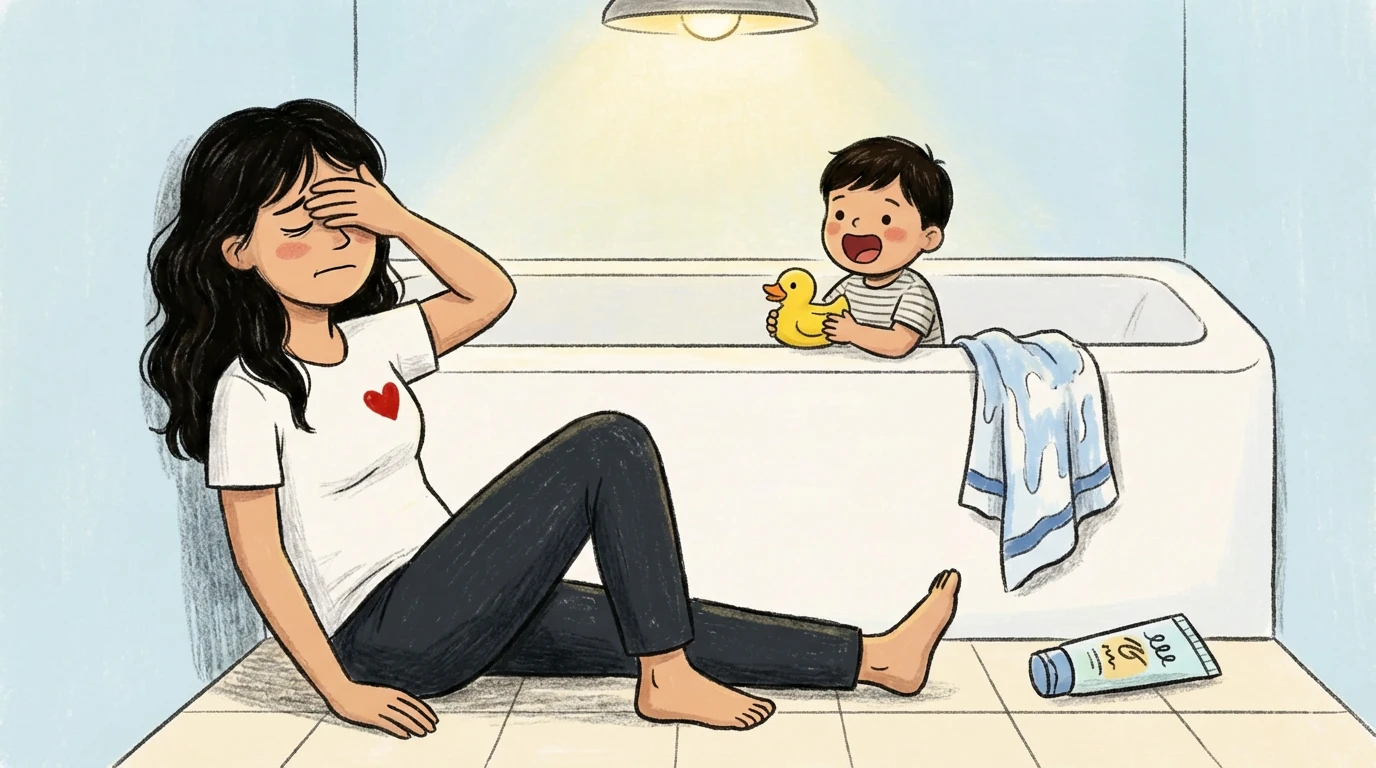
If your friend said "I'm so exhausted I cried in the shower this morning," you would not tell them to try meal prepping. You'd say "Of course you're exhausted. This is genuinely hard. What do you need right now?" That's the voice you need aimed at yourself.
Three parts that make it work
Neff's framework breaks self-compassion into three pieces, and each one targets a burnout driver.
Self-kindness instead of self-judgment. "I'm having a hard day" is observation. "I'm having a hard day because I can't handle basic parenting" is prosecution. Notice the difference.
Common humanity instead of isolation. At 3 a.m. with a screaming baby, you are one of millions of parents worldwide doing the exact same thing. You're not uniquely failing.
Mindful observation instead of getting swallowed by feelings. The thought "I can't do this anymore" passes through. You can notice it or believe it's the final truth about your life. Noticing gives it less power.
If the exhaustion comes wrapped in persistent sadness, numbness, or inability to enjoy anything, that's a signal to get professional support alongside self-compassion. The two work together.
Recovering when you have nothing left
Recovery starts with one question: What would feel like relief right now?
The answer might be embarrassingly small. A shower alone. Ten minutes on the porch without a screen. Eating a meal sitting down.
How to start recovering from burnout
- Ask what would feel like reliefSit for sixty seconds and ask yourself what you need right now. Not what you should need. Not what a good parent would need. What your body is asking for. Write it down.
- Scale it down until it fits todayIf the answer is 'a week alone in a cabin,' find the essence of it. Silence? Solitude? Being in nature? Now find five minutes of that essence in your actual day.
- Attach it to something you already doHabit stacking works because willpower is already gone. Listen to music while making lunches. Journal for three minutes while coffee brews. Don't add a new slot; hijack an existing one.
- Drop one thing from your listPick the task that drains you most and stop doing it this week. Not forever. Just this week. Laundry can pile. Dishes can sit. The permission to let something go is part of the medicine.
- Ask for one specific thing from one personNot 'I need help' (too vague). Try: 'Can you handle bedtime Tuesday and Thursday so I can be alone for an hour?' Specific requests get met. General pleas get sympathetic nods.
The trap is waiting until you have time for real self-care. There's no such time. There's only today and the five minutes you can carve from it. Repeated daily, those minutes compound.
When burnout goes deeper
Sometimes the answer to "what do I need?" is bigger than five minutes on the porch. If you've been depleted for months, if your anger is constant, if you've lost interest in things you used to love, burnout may have crossed into something that needs professional support. Finding a therapist who gets parental mental health is the same logic as seeing a doctor for a broken bone.
The anger underneath the anger
Anger is a bodyguard for more vulnerable feelings. Under the snapping, there's usually fear (I can't keep doing this), grief (I've lost myself), or powerlessness (nothing I do changes anything).
You can't make these feelings disappear by ignoring them. That means letting yourself feel the fear or grief for a few minutes instead of immediately reaching for your phone, the fridge, or a fight with your partner. Each time you sit with a difficult feeling instead of running, it loses a little of its charge.
Refilling the tank with what you have
You don't need to find your passion. You don't need a hobby. You need to stop the bleeding.
If you're managing multiple kids and the load feels impossible, brief one-on-one time with each child paradoxically reduces total stress.
Redefine what counts as productive
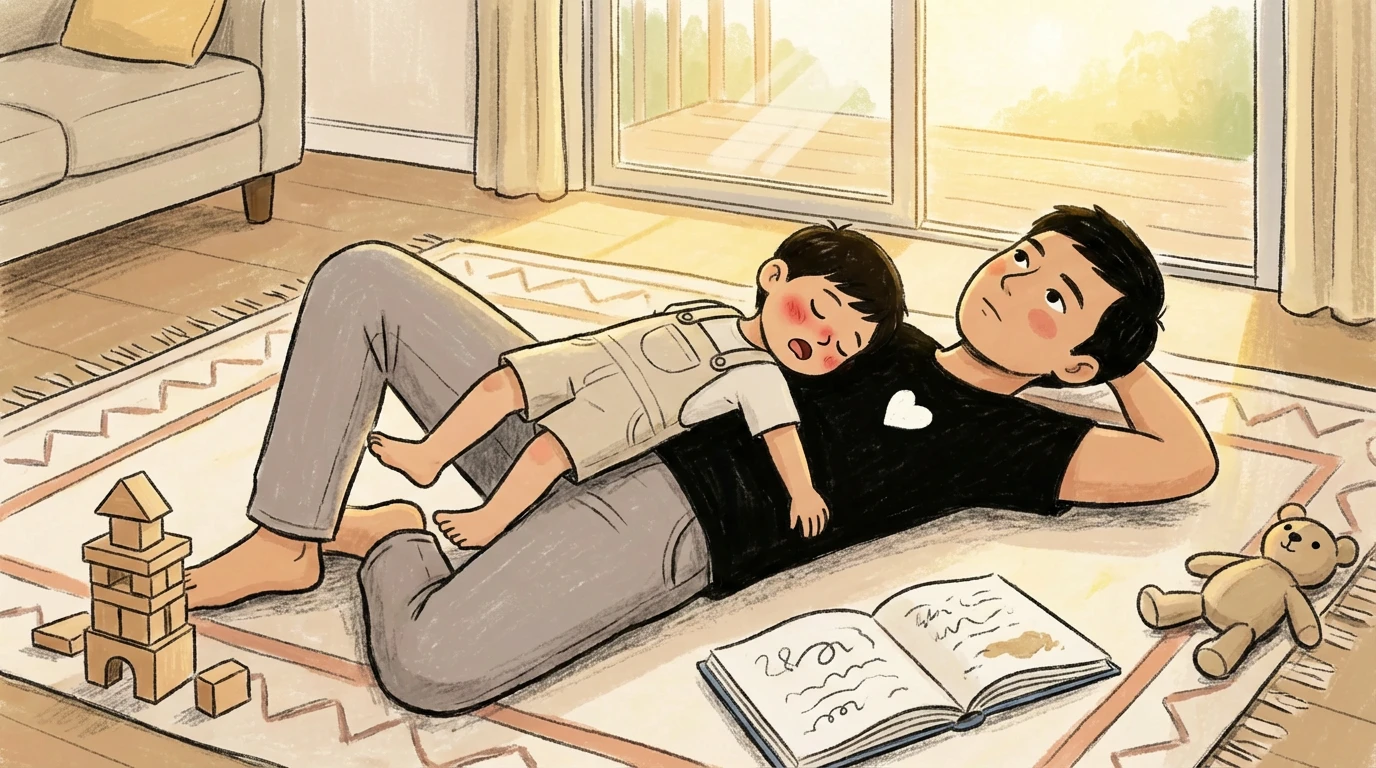
Will this task matter next month? Most of what's on your to-do list won't. But five minutes on the floor with your kid, fully present, changes the trajectory of their day and yours.
Move the moments that fill your tank to the top of the list. Your kid would rather eat cereal for dinner and have a parent who makes eye contact than eat a home-cooked meal served by someone who resents making it.
The part nobody says out loud
Burnout makes you wonder if you were cut out for this. If your kids would be better off with someone who had more to give.
Those thoughts show up when your reserves are empty and recede when they refill. They are weather, not geography.
You can check where your battery stands right now if you want a concrete read on what's depleted. Sometimes seeing it laid out helps. It turns the fog into a list, and lists have solutions.
The parents who recover from burnout don't do it by becoming better at suffering. They do it by getting ruthless about what they need and unapologetic about getting it. One small thing at a time. Starting today.
FAQ
Yes. Regular exhaustion resolves with rest. Burnout includes emotional depletion, detachment from your kids, and a persistent sense that nothing you do matters. If sleep and a day off don't touch it, you're dealing with burnout, not tiredness.
Many parents can, if the burnout hasn't crossed into depression or anxiety. Self-compassion, reducing your load, and small daily recovery habits work for moderate burnout. If you've been depleted for months or losing interest in things you used to enjoy, a therapist accelerates recovery.
Be specific about what you're experiencing, not the label. Instead of 'I'm burned out,' try 'I haven't had energy to enjoy anything in weeks and I need you to take bedtime three nights so I can rest.' Concrete descriptions land better than diagnostic terms.
Temporary burnout with repair does not cause lasting damage. What matters is the pattern over time. A parent who goes through a hard stretch, gets support, and recovers is modeling resilience. A parent who stays depleted for years without addressing it creates a different outcome.
The guilt is part of the burnout cycle. Self-criticism tells you rest is selfish, which keeps you depleted, which makes the guilt worse. Start by noticing the guilt without obeying it. Take the five minutes anyway. The guilt fades as your energy returns.