
TLDR
- Self-care fails when it doesn't match what you're really missing. A pedicure won't fix loneliness. A bath won't fix sleep deprivation. Figure out what's empty first, then pick the strategy that fills that specific tank.
- You don't need child-free time to take care of yourself. Deep breaths while sitting with a screaming toddler count. Tea while reading a picture book counts. Dancing in the kitchen with your kids counts.
- Small denials compound into resentment. Skipping water, holding your bladder, dismissing the urge to sit down for two minutes. Each one is tiny. Together, they drain you by 3 p.m.
- Your mood sets the weather for the whole house. When you're depleted, kids get stressed, act out more, and drain you further. When you're even slightly recharged, cooperation goes up and everyone breathes easier.
- Self-compassion is the highest-impact self-care habit. Talking to yourself like someone you love does more for your patience reserves than any spa day. The guilt-shame-yelling cycle breaks when you stop beating yourself up.
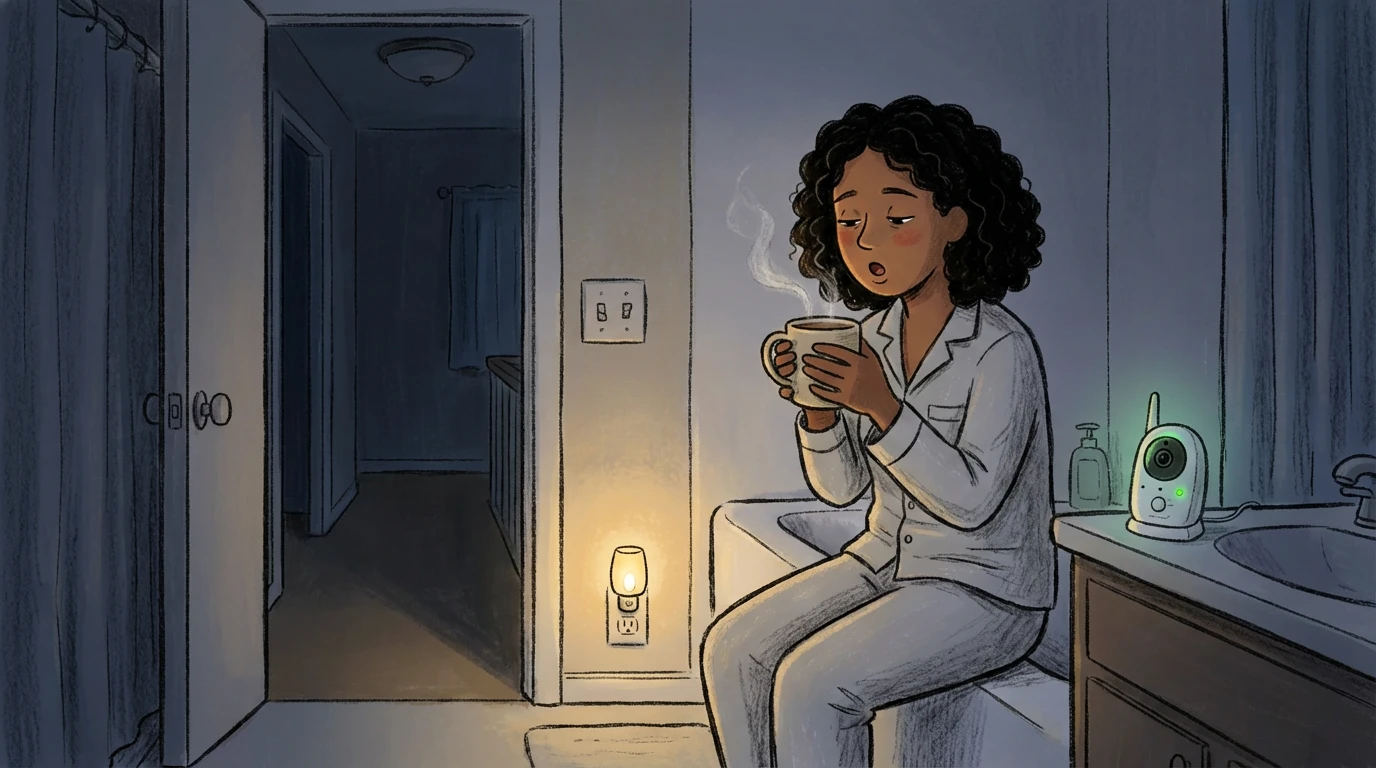
The lie you keep telling yourself
You know the one. I'll take care of myself when things calm down. When the baby sleeps through the night. When the toddler phase ends. When school starts. When school lets out.
Things do not calm down. You've been waiting for the calm patch since the first trimester, and the closest you've come is that one Thursday when both kids napped at the same time and you stood in the kitchen eating cold pizza over the sink like a raccoon.
That pizza moment was closer to real self-care than most of the advice you've been given. You identified a need (food, silence, standing up without someone touching you), and you met it immediately.
The problem with most self-care advice is that it describes a life you don't have. Yoga retreats. Morning routines that start at 5 a.m. "with intention." Meanwhile, you're brushing your teeth while a toddler tries to flush a sock.
Self-care that works for exhausted parents starts with one question you're probably not asking.
What are you really starving for?
A bubble bath is a fine idea, but only if the thing you're missing is the experience of being taken care of. If what you're really missing is sleep, conversation, or a sense that your brain still works, the bath will feel hollow. You'll sit in the warm water scrolling your phone and wondering why you don't feel better.
Before you pick a self-care strategy, diagnose the deficit. There are a few common ones:
The sleep tank
Sleep deprivation raises cortisol, tanks your patience, and makes every minor kid behavior feel like a personal attack. If you're running on five hours, go to bed when your kids do tonight. The dishes will survive.
The adult connection tank
You can spend twelve hours talking and not have a single adult conversation. If you notice resentment creeping in, or you're emotionally needy toward your partner the second they walk through the door, your connection tank is dry.
The fix is people, not pampering. A ten-minute phone call with a friend who won't judge you. A parenting community where other people get it. Walking with another parent while kids kick a ball ahead of you.
The autonomy tank
You haven't done a single thing today that was your choice. Every action was dictated by someone else's needs, schedule, or meltdown. When autonomy runs dry, even small impositions (your partner asking what's for dinner) feel rage-inducing.
The fix: one choice that's yours. Cook something you want to eat. Read four pages of a book. Lock the bathroom door for three minutes.
Running on fumes, not baths
The Calm Parent course will show you regulation that fits a real parent's day
You'll build recovery into the margins you already have instead of waiting for time that never comes.
Stop denying the small stuff
Most parents practice self-denial automatically. You want a cup of tea but dismiss it as too much trouble. You need to use the bathroom but hold it because the toddler will follow you. You want to sit on the floor and color alongside your kid but feel silly about it.
Each denial is microscopic. Together, they hollow you out by mid-afternoon.
Notice when you're denying yourself something small, and stop. Make the tea. Use the bathroom. Sit down for ninety seconds.
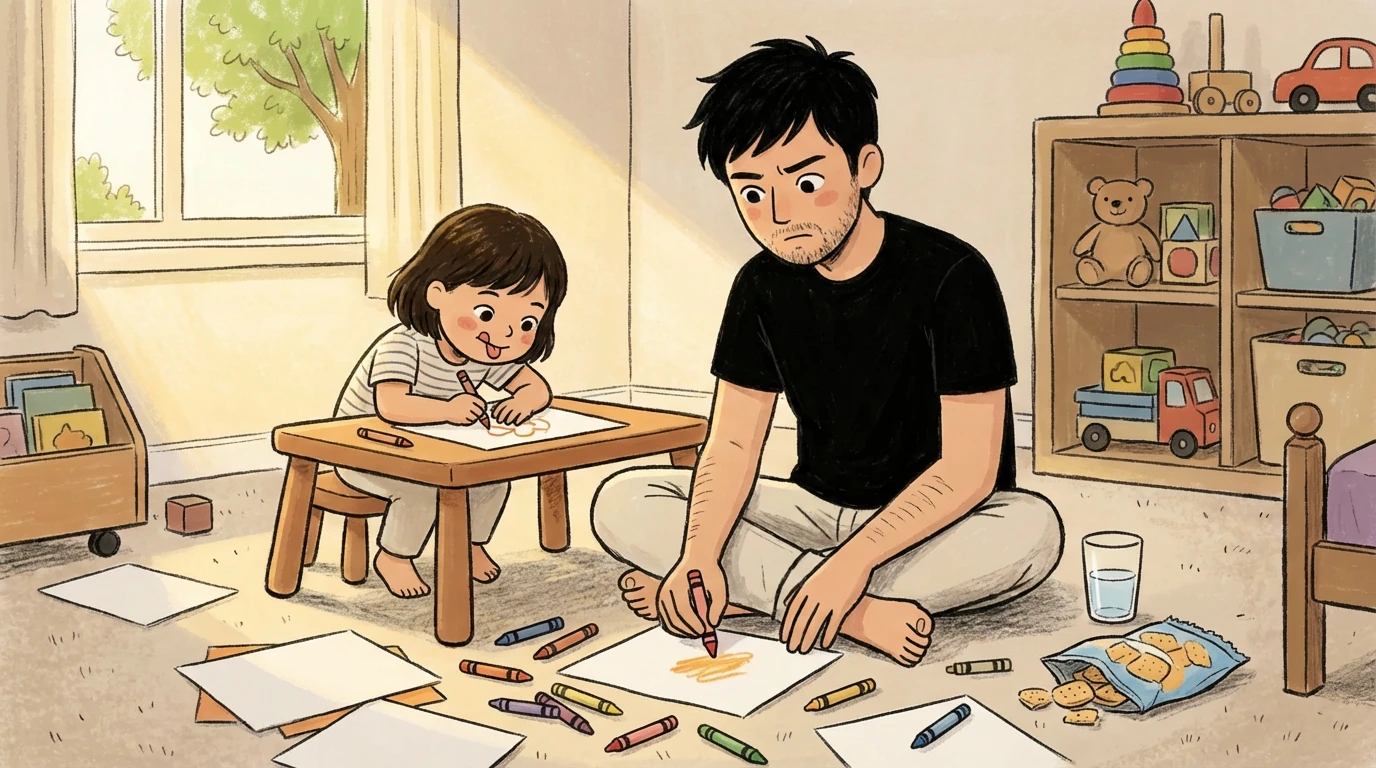
The hourly check-in that changes everything
This tool sounds too basic to work, which is how you know it probably does. Once an hour, ask yourself: What do I need right now?
Not "what does the house need" or "what does the toddler need." What do YOU need, right now, in this body?
Sometimes the answer is water. Sometimes it's to stand outside for sixty seconds. Sometimes it's to acknowledge that this is really hard and you're doing it anyway.
How to build a self-care check-in habit
- Set a quiet hourly alarmUse your phone or watch. When it goes off, pause for ten seconds and scan your body. Notice tension, thirst, hunger, fatigue, or the urge to scream into a pillow.
- Ask one questionWhat do I need right now? Let the first answer that comes up be the answer. Don't filter it through whether it's practical or reasonable.
- Give it to yourself if possibleDrink the water. Sit down. Step outside. Many needs can be met in under two minutes, even with kids present.
- Make a promise if notIf you genuinely cannot meet the need right now (you need sleep and it's 2 p.m.), make a specific deal with yourself. 'I'm going to bed at 8:30 tonight.' Then keep that deal.
- Watch for repeating patternsIf the same answer shows up every day (always exhausted, always lonely, always touched-out), that's a signal you need a structural change, not just a better afternoon.
The keeping-the-promise part matters more than you think. Every broken self-promise erodes the trust between you and yourself. Every kept one rebuilds it. Treat promises to yourself like you'd treat promises to your kid.
Self-care you can do with kids attached to you
The biggest barrier to self-care is the belief that it requires being alone. Mindfulness practices work while you're pushing a swing. Deep breathing works while a toddler sobs in your lap. Put your hand on your chest and breathe into your heart. Research shows this calms your entire nervous system.
More options while parenting:
- Crank music and dance. Your kids will join in. You get movement, dopamine, and connection simultaneously.
- Eat a snack you like, not just whatever the toddler rejected.
- Step onto the back porch for two minutes and listen to whatever's out there.
- Stretch while your kid watches a show. Five minutes of stretching counts.
You set the emotional weather in your house. When you're slightly more regulated, kids cooperate more. They sleep better. Which gives you more capacity, which makes them calmer. The cycle runs in both directions.
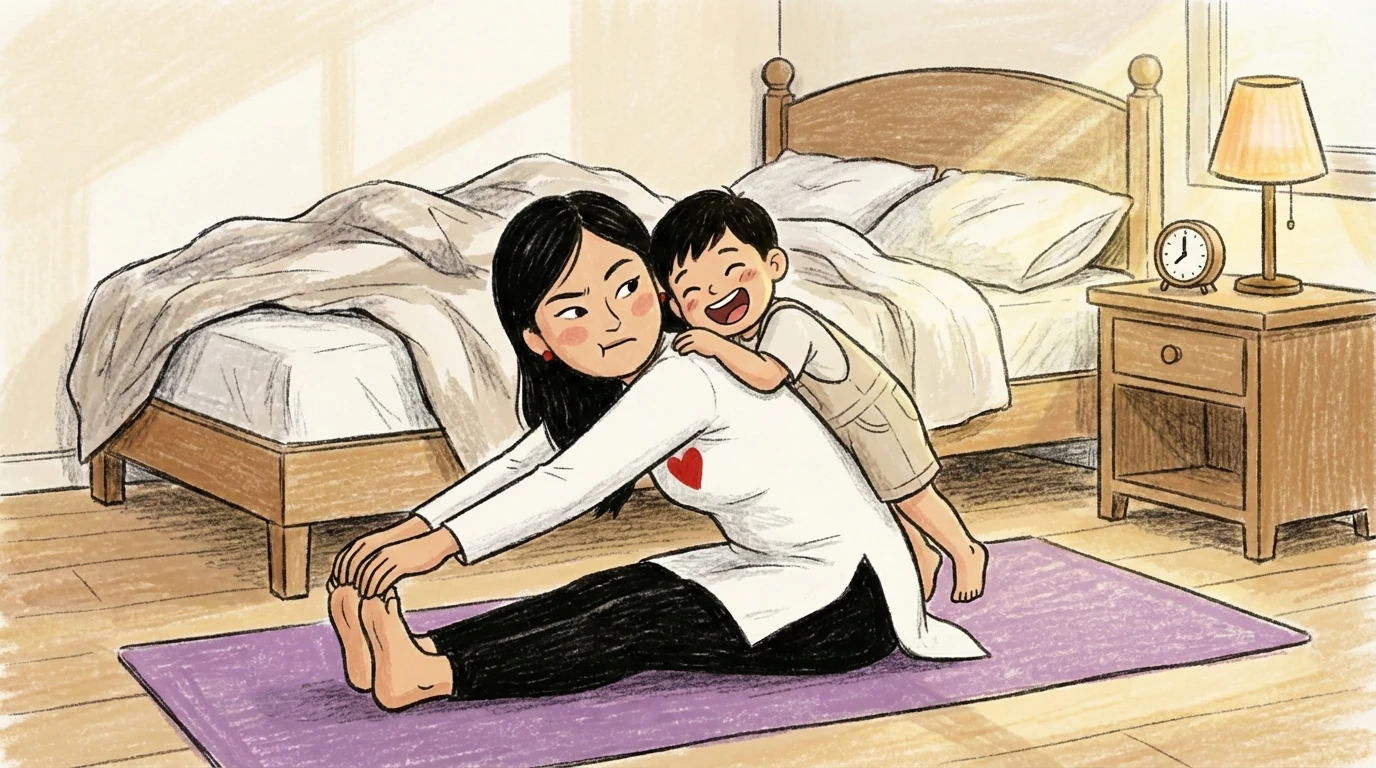
The guilt trap (and the way out)
You finally carve out thirty minutes for yourself, and instead of enjoying it, you spend twenty-eight of those minutes feeling guilty. Guilt eats the self-care from the inside.
What most parents call "guilt" about self-care is really discomfort with doing something unfamiliar. Guilt is what you feel when you act against your values. Taking care of yourself so you can take care of your family lines up with your values perfectly.
The mantra that helps: Two things are true. I'm a good parent AND I need things for myself.
If you weren't nurtured much as a child, self-care might feel foreign in your bones. Like you're getting away with something. That's old wiring, not truth. Start by talking to yourself like someone you love. Tell yourself what you'd tell a new parent who was running on fumes: you're doing enough. You are enough.
Self-compassion might be the single highest-impact self-care habit you can build. When you stop beating yourself up after a rough parenting moment, you break the guilt-shame-depletion cycle that was draining you faster than any toddler could.
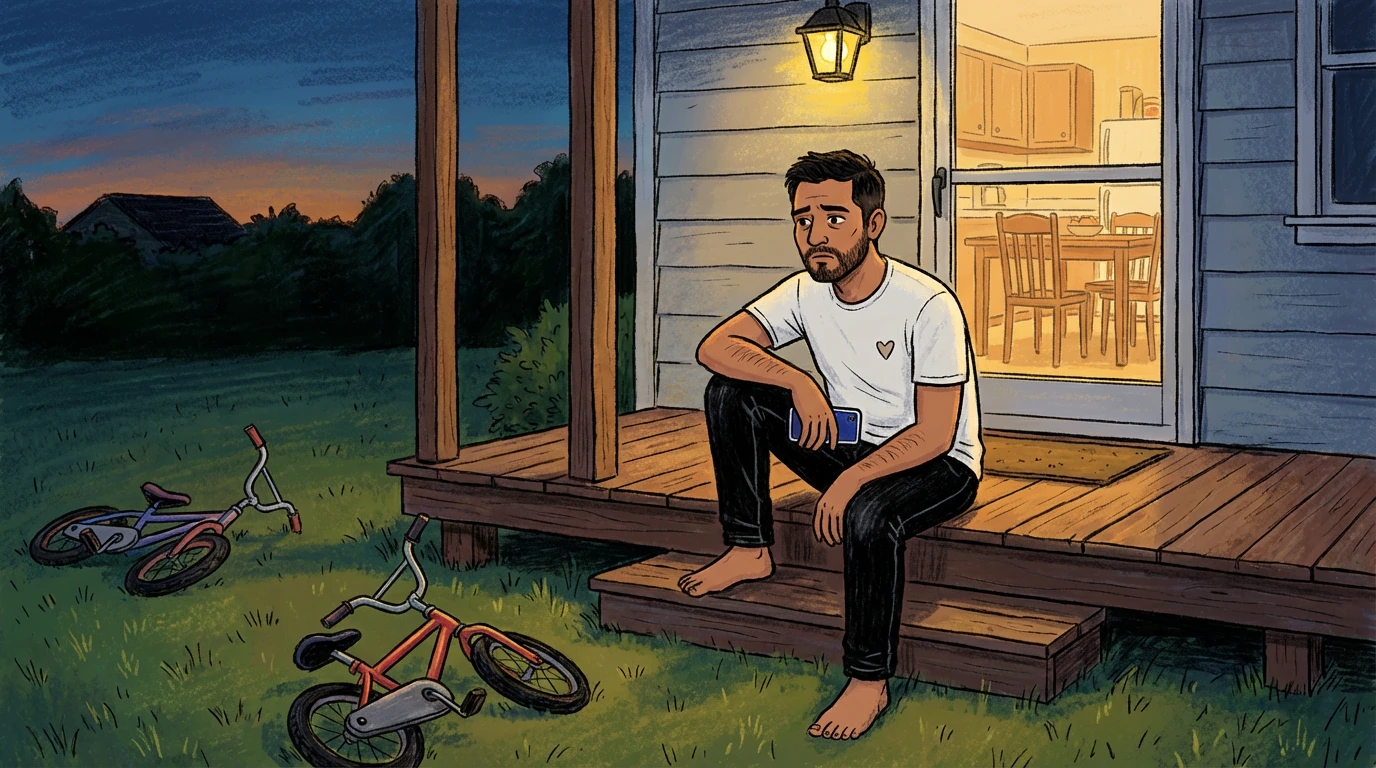
You are not the leftover time
Every parent falls into the pattern of scheduling everything for the kids first and hoping there will be "time leftovers" at the end of the week. There are never leftovers. The week eats itself.
Put yourself on the calendar like any other appointment. Ten minutes that says "walk." Fifteen minutes that says "drink coffee sitting down." If scheduling permission to be a person feels strange, that tells you how far down the list you've fallen.
Your kid needs you functional more than they need you available every single second. A parent who takes ten minutes and comes back present is doing more than one who white-knuckles through sixteen hours and snaps at bedtime.
Taking care of yourself while taking care of small humans is parenting. Full stop.
FAQ
Self-care doesn't require being alone. Deep breathing while holding a crying baby counts. Drinking water counts. Two minutes of stretching while your kid watches a show shifts your nervous system more than you'd expect.
Your kids need a parent who can regulate their own emotions. When you're depleted, you can't co-regulate with them, and their meltdowns get worse. Self-care directly improves your ability to be the parent they need.
Probably a mismatch between the strategy and the deficit. If you're lonely, solo activities won't help. If you're sleep-deprived, meditation won't fix it. Diagnose what's empty first, then pick the strategy that fills that specific tank.
Name the feeling accurately. What most parents call guilt is really discomfort with doing something unfamiliar. Keeping yourself functional so you can parent well is not against your values. Repeat: I'm a good parent AND I need things for myself.