
TLDR
- Being hard on yourself does not improve your parenting. Research shows self-criticism depletes the exact emotional resources you need to stay calm with your kids. It makes you worse, not better.
- Self-compassion means acknowledging difficulty, not letting yourself off the hook. It means recognizing that parenting is difficult and you are doing it while tired, overstimulated, and under-resourced. That context matters.
- Your inner critic runs on outdated survival software. The voice telling you that you are failing evolved to scan for threats. It treats a bedtime meltdown like a predator. It is not giving you useful information.
- Perfectionism is a lower standard than unconditional love. Perfection has clear metrics you will never meet. Love requires you to keep showing up imperfectly, which is harder and more valuable.
- Your child needs to see you fail and recover. A parent who models self-forgiveness teaches more about resilience than a parent who never admits to struggling.
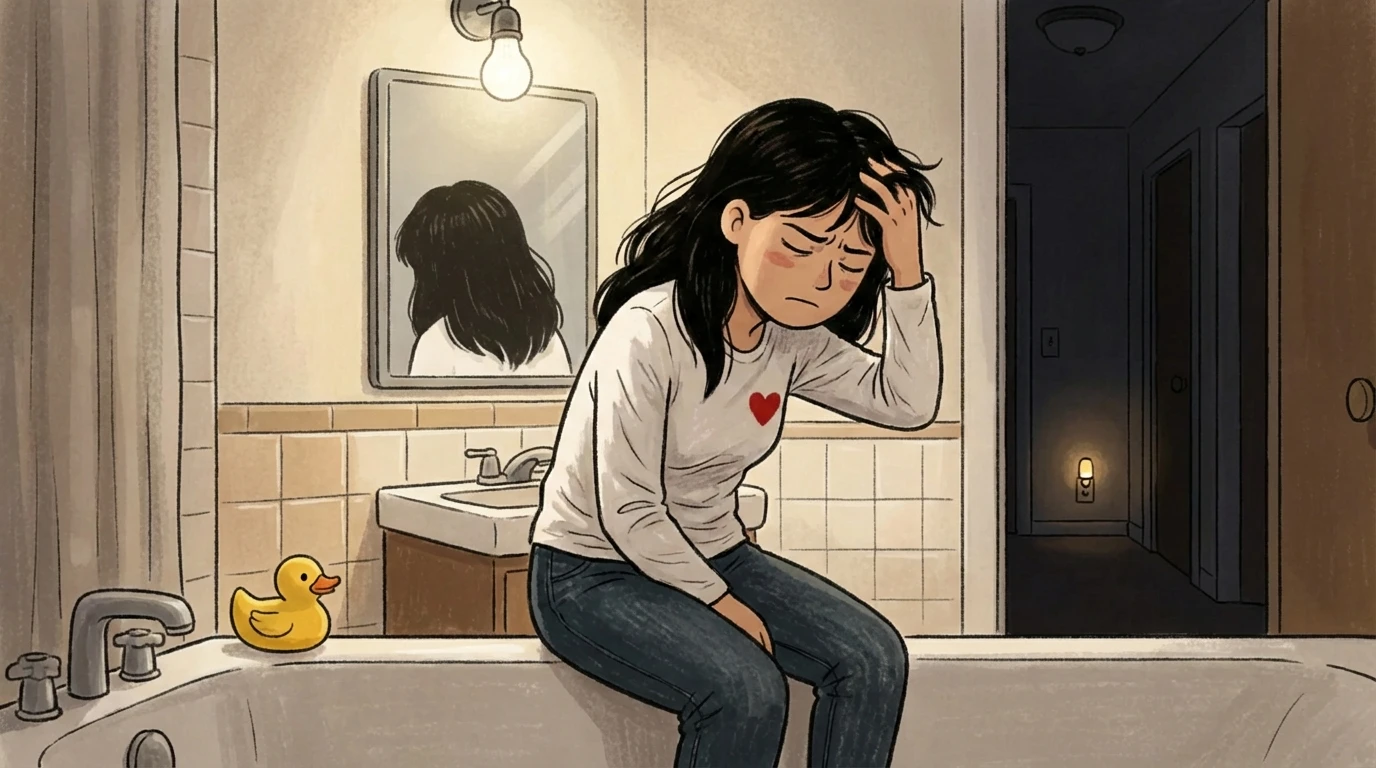
The voice that shows up after bedtime
You know the one. The kids are finally asleep, the house is quiet, and instead of relief you get a highlight reel of everything you did wrong today. You snapped during homework. You handed them a screen because you could not take one more minute of the whining.
The voice says you should be better at this by now. It says other parents handle this without losing their composure.
Here is what the voice never mentions: you were running on five hours of sleep. You mediated a fight over a pencil, held it together through a grocery store tantrum, and the day was not even half over. The voice does not factor in context. It just judges.
Why self-criticism makes everything worse
Most parents assume that being hard on themselves is what keeps them trying. That if they let up on the internal pressure, they will slide into laziness.
The opposite is true. Self-criticism depletes the emotional resources you need to stay patient. Think about it like a phone battery. Every round of I should have handled that differently drains a few more percent. By dinnertime, you are operating at 8%, and your four-year-old just threw spaghetti at the wall. You spent your reserves on guilt instead of patience.
The ricochet pattern
When guilt gets bad enough, parents tend to swing between two extremes. They lose their temper, then overcorrect by becoming permissive. Neither version feels right, and the swinging itself becomes another thing to feel bad about.
Resolving to "be more patient" does not work because patience is the output of a system, not a character trait you can will into existence. When the system is drained by self-criticism, there is nothing left to output.
If your inner critic sounds like a voice you grew up with, that is not a coincidence. Most of us internalized the way we were spoken to as children, and now that voice runs on autopilot.
Replaying every mistake tonight
The Calm Parent course will quiet the inner critic that keeps you spiraling
You'll stop the midnight replay loop and wake up ready to parent again instead of pre-defeated.
What self-compassion is (and what it is not)
Self-compassion means treating yourself with the same fairness you would offer a friend who came to you exhausted and ashamed. If your best friend said "I screamed at my kid tonight and I feel horrible," you would not respond with "Yeah, you should feel horrible." You would say "You were exhausted. Tomorrow is a new day."
That is all self-compassion is. Giving yourself the response you would give anyone else.
The three pieces
Dr. Kristin Neff's research breaks self-compassion into three components:
- Self-kindness instead of self-judgment. Acknowledge that you are struggling without adding a verdict on top of it.
- Common humanity instead of isolation. Right now, at this exact moment, thousands of parents are lying awake feeling the same shame you feel. You are not uniquely bad at this.
- Mindfulness instead of fusing with your thoughts. Notice I am having the thought that I am a terrible parent rather than believing it as fact. The thought exists. It is not necessarily true.
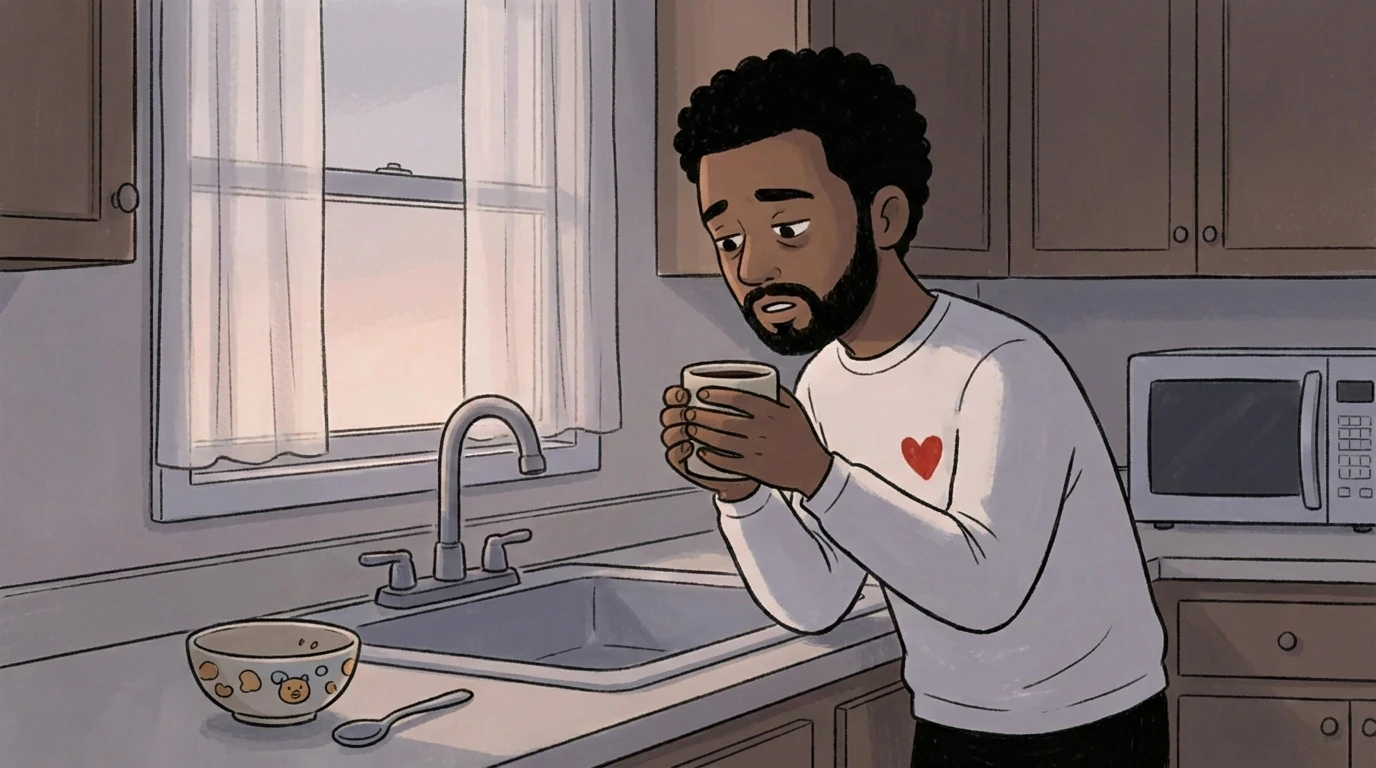
The perfectionism trap
Here is where most parenting advice goes sideways. It tells you what the ideal response looks like and then leaves you alone with the gap between that ideal and your reality.
Perfectionism blocks the thing your kid needs most, which is unconditional love. Perfection has a checklist you can fail against. Love requires you to keep showing up without a checklist, including on the days you got it wrong.
When you judge yourself against an impossible standard, the judgment leaks. You start scanning your kid for problems too. Is there something wrong with him? Have I damaged them? Fear turns into criticism so fast you do not notice the transition.
What your kid needs to see
Your child will never be perfect. They are human. So a perfect parent would be a terrible role model, because the child would have no example of how to handle falling short.
What your kid needs is a parent who messes up, acknowledges it, apologizes without making excuses, and tries again. That sequence teaches more about resilience than a thousand perfect days ever could.
How to practice self-compassion after a hard parenting moment
- Notice the self-critical thoughtCatch the voice mid-sentence. You do not need to stop it. Just notice it. Say to yourself: I am having a harsh thought about my parenting right now.
- Put your hand on your chestThis is not woo. Physical touch releases oxytocin, which calms your nervous system. It works even when you do it to yourself.
- Say what you would say to a friendOut loud if possible. Something like: That was a hard moment. You were exhausted. You are not a bad parent because of one rough evening.
- Name the common humanityRemind yourself that every parent alive has had this exact moment. You are not uniquely failing. You are having the universal parenting experience.
- Ask one support questionInstead of What is wrong with me, ask What do I need right now to show up better tomorrow. Maybe it is sleep. Maybe it is ten minutes alone. Maybe it is less on your plate.
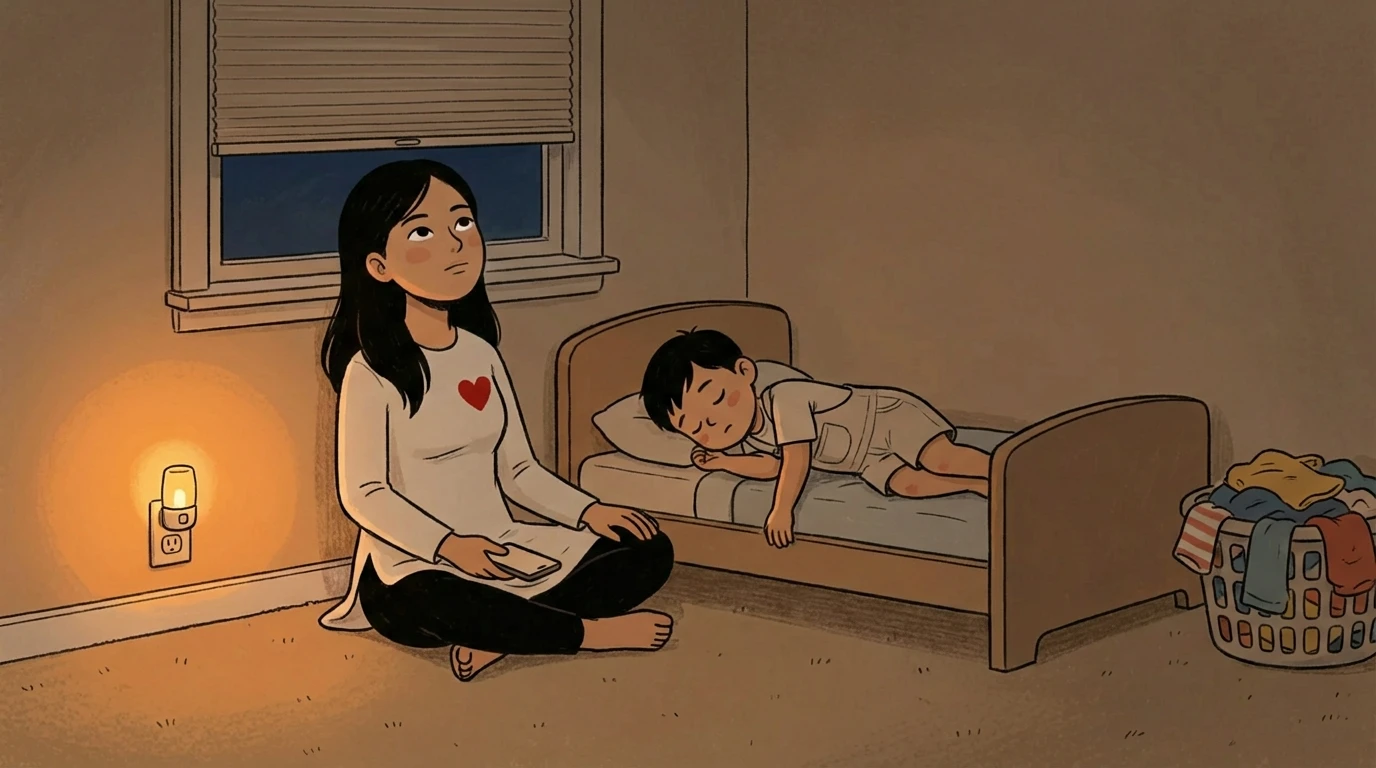
What happens when you stop beating yourself up
Something counterintuitive happens when you stop running the self-criticism loop. You get better.
When you drop the guilt, you free up bandwidth to change your behavior. You can look at what happened clearly instead of through a fog of shame. You can identify what you needed and build that into tomorrow.
Kids pick up on the internal weather too. When you are consumed with self-hatred, your repair attempt comes out stiff and forced. When you have forgiven yourself, the repair comes from a genuine place and your kid feels the difference.
The ratio that matters
What you can do is commit to improving your ratio. More good moments than bad ones. When you mess up, pick yourself up and try again without spending an hour punishing yourself first. Small improvements compound. They matter more than dramatic overhauls that do not stick.
If outside criticism from family or friends is amplifying your internal critic, know that their judgment says more about their anxiety than your parenting.
Teaching it by living it
Here is the part nobody talks about. Your child has an inner critic too. It might already be loud. They might already say things like I am stupid or I can not do anything right.
If you want your child to be kind to themselves, they need to watch you practice it for real. When you say out loud "I burned dinner and I feel frustrated, but it is not a big deal and we can figure something else out," your kid absorbs a template for handling their own mistakes.
If your child struggles with harsh self-talk and negative beliefs about themselves, they are watching how you handle yours. You cannot teach what you refuse to practice.
Curious whether your child experiences you as the parent you are trying to be? The quiz about how your kid would describe you might surprise you.
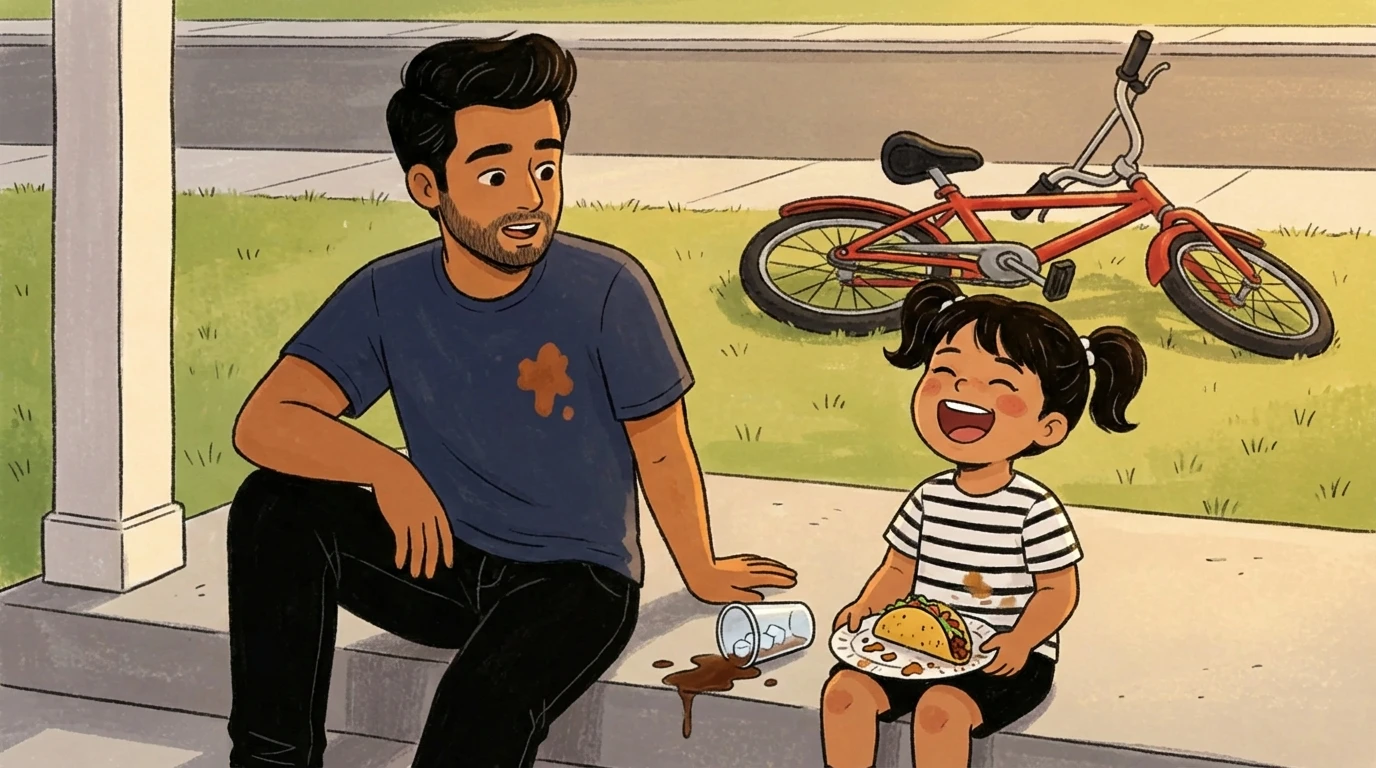
The only permission you need
You are allowed to be a work in progress. You are allowed to have days where you are not the parent you want to be. You are allowed to sit on the bathroom floor after bedtime and feel like you failed, as long as you also tell yourself: Tomorrow I will try again, and that is enough.
Two steps forward, one step back still gets you where you want to go. The kids do not need you to be perfect. They need you to keep going.
FAQ
No. Self-compassion means acknowledging what happened without drowning in shame about it. You still take responsibility. You still apologize and change your behavior. The difference is that you do those things from a place of clarity instead of self-hatred, which makes the change more likely to stick.
Repeating a pattern means something in your system is not getting addressed. Ask what you need, not what is wrong with you. Maybe you need more sleep, fewer obligations, or support you have not asked for. Self-compassion includes being honest about what is missing.
Children learn boundaries from your actions, not from your guilt. You can hold firm limits and still forgive yourself when you lose your temper. Those are separate processes. Kids who see self-compassion modeled tend to be better at taking responsibility for their own mistakes.
Self-compassion produces measurably better outcomes than self-criticism. Parents who practice it yell less, repair faster, and stay more consistent with boundaries. Share the research if your partner is skeptical, but also model it. Results tend to be persuasive.
If the self-critical voice is constant, if you feel numb or empty beyond normal tiredness, or if you have lost interest in things you used to enjoy, talk to a therapist. These can be signs of depression, which requires more than self-compassion techniques alone.