TLDR
- The urgent need to act IS the problem. When your temper rises, your brain screams that you must intervene right now. That sense of emergency is a stress hormone illusion, not reality. The urgency is the signal to wait, not to act.
- Your body flips before your brain catches up. Jaw clenching, voice rising, mind churning with irritated thoughts. These physical signals are your early warning system. Catch them at a simmer and you never reach a boil.
- Doing nothing is the hardest and best first move. Breathe through the wave. You'll want to lash out, run away, or numb yourself with a screen. All three make it worse. The feelings pass if you let them.
- What's underneath your anger matters more than the anger. Anger is almost always a shield over something more vulnerable: fear, exhaustion, hurt, powerlessness. Once you feel the thing underneath, the anger starts to dissolve on its own.
- Every time you pause instead of react, you're rewiring your brain. Each successful override builds neural pathways that make the next one easier. This is a practice that gets measurably better with repetition.
Your body already knows what's coming
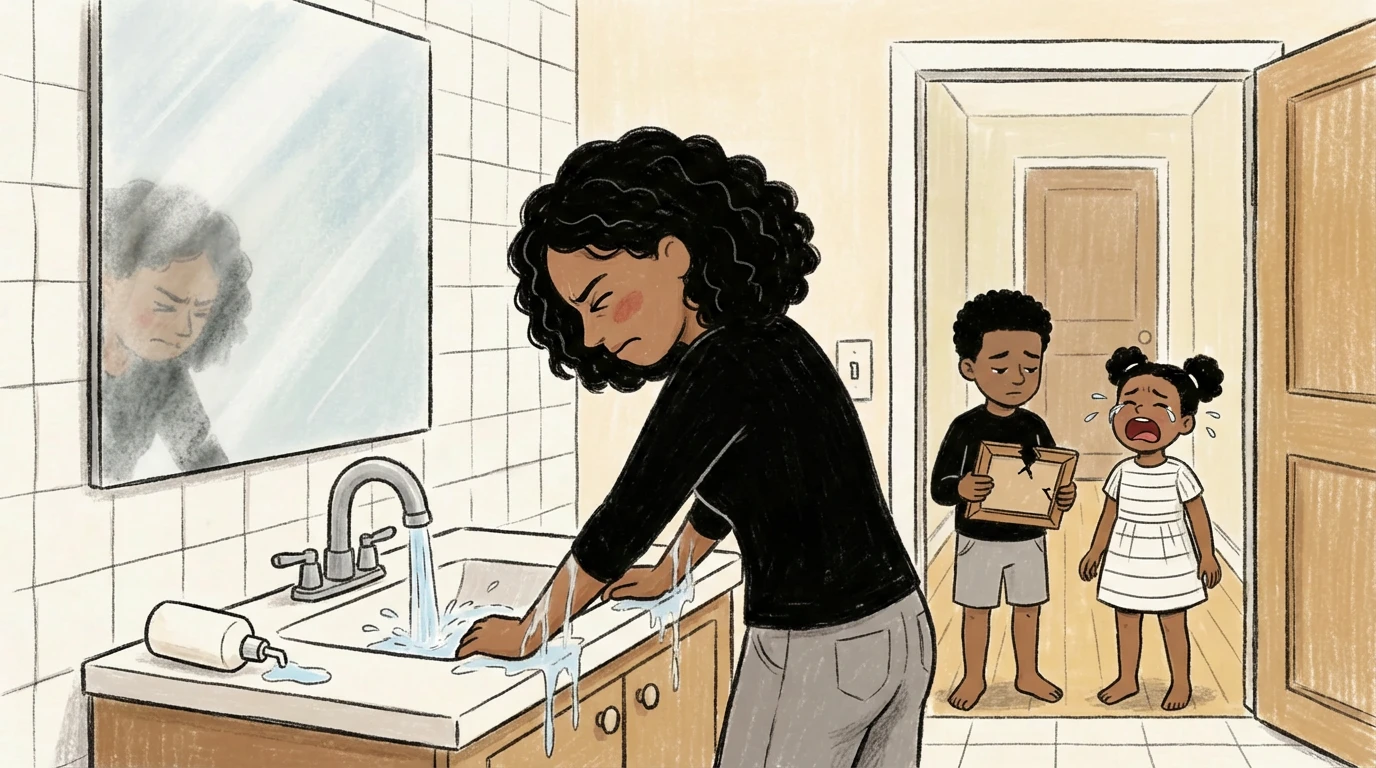
You know the feeling before it has a name. Your jaw tightens. Your voice goes up half an octave. Your mind starts drafting a closing argument for why your child is being unreasonable.
That physical shift is your early warning system. An exasperated sigh. A clenching fist. A sudden certainty about exactly how wrong your kid is. Once you notice these signals, you've done the hardest part. Noticing turns an automatic reaction into a choice.
The science behind what's happening in your nervous system is straightforward: stress hormones flood your body, your muscles tense, and your rational brain goes temporarily offline. The two-second cascade from He hit the baby again to He's going to be a terrible person to I've failed to full-blown rage is a physiological hijack. You are physically incapable of making good parenting decisions in this state. Your prefrontal cortex, the part responsible for empathy, perspective-taking, and measured responses, needs about ninety seconds to come back online once the stress hormones start clearing.
Chest tight, jaw clenched
The Calm Parent course will teach you what to do in that five-second window
You'll use the physical warning signs as a cue instead of a countdown to explosion.
Do nothing (yes, seriously)
When your temper is rising, the most effective response is to do nothing. Notice what you're feeling, breathe through it, and refuse to act.
This feels wrong. Every fiber of your being is insisting you must intervene right now, that if you don't set your child straight this instant, they'll "get away with it." But that voice is your emergency response system talking, and parenting is almost never an emergency.
Why inaction beats reaction
Your rational brain stops working when you're angry. You cannot teach while triggered, because your child's learning brain shuts down right alongside yours. Any lesson you need to teach will land better in twenty minutes. Your child isn't going anywhere. You know where they live.
The safety exception
If someone is about to get hurt, physically intervene. Move the child, separate the combatants. But keep your mouth shut. Whatever comes out in the first five seconds of rage is something you'll regret by second six.

The five-step reset
How to stop yourself when anger is building
- Notice the physical warning signsJaw clenching, voice rising, mind building a case against your child. These signals mean you're sliding into fight mode. Catching them early is the whole game.
- Stop, drop your agenda, and breatheStop whatever you're doing. Release your agenda for the next ninety seconds. Breathe deeply. The exhale matters more than the inhale. This interrupts the stress hormones flooding your body.
- Resist the urge to act or speakYou'll feel like lashing out, running away, or numbing yourself with a screen. Breathe into the sensations in your body and let them pass. This is the hardest step and the one that changes everything.
- See it from your child's perspectiveThe thought 'she's giving me a hard time' keeps you in combat mode. The reframe 'she's having a hard time and needs my help' changes what happens next. The reframe is also more accurate.
- Choose your response from a settled stateOnce the wave passes, set the limit with empathy. Listen to your child. Offer a do-over. You can address behavior and hold boundaries, just not while your heart is pounding.
What "breathing through it" feels like
Let's be honest: it feels terrible. You'll want to lash out (fight), leave the room and never come back (flight), or scroll your phone until the feeling goes away (freeze). These are normal sensations when you're processing big emotions without acting on them.
Keep breathing into wherever the tension lives in your body. The tightness in your belly, the knot in your throat. The feelings will pass. If it feels unbearable, wrap your arms around yourself. It sounds ridiculous, and it works.
Every time you breathe through anger without lashing out, you're practicing the kind of grounding that gets easier with repetition. You're also processing old emotional baggage that made this trigger so hot in the first place.
The "gathering kindling" trap
There's a mental pattern that guarantees an explosion. You're reviewing all the evidence for why you're right and your child is an ungrateful disaster. Stacking grievances like firewood. She never listens. This is the fourth time today.
Once you've gathered enough kindling, any spark will start a firestorm. The moment your internal monologue turns into a prosecution, that's your cue to interrupt. Stop. Breathe. Deliberately think one generous thought about your child. It doesn't have to be true in that moment; it just has to break the courtroom loop running in your head.
This is where it helps to check whether you're running on empty or reacting to a genuine behavior problem. When you're well-rested, the same behavior that makes you see red today might make you shrug tomorrow. Your capacity is the variable.
What your anger is trying to tell you
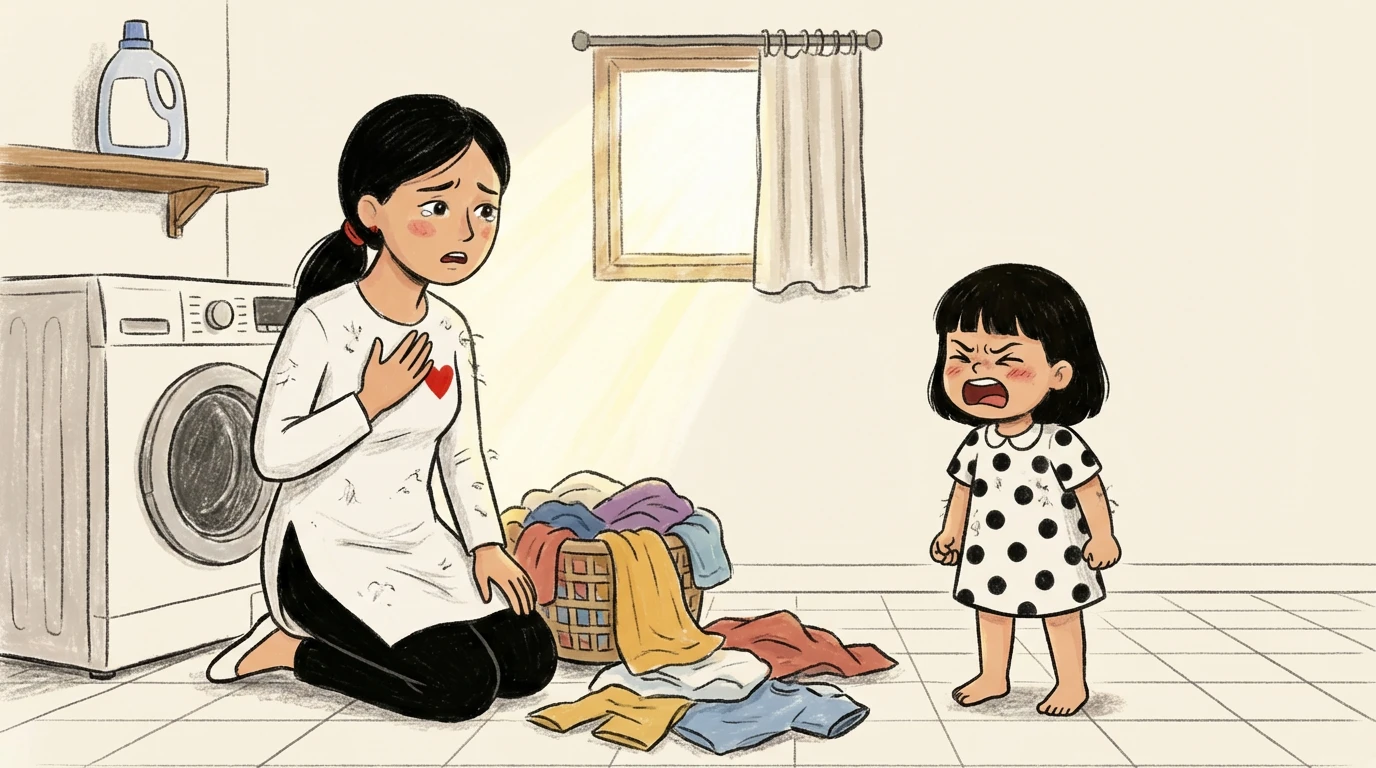
Anger is a bodyguard. It shows up to protect you from feelings that are scarier than rage: fear, grief, powerlessness, exhaustion. When your four-year-old defies you for the ninth time and something detonates in your chest, the explosion is about the terror underneath. Have I already failed? Will I ever get my own needs met?
Anger from today, fuel from years ago
Any issue that makes you feel like lashing out has roots older than this morning. Psychologists call this "ghosts in the nursery." Your child's behavior activates feelings from your own childhood, etched deep enough to overwhelm you as an adult. Your kid didn't create these triggers. They just have a talent for finding them.
Triggers weaken every time you feel them without acting on them. Each successful pause dissolves a little of the stored charge. The reaction doesn't vanish overnight, but over weeks and months, you'll notice the same situation producing less heat and more space to choose.
When it's more than a bad day
If you're irritable every single day, that's data. It means something in your life needs restructuring: more sleep, more support, or help processing whatever you're carrying.
The do-over script
You will lose it sometimes. What matters is what happens next.
When you catch yourself mid-yell (even mid-sentence), stop. Close your mouth. Take a breath. Then:
"I'm sorry. That was my frustration talking. Let's try a do-over. What I meant to say is..."
Stopping mid-explosion is the most powerful form of self-regulation your child will ever witness. You're showing them that tone can be corrected and relationships can be repaired in real time.
If you're still too wound up, say: "I'm upset right now. We'll talk about this once we've both calmed down." Then follow through. If you need a script for the conversation that comes after, start with empathy and move to problem-solving.

The long game
Every time you resist acting when your temper spikes, you're building new neural pathways. The first ten times are brutal. By the fiftieth, you catch yourself before your voice goes up.
You are teaching your child more about emotional regulation by managing yours than by anything you could ever say to them. The modeling is the lesson. The pauses, the do-overs, the honest admissions. That's the curriculum.
FAQ
You don't. Any behavioral conversation will land better when both of you are calm. The urgency you feel is a stress hormone illusion. Say 'We'll talk about this later' and mean it. The suspense is more effective than a threat made in anger, and the lesson sticks when the learning brain is back online.
Pausing is not permitting. You're separating the limit-setting from the rage. You still address the behavior, just twenty minutes later when you can think straight. Kids learn better from a calm correction than from a parent in full fight-or-flight mode.
Stop. Even mid-word. Close your mouth. The awkward silence is you modeling exactly the self-control you want your child to learn. Then repair: acknowledge what happened, own your tone, and try again. Repair turns a rupture into a teaching moment.
If you're irritable most days, that's a signal that something needs to change in your life, not just your parenting. Chronic irritability points to depleted resources: sleep, support, space, or unprocessed emotional history. A bad day is human. A bad month is information.
Occasional anger followed by genuine repair does not damage your child. What causes harm is chronic, unrepaired rage. If your child seems unfazed by your anger, that's a warning sign: they've built walls. If they still react, the relationship is open. Repair quickly.