TLDR
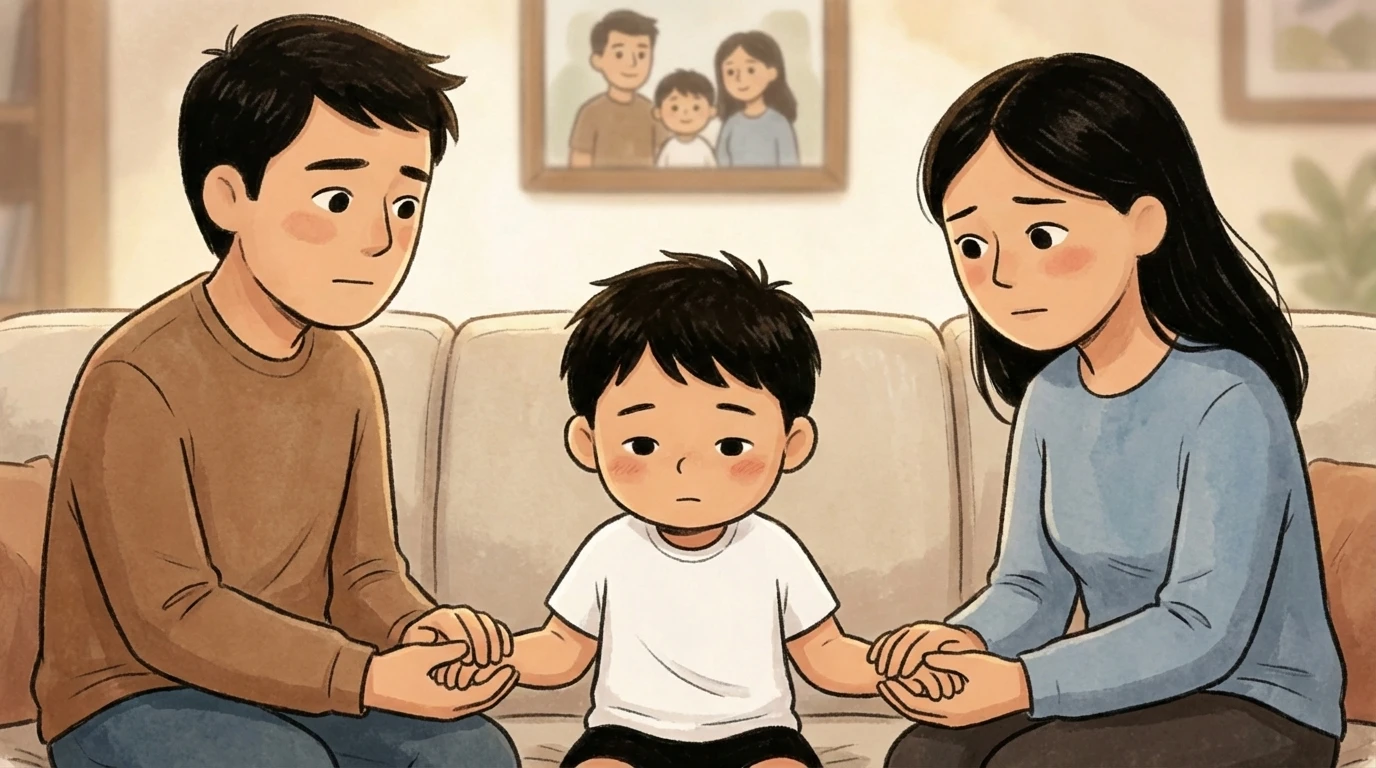
- Tell them together if at all possible. Both parents in the same room delivering the same message prevents your child from casting one parent as the villain. A united front now sets the tone for co-parenting later.
- Children will assume they caused this. Even kids who have never consciously thought it are running that calculation in the background. Address it directly and repeatedly: this was a grown-up decision, and nothing they did or could do will change it.
- Grief comes in waves, not a straight line. Your child will seem fine for weeks and then fall apart over a lost sock. The backpack of grief they have been carrying just tipped past what they could hold, and the sock was the last straw.
- Your child needs permission to love both parents. If they sense that enjoying time with your ex threatens you, they will start editing their stories. The tightening of your jaw at drop-off teaches them more than any speech you give.
- Your emotional processing is yours to carry. Find a therapist, a friend, a support group. Your seven-year-old is not your confidant. Children who become a parent's emotional support system carry that weight for decades.

Before you say a word
The conversation itself will take five minutes. The preparation takes longer, and matters more.
Sit down with your co-parent before you sit down with your child. Agree on the message: we are going to live in two homes, we both love you, this was our decision. Agree on what you will say about the reasons (keep it vague and blame-free) and what you will not say (anything that assigns fault to either person).
Plan the logistics in advance so you can answer concrete questions. Your child does not care about your emotional growth or irreconcilable differences. They care about where they will sleep, whether both parents will be at their birthday, and who gets the dog. Have answers ready.
If your child has witnessed fighting between you and your co-parent, you can reference that as context. If they have not seen conflict, keep it simple: you will both be happier living in separate homes, and happier parents make better parents.
The conversation
Tell them together. Both parents, same room, same message. This prevents your child from assigning blame to one parent for breaking up the family.
Three things need to land:
- This was a grown-up decision. You did not cause it and nothing you do can change it.
- Both parents still love you and will always be part of your life.
- You do not need to choose sides or worry about either parent's feelings.
Say the decision is final. This sounds cruel, and it will feel cruel in the moment. But leaving the door open for reconciliation traps your child in a holding pattern where they spend their energy trying to fix your marriage instead of processing their grief. Painful clarity is kinder than prolonged uncertainty.
Rehearsing the divorce talk
The Life Transitions course will walk you through that first conversation
You'll have the actual words ready, know what reactions to expect, and stop dreading the moment you sit them down.
What never to say
"Your father chose to leave." "Your mother made it impossible to stay." These statements may be accurate. Your child does not care about accuracy. They care about whether loving both parents is still allowed, and blame language teaches them it is not.
Don't promise things will be better. They might be, eventually. Right now your child is grieving, and telling a grieving person to look on the bright side is dismissal wearing a smile.
Don't apologize for the decision. Apologizing signals the decision might be wrong or reversible, and your child will spend the next six months testing that theory.
What your child is feeling
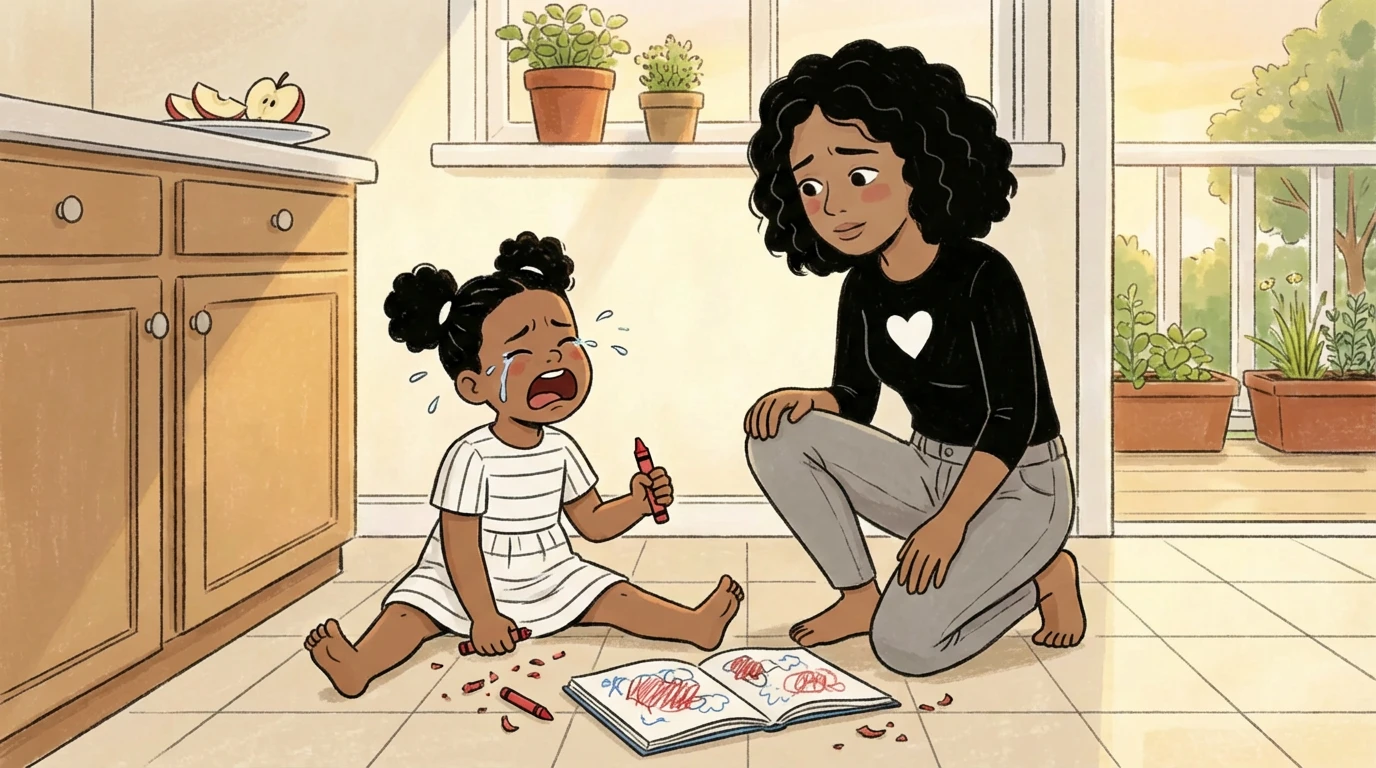
Your kid will seem fine for three weeks and then melt down because a crayon broke. The grief they have been carrying just found its tipping point, and the crayon was the thing that finally made the weight impossible to hold.
Don't analyze it. Don't say "I think you're really upset about the divorce." Just be present with whatever they bring you: "That crayon breaking is really upsetting." Let them lead when they are ready to go deeper.
The loyalty trap
Kids in shared custody live in constant fear of betraying one parent by loving the other. If your child comes home talking about how great dinner was at your ex's place, your only acceptable response is: "That sounds awesome."
Any tightening of your jaw, any change in your voice, any pause that lasts a beat too long teaches your child to edit their stories. They will start pretending half their life does not exist to protect your feelings. This is the hardest emotional discipline divorce will ask of you, and it is the most protective thing you can do.
Coaching your child through these big feelings matters more than any custody schedule you negotiate. The emotions are the real work.
Expect the conversation to happen more than once
Young children cannot absorb all of this at once. Expect to have variations of the same conversation for months. Sometimes they will ask the same question they asked last Tuesday. Sometimes they will bring it up while you are brushing their teeth. Repetition means they are still processing, and each round helps them absorb another layer.
Be available every time. And when the anxiety and uncertainty show up at bedtime or in the form of sleep regression, know that those are grief wearing a different outfit.
Keeping their world stable
Your child's internal world just shifted on its axis. The more their external world stays the same, the more capacity they have to process the change.
Same rules, both houses
This means having a conversation with your co-parent that neither of you wants to have. Bedtimes. Homework expectations. Screen time. The more overlap between households, the less your child has to recalibrate every few days. You don't need identical homes. You need enough consistency that the transition between them does not require a full system reboot.
Make the handoff boring
The moment of transition between homes is when your child's stress spikes highest. Their nervous system is reading both parents for danger signals, and any tension registers as a threat.
Same time, same place, same script. A quick hug, a calm goodbye. If you cannot be cheerful, be neutral. If you cannot be neutral, hand off at school so your child doesn't watch you fall apart at the front door.
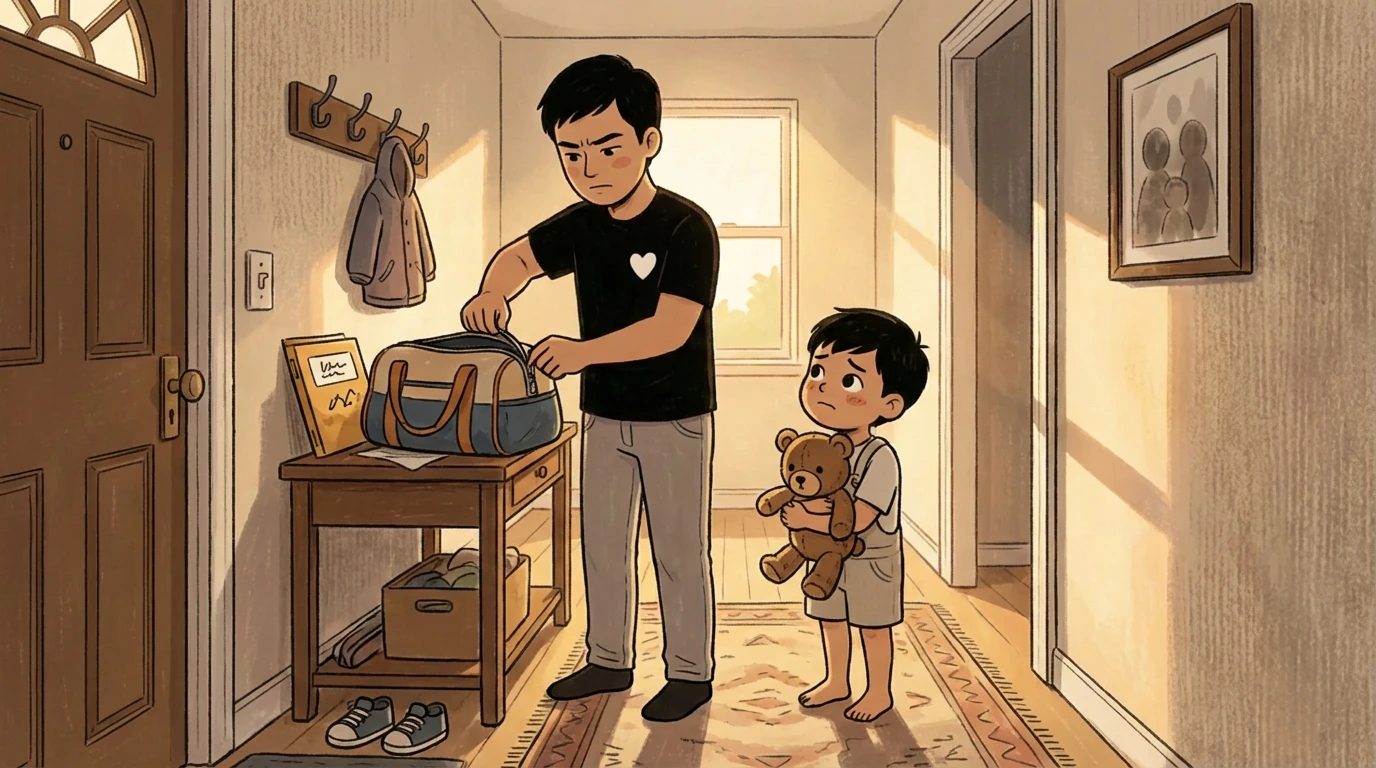
Pack continuity objects
A stuffed animal that travels. The book you are reading together. A blanket that smells like the other house. These objects carry the feeling that life is continuous even when the address keeps changing.
Your grief (and where it belongs)
You are grieving too. The empty side of the bed on a Wednesday when the kids are at their other home. The birthday party you are coordinating with someone you once planned to grow old with.
Children who become their parent's emotional support system after a divorce carry that weight for decades. Your nine-year-old is a child who needs you to be the steady one, even when you do not feel steady at all.
Find your people. A therapist, a friend who has been through it, a support group. Somewhere you can say the ugly truth without worrying about who hears it. Talking to kids about hard things is a skill you will need repeatedly, and you cannot do it well if you are unraveling.
How to tell your kids about the divorce
- Tell them togetherBoth parents, same room, same message. This prevents your child from casting one parent as the villain and models the cooperation they need to see going forward.
- Say it was a grown-up decisionAddress self-blame directly. Children assume they caused this. Tell them explicitly and more than once that nothing they did or could do changes this decision.
- Confirm the decision is finalLeaving room for reconciliation traps your child in a holding pattern. Painful clarity lets them begin grieving instead of scheming to fix your marriage.
- Answer their practical questions firstWhere will I sleep? Who gets the dog? Will you both come to my game? Have concrete answers ready before you sit down. Logistics are what children can process first.
- Let them react without defending yourselfRage, tears, silence, sarcasm. Whatever comes, receive it. Their loss matters more than your rationale. Resist every urge to explain why this is for the best.
- Keep having the conversationThe first talk is the beginning, not the end. Expect the same questions for months. Every repetition is your child processing another layer of grief.
FAQ
Tell them as soon as both parents have made a firm decision, regardless of age. Younger children need simpler language but the same core message: both parents love you, this is not your fault, the decision is final. Giving advance warning before big changes helps children adjust, even if you think early notice drags out the pain.
Keep it vague and blame-free. Something like 'We tried hard but we are happier living apart, and happier parents are better parents.' Do not explain in terms that assign fault. Your child does not need the adult reasons. They need to know loving both parents is still allowed.
Completely normal. Young children process information in loops, not lines. Each time they ask, they are absorbing a new layer. Answer with the same patience you gave the first time. Repetition is processing, not a failure to understand.
Brief, honest emotion is fine. Saying 'I feel sad too sometimes' shows feelings are allowed. But sustained breakdowns or using your child as a sounding board crosses the line. Your grief needs an adult outlet: a therapist, a friend, a journal. Not your eight-year-old.
Receive it without defending yourself. Say something like 'You are really angry at me right now, and that makes sense.' They are entitled to their feelings about a loss this big. Arguing them out of it teaches them to hide their grief from you, which is worse.