TLDR
- Traditional discipline assumes a regulated child. Reward charts, time-outs, and consequences all require a child who can pause, reflect, and choose differently. Spirited kids often can't do that mid-meltdown.
- Defiance is usually communication, not disobedience. When your child goes floppy, runs away, or does the exact opposite of what you said, they're telling you something about their emotional state.
- Connection before correction works faster. A child whose nervous system feels safe can cooperate. One who feels controlled will fight harder.
- The transition to a new approach gets worse before better. Kids who were previously cowed by punishment become more defiant when they feel safer. That's progress, even though it looks like chaos.
- Your own regulation comes first. You cannot calm a child from a dysregulated state. Your breathing matters more than your words.
When you've tried everything and nothing sticks
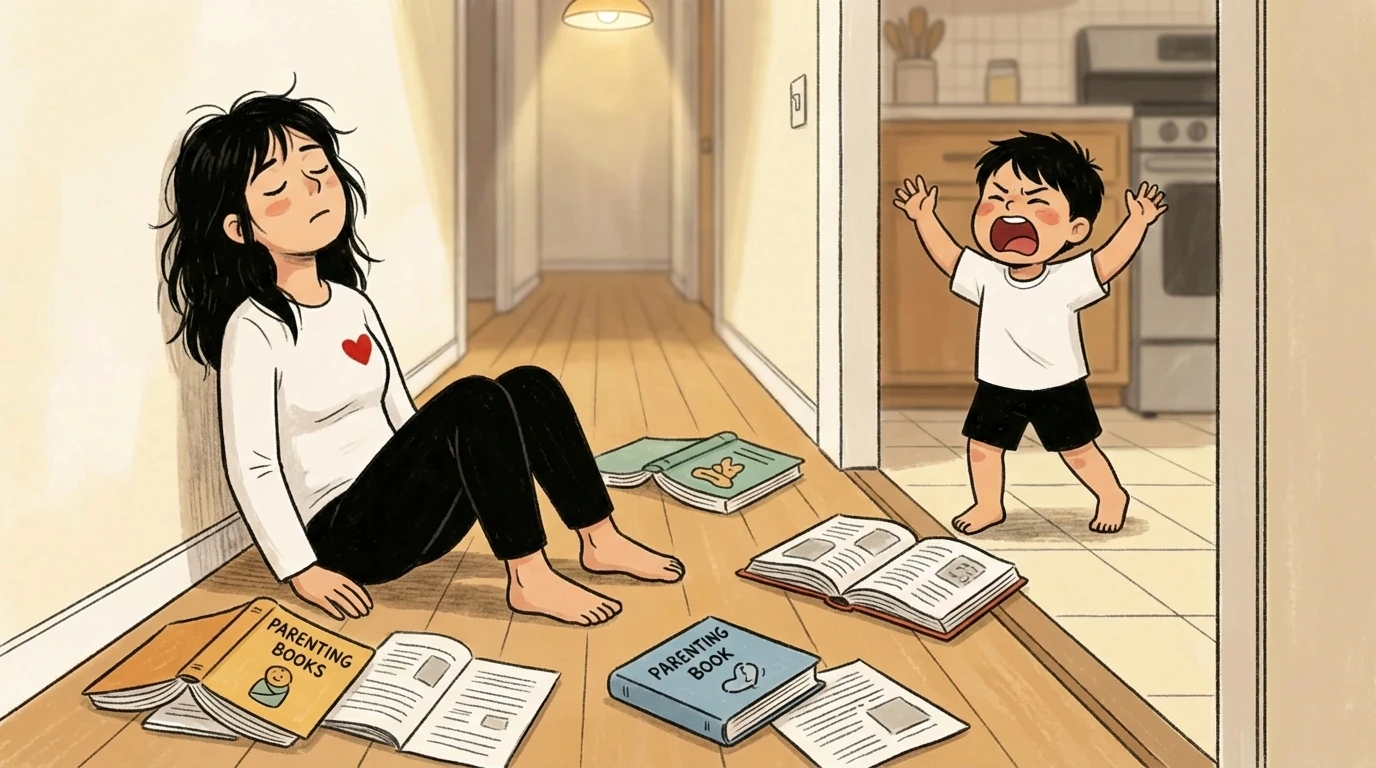
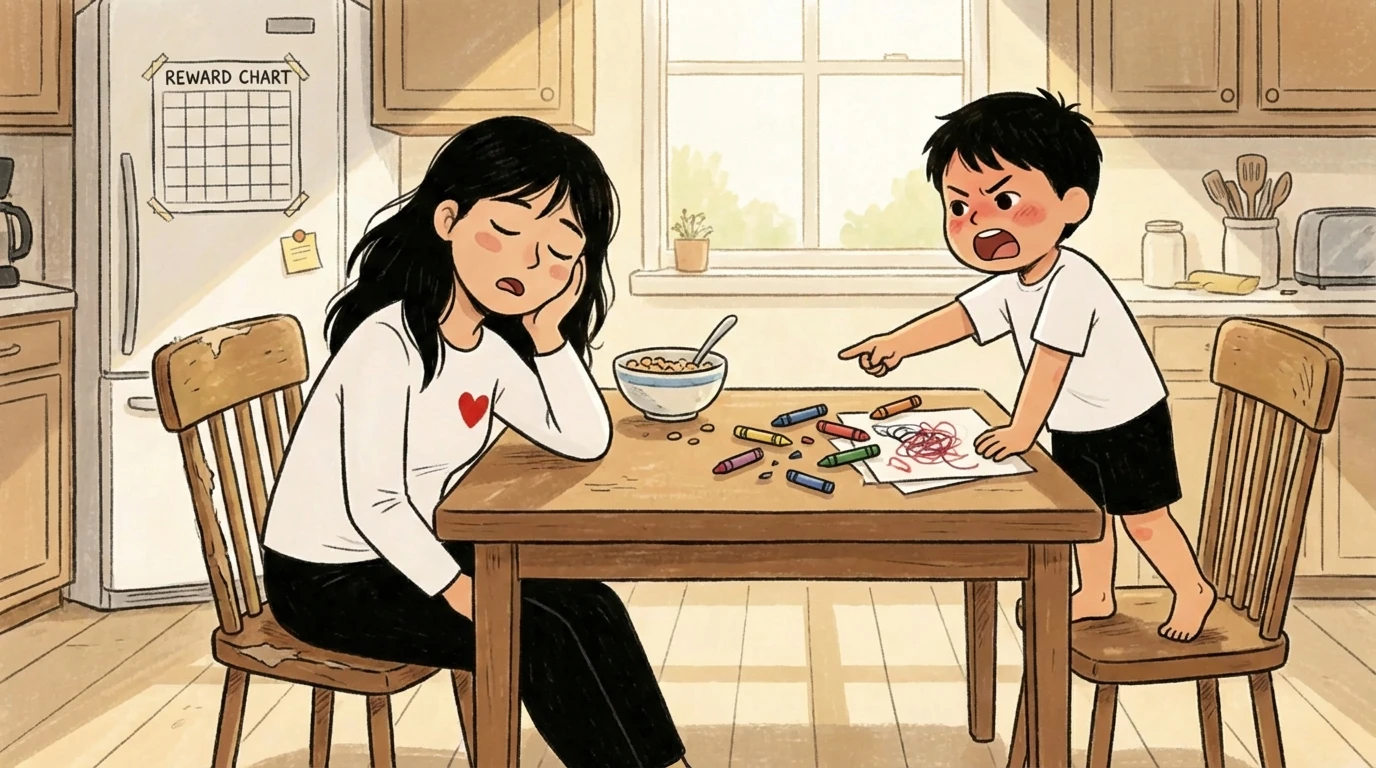
You read the book. You bought the sticker chart. You did the calm voice, the countdown from five, the "natural consequences." And your kid looked you dead in the eye and knocked the cereal off the table anyway.
So you tried firmer boundaries. Shorter timers. Bigger consequences. And somehow the behavior got worse. More screaming, more running, more of whatever you specifically asked them not to do.
Here's where most parents spiral. You assume you're too soft, so you get harder. Or you assume you're too hard, so you back off entirely. Neither works, because the problem was never your firmness level. The problem is that conventional discipline approaches are designed for kids whose nervous systems can pause, reflect, and choose differently in the moment. About 40% of children have nervous systems that don't work that way.
Your kid might be spirited, intense, differently wired, or some combination that doesn't have a tidy label yet. What they all share: consequences don't teach them anything when their brain is in fight-or-flight mode. And their brain goes there faster and stays there longer than the parenting books predicted.
Why the standard playbook backfires
The compliance trap
Time-outs assume your child can sit, reflect, and return calmer. Reward charts assume your child can sustain motivation through delayed gratification. "First/then" statements assume your child can hold two sequential ideas while emotionally flooded. These are executive function skills, and they develop on different timelines for different kids.
When you punish a child who genuinely cannot comply, you're not teaching a lesson. You're confirming what they already suspect: something is wrong with me, and even my parents think so. That confirmation makes the behavior worse, not better, because an insecure child acts out more, not less.
The escalation cycle
It goes like this. Your child acts out. You apply a consequence. They escalate. You escalate. They go nuclear. You either give in (and they learn that nuclear works) or you match their intensity (and now everyone is dysregulated and nobody has learned anything).
With spirited kids, this cycle doesn't just repeat. It compounds. Each round of failed discipline adds to an emotional backpack your child is hauling around. They become crankier, more reactive, and more oppositional because the feelings from yesterday's battle are still sitting in their body when today's battle starts.
Consequences making it worse
The Spirited Kids course will replace what's been backfiring
You'll drop the punish-escalate cycle and use approaches that register with your child's brain.
What spirited kids need instead
Regulate yourself first
This is the part no one wants to hear. Before you address your child's behavior, you have to address your own nervous system. A deep breath. A ten-second pause. Whatever it takes to get your body out of fight mode.
Your child is reading your nervous system faster than they're hearing your words. If your jaw is tight and your voice is clipped, their system registers "threat" and responds accordingly. You cannot guide a child to calm from a state of agitation. The airplane oxygen mask metaphor applies every single time.
Connect before you correct
When your kid goes floppy after being told "no," they might be in freeze mode. When they grab something forbidden and run, they're exercising power they feel they don't have anywhere else. When they do the exact opposite of what you asked, they're proving to themselves that they still have autonomy.
All of it is communication.
The move that works: get on their level, make brief eye contact, and name what you see. "You're really mad right now." "You wanted that and I said no, and that's hard." Acknowledging feelings isn't rewarding bad behavior. You're giving their nervous system the safety signal it needs to step out of fight mode.
Set the limit without the lecture
State it once, simply. "The dog doesn't like that. It hurts him." "That's not for throwing." Then stop talking. The floppy, screaming, or running child is not absorbing your explanation about why we don't throw things in the house. One sentence, said calmly, then attend to the emotion underneath the behavior.
If they cry after you connect, that's good. Tears are the nervous system's way of processing big feelings. A child who cries in your arms after acting out is doing exactly what they need to do. Your job is to stay there, stay quiet, and let it happen.

The transition period nobody warns you about
When you stop punishing and start connecting, your kid will probably get worse before they get better. This is predictable and it means the approach is working.
Children who were compliant because they were scared become defiant when they feel safer. Your child no longer needs to suppress their real feelings around you. They're testing whether this new safety is real.
Fight mode is armor
A child who screams, hits, and refuses to cry is using anger as a shield. Underneath that anger lives sadness, fear, and vulnerability they don't know how to access directly. When you respond to anger with empathy instead of escalation, you're helping them find what's underneath.
The script sounds something like: "You're so mad you want to hit. You can be as mad as you want, and you can stomp your foot to show me. I won't let you hurt anyone. I think you're sad inside too."
Sometimes they'll cry. That's a breakthrough, even though it looks like a breakdown. Sometimes they won't, and that's fine. Back off, increase connection over the next few days, and try again. Building enough safety for a child to drop their armor takes time.
When they yell "go away"
They don't mean it. They're trying to regulate the intensity of what they feel. Because they feel safest with you, your presence makes the big feelings bigger. They want you to leave so the feelings will shrink.
What helps: "I'll move back to here. I won't leave you alone with these big feelings. I'll be right here when you're ready." With older kids, you might sit outside their door the first few times. The point is presence without pressure.
What this looks like in practice
How to respond when discipline fails
- Pause before interveningTake one breath. Remind yourself there's no emergency. The extra three seconds changes your body language from threat to safety.
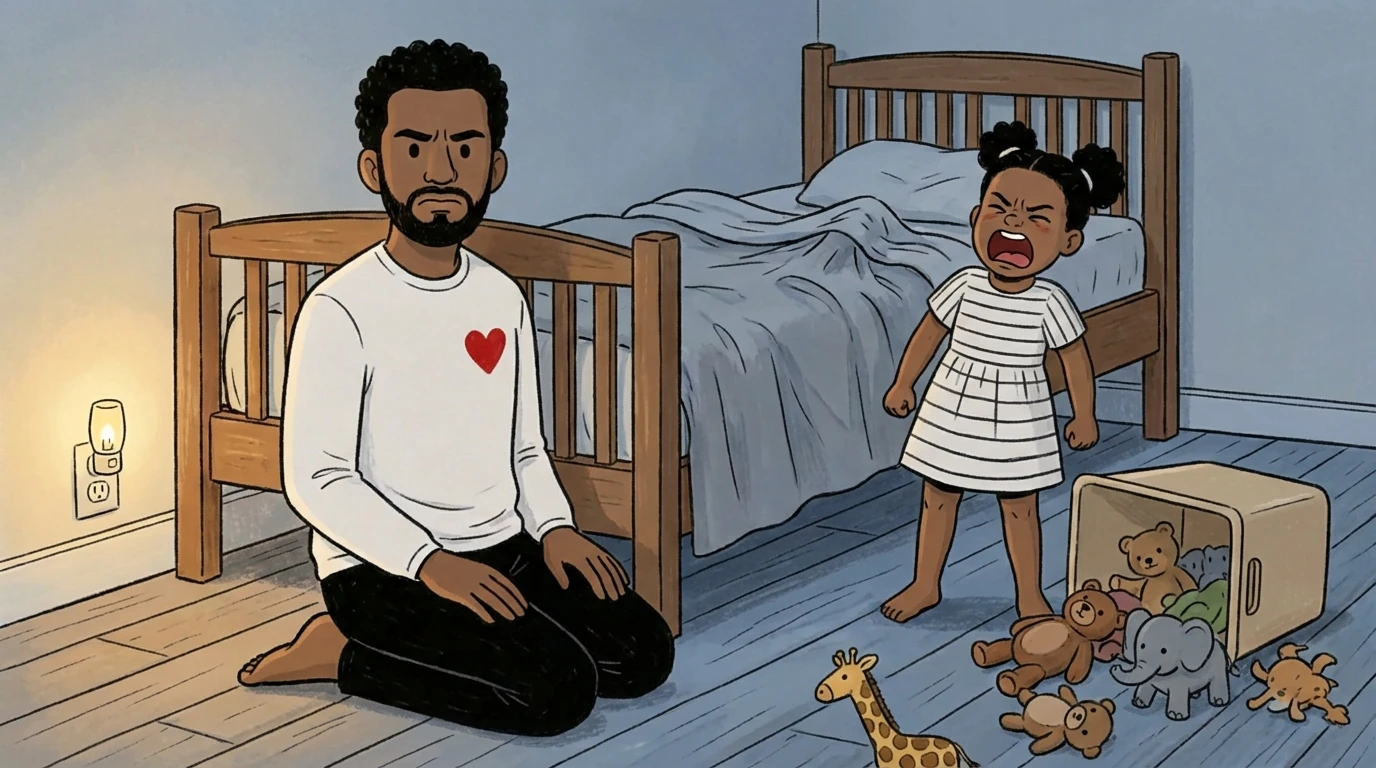
- Get physically lowerKneel, crouch, or sit. Being at eye level signals connection. Towering over a dysregulated child signals dominance, and their nervous system will fight it.
- Name the emotion, not the behaviorSay what you see feeling-wise. 'You're really frustrated' works better than 'stop throwing things.' The child already knows they're throwing things.
- State the limit onceOne short sentence. 'We don't hit the dog.' Then stop. No lecture, no explanation of why, no countdown. The limit is the limit.
- Stay through the stormIf they cry, hold space. If they rage, stay close but safe. If they go quiet, wait. Your steady presence is doing more than any consequence could.
When it's more than temperament
Sometimes discipline fails because the standard approaches don't account for how your child's brain is wired. If you've shifted to connection-based strategies and your child is still consistently more intense, more reactive, and more rigid than their peers across every setting, that's worth exploring further.
The line between "spirited temperament" and something that needs professional attention isn't always obvious. Neither authoritarian nor permissive approaches work for these kids, and figuring out the right kind of support sometimes means getting expert eyes on the situation. A calm-down toolkit can help in the meantime while you figure out what your specific child needs.
What stays true regardless of diagnosis: your child wants to do well. They want your approval. They want to feel connected to you. When they can't get there through cooperation, they try through opposition, because any connection is better than none. Meeting that bid, even when it comes wrapped in a tantrum, is the beginning of the approach that works.

FAQ
Most families see increased testing for two to four weeks. Some spirited kids take longer, especially if punishment-based discipline was used for years. Consistency matters more than speed. The behavior typically shifts once the child trusts the new pattern is real.
Share specific observations rather than parenting articles. Track what happens after time-outs versus after connection attempts for a week. Data from your own household is more convincing than theory from a book.
You set limits constantly. You just set them without anger, lectures, or consequences designed to make the child feel bad. The limit stays firm. The delivery changes. 'I won't let you hit' said calmly is still a hard boundary.
Connection-based strategies work at every age. The scripts change, the physical positioning changes, but the principle stays the same: regulate yourself first, connect before correcting, and address the feeling underneath the behavior.
If your child's behavior is disrupting daily life across multiple settings despite consistent connection-based parenting for several weeks, ask your pediatrician for a referral. Early evaluation helps whether or not it leads to a formal diagnosis.