
TLDR
- Arsenic hour is biology, not bad behavior. Blood sugar drops, cortisol spikes, and the prefrontal cortex checks out. Your kid isn't choosing chaos. Their body is running out of fuel.
- You are also falling apart at 5 p.m. Parents hit their own regulation low point in the late afternoon. Two dysregulated people in one kitchen is a guaranteed disaster.
- Snacks before hunger, not after meltdowns. A protein-heavy snack at 3:30 buys you an hour of functioning. Waiting until a child is already melting down is too late.
- Lower every expectation for that window. Arsenic hour is not the time to practice manners, start homework, or have a family dinner. Survive it. That's the goal.
- Transitions need a runway, not a cliff. Give warnings, offer choices about how (not whether) things happen, and build in ten extra minutes for everything.
The witching hour is real, and it has a body count
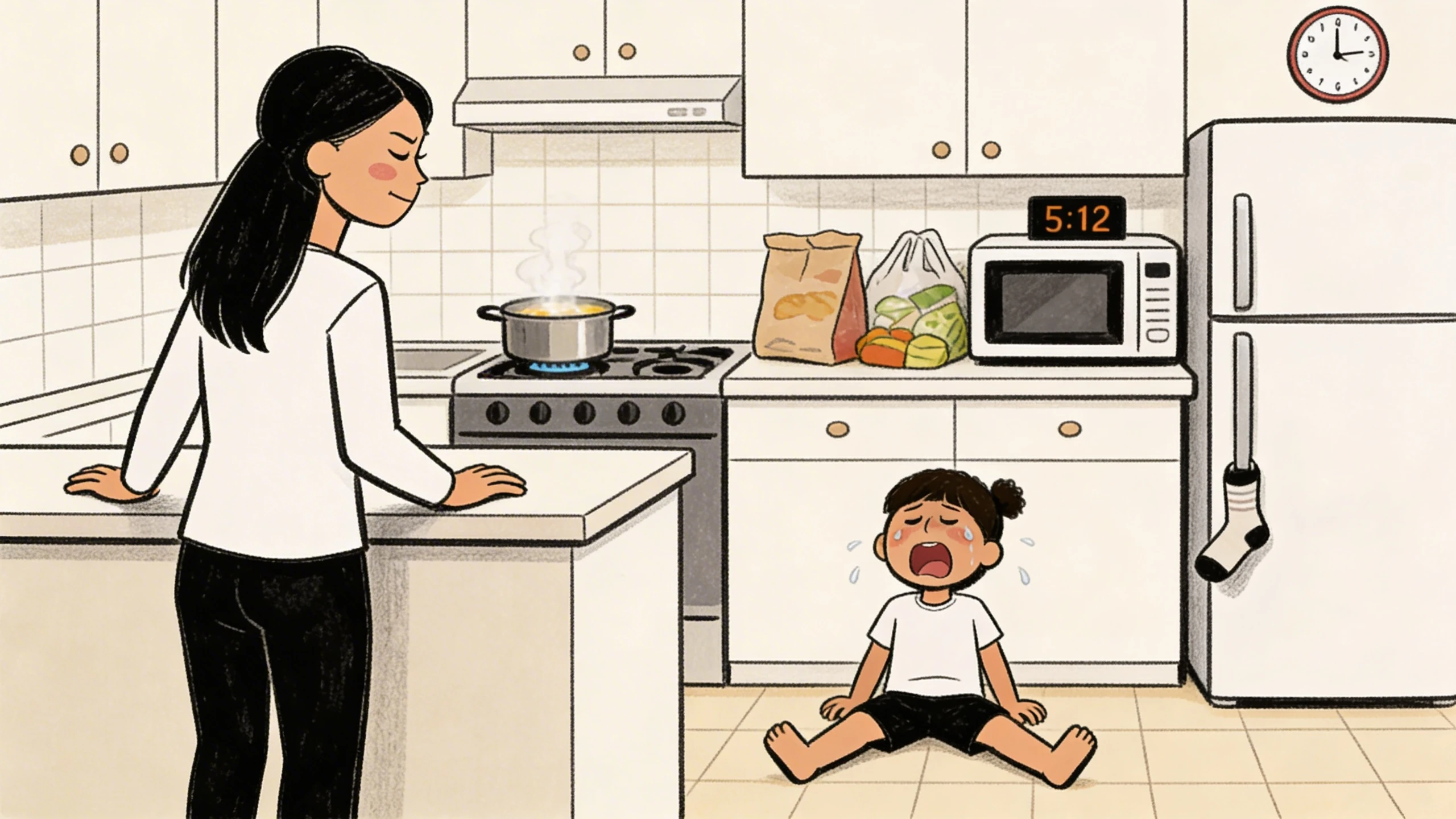
Somewhere around 4:30 p.m., your house turns into a hostage situation. The toddler is screaming because you cut the banana wrong, the older kid is whining about lunch, and you are standing at the stove wondering if it's possible to cry into pasta water without anyone noticing.
The reason this hour is so consistently terrible has nothing to do with your parenting. It's biochemistry. Cortisol peaks in the morning and crashes in the late afternoon. Blood sugar drops. The brain regions responsible for emotional regulation run on glucose, and by 5 p.m. the tank is empty. Your kid's prefrontal cortex, already years from being fully developed, has even less to work with.
And here's the part nobody mentions: you're falling apart too. You've been regulating all day, making decisions, managing logistics. By late afternoon, your patience is roughly equivalent to your kid's impulse control. Two depleted people, one kitchen.
The 4:30 collapse
The Tantrum Toolkit course will help you survive the late afternoon window
You'll restructure the pre-dinner hour so the daily meltdown stops being inevitable.
Why your kid stores meltdowns for you
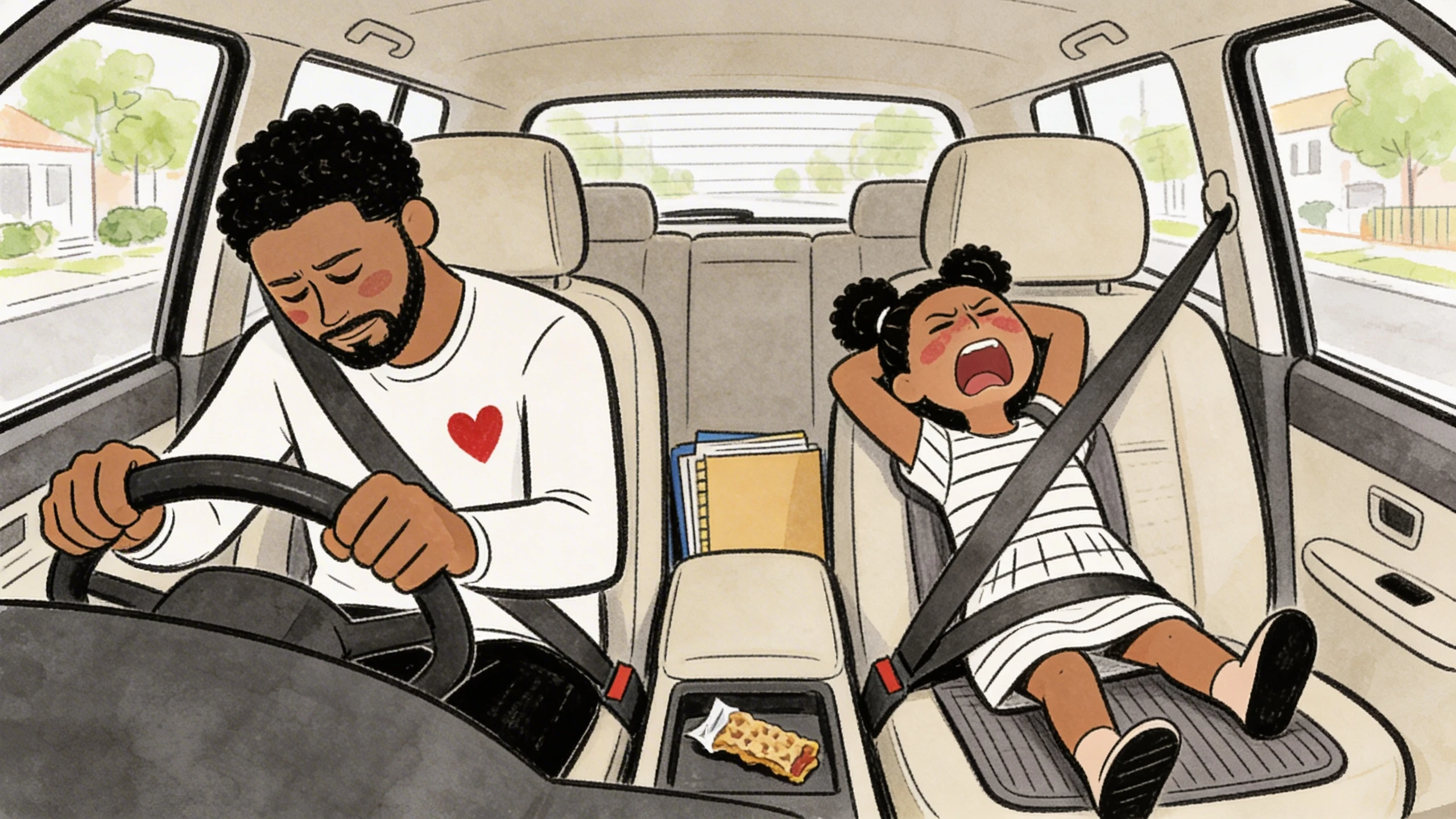
Your kid holds it together at school all day, then walks through the front door and immediately detonates. The teacher says they're an angel. You're getting screamed at because their cup is the wrong color.
This is a sign of secure attachment, and it's also maddening. Your child suppresses emotions all day because the outside world doesn't feel safe enough to fall apart in. Home does. You do. So every frustration they clenched down comes flooding out the moment they feel safe enough to release it.
The emotional backpack
Think of it as an emotional backpack your kid has been filling all day. A friend who wouldn't share. A transition that felt too fast. A snack they didn't want. None of these individually would cause a meltdown. But by 5 p.m., the backpack is full, and the wrong-colored cup is just the thing that finally tips it.
Why the trigger looks ridiculous
The banana was cut wrong. The sock has a bump. The TV show ended. These triggers seem absurd because they are. The child isn't melting down about the banana. The banana is the last straw on top of eight hours of accumulated emotional weight. When parents understand this, the meltdown stops looking like manipulation and starts looking like overflow.
The four triggers that collide at 5 p.m.
Arsenic hour is predictable because the same four things converge every single day.
Hunger
Kids burn through calories fast. If lunch was at noon and dinner is at 6, that's a six-hour gap with a growing body in the middle. A protein-heavy snack at 3:30 (cheese, nut butter, yogurt) is the single most effective arsenic hour intervention. It's boring advice. It works anyway.
If you're dealing with toddler mealtime battles, the overlap with arsenic hour makes everything worse. A hungry kid who also hates what's for dinner is a kid who has two reasons to lose it.
Overtiredness
The cortisol crash in the late afternoon mimics the feeling of being up too late. Kids get wired and wild when they're tired, not quiet and sleepy. If your child's meltdowns are followed by resistance at bedtime, you're looking at one long overtiredness arc that starts at 4 p.m. and doesn't resolve until they finally pass out.
Overstimulation
School, daycare, playdates, and errands accumulate sensory input all day. By late afternoon, a normal conversation can feel like too much. The TV is too loud. The lights are too bright. Everything is too much.
Transition overload
The late afternoon is packed with transitions: pickup, car ride, walking in the door, changing clothes, starting homework, setting the table. Each transition is a potential fight. Stack six of them in ninety minutes and you've built a meltdown machine.
How to defuse arsenic hour before it starts
The single most useful insight from child development research is that prevention beats reaction every time. You cannot talk a child down from a 5 p.m. meltdown with the same tools that work at 10 a.m. Their brain is offline. Your brain is barely online. Prevention is the only strategy that reliably works.
How to survive arsenic hour
- Feed them before they crashOffer a filling snack between 3:00 and 3:30. Protein and fat keep blood sugar stable longer than crackers or fruit. This one change eliminates a shocking percentage of late-afternoon meltdowns.
- Lower your expectations to the floorArsenic hour is not the time for homework, manners practice, or meaningful conversation. Your only goal between 4 and 6 is survival. Cook something easy. Let them watch a show. Save ambition for Saturday morning.
- Build transition runwaysGive a ten-minute warning before any change. Then a five-minute warning. Offer a choice about how, not whether: 'Do you want to hop to the car or walk like a dinosaur?' The choice gives them a scrap of control when everything feels out of control.
- Separate yourself from the chaos brieflyStep into the bathroom for sixty seconds. Splash water on your face. You are not abandoning your child. You are making sure you don't become the second person screaming in the kitchen.
- Make the first ten minutes home low-demandWhen your kid walks through the door, skip the questions about their day. Offer a snack, a quiet activity, and ten minutes of zero demands. Let the backpack (the emotional one) get set down before you ask them to do anything.

When the meltdown happens anyway
You did the snack. You did the warnings. Your kid is still face-down on the hallway floor because you told them dinner is in ten minutes.
Prevention reduces meltdowns; it doesn't eliminate them. When one hits during arsenic hour, your options are narrower because you're also depleted.
When you have time
If nothing is burning on the stove, let it ride. Sit nearby. Say "I know you're upset" once. Then be quiet. Supported meltdowns, where a child cries until they're done while a parent stays present, lead to cooperation afterward. The child empties the emotional backpack.
When you don't have time
Acknowledge it fast: "You don't want to stop playing. I get it." Then give them something to move toward: "You can pick the music in the car" or "Race you to your shoes." You're giving their brain a small hit of anticipation to compete with the disappointment.
If none of that works, pick up your howling child and go. Don't yell. That's enough. The emotions you skip now will show up later. Expect a second meltdown at bedtime. Feelings don't disappear when you override them.
Multiple kids melting down at once
Two kids in arsenic hour simultaneously is roughly ten times worse than one, because they feed off each other. Reduce your variables. Put the baby in a carrier. Recruit the older child with a role: "I need a helper to carry the snack bag." Children who feel competent don't melt down as easily.

Stop trying to win arsenic hour
The goal is not a good evening. The goal is getting to bedtime without anyone doing something they'll regret. Screen time is fine. Cereal for dinner is fine. Sitting on the kitchen floor eating cheese while your toddler cries about their sock is fine. You don't have to make this hour work. You just have to get through it.
FAQ
It typically peaks between ages two and five, when emotional regulation skills are weakest and the gap between lunch and dinner feels longest. It doesn't vanish after that, but it shifts. Older kids get grumpy and withdrawn instead of melting down. Most families notice a real improvement around age six or seven.
No. A predictable window of screen time during the hardest part of the day gives everyone a reset. The research on screen time harm is about quantity and content over months and years, not about one hour of cartoons while you make dinner. Use it without guilt.
Yes, if you can. A 5:00 dinner instead of a 6:30 dinner eliminates the worst of the hunger trigger. Many families with young kids find that eating earlier and doing bath and bedtime right after transforms their evenings. It feels weird at first. It works.
Because you are their safe person. They held it together all day for teachers, peers, and other adults. Home is where they can finally stop performing. The meltdown at your front door is a sign of trust, even though it feels like punishment.
The intensity fades as kids develop better emotional regulation, usually noticeably by age six or seven. But the late afternoon slump is a lifelong human pattern. You feel it too. The difference is that adults have learned to manage it with coffee, snacks, and complaining to friends.