
TLDR
- Logic doesn't work mid-meltdown. Full stop. Your toddler's prefrontal cortex goes offline during dysregulation. The part of the brain that processes reasoning is temporarily unreachable. Save the explanations for later.
- Your nervous system is the intervention. Co-regulation works because children's brains borrow regulation from nearby adults. Your steady breathing and quiet presence do more than any words.
- Narrate, wait, connect. Name what you see happening, go silent while staying close, then reconnect by telling the story of what just happened or offering a creative alternative.
- Silence beats more talking. Extra words during a meltdown overload an already flooded nervous system. Physical presence with fewer words is more effective than talking them through it.
- You're building adult coping skills right now. Every co-regulated meltdown lays down neural pathways for self-regulation. You're programming how they'll handle stress at age 30.

Your toddler is screaming and you're about to try reasoning with them
Your three-year-old has just discovered that their sibling has "more spaghetti." (They don't. You scooped identical portions.) The shrieking has begun. And every instinct in your body is screaming at you to explain, logically and patiently, that both plates are equal.
Don't.
That explanation is going to land like a tennis ball thrown at a brick wall. Your kid's brain is in a state called dysregulation, and the part responsible for processing your very reasonable spaghetti argument has gone dark. The prefrontal cortex, the region that handles logic and reasoning, goes offline during big emotions.
This is where co-regulation comes in. And it works with the neuroscience of your child's developing brain instead of against it.
Your heart rate spiking
The Tantrum Toolkit course will teach you to hold your calm under pressure
You'll learn to slow your own nervous system first so your child's can follow, through illustrated lessons.
Why explaining harder doesn't help
The temptation is always the same. If I just say it more clearly, they'll understand. A toddler's brain hasn't finished building the connections between the limbic system (where emotions live) and the prefrontal cortex (where reasoning happens). Those neural pathways are under construction until roughly age seven. During a meltdown, the limited wiring they do have gets swamped.
Trying to reason with a dysregulated toddler is like sending an email when the internet is down. The message might be perfectly composed. The connection just isn't there.
This applies to punishment too. Consequences require the same rational processing that logic does. A child hitting their sibling mid-meltdown cannot evaluate the relationship between action and consequence. The fight-or-flight reflex has taken the wheel.
What's happening in their body
When a toddler hits a trigger (the show ended, someone took their toy, the banana broke in half and now it's ruined forever), their stress response fires. Heart rate climbs. Cortisol floods. The emotional brain takes full control. The screaming, the throwing, the going boneless on the floor: that's the only output the system can produce.
The fix is lending them something they can't generate on their own: regulation.

Co-regulation: what it is (and what it isn't)
Co-regulation is the process of using your calm nervous system to help stabilize your child's overwhelmed one. You're not fixing their emotions. You're being the steady thing in the room while the storm runs its course.
Think of yourself as a tuning fork. Your child's nervous system picks up signals from yours. When you're regulated (slow breathing, quiet voice, relaxed body), their system starts to sync. When you're activated (raised voice, tense posture), you add fuel.
What co-regulation is not
It's not giving in. You can hold a boundary ("you can't have the remote") while being a calm presence through the resulting meltdown. The boundary stays. You just stop expecting them to process it mid-crisis.
It's also not performing calm while seething inside. Your kid reads your body, not your script. If you feel your own temper rising, that's real information. Get yourself regulated before you try to lend regulation to anyone else.
The three-step method that replaces everything else
This framework handles the vast majority of toddler meltdowns, and you can remember it while sleep-deprived at 6 AM.
How to co-regulate during a meltdown
- Narrate what you seeDescribe what's happening out loud: 'You wanted the remote and I said no. You're really upset right now.' This shows your child you understand, and it teaches them the words they'll eventually use instead of screaming.
- Wait in silence with presenceStop talking. Stay close. Offer a hand on their back or a hug if they want one. Extra words overload a flooded nervous system. Your quiet, steady body does the co-regulating now.
- Connect after the stormOnce the crying slows, tell the story: 'You were so sad about the remote. You let your tears out, and now you're feeling calmer.' Or offer a creative yes: 'You can't have the remote, but you can play with this car.'
- Check your own state firstBefore any of this works, you need to be regulated yourself. If your jaw is clenched and your breathing is shallow, take three slow breaths. You cannot lend calm you don't have.
The narration step does double duty. In the short term, it helps your child feel understood. Over months and years, you're teaching them the exact vocabulary they'll need to tell you "I'm frustrated" instead of biting their sibling.
What to do when you can't stay calm yourself
Let's be honest. You're reading about lending your calm, and some part of you is thinking, I don't have any calm to lend. I'm running on four hours of sleep and cold coffee.
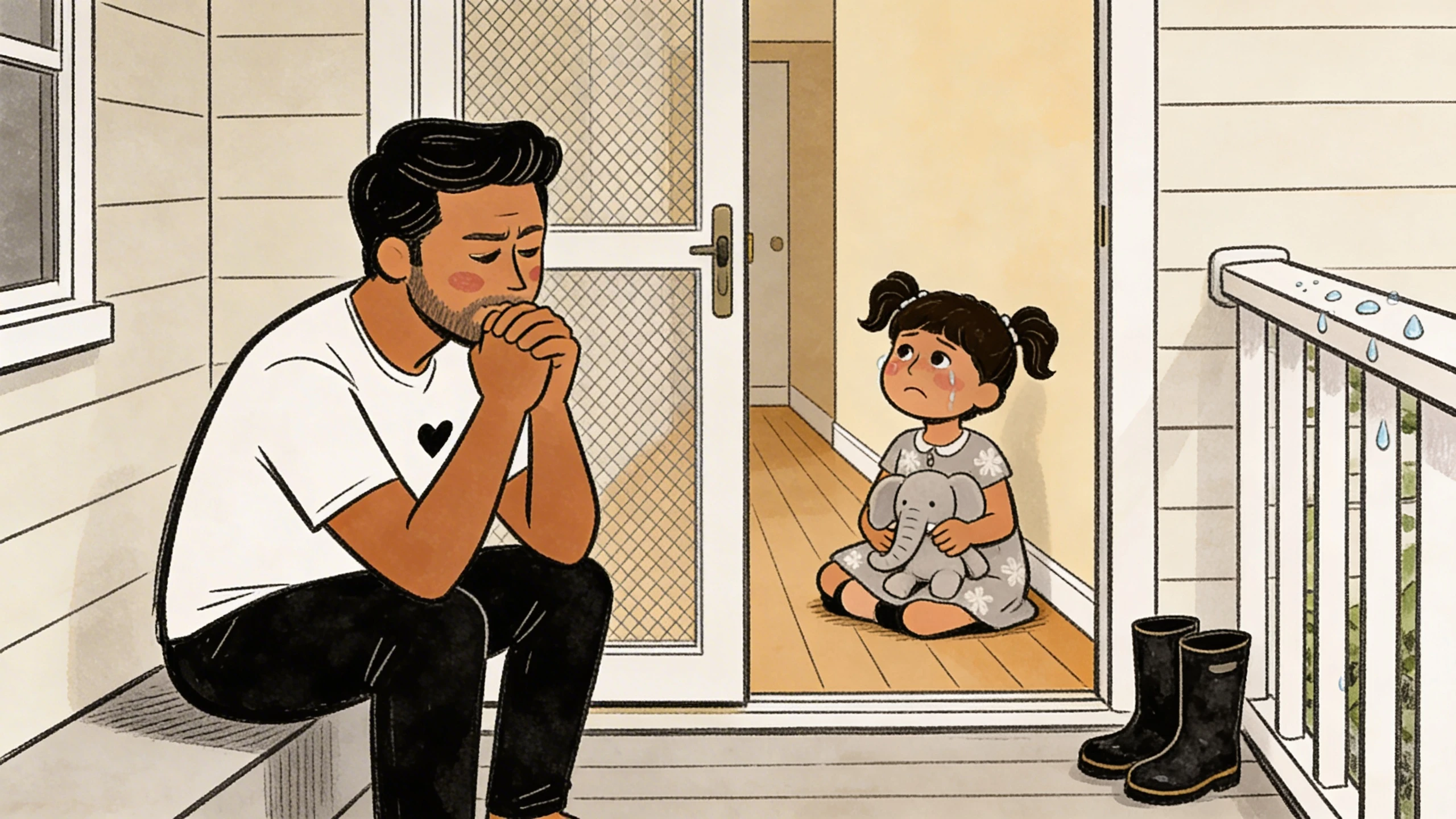
Fair. Co-regulation assumes you have something in the tank. When you don't, the first step is getting yourself back online. Step into the next room for thirty seconds. Put both hands on the counter and breathe until your heart rate drops. Tag in your partner if they're home.
You can't regulate another human's nervous system while yours is in fight-or-flight. Two dysregulated people in a room just escalate each other. Finding your own tools to stay regulated is the prerequisite, not the bonus round.
The oxygen mask reality
Your regulation comes first, because co-regulation physically requires a regulated adult. One of you has to be the stable one, and your three-year-old isn't going to volunteer.
Practice calming strategies during peaceful moments so they're available when you need them. Model out loud: "I'm feeling frustrated right now, so I'm going to take some deep breaths." Your kid absorbs the template even when they seem to be ignoring you.
Why it feels like it's not working (but it is)
Co-regulation won't stop all meltdowns. What it will do is gradually reduce how long they last and how intense they get. The change is slow enough that you won't notice it, and then one Tuesday your kid takes a shaky breath mid-tantrum and you realize they learned that from watching you.
Every co-regulated meltdown is a deposit in a long-term account. You're building neural pathways between their emotional brain and their thinking brain, one episode at a time. That wiring project runs until roughly age seven, and every time you stay steady through a storm, you're running another wire.
The long-term payoff: a kid who can do this for themselves. Picture them as an adult after a bad day at work. Instead of exploding or shutting down, they take a breath and talk about what they're feeling. That capacity didn't appear from nowhere. Somebody stayed calm with them when they were three.

After the meltdown: the part most people skip
The storm has passed. Your kid is sniffling. The temptation is to move on as fast as possible because you're both exhausted.
Don't skip this. What happens after the meltdown is where the real learning happens. Tell the story: "You were really upset that the show ended. You cried a lot. And then you took some breaths and started to feel better." This retelling stitches the experience into something they can understand.
This is also the window for teaching emotional vocabulary, because the prefrontal cortex is back online. Name the feelings. Connect emotion to trigger. Keep it brief (two sentences, not a lecture).
Celebrate small wins. If your kid calmed down even slightly faster than last time, say so. "You took a big breath all by yourself. That was hard and you did it." Reinforcing regulation makes it more likely next time.
FAQ
No. The boundary stays. You can say 'I can't let you have the remote' and still sit with your child through the resulting meltdown. Co-regulation means you hold the limit while also holding the space for their feelings about that limit. Both things happen at the same time.
You'll likely see small shifts within a few weeks of consistent practice. Meltdowns may get slightly shorter or less intense. The bigger developmental shifts in self-regulation take months to years, because you're waiting for actual brain wiring to develop. Stay the course.
Respect it. Say 'I'm right here when you're ready' and stay nearby without touching them. Some kids need physical space to regulate. Your calm presence works even from across the room. Don't force physical comfort on a kid who's telling you they need distance.
Yes, and you will get looks. A parent sitting quietly next to a screaming child in a grocery store looks strange to people who expect you to 'do something.' Partial co-regulation in public still works. Focus on your own breathing, stay close, and let the stares bounce off. You're playing a longer game than they realize.
Self-regulation develops gradually from around ages five to seven, though it varies widely. Even older kids and teenagers benefit from co-regulation during intense emotions. The goal is a gradual handoff, not a hard cutoff. You'll co-regulate less as they get older, but the skill never becomes irrelevant.