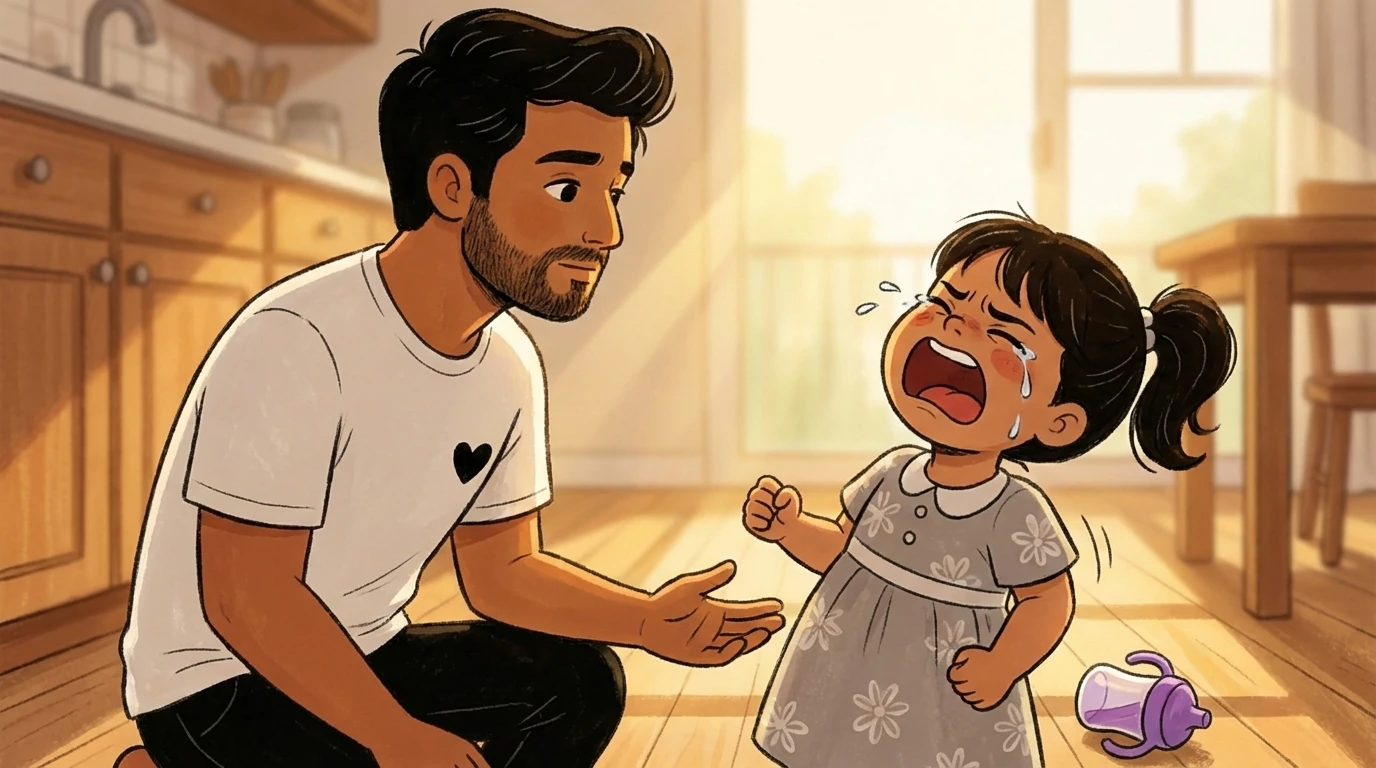
TLDR
- Your only two jobs are staying calm and keeping them safe. You are not supposed to stop the tantrum. You're supposed to survive it without making things worse. That's the whole assignment.
- Name the feeling before you state the rule. Validation has to come first because a dysregulated brain cannot process a boundary it hasn't been primed to hear.
- Boundaries without validation create power struggles. If you skip straight to 'no,' your kid hears a wall. If you acknowledge first, they hear a person.
- Offer a choice to move things forward. A small yes ('swing or sandbox after nap?') gives your child a sense of control without caving on the limit.
- Teach the lesson after the storm, not during it. Words don't land when the prefrontal cortex is offline. Save the conversation for when their eyes are focused again.
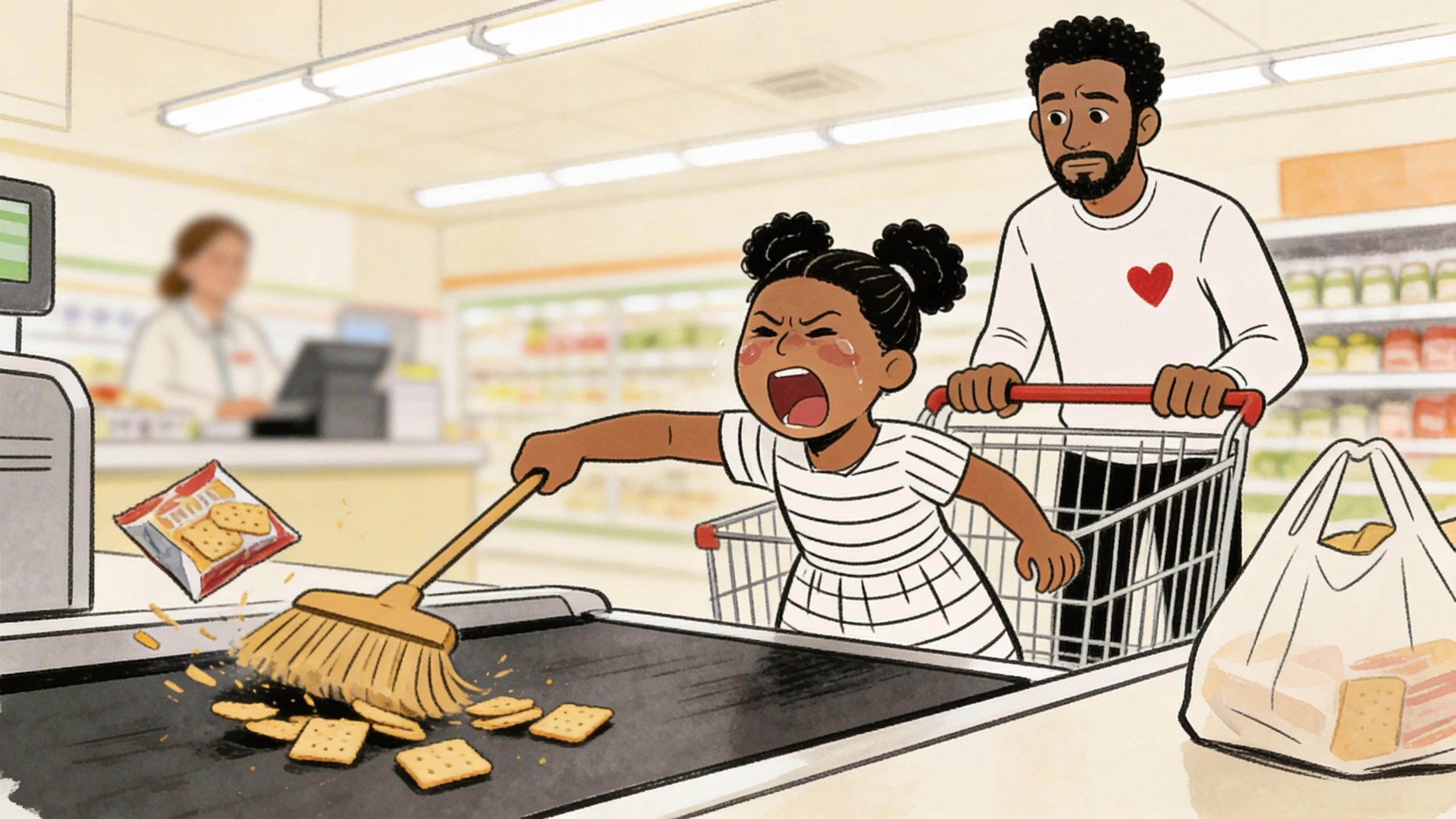
The tantrum is already happening. Now what?
Your kid is on the floor of the grocery store. The screaming started forty-five seconds ago and it already feels like an hour. You want a script. Here it is: three steps, in order, with the actual words.
But first: your job right now is not to stop the tantrum. Your job is to keep yourself regulated and keep your child safe. The tantrum will end on its own timeline. Your calm is the tool.
If staying calm in the moment feels like a joke, you're in good company.
Brain blank mid-tantrum
The Tantrum Toolkit course will give you the exact words to say
You'll reach for a tested phrase instead of freezing or defaulting to yelling when the screaming starts.
How to handle a tantrum in progress
- Name the feeling out loudUse 'I see' or 'I hear' to describe what your child is experiencing. 'I hear you're so mad we have to leave.' This tells their nervous system someone understands, which is the fastest way to start de-escalation.
- State the boundary immediatelyRight after validating, say what the limit is: 'And it's time to go now.' No justification, no debate. The boundary is a fact, not a negotiation opener.
- Offer a small choiceGive two acceptable options: 'Do you want to hold my hand or be carried to the car?' The choice returns a sense of control without caving on the limit you just set.
- Stay close and talk lessSit nearby. Keep language to short phrases: 'I'm here. You're safe.' Their flooded nervous system can't process paragraphs. Your quiet presence does more than your words.
- Tell the story after calm returnsOnce tears stop, narrate what happened: 'You were mad. You cried. I stayed with you. Now you feel better.' This builds emotional vocabulary and develops the brain wiring for future self-regulation.
Step one: name what they're feeling
The impulse is to fix things. Stop crying. Use your words. Calm down. All of those make it worse. A toddler whose prefrontal cortex went offline three minutes ago cannot process instructions. Their brain is running fight-or-flight software.
What gets through: being seen. When you name what your child is feeling, their nervous system registers that someone understands. Shoulders drop. Volume dips. Think about the last time someone told you to "just relax" versus "yeah, that sounds brutal."
The phrases that work
Two words do the heavy lifting: "I see" and "I hear."
- "I hear you. You're so mad that we have to leave the playground."
- "I can see you're upset about the green bowl. It's okay to feel sad."
- "I hear you want to keep watching. It's so hard to turn it off."
You're naming the emotion, identifying the trigger, and giving permission for the feeling to exist. You are not saying the tantrum behavior is fine. You're saying the feeling underneath it is allowed.
Don't waste time figuring out why the meltdown is happening. Toddlers cry because the banana broke. Because they asked for blueberries and then received blueberries. Name whatever feeling you can see and move on.
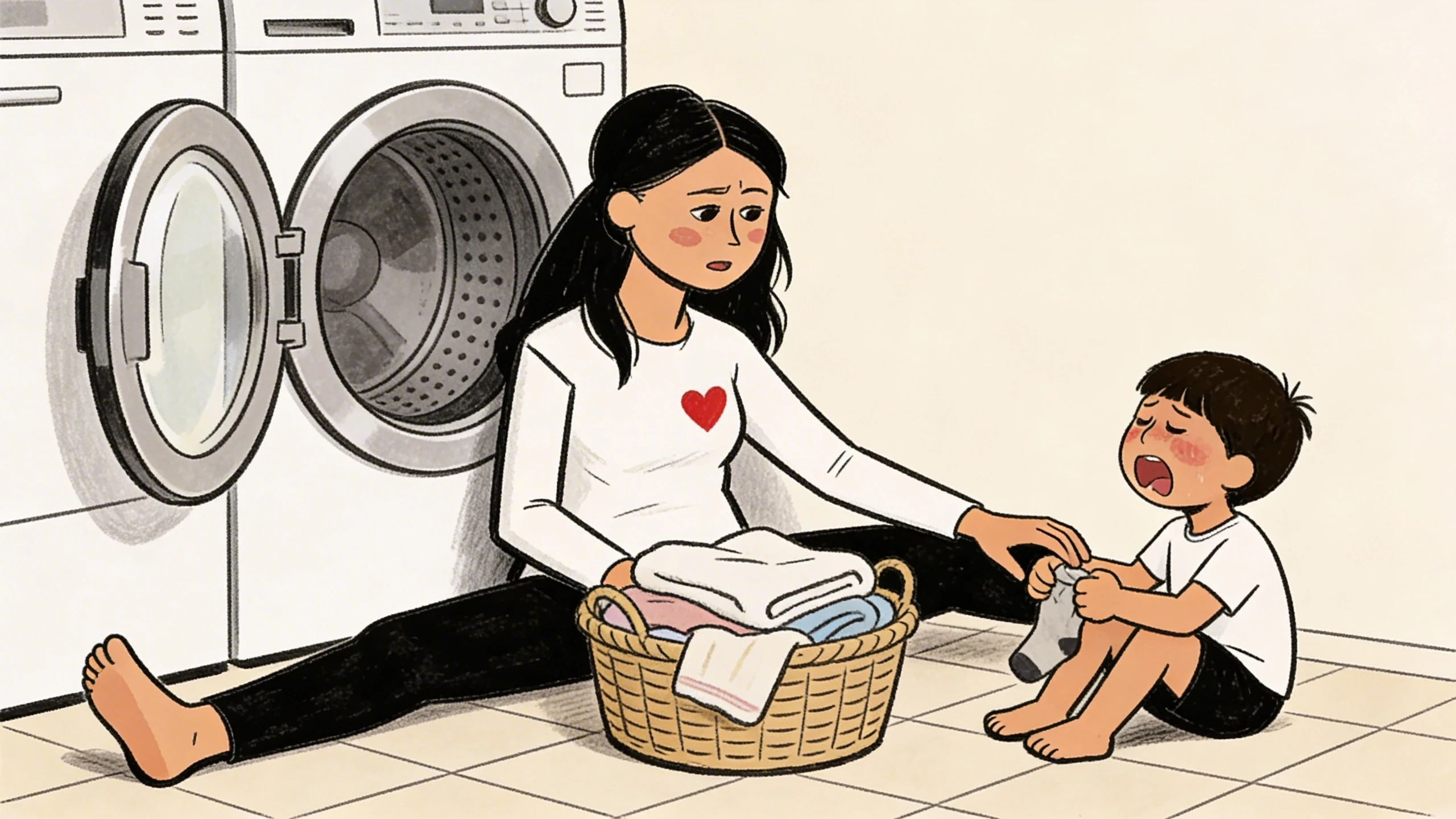
Step two: hold the boundary
This is where a lot of parents stop. They validate and then... wait. If you consistently stop at validation without stating where the limit is, you accidentally teach your child that big emotions are a negotiation tool.
State the boundary immediately after the validation. The two pieces are delivered as one connected thought.
What this sounds like
- "I hear you don't want a nap. It's so tough. Right now it's time for a nap."
- "I can see you're upset about the green bowl. We're not getting another bowl right now."
- "I hear you want another show. It's time for dinner now."
Notice what's missing: explanations. Explanations invite negotiation. The boundary is a statement of reality, not the opening argument in a debate. Your child will probably scream louder. That's the boundary doing its job.
Step three: shift to a yes
Your kid has heard "no" four hundred times today. A constant stream of "no" builds pressure, and these scripts work even when you're out in public. The third step releases some of that pressure by giving your child something to move toward.
The yes is a small choice that returns a sense of control, not a bribe and not giving in.
Offer two options. Both are acceptable to you:
- "It's nap time now. Swing or sandbox after your nap?"
- "We're not getting another bowl. What toy after we eat?"
- "It's time for dinner. Dinosaur cup or star cup?"
The choice redirects attention from what they can't have to what they can decide.
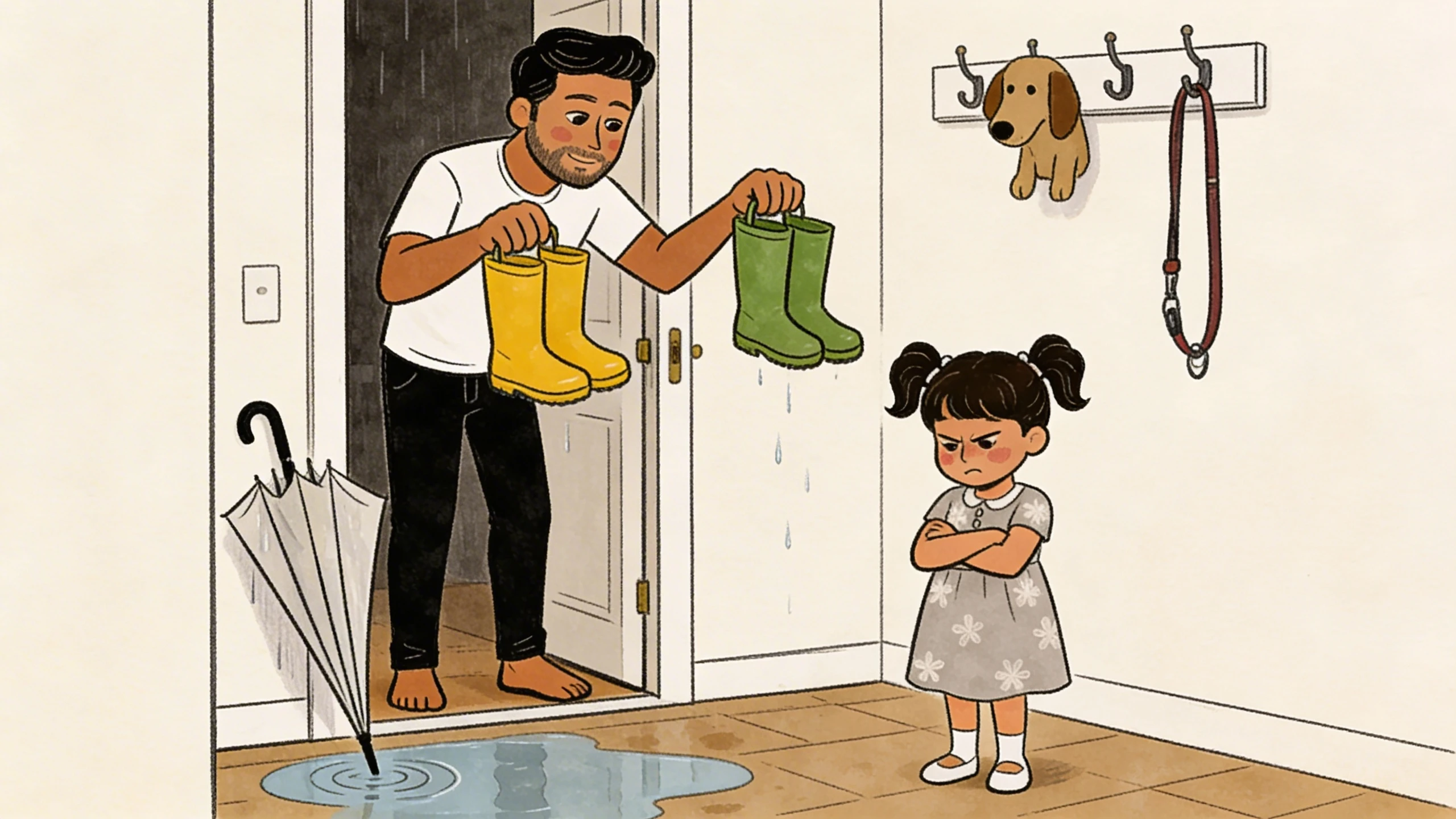
What to do with your body while you wait
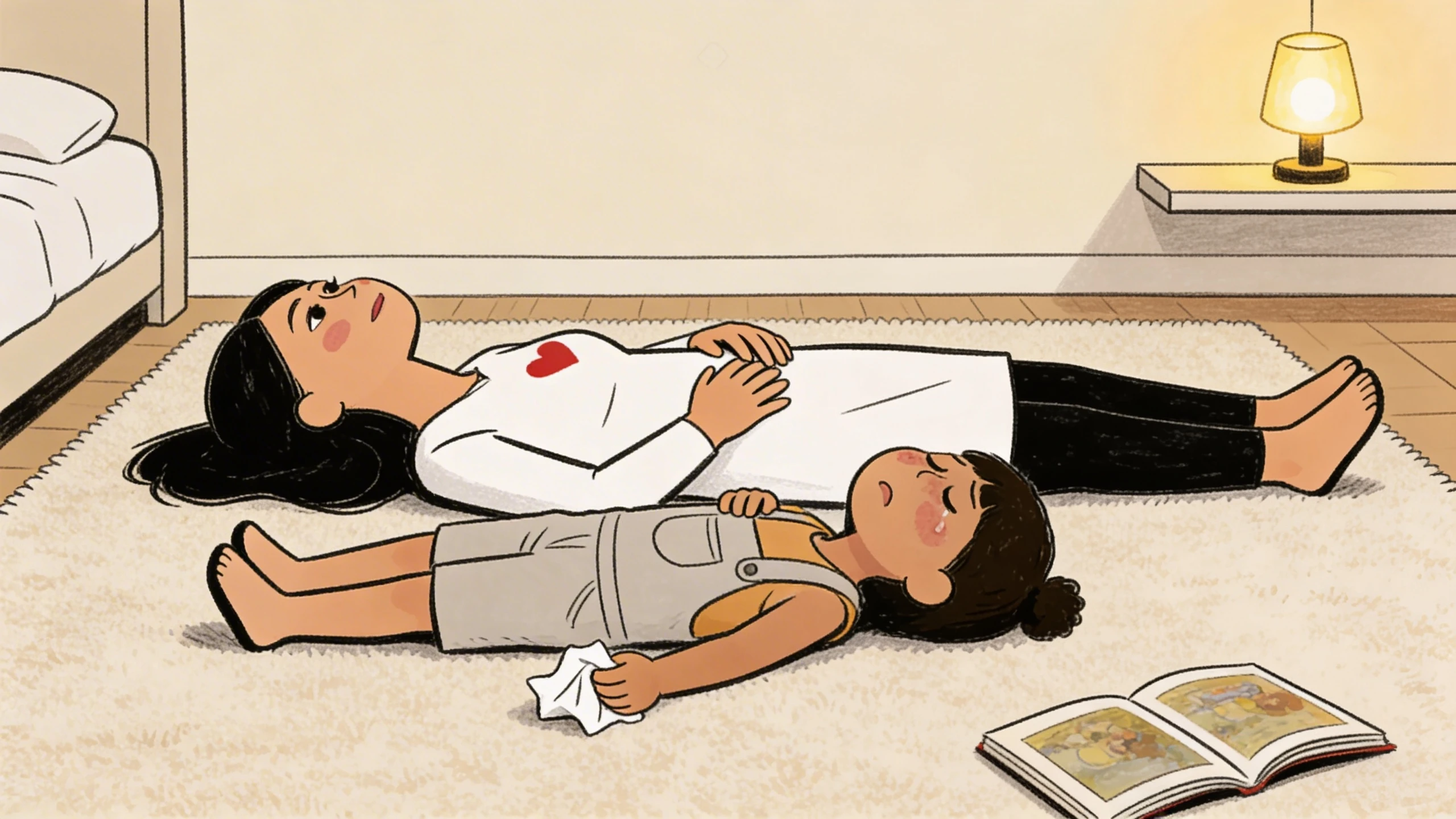
The three steps take thirty seconds. The tantrum might last another ten minutes. Here's what to do with yourself in the gap.
Stay close. If your child won't let you touch them, sit a few feet away. If they're hitting or kicking, calmly move them or yourself so nobody gets hurt: "My job is to keep you safe."
Talk less. Extra words overload a flooded nervous system. Keep it to short phrases: "I'm here." "You're safe."
Drop your volume. When they get louder, you get quieter. A quiet voice forces them to tune in, which means they have to quiet down first.
When you're the one about to lose it
Use the silent mantra: Nothing is wrong with my child. Nothing is wrong with me. I can cope with this. If you can't stay calm, say "I need a minute too. I'll be right back." The calm-down toolkit quiz can help you figure out which strategies work for your nervous system.
After the storm: tell the story
Once the tears have stopped and the eyes are focused again, you have a brief window where real learning happens.
Tell your child the story of what just happened. "You were really mad that we had to leave the park. You screamed and kicked. I stayed with you. You cried, and then you felt better." This narration gives them vocabulary, reinforces that the relationship survived, and builds the prefrontal cortex wiring they'll need to say "I'm frustrated" instead of throwing a shoe.
Practice the replacement skill
After the narration, pick one small skill to rehearse. Deep breathing. Saying "I'm mad" with words. Stomping feet instead of hitting. You're planting the seed so that in six months, there's a faint neural pathway that says wait, there might be another option.
The three mistakes that make tantrums longer
Quick list of what to avoid, because knowing the right moves means nothing if you're accidentally doing the wrong ones.
- Reasoning with a screaming child. Their brain cannot process your logic right now. Save it. Every word you add is noise on an overloaded system.
- Ignoring the tantrum entirely. Your child is communicating the only way they currently can. Walking away tells them their distress doesn't matter enough for you to stay. Stay close, even if you stay quiet.
- Punishing the meltdown. Timeouts, threats, taking things away. These assume a child possesses self-regulation skills they have not developed yet. You're punishing a skill deficit, and it backfires every time.
FAQ
You don't wait to intervene. Start the three steps (name the feeling, state the boundary, offer a yes) as soon as the meltdown begins. Then stay close and wait it out. Most tantrums peak within two to five minutes once a child feels heard. If it stretches longer, your quiet presence is still the right move.
That's the tantrum talking, not your child making real requests. 'I want the bear. No bear. I want milk. No milk.' Don't chase these demands. Acknowledge them once ('I hear you') and wait. You can sort out what they need after the storm passes.
Yes. The framework applies from about age one through six, and a modified version works well into the school years. Older kids can process slightly more language during a meltdown, but the core sequence (validate, hold the boundary, redirect) stays the same.
Safety becomes job number one. Calmly hold their hands if they're hitting, or move them to a safer spot. Use simple words: 'I won't let you hit. I'm keeping us safe.' Once the physical danger is managed, resume the three steps. The boundary around safety is non-negotiable.
Only if you stop at validation and skip the boundary. Naming feelings without holding limits teaches kids that big emotions are a negotiation tool. The boundary in step two is what prevents that. Validation plus a firm limit reduces tantrum frequency over time.