
TLDR
- Your child's brain cannot handle the chaos. The prefrontal cortex that manages emotional regulation is still under construction. A holiday gathering is a neurological assault course for a toddler.
- Meltdowns are communication, not defiance. Fear of strangers, sensory overload, hunger, broken routine. Your kid is telling you something is wrong the only way they know how.
- Prevention beats intervention. Tell the story of the gathering in advance. Show pictures of unfamiliar relatives. Bring comfort items from home.
- Create a secret signal before you leave the house. A hand on your elbow, a silly face. Your child needs a way to reach you when the room is loud and you're mid-conversation with your aunt.
- Validate the feeling, hold the boundary. Acknowledge that waiting for dinner is miserable AND stop them from throwing a bread roll at cousin Kevin. Both at once.
- The car ride home matters. Kids bottle up emotions at gatherings. Don't be surprised if the biggest meltdown happens in the driveway.
The scene you already know
You spent three days planning the outfit. You prepped the casserole. You told yourself this year would be different.
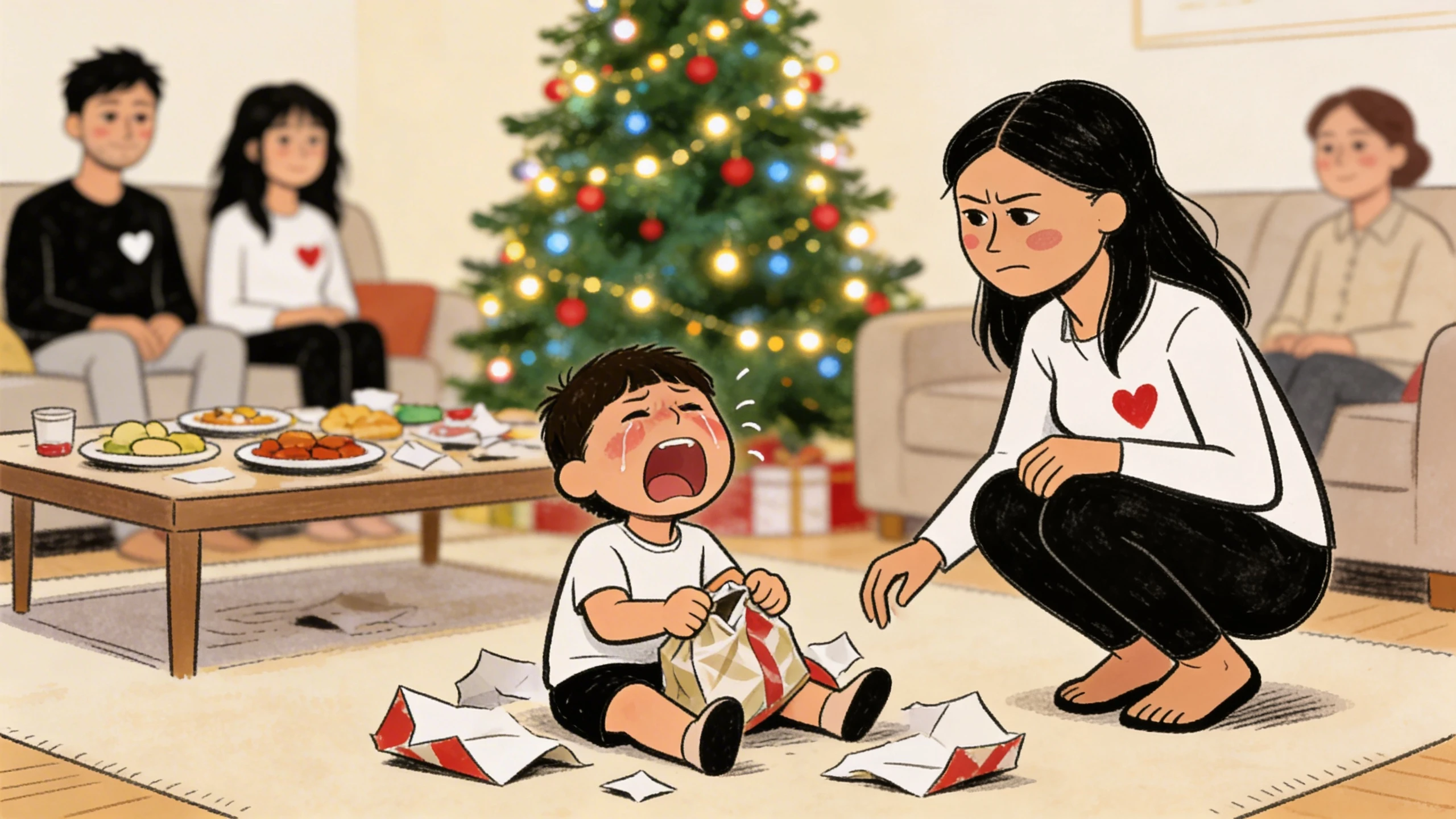
Then, forty minutes into Christmas at Grandma's house, your toddler is face-down on the carpet, screaming like someone stole their kidney, because a great-uncle they've never met tried to pick them up.
And now every relative in the room is looking at you with that expression. The one that says well, are you going to do something about that?
Your kid is having a completely predictable neurological response to an environment that would overwhelm most adults, too. Bright lights, competing smells, a dozen unfamiliar voices, zero routine, and Aunt Linda's perfume hitting like a chemical weapon.
Once you understand why this happens, you can plan around the stress of disrupted routines before it ever escalates. And when it escalates anyway (because it will), you'll know exactly what to do.
Grandma is watching
The Tantrum Toolkit course will help you handle meltdowns at family gatherings
You'll respond to your child calmly in front of relatives without performing for their approval or freezing up.
Why your toddler loses it at gatherings
Their brain is still under construction
The prefrontal cortex (the part that manages emotional regulation) doesn't finish developing until the mid-twenties. Your toddler's version is roughly as functional as a half-built bridge. They can walk across it on a calm Tuesday at home. They cannot walk across it during a seven-course dinner with fourteen strangers.
When environmental demands exceed the brain's capacity, the system crashes. Screaming, hitting, going limp, refusing everything. A capacity problem, plain and simple.
The sensory ambush
Think about a typical family gathering from floor level. Bright overhead lights. The oven, the candles, Uncle Steve's cologne, all competing for nasal real estate. Six conversations happening at once. Someone's kid is banging a new drum set in the next room.
Your child's nervous system is processing all of this without any of the filtering mechanisms adults have spent decades building. A sensory ambush, and your toddler walked in with zero body armor.
The emotional pile-up
Within a single gathering, your child might cycle through fear (unfamiliar faces), anxiety (where did you go?), frustration (dinner is taking forever), and anger (you're talking to someone else while they need you). Each emotion stacks on the last. By the time the meltdown arrives, it's been building for an hour.
Three things to do before you leave the house
Tell the story first
Kids regulate better when they know what's coming. Before the gathering, walk your toddler through the day like you're narrating a picture book.
"We're going to Grandma's house on Saturday. There will be a lot of people there, and some of them will be new to you."
For relatives your child has never met, show them pictures in advance. "You've never met your cousin Maya because she lives far away. She has brown eyes, just like you. Want to see what she looks like?" Make the unfamiliar more familiar. Every piece of predictability you add reduces the chance of a meltdown.
Create a secret signal
Before you walk out the door, establish a communication system. Something your child can use to tell you I need you when the room is chaos and you're trapped in a conversation about mortgage rates.
"No matter how busy I get today, you can always come to me. If I'm talking to someone, put your hand on my elbow so I know you need me."
This signal is your child's emergency cord. It gives them agency in an environment where they otherwise have none.
Pack the comfort kit
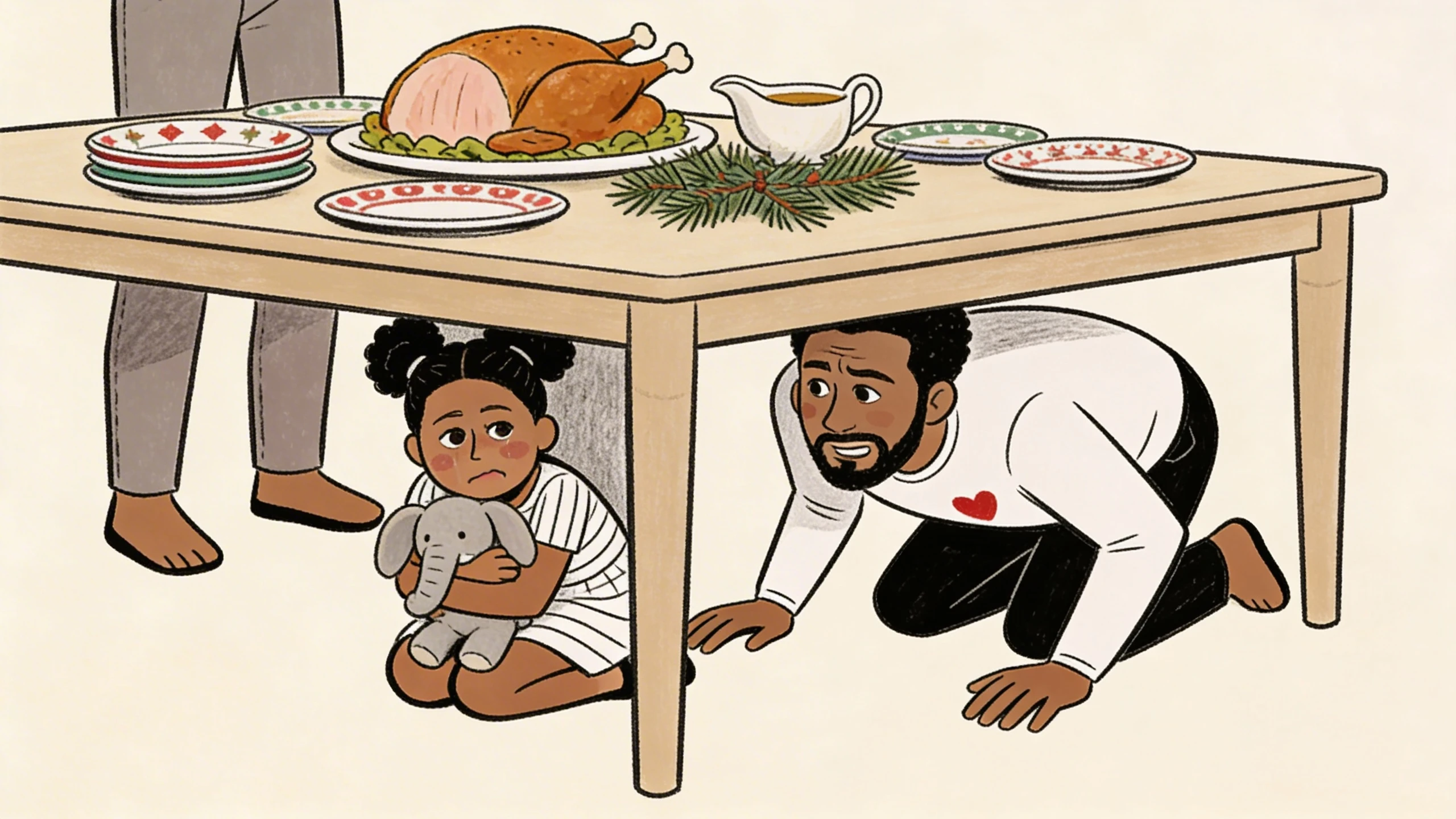
Bring their favorite stuffed animal, blanket, or fidget toy. These are portable pieces of home. When everything else is unfamiliar, that ratty stuffed penguin is the one constant. Sensory objects (squishy toys, textured blankets) give your child something to do with their hands besides hit.
When the meltdown happens anyway
Because it probably will. Preparation reduces meltdowns. It doesn't eliminate them.
How to respond when your child melts down at a gathering
- Get low and get closeMove to your child's level. Crouch, kneel, sit on the floor. Your body language communicates safety faster than words. Open arms, relaxed shoulders, eyes on them.
- Validate the feeling out loudName what you see. 'I hear you. You're hungry and waiting for food feels terrible when your tummy is grumbling.' You're translating their experience back to them.
- Drop the logicYour child cannot process reasoning when they're dysregulated. 'Dinner will be ready in ten minutes' means nothing to a flooded nervous system. Use tone and body language instead.
- Hold the boundary without anger'It's okay to be upset that dinner isn't ready, but I can't let you hit.' 'I know you're frustrated, but food isn't for throwing.' Empathy and firmness are not opposites.
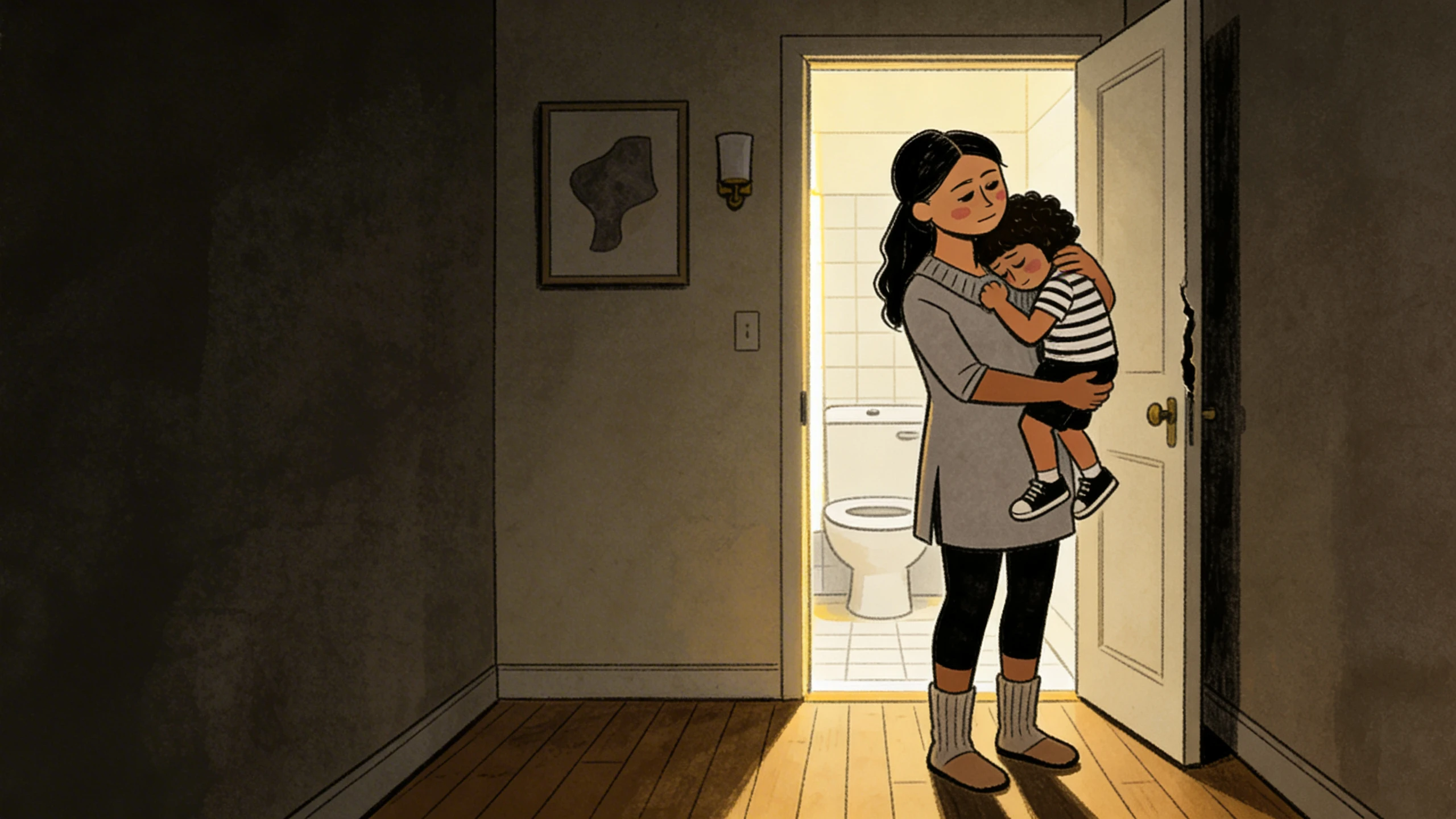
- Move to a quiet space if neededSometimes the environment itself is the problem. Take your child to a quiet room, a hallway, or even the car. Removing sensory input is often more effective than any technique.
- Sprinkle connection before escalationThroughout the gathering, preemptively connect. A pat on the back. A hand squeeze at the dinner table. Small moments of contact keep their emotional tank from emptying.
The hardest part is staying composed while every relative watches you. Your nervous system wants to match your child's panic. Resist that pull. One dysregulated person in the room is enough.
What to do about the audience
Other people are watching. And some of them have opinions.
Your job is to parent your child, not to perform for the room. When Grandpa mutters that you're "too soft" or your sister-in-law suggests the kid "just needs a firm hand," that commentary is about their discomfort, not your parenting.
You don't owe anyone an explanation mid-meltdown. "We've got this, thanks" is a complete sentence. If you need backup, have a plan with your partner beforehand: one person handles the child, the other handles the relatives.
The pressure of dealing with meltdowns when everyone is watching can push you into reactive parenting you'll regret later. The audience doesn't get a vote. Your child's nervous system does.
And when someone questions your approach after dinner, you can have that conversation then. Or not.
The car ride home (don't skip this)
Here's something most parents miss: the gathering isn't over when you leave.
Kids often hold it together at events because the environment doesn't feel safe enough for a full release. They suppress. They cope just enough to get through it.
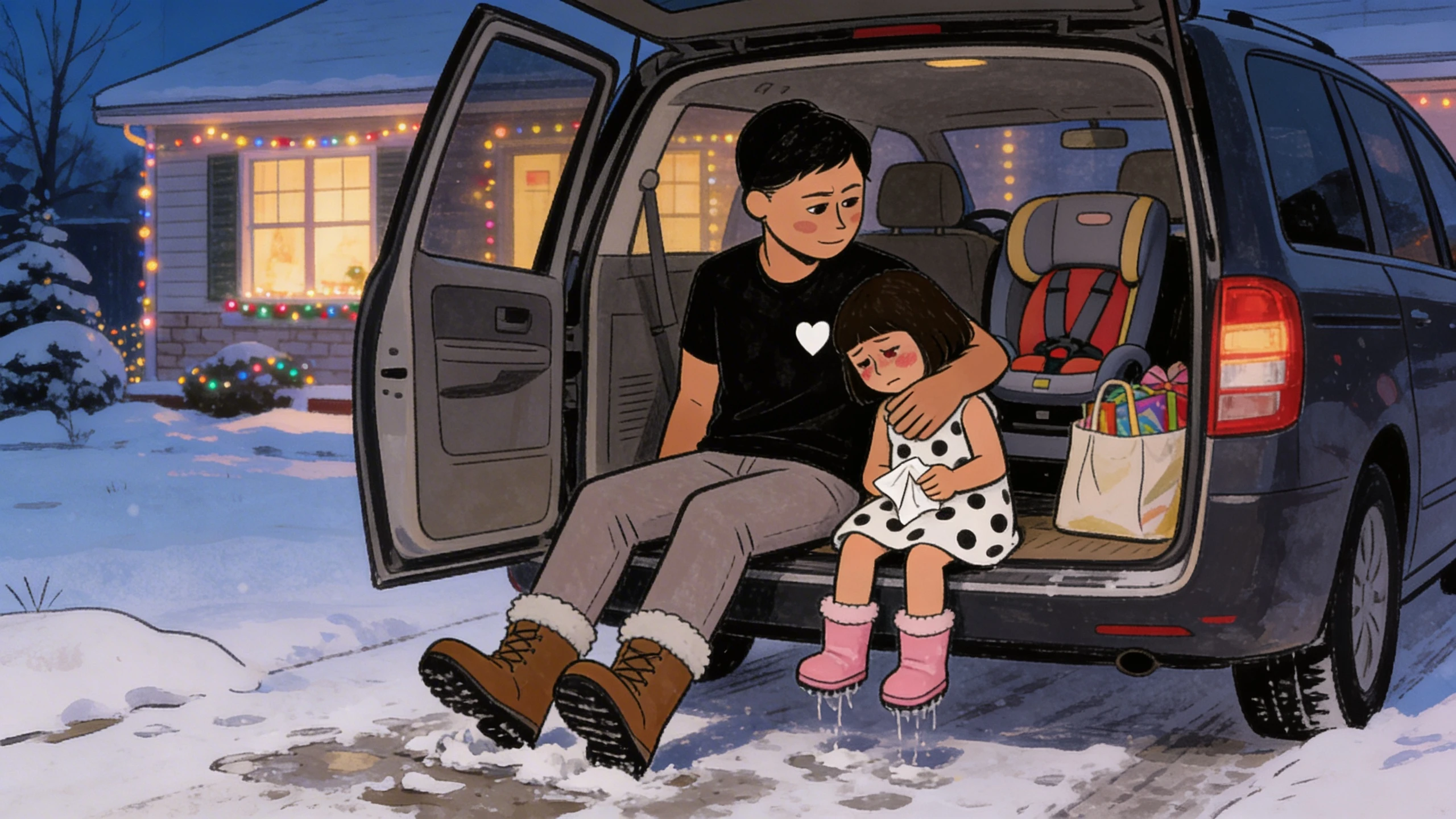
Then they get in the car, and the dam breaks.
Expect the post-gathering meltdown and make room for it. This is emotional backlog having a safe place to land.
You don't need a therapeutic debrief. Keep it simple: "That was a big day. Did anything feel tricky?"
At bedtime, try again. "Was there anything at Grandma's house that was hard for you?" Sometimes the answer is "no" and sometimes it's a twenty-minute cry about a cousin who took their cookie. Both are fine. The point is that you asked.
The long game
Every gathering where you respond with connection instead of punishment is a deposit in their emotional bank account. You're teaching them that big feelings are survivable and that losing it doesn't mean losing you.
Your toddler won't remember whether the turkey was dry. They'll remember whether you were safe.
Next year will be easier. Their brain will be a little more built. And Aunt Linda will still wear that perfume.
FAQ
No, but adjust. Arrive early before the crowd builds, plan a shorter visit, or choose one gathering instead of three in a weekend. Complete avoidance removes the chance for your child to gradually build tolerance for new environments.
Clinging is a normal stress response. Your child is using you as a safe base, which is healthy attachment behavior. Don't force interaction. Let them observe from your lap first. Many kids warm up after thirty to sixty minutes if given zero pressure.
Validate the emotion, hold the boundary. 'I know you're frustrated, but I can't let you hit.' If it continues, calmly remove them to a quieter space. Physical boundaries like gently holding their hands or leaving the room are appropriate when safety is involved.
Have a one-liner ready: 'We've got this, thanks.' Don't engage in a parenting debate while your child is screaming. If someone persists, your partner can redirect them. Address it later, privately, when everyone has calmed down.
Meltdowns at overstimulating events are developmentally typical through ages four to five, and can still happen through age seven. The frequency decreases as the prefrontal cortex matures. If meltdowns are intensifying after age five, discuss it with your pediatrician.