
TLDR
- Ignoring doesn't extinguish tantrums. It escalates them. A toddler whose cries get no response doesn't learn to stop. They learn to scream louder, longer, and with more desperation. The research on this is clear.
- Your child cannot calm down alone. The prefrontal cortex that handles self-regulation is under construction until roughly age seven. Expecting a toddler to 'cry it out' is asking for a skill their brain hasn't built yet.
- Comfort and giving in are two different things. You can hold a boundary and still acknowledge a child's feelings about that boundary. The limit stays. Your presence stays too.
- Suppressed feelings don't vanish. They leak. Kids who learn to stuff emotions become clingy, anxious, or defiant. The feelings always find another exit.
- The alternative takes three steps and thirty seconds. Name the feeling, state the boundary, offer a small choice. Then stay close and let the storm pass. That's it.
You were told to just ignore it
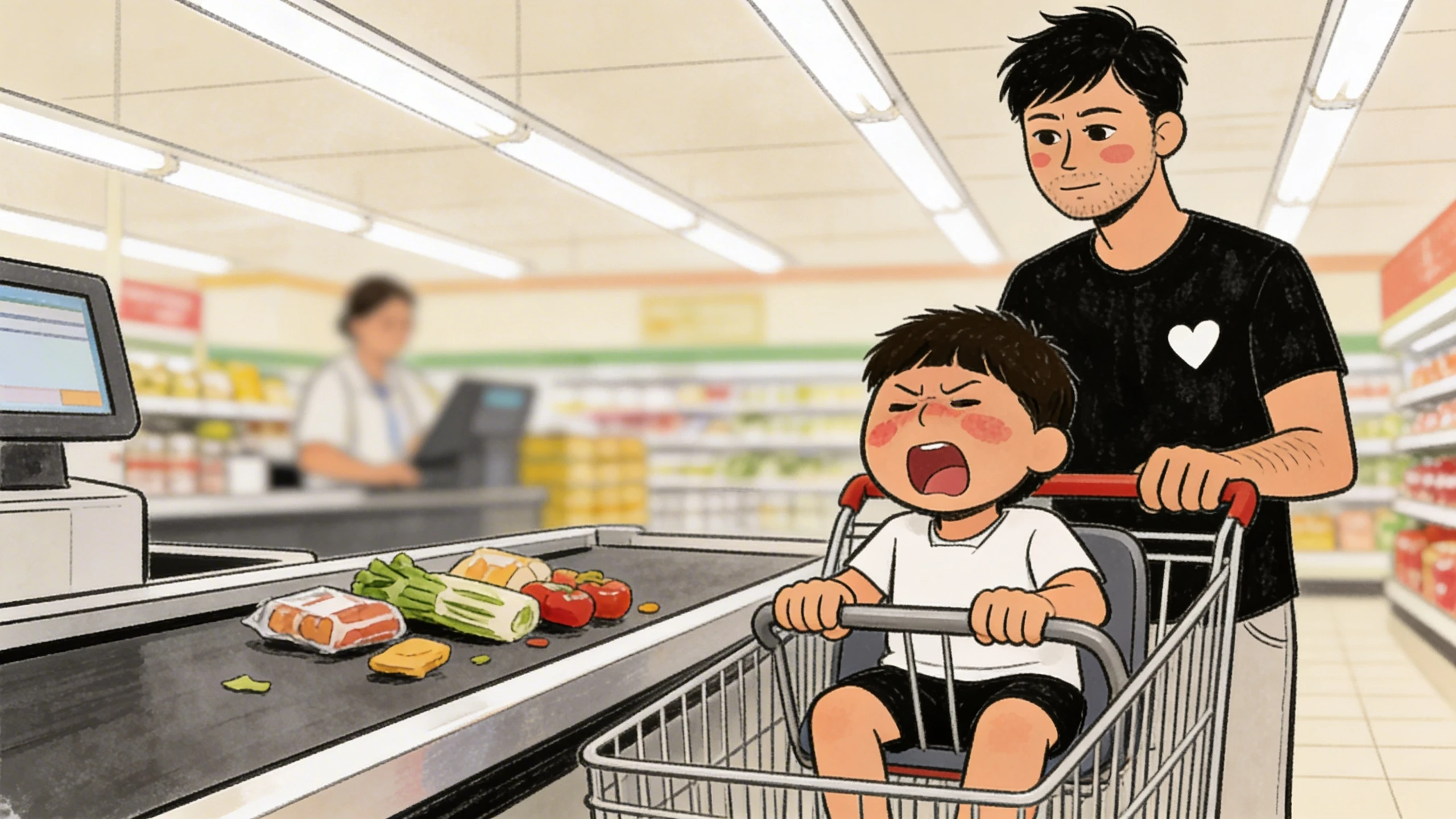
Someone told you (your mother, a parenting book from 2004, a stranger at Target) that the best thing to do when your toddler melts down is walk away. Don't make eye contact. Don't engage. The tantrum is "attention-seeking behavior," and if you remove the attention, the behavior stops.
This advice sounds logical. It also doesn't work.
The theory comes from behavioral extinction: remove the reinforcement, and the behavior fades. That works for lab rats pressing levers. It does not work for a two-year-old whose entire nervous system just went offline because the banana broke in half.
Ignoring a dysregulated toddler teaches them that nobody comes when things feel impossible. And the brain science behind why withdrawal backfires is well-documented at this point.
Ignoring made it worse
The Tantrum Toolkit course will replace the ignore strategy with something that works
You'll have a response that shortens the meltdown instead of stretching it into a standoff.
Why the "ignore it" strategy backfires
The premise of ignoring is that your child is choosing to tantrum. That the screaming is a strategy, a calculated bid for attention that will stop once it fails to produce results.
Here's the problem: toddlers don't have the neurological hardware for calculated bids. The prefrontal cortex (the part that plans, reasons, and weighs consequences) is under construction. During a meltdown, even the limited wiring they have goes dark. What's left is a limbic system running fight-or-flight with no brake pedal.
It makes tantrums longer and louder
When a distressed child gets no response, their stress response escalates. Cortisol keeps flooding. Heart rate stays elevated. The tantrum doesn't burn itself out because the child's nervous system has no way to downshift without an external anchor. That anchor is you.
Many parents who try the ignore approach report the same pattern: tantrums get more frequent, more intense, and harder to recover from. The opposite of what was promised.
It damages trust over time
A child mid-meltdown is communicating the only way their brain currently allows. When that communication consistently meets silence, they absorb a message: my distress doesn't matter enough for someone to stay. This isn't a single-incident problem. Repeated over months, it chips away at the sense of security that makes a kid willing to come to you with bigger problems later.
The long-term cost of ignoring is a child who stops believing you'll show up when things are hard.
What to do instead of walking away
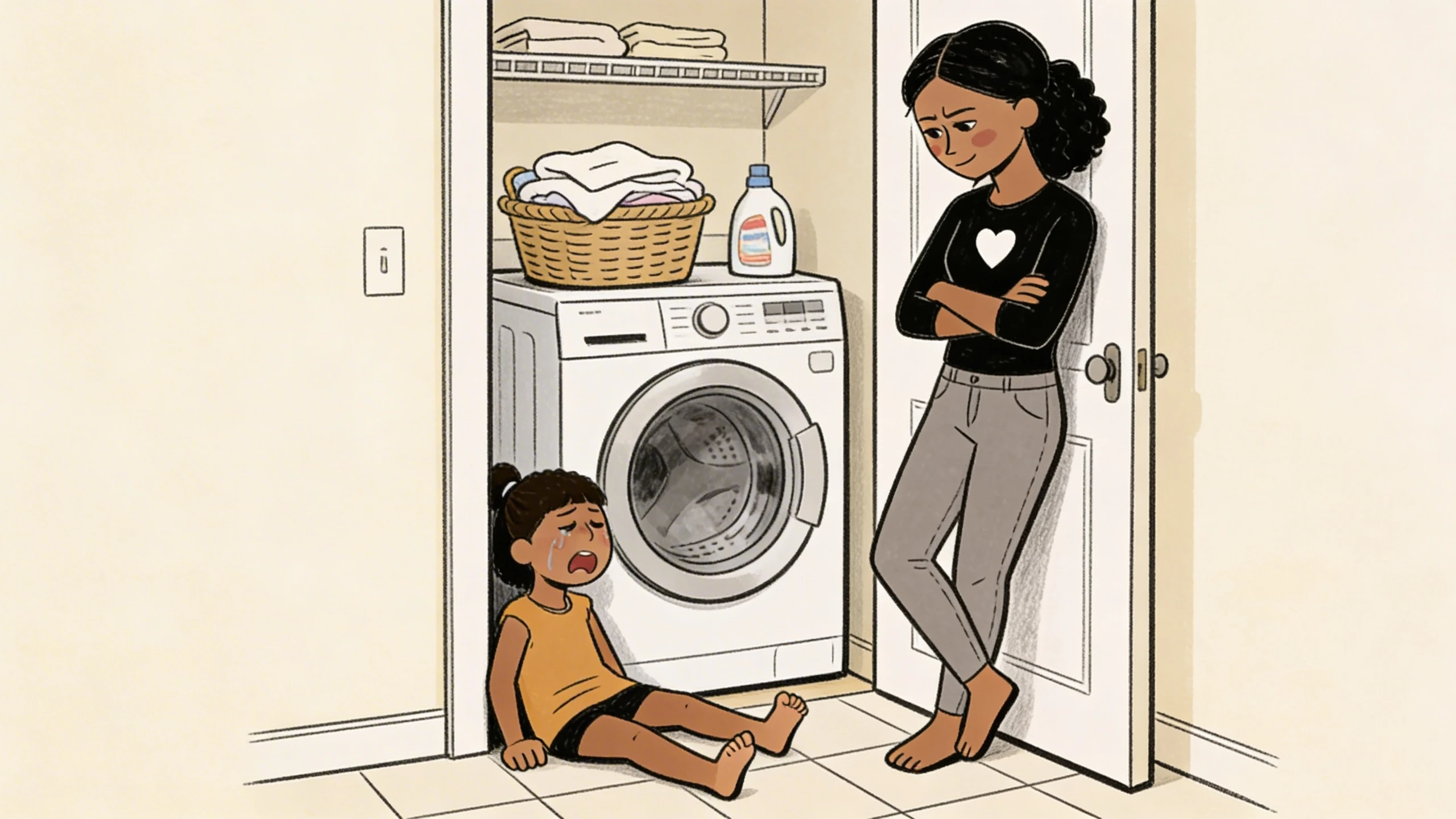
The alternative to ignoring isn't giving in. That distinction matters. You can hold every boundary you've set while also staying present through the fallout. Here's the framework that replaces the ignore strategy, and it takes about thirty seconds before the waiting begins.
How to respond to a tantrum instead of ignoring it
- Name the feeling out loudDescribe what you see: 'You wanted that toy and I said no. You're really mad right now.' You're not fixing anything yet. You're telling their nervous system that someone understands what's happening.
- State the boundary onceRight after the validation: 'And we're not getting the toy today.' No explanation. No negotiation. The boundary is a fact, delivered in the same breath as the empathy.
- Offer a small choiceGive two options you're fine with: 'Do you want to hold the cart or walk beside me?' This redirects attention from what they can't have to something they can decide.
- Stay close and go quietStop talking. Sit nearby. Your calm body does the regulating now. A flooded nervous system can't process paragraphs. Short phrases only: 'I'm here. You're safe.'
This is the same step-by-step script that works mid-tantrum, and the order matters. Validation before boundary. Boundary before redirect. Quiet presence through the rest.
The difference between comfort and caving
This is where parents get stuck. "If I comfort my kid during a tantrum, aren't I rewarding the tantrum?"
No. Rewarding would be handing them the thing they're screaming for every time they scream. That teaches screaming as a negotiation tool.
Comfort means staying present while maintaining the limit. "I hear you. You really wanted another episode. And it's time for dinner now. I'm right here." The boundary hasn't moved. You've just refused to abandon your kid while they process the disappointment.
Think of it this way. If you had an awful day and broke down crying, would you want your partner to leave the room until you stopped? Or would you want them to sit with you, even if they couldn't fix anything? Your toddler's brain works the same way, just with less vocabulary and more floor-throwing.
What happens when feelings get stuffed
Kids who learn that crying gets no response don't stop having feelings. They stop showing them. Those suppressed emotions leak out sideways: clinginess, sleep problems, nail biting, defiance, anxiety. The tantrum you "solved" by ignoring it resurfaces as a different problem.
When your guilt says you've already done the damage
Maybe you've been ignoring tantrums for months. Maybe it felt wrong every time and you did it anyway because the books said to. Self-compassion matters here, and here's why: you were following advice that sounded reasonable from sources that seemed credible.
The fact that it didn't sit right with you is data. Your instinct was telling you something the extinction model missed. Your toddler is a small human whose brain is under construction, and they need a co-regulator until the wiring is done.
You can change the approach today. Not next week, not after you finish the parenting book. Today. The next tantrum is your first rep with the new method.
What the first few weeks look like
Tantrums won't vanish overnight. They might get briefly worse as your child tests whether this new response is real. Behavioral science calls this an "extinction burst" (the irony). Stay consistent. Within a few weeks, you'll notice the meltdowns get shorter. Your kid might take a shaky breath mid-cry. That breath is the first sign of self-regulation developing, and they learned it by watching you do it.
The real problem with extinction-based parenting
The ignore strategy belongs to a broader set of punishment-based approaches that assume children misbehave by choice and need consequences to course-correct. The evidence points the other direction. Toddlers tantrum because their brains aren't finished yet, because they feel passionately about everything, and because they cannot regulate their own emotional state without help.
Ignoring targets the symptom and misses the cause. The unmet need (frustration, overwhelm, hunger, the wrong cup) doesn't disappear because you looked away. It just finds a new exit: a different tantrum, an hour of whining, a bedtime battle.
The developmental window for building self-regulation runs until roughly age seven. Every tantrum you stay present through is a rep in that training program. Every tantrum you walk away from is a missed rep.

After the storm passes
Once the crying slows and the eyes refocus, you have a brief window. The prefrontal cortex is back online. This is when learning happens.
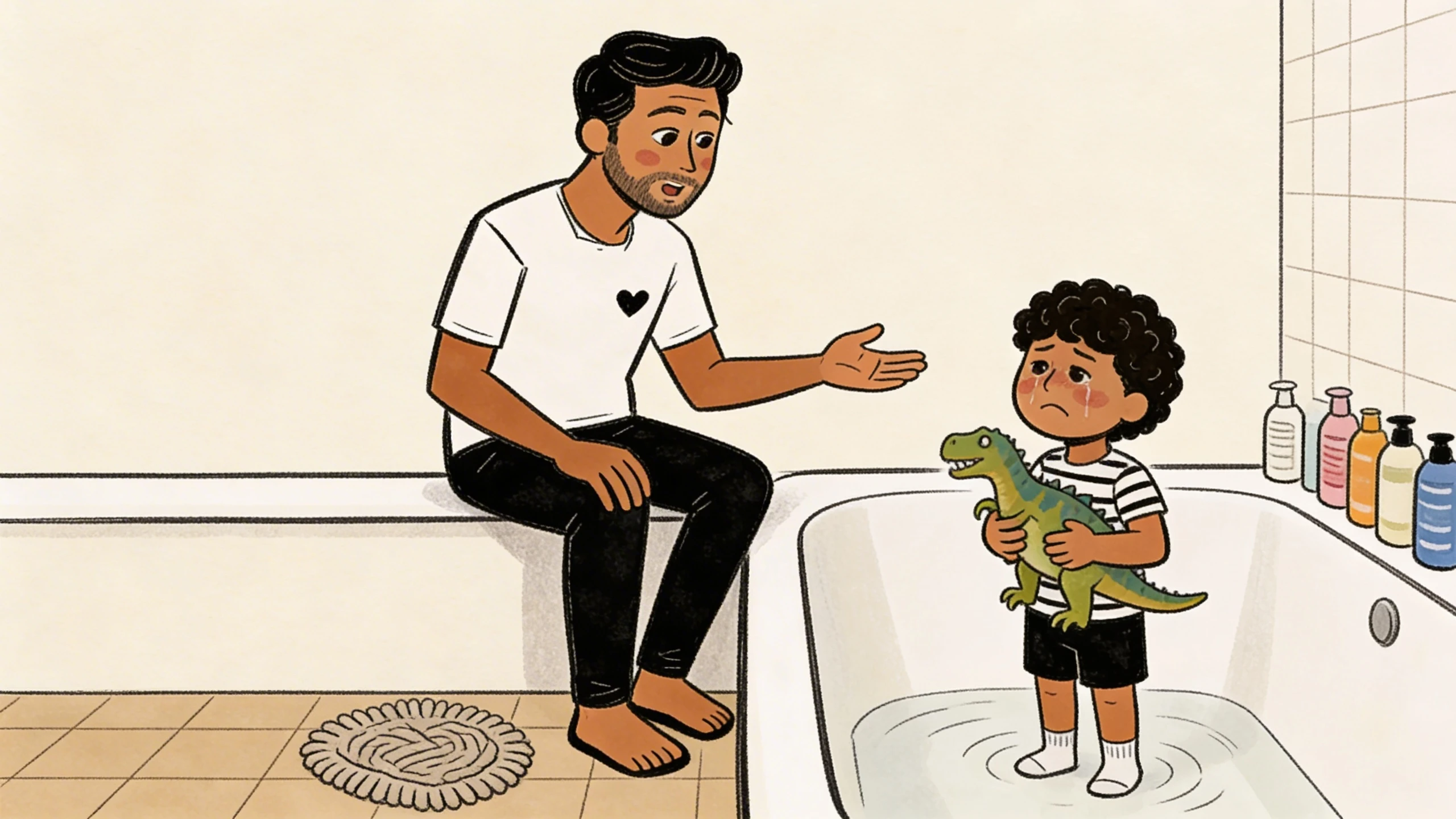
Tell the story: "You were so upset about bath time. You cried a lot. I stayed with you, and you calmed down." This narration gives your child the vocabulary they'll eventually use instead of screaming. It also confirms that the relationship survived the storm intact.
Keep it to two or three sentences. A lecture at this point overloads a brain that just came back online.
FAQ
For attention-seeking behaviors in older children who already have self-regulation skills, planned ignoring of specific minor behaviors can be one tool. For toddlers and preschoolers mid-meltdown, no. Their brains cannot self-regulate, so ignoring increases distress instead of reducing it.
That's normal. Some tantrums are longer because the child is processing accumulated stress, not just reacting to the immediate trigger. Your presence doesn't guarantee a short tantrum. It guarantees your child isn't alone while their nervous system resets.
The opposite. Co-regulation builds the neural pathways for self-regulation. Children who are consistently co-regulated develop independent coping skills earlier than children who are left to figure it out alone. You're building the wiring, not creating a crutch.
Keep it brief: 'We're trying a different approach and it's working for us.' You don't need to convert anyone. If they push, the research on co-regulation versus extinction is widely available. Most people back off once they see your kid calming down faster.
Yes, and it matters. You can decline to engage with screaming as a negotiation tactic while staying physically present and emotionally available. Ignoring the behavior means not caving on the limit. Ignoring the child means walking away from their distress. Only one of those helps.