TLDR
- Build buffer time into every morning. If you know a meltdown is likely, start the leaving process 30 minutes early. Worst case, you arrive early. Best case, you avoid the whole blowup.
- Acknowledge their perspective before giving instructions. Kids cooperate more when they feel understood. 'I know you don't want to stop playing' does more than 'We're leaving NOW.'
- Give them something to move toward. A small anticipatory pleasure (choosing the car music, a snack, unlocking the car) gives their brain a reason to let go of the current thing.
- Offer choices about how, not whether. You're leaving. That's not negotiable. But 'Do you want to hop like a kangaroo or zoom like a rocket to the car?' gives them agency inside the boundary.
- Suppressed feelings show up later. If you have to physically carry them out, expect a meltdown over something trivial that afternoon. The emotions don't vanish. They get deferred.
The 7:47 AM hostage negotiation
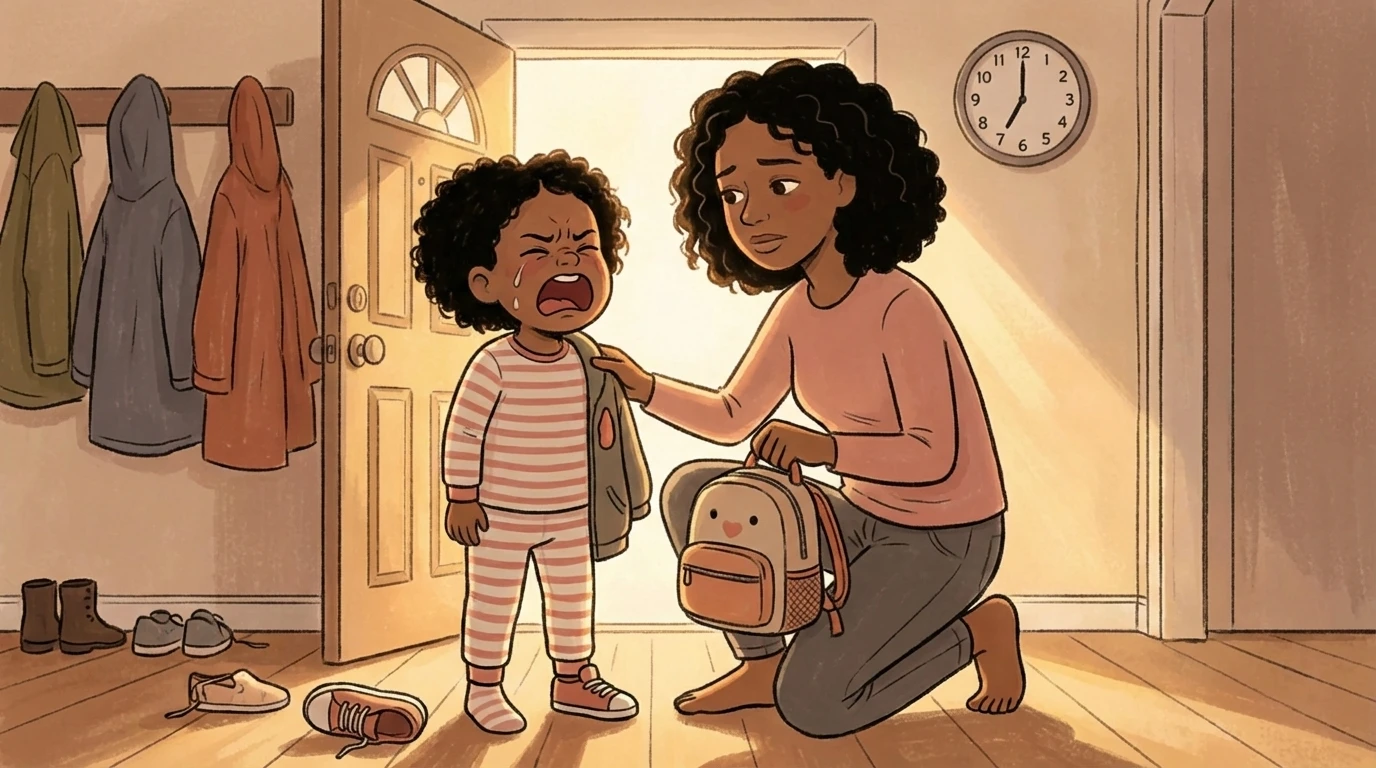
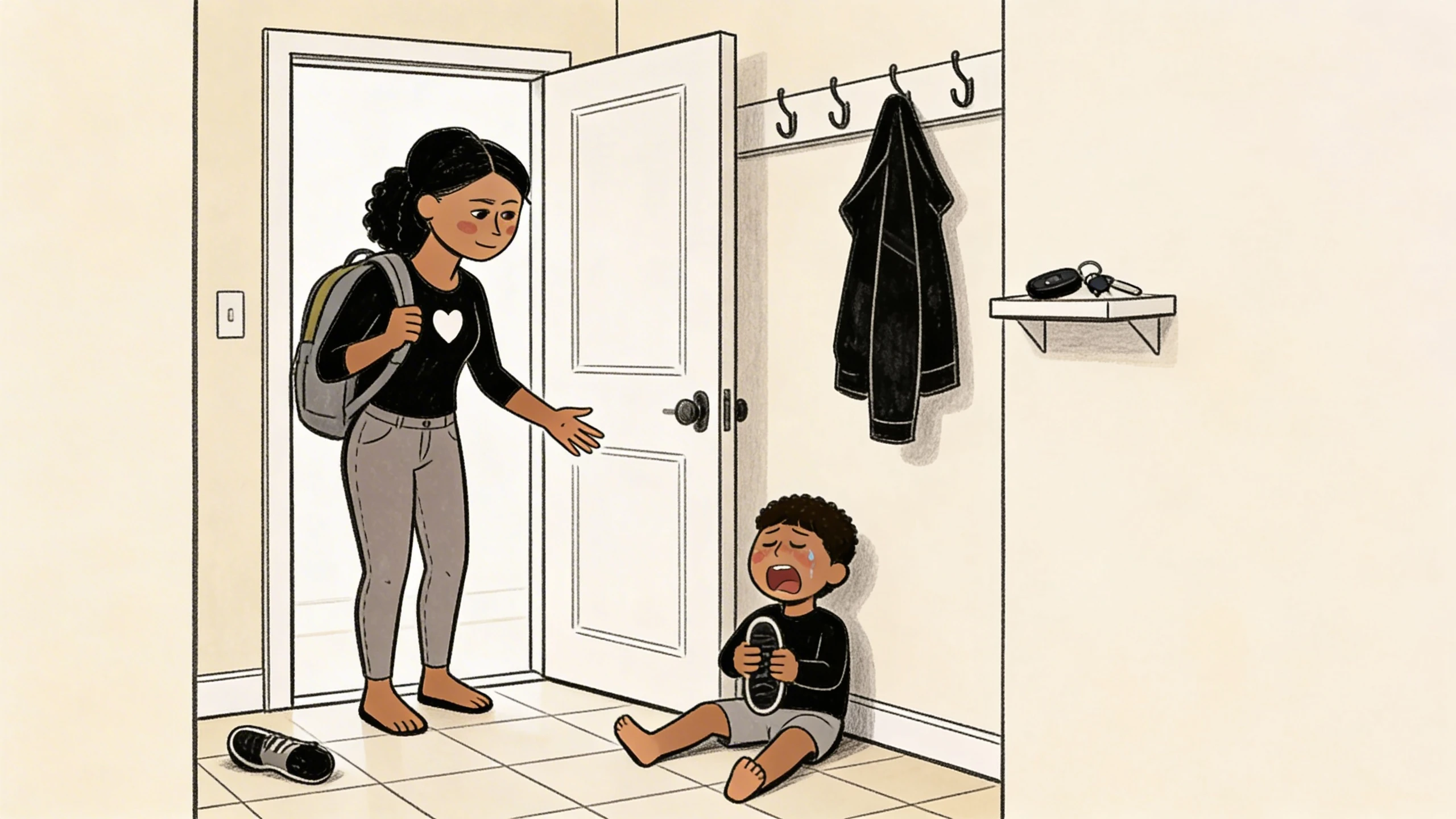
You've done everything right. Clothes are out. Breakfast is ready. You set an alarm fifteen minutes earlier because yesterday was a disaster. And now your four-year-old is on the floor, one shoe on, screaming because the other shoe "feels weird," and you're calculating exactly how late you'll be.
It will go on for more than three minutes.
Morning meltdowns aren't random. They follow a pattern, and once you see it, you can get ahead of most of them. Not all. But most.
Here's what's happening in your kid's brain at 7:47 AM, and what you can do about it that doesn't involve bribery or losing your voice before 8 o'clock.
Wrong toast, shoes off, clock ticking
The Tantrum Toolkit course will help you get out the door without tears
You'll defuse the breakfast standoff and reach the car on time with everyone's dignity intact.
Why mornings are a meltdown minefield
The emotional backpack theory
Kids carry around unprocessed feelings from previous days. Think of it as a backpack stuffed with every frustration, disappointment, and hurt that didn't get fully expressed at the time. A rough day at preschool. A moment when they wanted your attention and didn't get it.
Those feelings don't dissolve overnight. They sit there, compressed, waiting for a crack. And mornings are full of cracks.
A small trigger (the weird shoe) opens the floodgates for everything stuffed in that backpack. Your kid isn't melting down about footwear. The shoe was just the first crack in the seal.
Transitions are the trigger
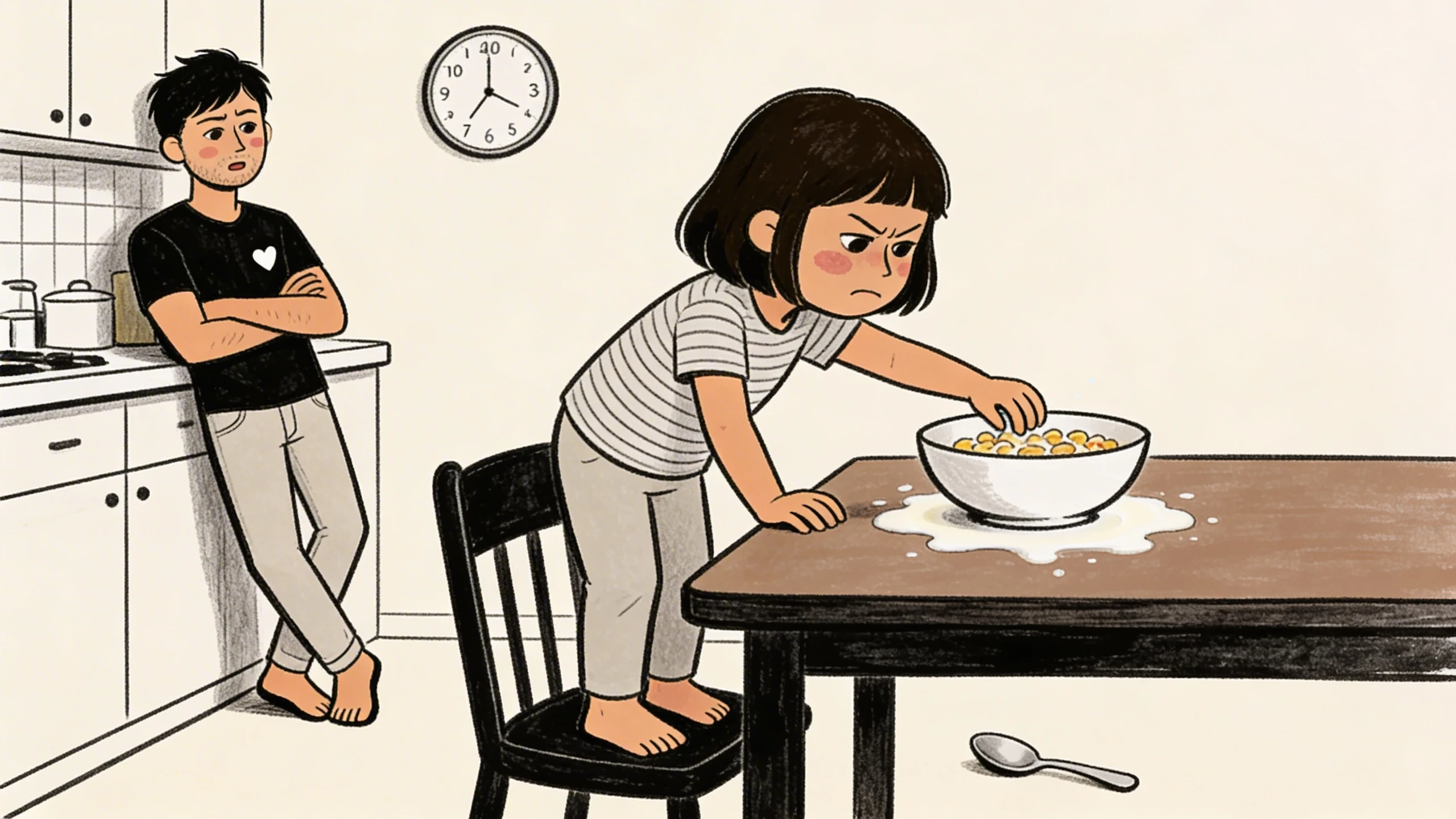
Every morning is a chain of transitions that can each spark resistance. Stop playing. Come to the table. Get dressed. Put on shoes. Get in the car. Each transition is a demand to abandon what they want and do what you want. That's five or six mini-power-struggles packed into forty-five minutes.
Wake-up mood sets the tone
If your child wakes up too early or too abruptly, the rest of the morning is playing defense. A kid who wakes naturally handles transitions better than one dragged out of sleep. The morning meltdown sometimes starts with how the morning begins.
The 30-minute rule
This feels stupidly simple. Start the leaving process 30 minutes earlier than you think you need to.
Not "wake up earlier." Just begin the transition to leaving with a half-hour of margin built in. You know the meltdown is coming. You've lived this exact morning forty times. Budget for reality instead of pretending today will be different.
Worst case: you arrive early and your kid plays on the playground before school starts. Best case: the meltdown happens, you have time to handle it without screaming, and you still leave on schedule.
The 30-minute buffer turns a crisis into an inconvenience.
What to say (and what to stop saying)
Acknowledge before you instruct
Your kid doesn't want to leave. This is rational. They're doing something they enjoy and you're asking them to stop.
So before you give instructions, acknowledge their reality: "I know you want to keep playing. You're having so much fun with those blocks."
Kids cooperate more when they feel understood, even when there's nothing in it for them. If you want your instructions to land, start by proving you see what they're losing.
Give them something to move toward
This gets confused with bribery. A bribe rewards the meltdown: "If you stop screaming, I'll give you candy." A motivator creates anticipation before the meltdown starts: "We're going to the car now. You get to pick the music."
You're giving their brain a small dopamine hit of anticipation. Something pleasant to move toward instead of just something pleasant being taken away:
- Choosing the car music
- A snack waiting in the car
- Getting to unlock the car with the key fob
- Racing you to the mailbox
- "Hop like a kangaroo or zoom like a rocket to the car?"
The key is knowing your kid. What gives that particular child a little thrill? Use it.

When nothing works: the carry-and-go
Sometimes you've done everything right and your kid is still face-down on the floor at T-minus two minutes. Pick them up and go.
While carrying: grunt empathy
If you can manage it, squeeze out an occasional acknowledgment as you stagger to the car: "I know. You're so mad. You didn't want to leave."
If you can't manage empathy because you're too activated, just focus on not yelling. Bite your tongue. Self-regulation beats perfect parenting every time.
Expect the deferred meltdown
When you override your child's emotions and physically move them, those feelings don't disappear. They get stored. Expect a meltdown later that day over something absurdly minor. A broken cracker. The wrong cup. A sock seam. That delayed meltdown is the backpack unzipping.
When you let that second meltdown run its course (with connection, not punishment), the whole system resets. Kids who fully express their emotions become weirdly cooperative afterward. Sometimes for days.
Why carrying them out works long-term
Your kid learns you're serious. Consistent boundaries, even messy ones, create safety. You only have to do this once or twice before your child starts taking "we're leaving in five minutes" at face value.
How to get out the door without a meltdown
- Start 30 minutes earlyBegin the leaving process with a half-hour buffer. You know the meltdown is coming, so budget for it instead of pretending today will be different.
- Acknowledge their perspective firstBefore giving instructions, name what they're losing: 'I know you love playing with those trains.' Kids cooperate more when they feel heard.
- Offer a motivator to move towardGive them something pleasant ahead: picking the car music, a snack, racing you to the door. This creates anticipatory pleasure instead of just loss.
- Give choices about how, not whetherThe departure isn't negotiable. But 'Do you want to walk or hop to the car?' gives them a sense of control within the boundary.
- Use older siblings as alliesIf you have multiple kids, get the older one excited about leaving first. Peer enthusiasm is more persuasive than parental commands.
- When all else fails, carry and goPick them up, acknowledge their feelings if you can manage it, and leave. Self-regulation first. Perfect parenting second. The feelings will resurface later, and that's okay.
Prevention beats reaction
If morning meltdowns happen three or more times a week, the fix is prevention, not a better in-the-moment strategy.
Regularly helping your child process emotions on your schedule (not theirs) shrinks the emotional backpack. Fewer stored-up feelings means fewer surprise blowups over the wrong shoe.
What does that look like? Connection time. Dedicated, phone-down, follow-their-lead play. Even ten minutes a day where your kid directs the activity and gets your full attention. It sounds unrelated to morning meltdowns, but it lightens the emotional load that causes them.

The whale story (or: let them finish the game)
A mother faced her five-year-old refusing to leave the playground after a game about a human-eating whale. She felt the familiar chest-tightening, paused, gathered their things, then walked over: "We need to leave now. How would you like to leave the park?"
He decided the whale would swallow a squid that would squirt black ink, making it too dark inside, so the boy would have to come out. Less than a minute later, they were walking to the car hand in hand.
The kid didn't need to win. He needed to finish. Giving him the "how" while holding the "whether" turned a standoff into a creative collaboration.
You won't always have time for the whale game. But when you do: "We're leaving. How do you want to do it?"
FAQ
The buffer reduces the stakes but won't eliminate every meltdown. Look upstream: is your child getting enough sleep? Is there an ongoing stressor at school or home? Chronic morning meltdowns often signal something bigger than the morning itself. Consider adding daily connection time to lighten their emotional load.
No. A bribe rewards bad behavior after it starts. A motivator gives your child something pleasant to move toward before the meltdown begins. You're not saying 'stop crying and you get a cookie.' You're saying 'let's go, you pick the music.' The timing and framing matter.
Some inconsistency is fine. Kids adjust to different people having different styles. What hurts is unpredictability within one person: calm Monday, screaming Tuesday, giving in Wednesday. Pick a shared baseline (like the 30-minute buffer) and let each parent execute it their way.
Yes, within reason. Tears in the car are emotions finally coming out. Stay calm, acknowledge what they're feeling, and let them cry. Don't lecture. Don't punish. The crying is the processing. Once it passes, you'll often see surprising cooperation for the rest of the day.