TLDR
- The audience is irrelevant. Your child is the only person who matters right now. Every second you spend worrying about what the stranger in aisle seven thinks is a second you're not helping your kid.
- Public tantrums feel different but the tools are identical. The same validate-boundary-redirect sequence works at Target, the airport, and the playground. The only new variable is your own embarrassment.
- Drop your agenda before you drop to their level. You cannot simultaneously finish your grocery list and co-regulate a three-year-old. Pick one.
- Move to a quieter spot to reduce overload, not to escape judgment. Relocating lowers sensory input for your child and gives both of you room to breathe.
- Every public meltdown you handle well builds their regulation for next time. Your child is watching how you respond under pressure. That data gets stored and replayed for years.
The grocery store meltdown is here and everyone is watching
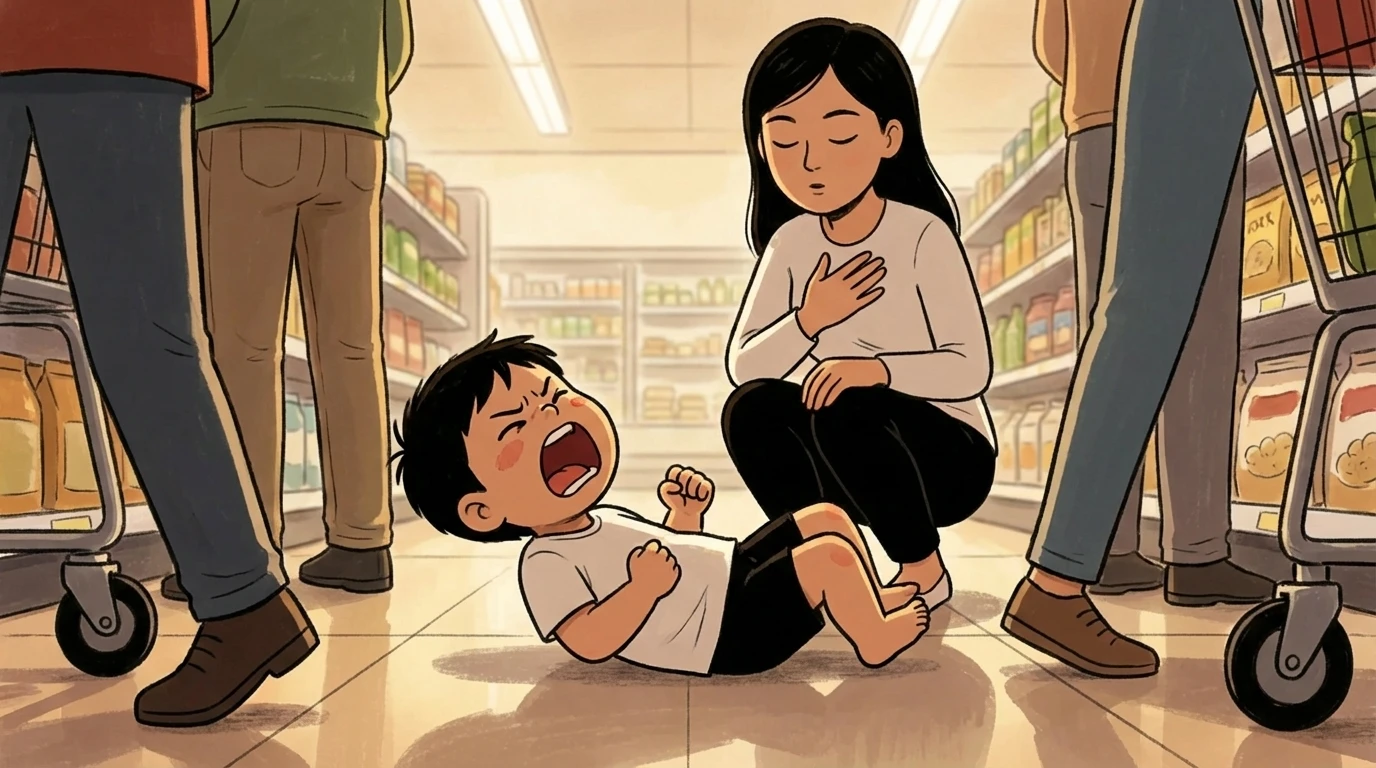
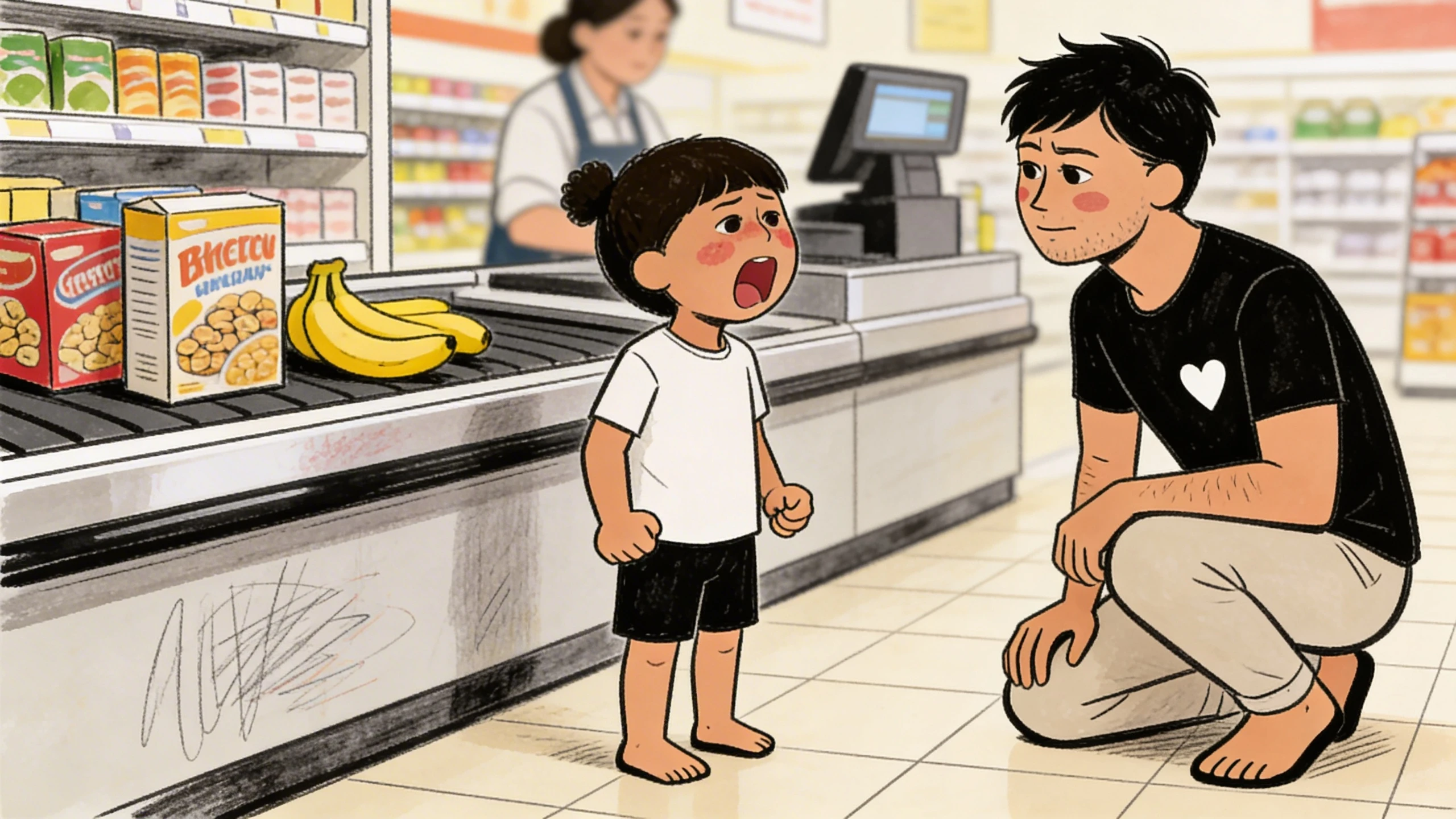
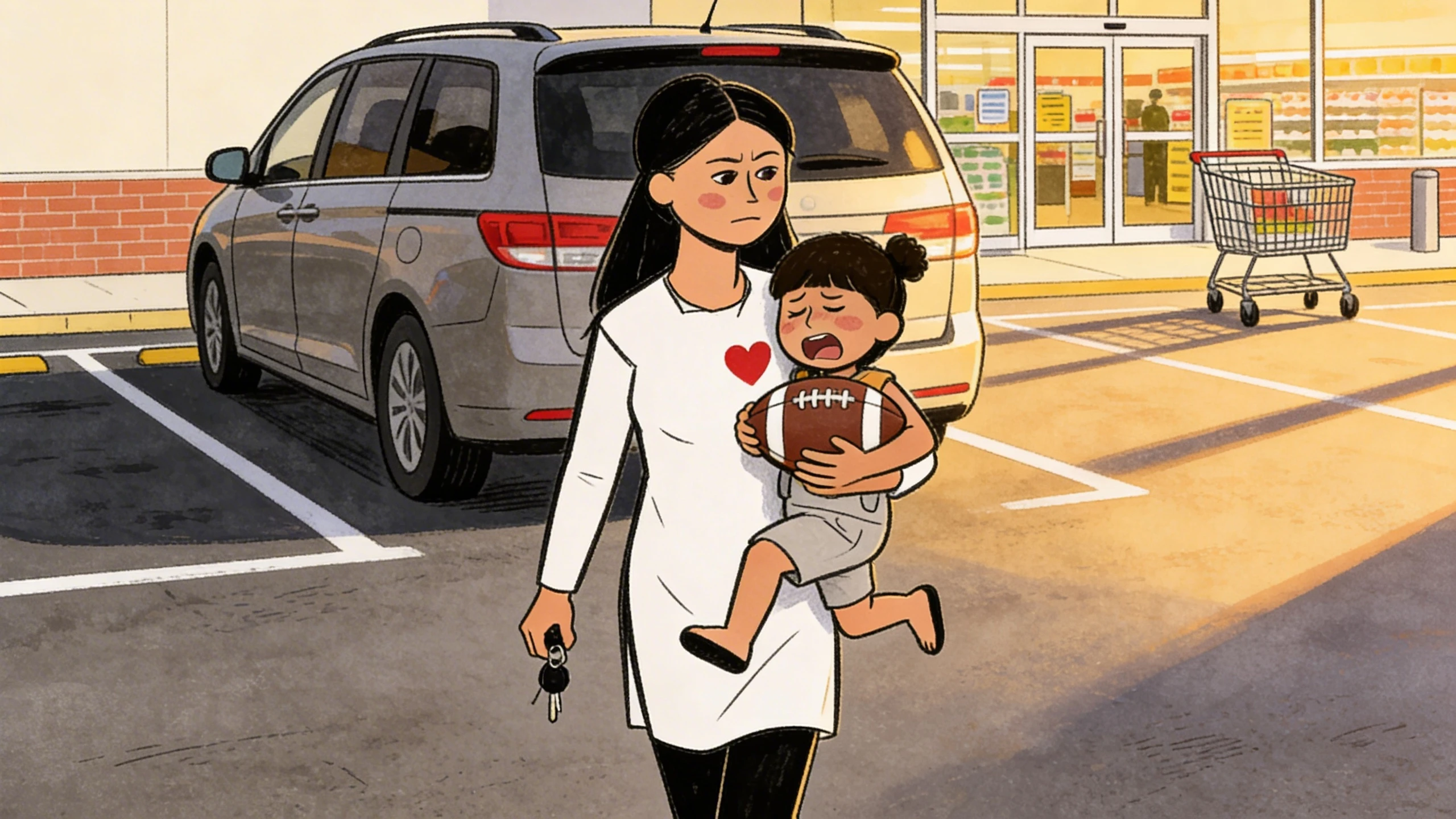
Your three-year-old has spotted the candy display. You said no. And now every person in the checkout line is getting a front-row seat to a full-volume meltdown echoing off the fluorescent lights.
Your first instinct is to end it fast. Grab the kid, abandon the cart, escape to the parking lot. Or cave on the candy just to make the screaming stop.
Both options feel urgent. Neither one helps.
Public tantrums are regular tantrums with an audience. The meltdown mechanics are identical to what happens at home. Your child's emotional brain has taken the wheel and their logical brain has clocked out. The only new ingredient is a dozen strangers, and the hot shame crawling up your neck.
They're probably not judging you. And even if they are, their opinion is not your problem right now.
Strangers staring at you
The Tantrum Toolkit course will help you handle the grocery store meltdown
You'll move from frozen-in-the-aisle to calm exit in under two minutes, audience or not.
Why public spaces are tantrum factories
Stores, restaurants, and airports are designed for adults. For a toddler, they're a sensory assault course.
Everything your child wants is at eye level. Grocery stores deliberately place candy, toys, and bright packaging where small hands can reach. Your kid didn't develop a sudden character flaw in aisle four. The environment is engineered to trigger impulse, and your three-year-old has zero impulse control to fight back with.
The control problem
At home, your child has some agency. They pick which cup, which show, which snack. In public, they're strapped into a cart, dragged through a building they didn't choose, told not to touch anything, and expected to hold it together for forty-five minutes.
Add hunger, a skipped nap, or the tail end of a long day, and you've built the perfect conditions for a meltdown. Expecting a toddler to stay composed in a grocery store is like expecting yourself to stay calm after four hours of sleep and a parking ticket.
What to do when the screaming starts
The sequence is the same one that works at home. You've seen it in the step-by-step tantrum scripts: validate, hold the boundary, redirect. In public, you do it faster and with fewer words.
How to handle a public tantrum
- Stop and drop your agendaWhatever you came to the store for is no longer the priority. Put the cart aside. Crouch down. Your errand can wait. Your child cannot.
- Regulate yourself firstTake three slow breaths. Unclench your jaw. If your heart is pounding, you are not ready to help anyone yet. Your child's nervous system reads yours before your words.
- Validate in two sentences or fewerName what they feel and what triggered it: 'You're so upset we can't get that toy. That's really hard.' Then stop talking. Extra words overload a flooded brain.
- Hold the boundaryRight after validating: 'And we're not getting it today.' The boundary is a fact, not a negotiation. Say it once, calmly, and don't repeat it.
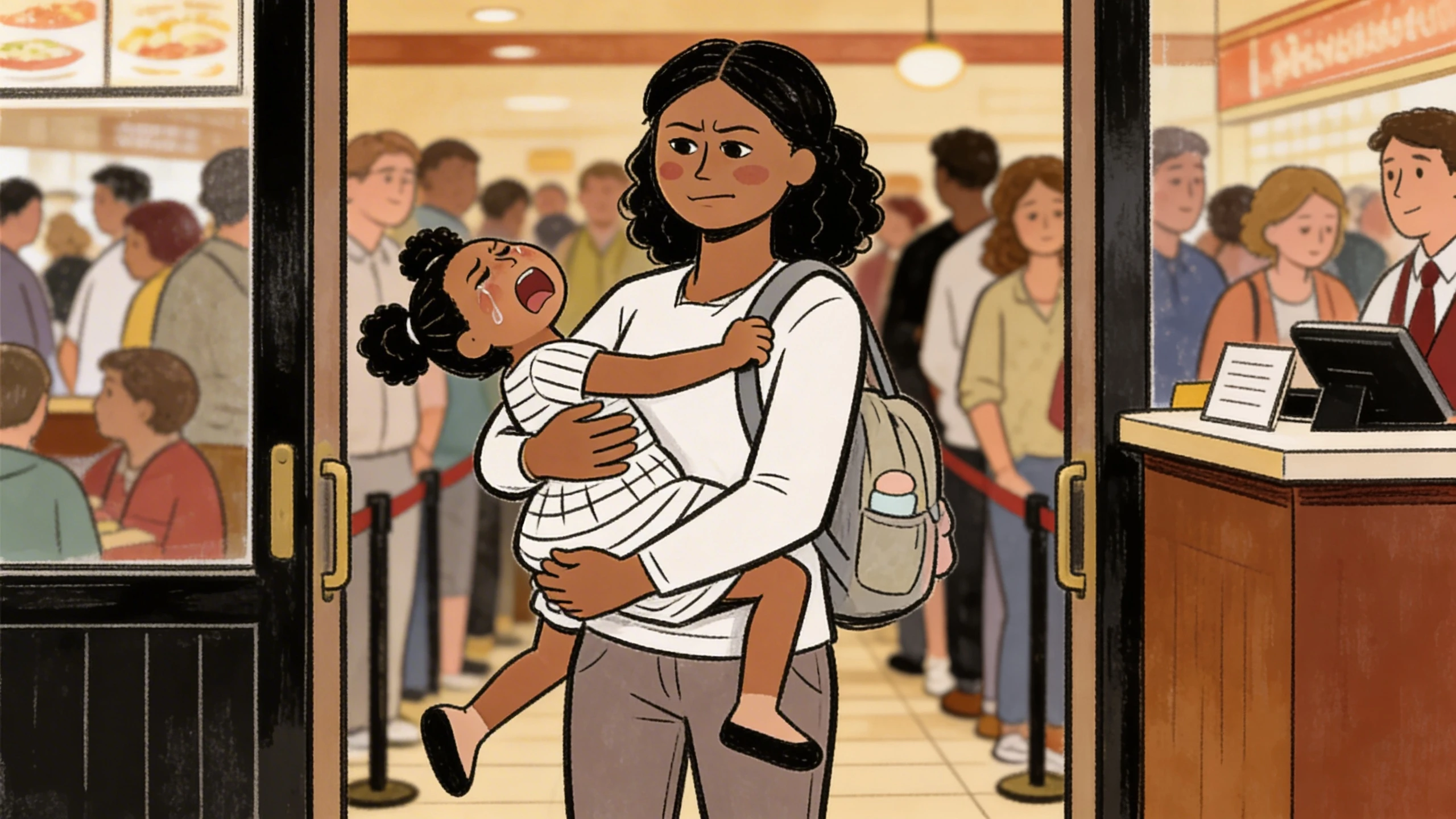
- Relocate if neededMove to a quiet aisle, a bench outside, or your car. Less stimulation means faster de-escalation for both of you.
The relocation step matters more in public than at home. A busy checkout line with beeping scanners adds sensory fuel to an already overloaded system. Stepping outside cuts the stimulation in half.
The creative yes
Once you've validated and held the boundary, offer something to move toward. "We're not getting candy today. When we get home, do you want your snack on the porch or at the table?" The choice gives your child a sliver of control without caving on the limit. Setting limits in public works the same way it does at home: firm boundary, small yes, no debate.
How to handle the audience
Here's the part nobody prepares you for. Your child is screaming, you're doing everything right, and a woman three feet away is staring at you like you just committed a crime.
Your loyalty belongs to the three-year-old, not the stranger. The mental anchor: "The most important person in this moment is my child. Everyone else can wait."
The shame spiral
The embarrassment is real. Your face is hot, your thoughts are racing ("everyone thinks I'm a terrible parent"), and part of you wants to snap at your kid just to prove to the audience that you're Doing Something. That impulse comes from shame, not from good parenting instinct.
Self-compassion after these moments matters. The internal script that helps: "I'm handling this. My kid is having a hard time, and I'm showing up for them."
Reframe the stares
Most adults have watched a toddler melt down in a store. A decent number of them are remembering their own kid doing the same thing last week. The stares that feel like judgment might be recognition. And even if someone genuinely disapproves, their disapproval costs you nothing. Your child's trust in you costs everything.
When you can't stay calm yourself
Staying calm while your child screams in public is harder than staying calm at home. The audience adds pressure. The noise bounces off hard surfaces. Your own fight-or-flight system activates.
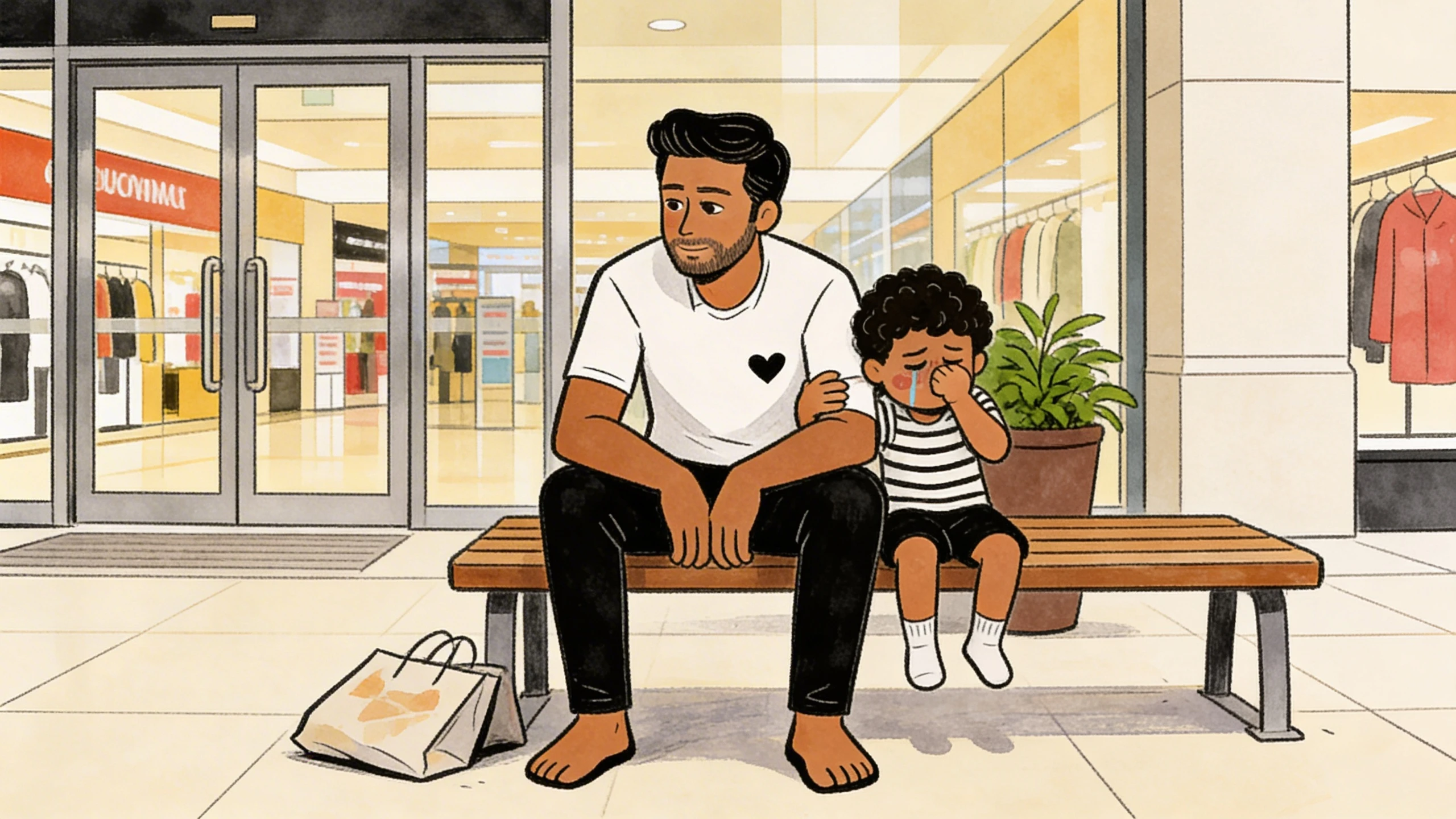
If you feel yourself losing it, tag out. Tell your partner "I need sixty seconds." If you're alone, park the cart, pick up your child, and walk to the car. Breathe until your heart rate drops.
Two dysregulated people in a checkout line just escalate each other. Your regulation has to come first. The calm-down toolkit quiz can help you figure out which strategies work for your nervous system, so you have something to reach for when the screaming starts.
Preparation that prevents some of the meltdowns
You won't prevent all public tantrums. But you can reduce the frequency by addressing the most common triggers before you leave the house.
Tell them the plan
"We're going to the store. We're getting milk and bread. We won't be getting any toys today. Do you want to bring your car or your dinosaur in the cart?" This preview gives your child a sense of what's coming and reduces the shock of "no" when they spot something they want.
Time it right
Schedule errands after meals and naps, not before. A hungry, tired toddler in a store is a meltdown waiting to happen. Stack the odds in your favor by going when everyone's fed and rested.
Pack the bag
Snacks, water, a small toy. They're tools that keep your child's basic needs met so their nervous system has a shot at staying regulated.
After you get home
The tantrum is over, you're back in the car, and your kid is sniffling in the backseat eating crackers like nothing happened. You, on the other hand, feel like you just ran a marathon.
Don't skip the debrief. Once everyone's calm: "You were really upset at the store. You wanted that toy and I said no. You cried a lot, and then you calmed down." This recap teaches emotional vocabulary and shows your child the relationship survived the storm.
Then give yourself credit. You didn't yell. You didn't cave. You held it together in front of an audience, and your kid watched you do it. That's data their brain stores for the next twenty years.
FAQ
Not automatically. Try validating and relocating to a quieter spot first. If the tantrum is escalating and your child is unsafe or you're losing your own regulation, leave. But abandoning the errand every time teaches your child that meltdowns are an exit strategy.
You don't owe anyone an explanation. A brief 'We're okay, thanks' is enough. If someone is openly rude, ignore them. Your job in this moment is your child, not managing the feelings of an adult stranger who can regulate themselves.
If you hand them a cookie every time they scream in the checkout line, yes. They'll learn screaming produces cookies. Validate the feeling, hold the boundary, and offer a choice that doesn't involve what they're demanding. The 'creative yes' redirects without rewarding the meltdown.
Public spaces hit kids with sensory overload, zero control, and temptation at eye level. Stores are designed to trigger impulse purchases in adults, and your three-year-old has even less resistance. The environment is genuinely harder for them.
Most children outgrow frequent public meltdowns between ages four and six as the prefrontal cortex develops. But stress, hunger, or exhaustion can trigger meltdowns in older kids too. The frequency drops as their self-regulation improves, especially with consistent co-regulation.