TLDR
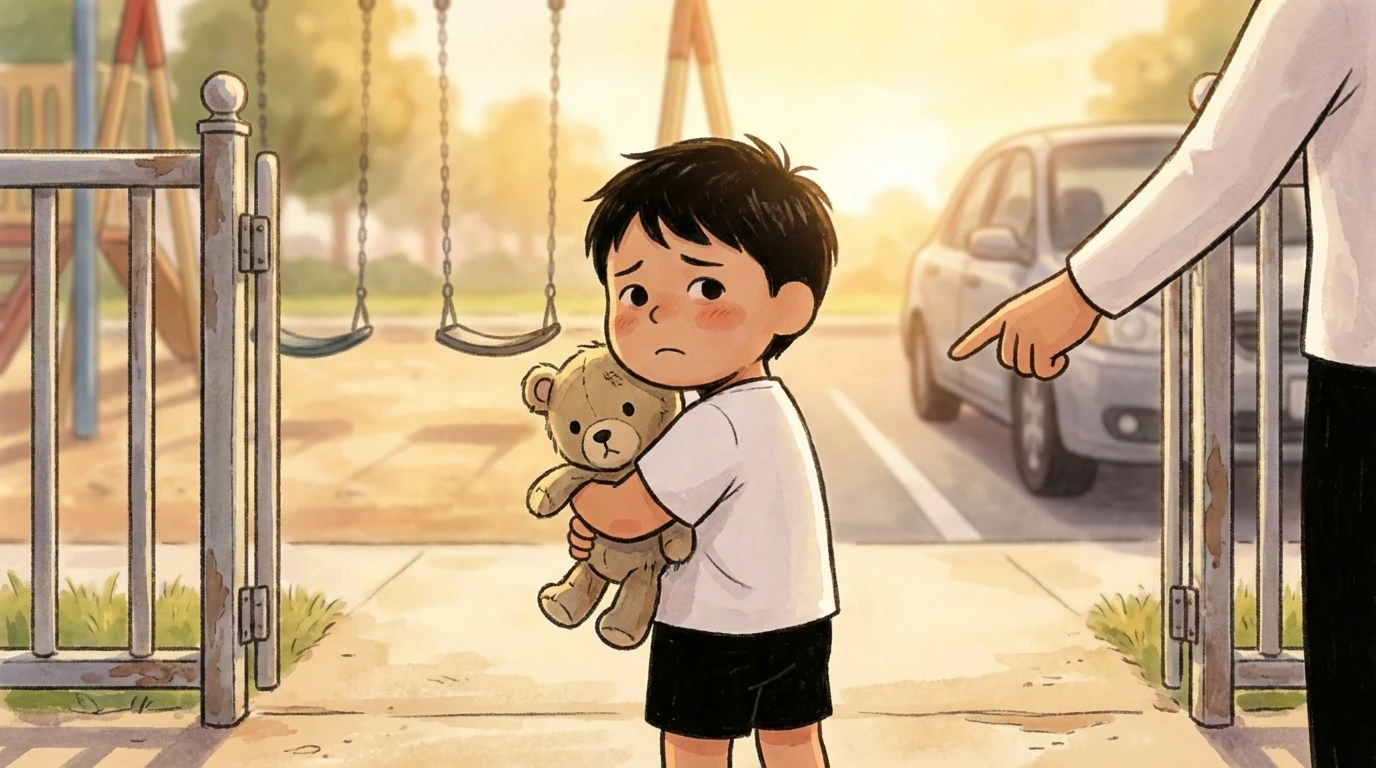
- Their brain cannot switch tasks like yours. The prefrontal cortex that handles flexible thinking is years from finished. Expecting smooth transitions from a three-year-old is like expecting a cat to fetch.
- Warnings only work if they are concrete. Saying 'five more minutes' means nothing to a kid who cannot tell time. Try 'two more turns on the slide, then we go.'
- The meltdown is the transition. Crying, protesting, going boneless on the floor. That is how their nervous system processes the shift. All of it is processing, even when it looks like pure defiance.
- Bridge activities beat cold stops. Instead of yanking them from one thing to nothing, give them something to carry forward. 'Pick one car to bring in the bath' works better than 'put the cars away.'
- Your calm is the instruction manual. When you stay flat and predictable during the protest, you are teaching their nervous system that transitions do not require panic.
Why "time to go" triggers a nuclear reaction
You gave the warning. You counted down. You used your best reasonable-adult voice. And now your kid is screaming like you suggested selling their kidneys.
This is a brain development problem, plain and simple.
Young children operate in what psychologists call "sticky attention." Once they lock onto something rewarding (the playground, the iPad, the pile of mud they have been sculpting for forty minutes), their brain treats that activity as the entire universe. Asking them to leave is, from their nervous system's perspective, asking them to abandon something vital. The reward circuitry is firing hard, dopamine is flowing, and then you walk over and announce that the fun stops now. Their brain registers that as a threat, not a schedule adjustment.
The prefrontal cortex, the part responsible for flexible thinking and task-switching, is barely online before age four and not reliably functional until the mid-twenties. Your kid is working with hardware that simply does not support the operation you are requesting - the capacity to stop, shift, and respond on demand is still under construction.
This also explains why the same child who melts down leaving the playground can seem perfectly fine moving between activities they do not care about. The intensity of the meltdown tracks with how rewarding the current activity is. A half-hearted block tower gets abandoned easily. The sandbox kingdom they spent thirty minutes building does not.
Some kids handle this worse than others. If yours seems to resist transitions more fiercely than every other child at the park, that is temperament, not a referendum on your parenting.
Five more minutes failed
The Tantrum Toolkit course will show you how to end activities without a meltdown
You'll leave the playground, turn off the screen, and switch tasks without the timer-bomb explosion.
The warning that lands
Most parents default to time-based warnings. "Five more minutes." "Two more minutes." "Last minute."
Here is the problem: your child has no idea what a minute is. You might as well say "seven more abstract units of meaninglessness." Time-based warnings feel like they should work because they are logical. But a preschooler's brain does not run on logic. It runs on sensory experience.
Make warnings concrete and countable
Instead of minutes, use events your child can track:
- "Two more turns on the slide, then we walk to the car."
- "You can watch until this episode ends, then the TV goes off."
- "Three more bites, then we clear your plate."
The warning needs to be something they can see ending. A countdown they can feel in their body, not a clock they cannot read.
Give the warning, then stop talking
One warning. Maybe two. Then follow through. The parent who gives eleven warnings before acting has trained their kid to ignore the first ten. You want your child to hear you when you give a transition cue, which means the cue has to mean something every time.
Bridge activities: the secret to fewer meltdowns
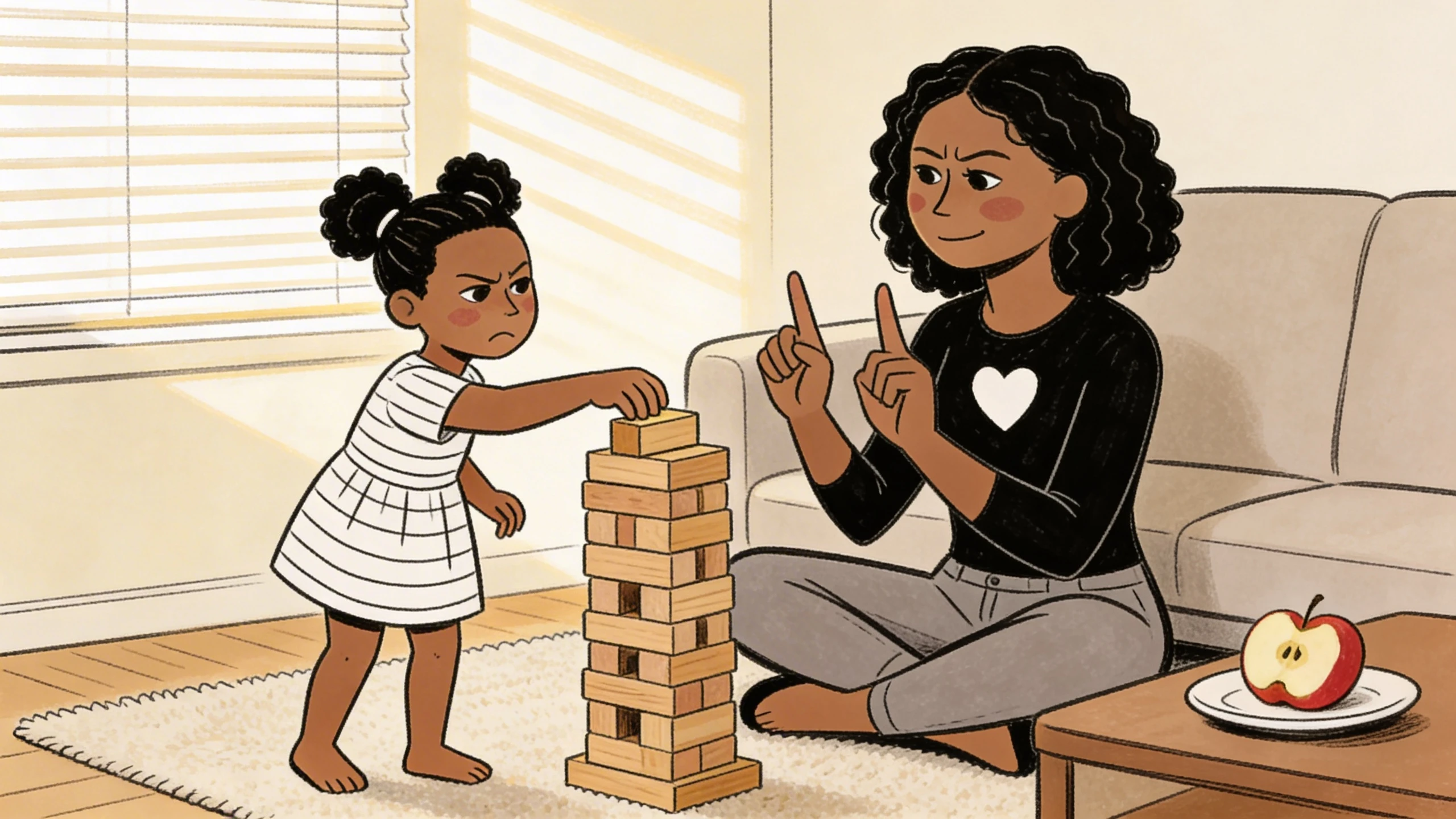
A cold stop is when the fun thing ends and nothing replaces it. "Turn off the TV." "Put down the toys." "Get in the car." Cold stops are meltdown fuel because the child goes from stimulation to a vacuum.
A bridge activity gives them something to carry from the current activity into the next one. Think of it as a cognitive ramp that eases the shift, not a bribe.
How bridges work in practice
- Leaving the playground: "Pick one stick to bring home. You can put it in your special collection."
- Ending screen time: "Tell me what happened in the show while we put on your shoes."
- Switching from play to dinner: "Can you carry this spoon to the table? I need your help."
- Leaving a friend's house: "Wave goodbye to the dog from the window in the car."
The bridge works because it keeps the child's brain engaged instead of forcing it into a dead stop. They are still doing something. The transition happens around the activity rather than replacing it.
How to handle a transition without a meltdown
- Give one concrete warningUse something countable, not time-based. 'Two more turns,' 'one more page,' 'when this song ends.' Say it once, clearly, at their eye level.
- Offer a bridge activityGive them something to carry into the next activity. A stick from the park, a story to tell you in the car, a job to do at home. Keep their brain engaged through the shift.
- Follow through without negotiatingWhen the count ends, move. Pick them up, turn off the screen, start walking. Calm and matter-of-fact. No speeches, no re-explaining.
- Validate but do not reverseSay 'I know you wanted to keep playing. That is really hard.' Then keep moving toward the next thing. Empathy and firmness live in the same sentence.
- Stay boring during the protestDo not match their energy. No yelling, no bargaining, no long explanations. Be a warm wall. They scream, you breathe. The storm passes faster when nobody fans it.
What to do when the meltdown happens anyway
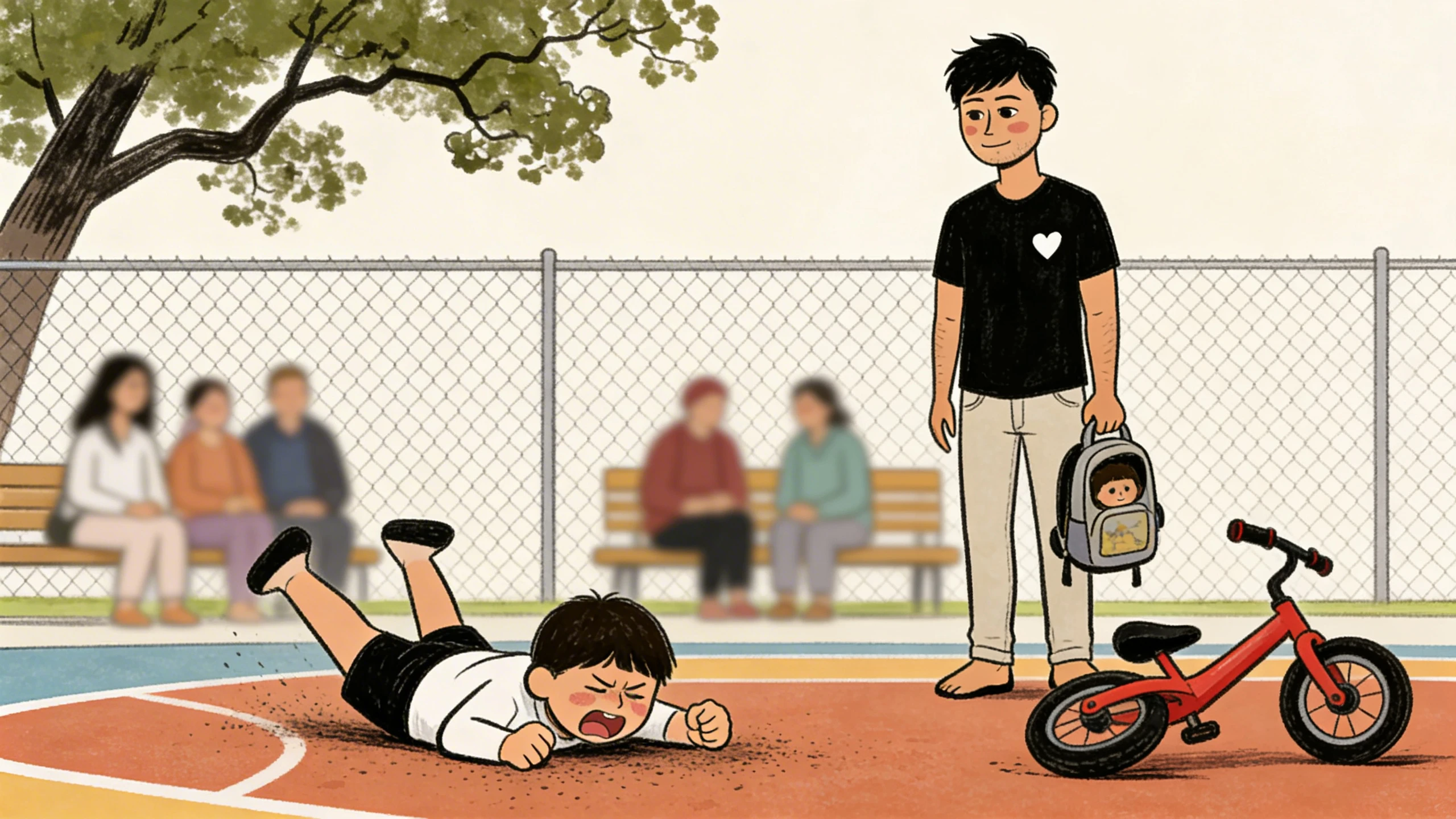
You did the warning. You offered the bridge. And your kid is still lying on the sidewalk like a starfish who has given up on life.
Good. You are doing it right.
The goal is a predictable, calm response that teaches their nervous system, over time, that transitions are safe. Some meltdowns will happen no matter what you do, and that is fine.
Stay boring
This is the hardest part. Your kid is screaming. People are staring. Your instinct is to fix it fast, whether that means giving in ("fine, five more minutes") or escalating ("we are LEAVING RIGHT NOW").
Both of those teach the same lesson: if I scream hard enough, something changes.
Instead, go flat. Low voice, slow movements, minimal words. "I hear you. We are going to the car now." Pick them up if you need to. No anger, no urgency. You are a warm, boring wall.

Morning transitions are their own beast
Morning routines pile transitions on top of each other under a hard deadline. Getting dressed, eating breakfast, putting on shoes, getting in the car. That is four transitions in forty-five minutes for a brain that struggles with one.
If mornings are your worst time, the fix is almost always structural. Lay out clothes the night before. Make breakfast predictable (same three options, rotating). Put shoes by the door. The fewer decisions required during the transition chain, the fewer points of failure.
The long game: what you are building
Every time you hold a boundary through a transition meltdown without losing your own composure, you are laying down a neural pathway in your child's brain. The pathway says: transitions are uncomfortable, but they are survivable, and the person I trust most stays steady through them.
Flexibility gets built by being the predictable, boring anchor while their brain does the difficult work of letting go and moving on. You show up the same way every time. You give the same kind of warning, hold the same boundary, and stay the same level of calm whether they whimper or scream. That repetition is the raw material their brain uses to build the skill.
You will not see the payoff tomorrow. You might not see it next month. But the four-year-old who screams when you leave the playground becomes the seven-year-old who grumbles but gets in the car, who becomes the twelve-year-old who can shift between homework and dinner without a federal incident.
That is the trajectory. And it starts with you standing in a parking lot, holding a screaming child, breathing slowly, and doing absolutely nothing dramatic.

FAQ
Daycare uses consistent, predictable routines with visual cues and group momentum. Your child knows exactly what comes next. At home, transitions are less predictable and they feel safe enough with you to protest. The meltdown is a sign of trust.
When possible, yes. Interrupting mid-task is harder on their brain than letting them reach a natural stopping point. But you do not owe them infinite time. Give a concrete endpoint and hold it.
Yes, as long as you are calm and they are safe. Sometimes a child who is stuck needs you to make the decision their brain cannot. Carry them gently, narrate what is happening, and keep your voice low and steady.
Not necessarily. Most young children struggle with transitions because their brains are still developing flexibility. If meltdowns are extreme, happen across all settings, and do not improve with consistent routines by age five or six, talk to your pediatrician.
Some kids do get upset at the warning itself. That is okay. The warning lets them start processing the transition early, which means less of an explosion at the actual endpoint. A small protest at the warning beats a full meltdown at departure.