TLDR
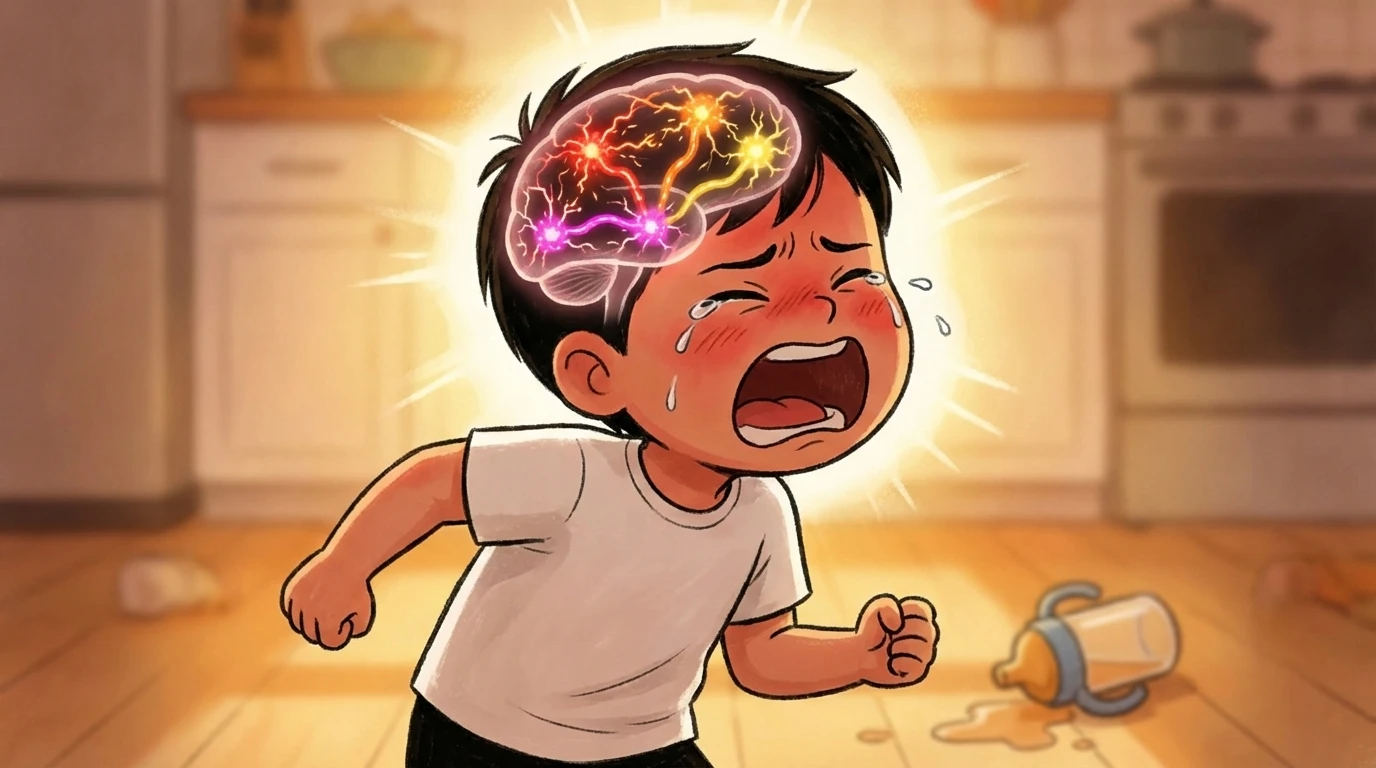
- Their brain cannot regulate big emotions yet. The prefrontal cortex, responsible for impulse control and logical thinking, doesn't start developing until ages five to seven. Until then, the emotional brain runs the show unchecked.
- Tantrums are communication, not manipulation. A toddler who can't say 'I'm frustrated, exhausted, and overstimulated' will scream it instead. The meltdown is the message.
- Hunger and tiredness pour gasoline on the fire. Low blood sugar and sleep deprivation strip away whatever thin layer of coping your child has. Most tantrums happen right before meals or naps.
- Chaos in routine or caregiving multiplies meltdowns. Disrupted schedules, inconsistent rules between caregivers, and major life changes leave kids feeling out of control, and tantrums are how they express it.
- Your response shapes their long-term emotional wiring. Comforting a tantruming child does not reinforce tantrums. Ignoring them does. Kids who receive empathy during meltdowns tantrum less over time.

Reason one: the brain is running on half the hardware
Your three-year-old throws themselves on the floor because you cut their toast into triangles instead of squares. You're standing there thinking, this cannot be a real thing. It is. And there's a biological reason.
Your child's brain has two systems that matter here. The emotional brain (centered around the amygdala) comes fully loaded at birth: fear, rage, excitement, and despair at industrial strength. The logical brain (the prefrontal cortex, which handles impulse control and decision-making) won't begin meaningful development until ages five to seven. For some kids, closer to eight or nine.
Your toddler has a gas pedal bolted to a rocket engine and no steering wheel. They feel everything at maximum intensity, and the part that would pump the brakes is a construction site behind caution tape.
Expecting a two-year-old to "just calm down" is like expecting someone to drive a car that hasn't been built yet. The hardware for self-regulation does not exist. The tantrum is the only thing their system can do with that much feeling.
Reason two: they can't name what's drowning them
Here's where it gets worse. Your kid isn't just flooded with emotion and missing the brakes. They also can't tell you what's wrong.
Think about the last time you were furious and couldn't articulate why. Now imagine you don't have the words "frustrated," "disappointed," or "overwhelmed" in your vocabulary at all. All you can do is scream.
Tantrums are a communication system. When a toddler melts down, they're telling you something: "I'm angry," "I need you," or "everything is too much." They just don't have the language to deliver it in a way that makes sense to you.
This is why building emotional vocabulary matters so much for reducing meltdowns. A child who can say "I'm mad" has an alternative to screaming. A child who can say "I need help" has an alternative to throwing things. The words become escape valves that release pressure before it blows.
Why is this happening
The Tantrum Toolkit course will show you the science behind each meltdown
You'll read your child's distress signals accurately instead of wondering what went wrong, through illustrated lessons with audio narration.
Reason three: hungry, tired, overstimulated (pick any two)
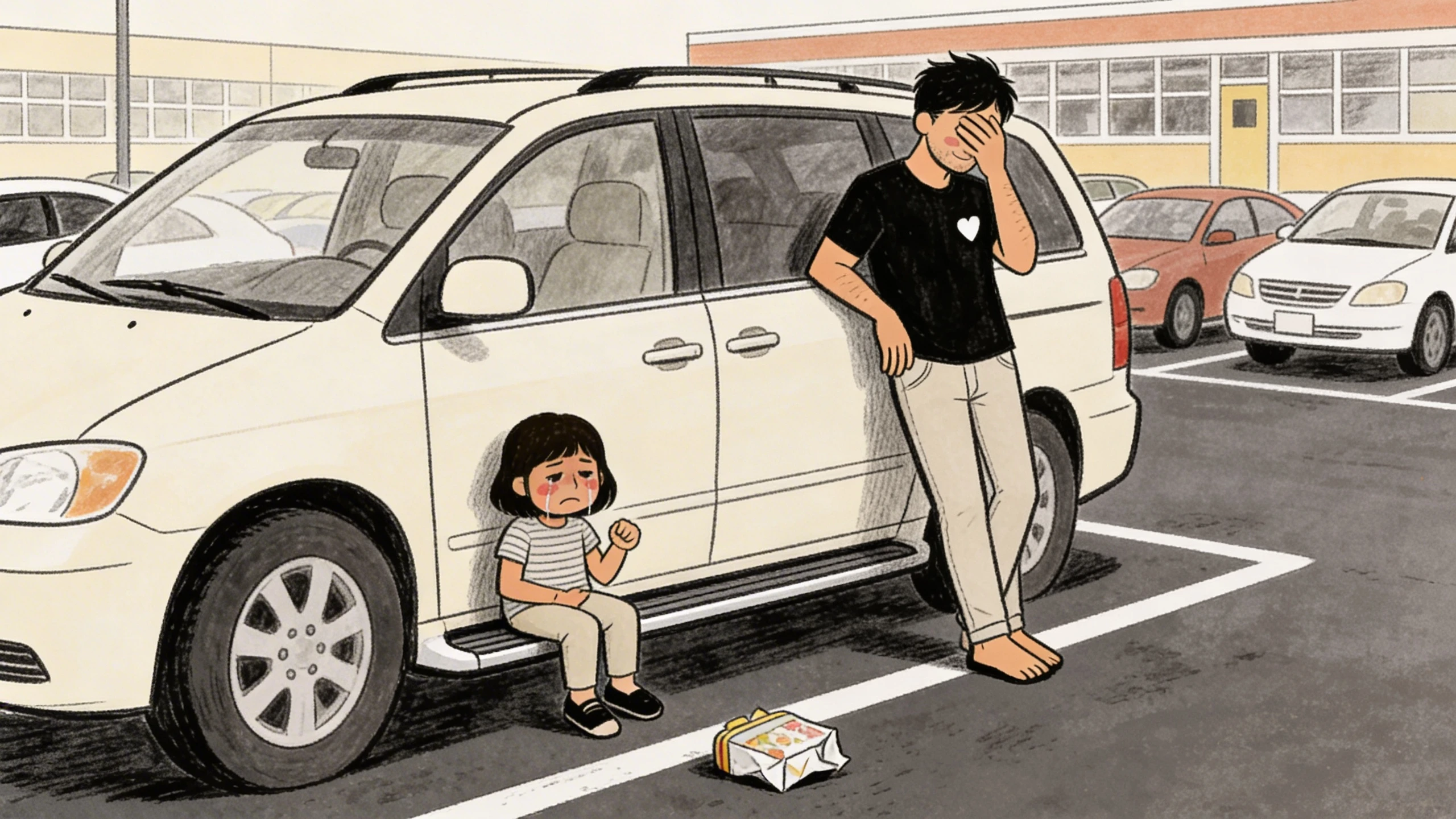
You already know what "hangry" feels like. You've snapped at your partner because dinner was twenty minutes late and the world felt personally offensive. Now imagine that feeling in a body with zero coping skills and a brain that can't override impulses.
The hunger factor
Low blood sugar strips away their already-thin capacity to handle anything. A well-fed toddler might tolerate hearing "no" to a cookie. A hungry toddler hears "no" and the universe collapses. A filling snack between meals can cut tantrum frequency in ways that feel almost too simple to be real.
The sleep factor
A tired child loses impulse control first. That's why the hitting, the throwing, and the worst tantrums tend to cluster around naptime and bedtime. When your kid melts down at 5:30 p.m. every single day, you don't have a behavior problem. You have a scheduling problem.
The overstimulation factor
Busy days, loud places, lots of new faces. Your nervous system can filter all that input. Your toddler's can't. Everything hits them at full blast, and eventually the "too much" feeling has to go somewhere. For some kids, this sensitivity runs deeper than others, and the threshold for "too much" is lower than you'd expect.
These three factors stack. A rested, well-fed child at a birthday party might handle the chaos fine. A tired, hungry child at that same party is a meltdown waiting for a trigger. Prevention is about controlling the conditions, not controlling your child.
Reason four: their world just got unpredictable
Kids run on routine the way adults run on coffee. Take it away and everything falls apart.
Chaos in the schedule
When something disrupts what your child expects (a new daycare, a parent traveling for work, a new sibling arriving, moving to a new house), tantrums spike. The child is processing the loss of predictability, and they're doing it with a brain that can't think through change logically.
A disrupted routine feels threatening to a small child. Predictability gives them a sense of control in a world where they control almost nothing. When that predictability disappears, tantrums become an attempt to regain some sense of order.
Chaos in the rules
This one catches a lot of families off guard. When different caregivers respond to the same behavior in different ways (grandma spanks, preschool does time-out, you do gentle redirection), your child has no idea what to expect. Three different responses to hitting feel chaotic. When toddlers feel lost, they burst. Consistent rules across caregivers reduce tantrums by giving kids something stable to push against.

What this means for how you respond
Understanding the reasons behind tantrums changes the game. You stop asking "how do I make this stop" and start asking "what does my child need right now."
How to use the science during a meltdown
- Check the basics firstBefore you do anything else, ask: are they hungry, tired, or overstimulated? If yes, address that. A snack or a quiet room solves more tantrums than any parenting technique.
- Stay close and stay steadyYour child needs to borrow your calm because they have none of their own. This is called co-regulation. Stay nearby, keep your voice low, and let them know you're there. Your composure is their anchor.
- Name the feeling out loudSay what you see: 'You're so upset. You wanted that toy and you can't have it.' You are not agreeing with the demand. You're telling your child that their feeling is real and you see it.
- Hold the boundary without lecturingKeep it simple: 'I hear you. The answer is still no.' A child in meltdown mode cannot process a five-sentence explanation. One short sentence. Then wait.
- Reconnect after the storm passesWhen everyone is calm (not five minutes later, more like hours later), revisit what happened. Ask what they were feeling. Help them name it. Brainstorm what they could do next time. This is where the teaching lives.
A child who learns to regulate with your help now builds the wiring to regulate on their own later. Every tantrum where you stay calm and present is a deposit into that account. It doesn't feel like progress when you're on the floor of Target with a screaming toddler and fourteen strangers staring at you. But it is.
And if you want to know what specific calming strategies work for your kid's particular triggers, the calm-down toolkit quiz can help you match techniques to your child's temperament.
The thing nobody tells you about tantrums
Every parenting book treats tantrums like a problem to solve. Here's what they skip: tantrums are how your child learns to feel.
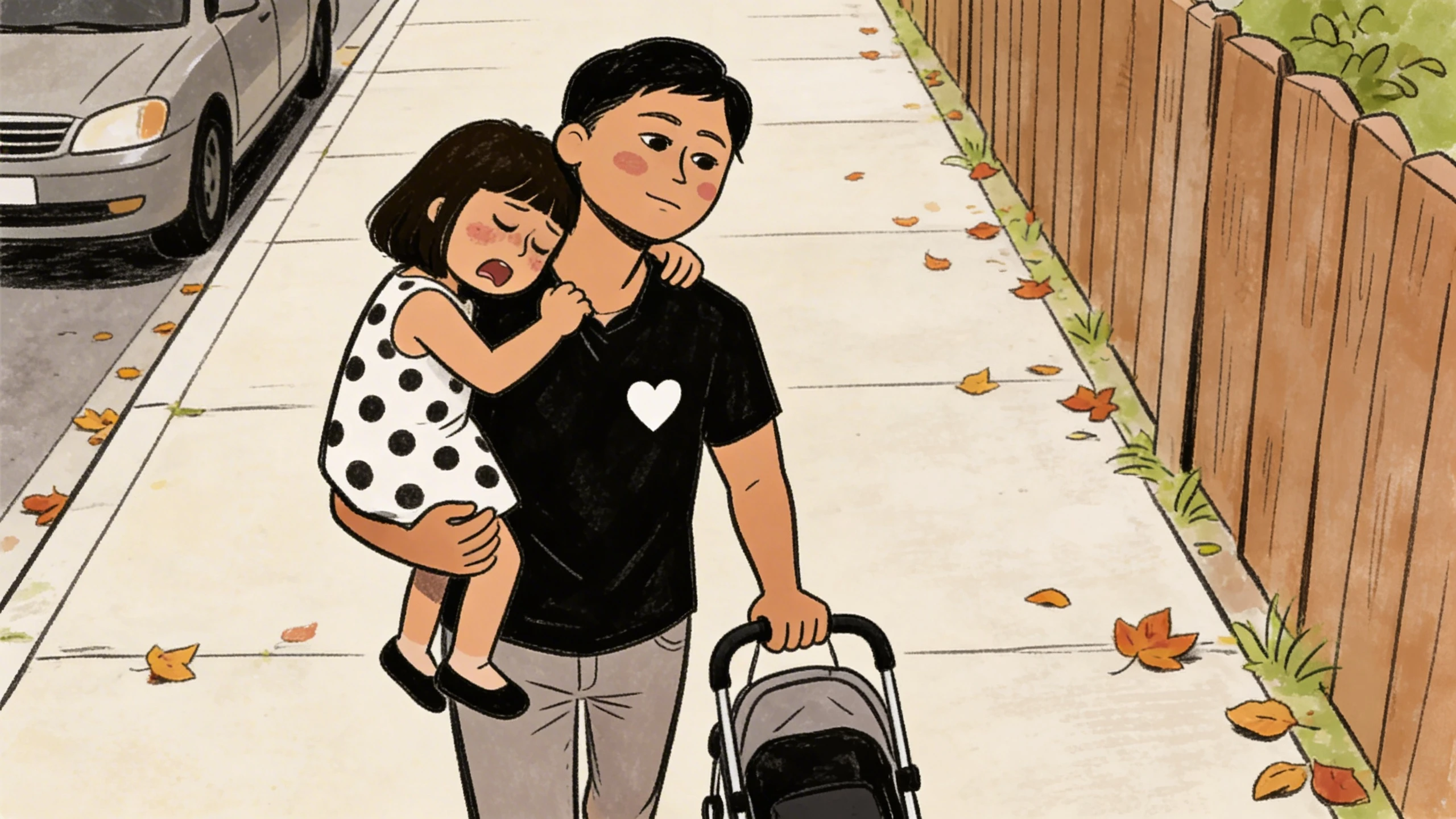
A kid who is allowed to have a meltdown in the safety of a parent's arms, who gets the message "you're having a hard time and I'm right here," is a kid who learns that big feelings don't destroy relationships. That lesson, repeated hundreds of times across toddlerhood, becomes the foundation of emotional health. Your child will not remember the tantrum over the wrong-colored plate. But their nervous system will remember that someone stayed.
So the next time your kid throws themselves on the floor because you peeled their banana when they wanted to peel it themselves (a scenario so common it should be in medical textbooks), remember: four things are happening at once. Their brain can't regulate. They can't tell you what's wrong. Their body is probably running on fumes. And their world might feel less predictable than it did last week.
You don't have to fix all four. You just have to not make it worse. Stay. Breathe. Wait. That's the whole job.
FAQ
Tantrums are developmentally typical from about age one through five or six. The prefrontal cortex begins meaningful development around age five to seven, which is when most kids start gaining the ability to regulate emotions without a full meltdown. If tantrums are frequent and intense past age seven, check in with your pediatrician.
No. Research shows that children who receive comfort during tantrums tantrum less over time, not more. Ignoring a tantruming child increases both the frequency and intensity of future meltdowns. You are not reinforcing bad behavior by being present. You are teaching your child that their feelings are safe with you.
The tantrum is almost never about the thing. A child who screams because their sock feels wrong is a child whose internal resources are already depleted by hunger, tiredness, overstimulation, or accumulated stress. The sock is the last straw, not the cause.
No. Children process emotions best when they feel safe, and safety means a caring adult nearby. Leaving a child alone during a tantrum teaches them to suppress feelings rather than work through them. Stay close, even if they won't let you touch them. Your presence is the intervention.